Claude Opus 4.8 Hands-On Review: A Comprehensive Evaluation of Game Development and UI Reproduction Capabilities
Claude Opus 4.8 Hands-On Review: A Com…
Claude Opus 4.8 multi-scenario review: noticeable detail refinements, impressive one-shot 3D game generation.
This article evaluates Claude Opus 4.8's real-world capabilities through approximately $50 worth of in-depth testing across 2D tower defense, UI reproduction, 3D game development, and tool generation. Results show Opus 4.8 offers detail-level improvements over 4.7 in UI reproduction, impressive one-shot generation of playable 3D game prototypes, and stable tool application quality. Overall it represents iterative optimization rather than a revolutionary upgrade, with room for improvement in detail handling on complex tasks.
Overview
Anthropic recently released the Claude Opus 4.8 model, the latest iteration in the Opus series. Its performance in code generation, UI reproduction, 3D game development, and other areas has attracted significant attention. This article is based on in-depth testing across multiple real-world scenarios (costing approximately $50 in tokens total), providing a comprehensive evaluation of Opus 4.8's true capabilities across dimensions including game development, system reproduction, and tool generation.
Background: Claude Model Family Tier System Anthropic's Claude models use a tiered naming system: Haiku (lightweight and fast), Sonnet (balanced), and Opus (flagship). The Opus series is positioned as the highest performance tier, primarily targeting professional scenarios requiring deep reasoning, complex code generation, and long-context processing. Anthropic, an AI safety company founded by former OpenAI researchers, emphasizes "Constitutional AI" methods in its model training, focusing on alignment and safety alongside capability improvements. Notably, the high performance of flagship models comes with significantly higher API costs—the approximately $50 spent on this test is a real-world reflection of the Opus series' premium pricing (typically around $75 per million output tokens) on complex tasks.
2D Tower Defense Game: Basically Playable in One Generation
The first test scenario had Opus 4.8 develop a tower defense game using pre-generated simple game sprite assets. Results showed that the model correctly handled core features including tower placement, mirror zone setup, and different turret selection—it even auto-generated sound effects.
However, there were obvious flaws—turrets couldn't properly fire projectiles, which is a critical missing feature for a tower defense game. Overall, the tester gave it a score of 80 out of 100. Considering this was a one-shot generation, this performance is quite impressive.
Why Models Excel at Frameworks but Fail on Details The code generation capability of large language models is essentially statistical pattern learning from massive code corpora (GitHub, Stack Overflow, etc.). Models don't truly "understand" program logic—instead, they predict the most likely code continuation at the token sequence level through the Transformer architecture's attention mechanism. This explains why models can generate structurally complete game frameworks yet may fail on details like "projectile firing" that require precise physics logic—the overall structural patterns of game frameworks appear frequently in training data, while correct implementations of specific interaction logic (such as projectile collision detection) require more precise contextual reasoning, with relatively lower density of correct examples in training data.
UI Reproduction Comparison: Subtle Improvements from Opus 4.8 vs 4.7
Wardrobe Management Prototype Reproduction
The test used a wardrobe management app prototype featuring both immersive experience and grid display modes. Comparing the reproduction results of Opus 4.7 and 4.8 revealed:
- Opus 4.7: Added unnecessary borders, had image processing issues, with clothing images overflowing beyond their containers
- Opus 4.8: Images and wardrobe display rendered correctly, clothing stayed within container boundaries, and overall layout was more standardized

The Technical Essence of UI Reproduction: Vision-to-Code Cross-Modal Conversion UI reproduction tests evaluate the model's "Vision-to-Code" cross-modal conversion capability. The model needs to parse input prototype screenshots, identify layout hierarchy, component types, and spacing relationships, then map them to HTML/CSS implementations. The "image overflowing container" issue in Opus 4.7 typically stems from the model failing to correctly infer the parent container's
overflow: hiddenproperty, or not setting constraints likemax-width/object-fit: cover—the density of correct examples for such CSS details in training data directly affects the model's ability to handle them properly. Opus 4.8's improvement suggests Anthropic performed targeted fine-tuning optimization on these visual precision issues.
The reviewer considered Opus 4.8 to be a "small but definite improvement" over 4.7, particularly in UI rendering performance.
Mac and Windows System Interface Reproduction
Using Opus 4.8 to reproduce the Mac system interface yielded satisfying results: the system opens normally, the editor accepts input properly, and window movement is smooth. The Windows system reproduction was equally impressive, with even the app store being faithfully recreated.
The admin dashboard case showcased a cyberpunk-style UI design with no obvious flaws in color scheme or layout. However, the reviewer noted that web-based UI generation had already performed well in earlier Claude versions, with Opus 4.8 representing more of an iterative optimization.
3D Game Development: The Most Challenging Test Scenario
Technical Foundation of Browser-Based 3D Games The 3D games generated by Opus 4.8 are most likely built on WebGL wrapper libraries like Three.js or Babylon.js. Three.js is currently the most mainstream browser-based 3D rendering framework, providing high-level abstractions like scene graphs, cameras, lighting, and materials by wrapping the underlying WebGL API, allowing developers to build complex 3D scenes without writing GLSL shaders directly. Since Three.js has tens of thousands of example projects on GitHub, large models typically have better mastery of its API compared to other 3D frameworks—this is why AI-generated 3D games can often quickly produce runnable frameworks.
Cultivation-Themed 3D Game "Cloud Sea Path"
This was one of the most impressive scenarios in the entire test. Opus 4.8 generated a 3D cultivation game called "Cloud Sea Path" (云海问道) with the following features:
- Multiple secret realms/maps to choose from
- Monster name display and combat system
- Sky-flying functionality (with some imperfections)
- Boundary crossing to reach different realms
- Sprint function (Shift key)
- Different beast designs for different maps
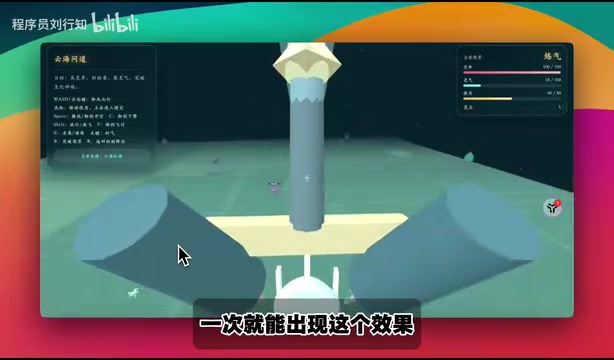
Overall, generating such a complex 3D game framework from a single prompt fully demonstrates Opus 4.8's ability to understand complex instructions.
CrossFire-Style FPS Game
Another 3D test was a shooting game similar to CrossFire, supporting multiple map selection (Desert Ruins, Lava Canyon, Frozen Tundra, etc.) and different weapon switching.
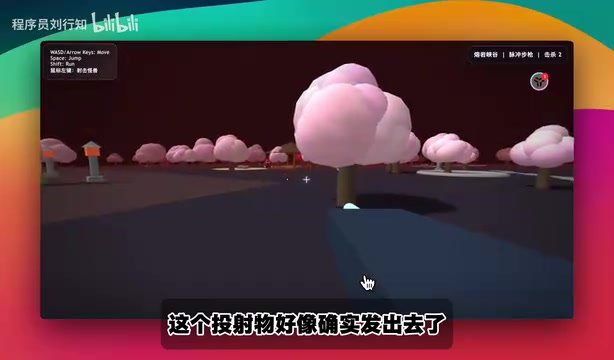
The tester gave it a score of 70 out of 100, with main deductions for:
- Maps rendered with a foggy appearance, lacking visual clarity
- Missing basic FPS operations like crouching
- However, kill count displayed correctly, and bullets could actually be fired
Technical Reasons Behind the "Foggy" Rendering Issue The "foggy" visual effect in the FPS game likely stems from the model defaulting to
THREE.FogExp2(exponential fog) orTHREE.Fog(linear fog) when generating Three.js code. These fog effects are commonly used in game development to hide low-detail geometry in the distance and create atmosphere, but improper parameter settings can cause near-field objects to appear blurry as well. Additionally, low ambient light (AmbientLight) intensity or missing directional light (DirectionalLight) can cause the overall scene to appear dark and gray. This type of rendering parameter tuning falls under "detail-level" issues—a typical weakness of current AI-generated code.
Interestingly, switching between different maps changed both the scene style and weapon appearance accordingly, indicating the model has some understanding of holistic game design.
3D Mario-Style Platform Jumping Game
Using a minimal prompt (just one sentence: "develop a 3D Mario Out game"), Opus 4.8 generated a playable result in one shot: supporting double jump (spacebar), sprint (Shift key), with a reasonably realistic 3D scene design. Due to token limitations, only the first level was designed, but it's sufficient to demonstrate the model's ability to understand and execute brief prompts.
Tool and Application Development Testing
JSON Visualization Tool
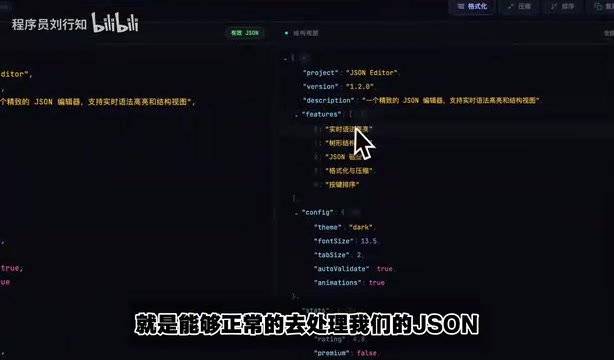
Having Opus 4.8 develop a JSON visualization tool with highlighting, compression, and sorting features produced a functionally complete result with a default cyberpunk-style UI design.
Social Media Business Management Platform
The generated social media business management platform prototype performed adequately, with basic features and layout correctly implemented.
Prompt Manager
For prompt management needs, Opus 4.8 generated a prompt manager supporting new prompt creation and zone-based display. While there were minor icon issues, the overall functionality was properly implemented.
Summary and Evaluation
After multi-scenario testing, Claude Opus 4.8's performance can be summarized as follows:
| Test Dimension | Score | Notes |
|---|---|---|
| 2D Game Development | 80/100 | Basic features complete, core mechanics have gaps |
| UI Reproduction | 85/100 | Improved over 4.7, stable web-based performance |
| 3D Game Development | 70-75/100 | Complete framework but flawed details |
| Tool Development | 85/100 | Functionally complete, consistent UI style |
The improvement from Opus 4.8 over 4.7 is modest, primarily reflected in detail optimization—such as UI elements no longer overflowing and more standardized layouts. However, the ability to generate playable games in a single shot for highly complex tasks like 3D game development is genuinely impressive.
Combining AI-Assisted Development with MVP Methodology The "Minimum Viable Product" (MVP) concept originates from lean startup methodology, emphasizing validating core assumptions at minimal cost and avoiding over-investment in features that haven't been market-validated. Opus 4.8's ability to generate playable game prototypes from a single prompt is reshaping workflows for indie developers and small teams: prototype building that previously took days is compressed to minutes, allowing developers to focus their energy on product differentiation rather than basic implementation. This aligns closely with the emerging trend of "Vibe Coding"—describing intent in natural language, having AI handle technical implementation, while humans maintain directional control and iteration decisions. For indie game developers and startup teams, the efficiency gains from this workflow are substantial.
For developers, Opus 4.8 is already a highly practical tool for rapid prototype validation and MVP development.
Key Takeaways
- Claude Opus 4.8 shows detail-level improvements over 4.7 in UI reproduction, with image handling and layout overflow issues resolved
- 3D game development capability is outstanding—brief prompts can generate playable games with multiple maps and mechanics in a single shot
- 2D tower defense scored 80/100, FPS game scored 70/100, with main deductions for missing core features and rendering quality
- Tool applications (JSON visualization, management platforms, etc.) show stable generation quality with high feature completeness
- Total testing cost approximately $50; Opus 4.8 represents iterative optimization rather than a revolutionary upgrade
Related articles
 Product Reviews
Qoder vs Cursor Real-World Comparison: Which $20/Month AI IDE Is Better?
Hands-on comparison of Qoder vs Cursor AI IDEs: Agent autonomy, human interaction count, and architecture decisions. Qoder needed only 2 interactions vs Cursor's 8.
 Product Reviews
Cursor Cloud Agent Demo: Eliminating Bottlenecks Across the Entire Software Development Lifecycle
Deep analysis of Cursor's Cloud Agent demo showing how cloud VMs, automated test artifacts, and a full-chain control plane systematically eliminate human bottlenecks across the software development lifecycle.
 Product Reviews
Cursor 3.0 Deep Dive: Multi-Agent Parallelism, Design Mode, and Best-of-N Model Comparison
Cursor 3.0 evolves from an AI coding assistant into an Agent fleet command center. Explore multi-agent parallelism, Design Mode, and Best-of-N model comparison.