Xiaomi MIMO Free 200M Token Hands-On: A Budget Alternative Amid AI Coding Tool Price Hikes

Xiaomi MIMO 2.5 offers 200M free Tokens as a budget alternative amid AI coding tool price hikes
As AI coding tools like GitHub Copilot and Cursor raise prices, Xiaomi MIMO 2.5 offers 200 million free Tokens (worth ~$50) with a simple application approved in about 12 hours. Hands-on testing shows coding performance below Copilot but close to DeepSeek V4. Currently limited to Chat mode without IDE real-time completion. Best suited as a free transitional solution for budget-conscious individual developers, but not recommended as a primary tool.
AI Coding Tools Are Getting More Expensive — Where Are the Free Options?
Recently, major AI coding tools have been adjusting their pricing strategies. Subscription costs for GitHub Copilot, Cursor, and similar products continue to rise, putting pressure on many developers. The root cause of this price hike wave is that inference costs remain stubbornly high — the GPU compute required to run a single large model inference directly determines the pricing floor for service providers. GitHub Copilot launched commercially in 2022, initially priced at $10/month for individuals. As more powerful underlying models like GPT-4o were integrated, cost pressures have continuously passed through to users. Cursor quickly gained developer favor with its deep IDE integration and multi-model support, but its Pro subscription fees have also been steadily increasing.
Against this backdrop, Xiaomi's MIMO 2.5 model offers a noteworthy free alternative — apply and receive 200 million free Tokens, worth approximately $50 at standard pricing, which is a substantial resource for daily coding assistance.
What are Tokens? Tokens are the basic units that large language models use to measure input and output text. Typically, one English word equals about 1-2 Tokens, and one Chinese character equals about 1-2 Tokens. For daily coding assistance, a single code review or generation request consumes roughly 500-2000 Tokens. In theory, 200 million Tokens can support over 100,000 medium-complexity interactions — genuinely generous for individual developers.
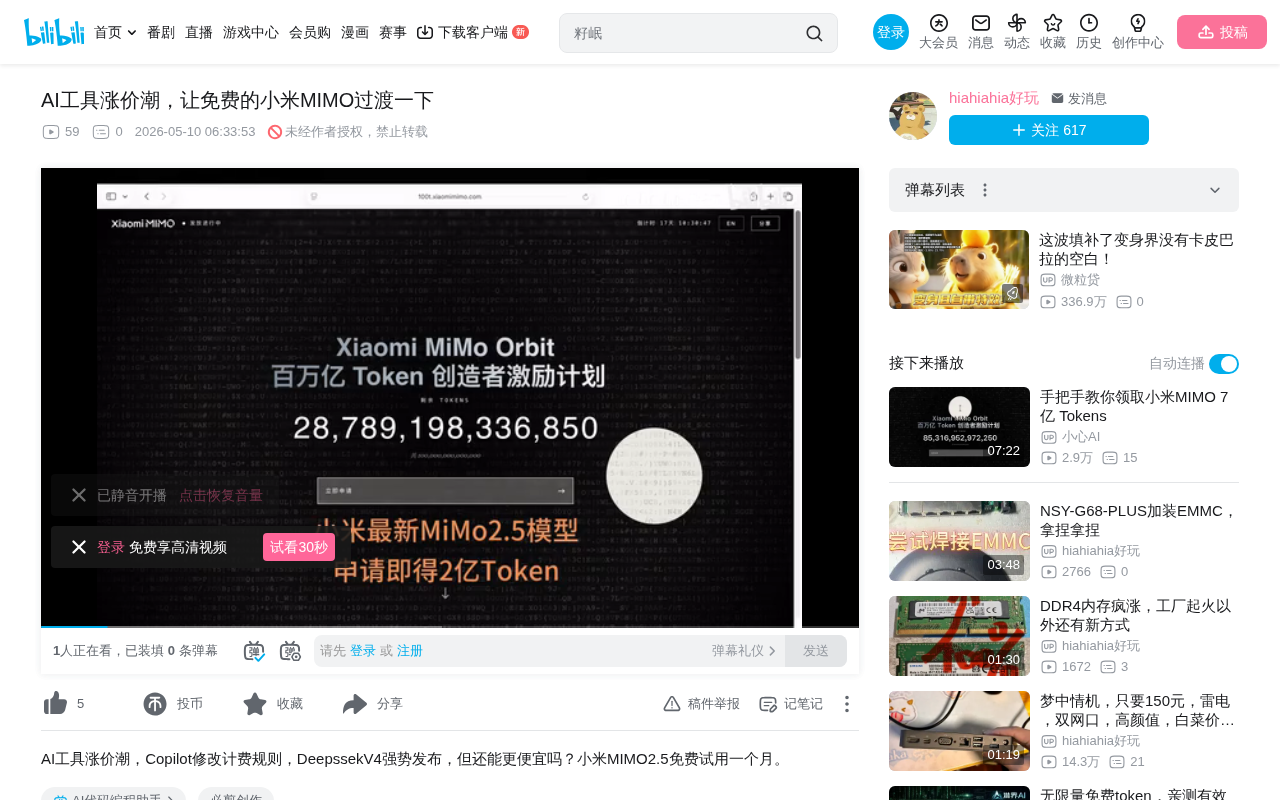
How to Apply for Xiaomi MIMO 2.5 Free Tokens
The application process is extremely simple with a very low barrier. Users just need to enter their email and complete an AI usage survey questionnaire to submit their application. The questionnaire isn't complicated — you can fill it out casually and still get approved.
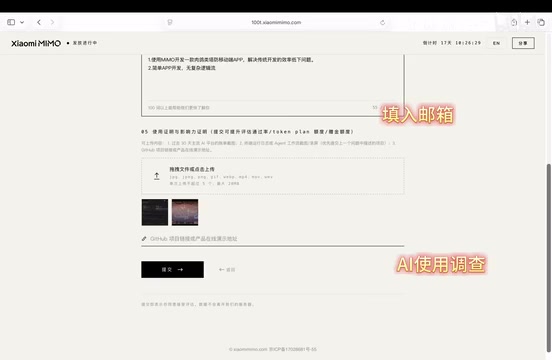
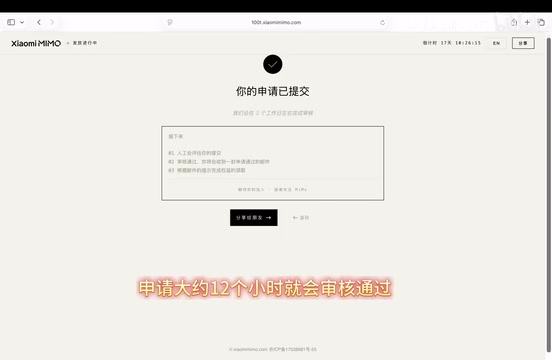
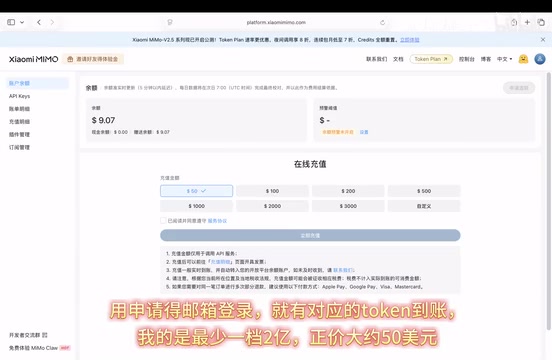
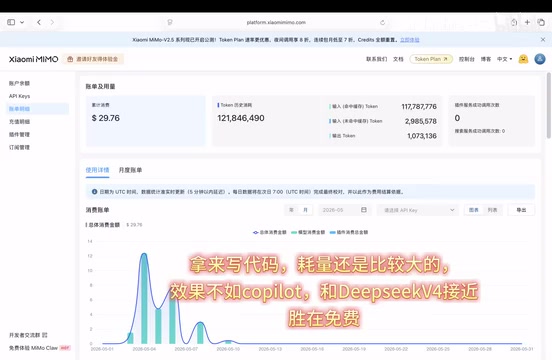
After submitting your application, you'll receive an approval notification in approximately 12 hours. Then log into the platform using the email you provided during application, and you'll see the corresponding Token quota credited to your account. Based on hands-on testing, the minimum tier is 200 million Tokens — quite generous for daily coding use.
How Much Are 200 Million Free Tokens Worth?
200 million Tokens at standard pricing equals approximately $50, which is a decent "transitional perk" in today's environment where AI tools generally charge fees. For individual developers or users who want to experience AI coding assistance without immediately paying, this quota can sustain a considerable period of use.
MIMO 2.5 Coding Performance Test: Compared with Copilot and DeepSeek V4
Free is free, but actual performance is what matters. Based on hands-on testing, MIMO 2.5 still has gaps compared to top-tier tools in code generation:
- Not as good as GitHub Copilot: In terms of code completion accuracy and context understanding, MIMO 2.5 doesn't reach Copilot's level. Copilot leverages top-tier closed-source models like GPT-4o, giving it clear advantages in complex business logic reasoning and cross-file context understanding.
- Close to DeepSeek V4: Overall coding capability is comparable to DeepSeek V4, performing reasonably well in certain scenarios. DeepSeek V4 uses a Mixture of Experts (MoE) architecture, achieving code generation performance close to top closed-source models at extremely low training costs. It performs excellently on code benchmarks like HumanEval and MBPP, representing the open-source/low-cost model camp. MIMO 2.5's comparable coding ability means it's already quite competitive on code tasks.
- Free Codex-level access: As a free solution, the value proposition remains outstanding.
It's worth noting that MIMO (Multi-modal Intelligence Model) is a large language model series developed by Xiaomi's AI team. MIMO 2.5 has undergone targeted Instruction Fine-tuning for code generation, enabling it to understand programming intent and generate corresponding code snippets. Compared to general-purpose conversational models, models specifically optimized for code scenarios typically perform better in syntax accuracy and API call conventions.
What Are the Usage Limitations?
Currently, MIMO 2.5 has certain limitations in how it can be accessed, and these limitations involve two fundamentally different AI coding interaction paradigms:
-
Chat mode only: Users can only interact with the model through conversation, suitable for question-based code generation and problem solving. Chat mode requires developers to actively describe requirements and paste code snippets — a "request-response" style interaction.
-
No direct VS Code plugin support: Unlike Copilot, it cannot provide real-time code completion within the editor, creating a noticeable gap in actual development experience. IDE plugin mode deeply integrates into the editor through the Language Server Protocol (LSP), reading current file context, cursor position, and project structure in real-time to deliver "ghost text" inline completions — this is fundamentally why developers still feel a significant productivity gap even when Chat mode model capabilities are similar.
-
Cloud-based VS Code plugin configuration available: If you need to use it in VS Code, you can configure a plugin through the Cloud approach. This essentially leverages MIMO's open API interface (typically compatible with the OpenAI API format), paired with open-source VS Code extensions like Continue or Codeium, replacing the API endpoint with MIMO's service address. While this approach enables calling the MIMO model within the editor, the experience still differs from native Copilot plugins since it requires manual triggering rather than real-time streaming completion. If you encounter difficulties during configuration, just ask an AI assistant to generate the configuration for you.
Who Should Use Xiaomi MIMO 2.5?
Overall, Xiaomi MIMO 2.5 is currently best suited for these types of users:
- Budget-conscious individual developers: With mainstream AI tools raising prices, MIMO provides a zero-cost transitional solution
- Light AI coding users: If you only occasionally need AI assistance for writing code or answering technical questions, Chat mode is sufficient
- Tech enthusiasts who want to compare tools: Having one more free tool on hand lets you make real comparisons with paid tools like Copilot and Cursor
Conclusion: Free and Useful, But Don't Make It Your Primary Tool
Xiaomi MIMO 2.5's free 200 million Token strategy genuinely provides a solid buffer option in an environment where AI tools are broadly increasing prices. While there's still a gap in coding performance compared to leading products like Copilot, as a free solution, the value proposition is hard to beat. For developers who don't want to pay for AI coding tools just yet, applying for a MIMO account as a transitional measure is a pragmatic choice.
However, keep in mind that free quotas are ultimately limited. If you have high-frequency, high-quality AI coding assistance needs, you'll still need to consider paid tools in the long run. MIMO is better suited as a "try it out" and "emergency backup" option rather than a primary production tool.
Key Takeaways
- Xiaomi MIMO 2.5 offers 200 million free Tokens upon application (supporting ~100,000+ medium-complexity interactions), worth approximately $50, with a simple application process and ~12-hour approval
- Coding performance is below GitHub Copilot but close to DeepSeek V4 level — outstanding value as a free solution
- Currently only supports Chat mode, no direct VS Code plugin support (fundamental interaction differences between the two modes), though Cloud-based plugin configuration is available
- Amid collective AI tool price hikes, MIMO is suitable as a free transitional solution for individual developers
Related articles
 Product Reviews
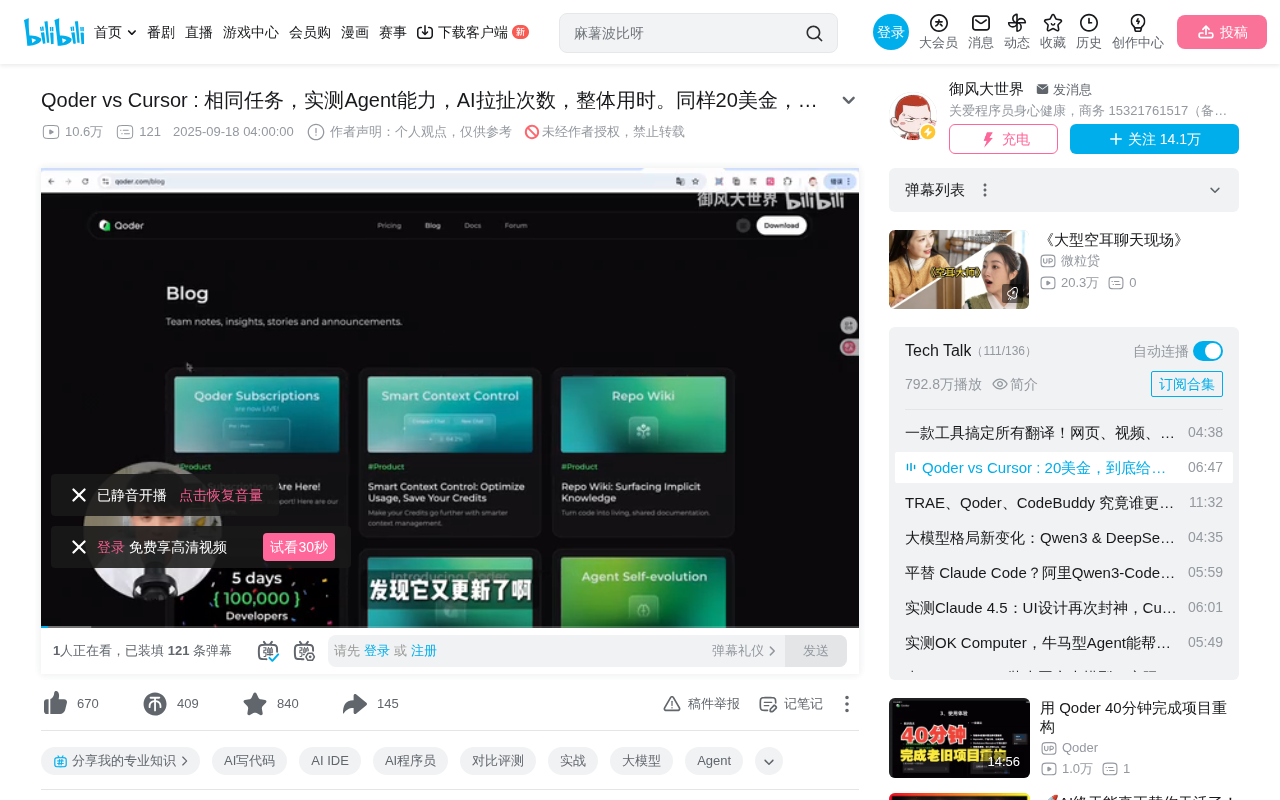
Qoder vs Cursor Real-World Comparison: Which $20/Month AI IDE Is Better?
Hands-on comparison of Qoder vs Cursor AI IDEs: Agent autonomy, human interaction count, and architecture decisions. Qoder needed only 2 interactions vs Cursor's 8.
 Product Reviews
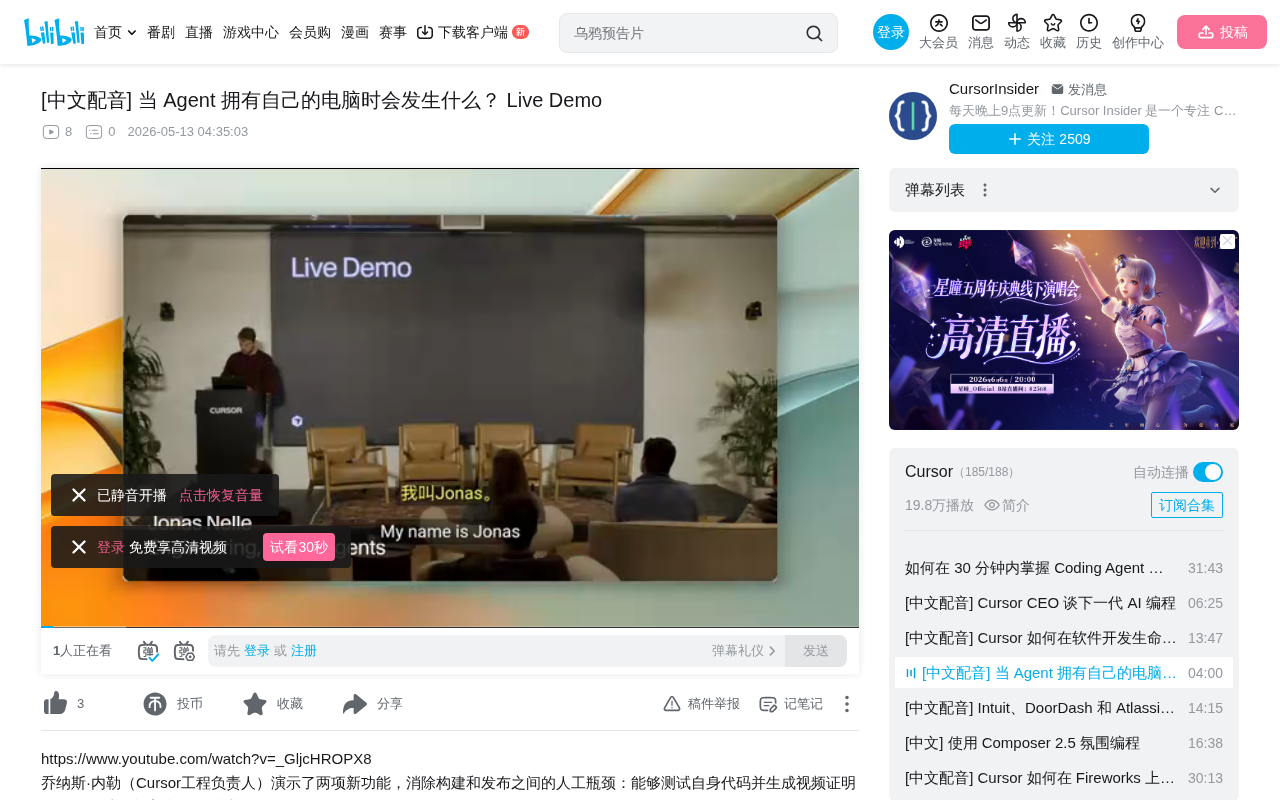
Cursor Cloud Agent Demo: Eliminating Bottlenecks Across the Entire Software Development Lifecycle
Deep analysis of Cursor's Cloud Agent demo showing how cloud VMs, automated test artifacts, and a full-chain control plane systematically eliminate human bottlenecks across the software development lifecycle.
 Product Reviews
Cursor 3.0 Deep Dive: Multi-Agent Parallelism, Design Mode, and Best-of-N Model Comparison
Cursor 3.0 evolves from an AI coding assistant into an Agent fleet command center. Explore multi-agent parallelism, Design Mode, and Best-of-N model comparison.