100K Views but Only 20 Sales: An Indie Developer's Monetization Post-Mortem
100K Views but Only 20 Sales: An Indie…
Programmer gets 100K views but earns only $80, revealing the gap between traffic and monetization.
A programmer seized the Open WebUI viral moment, built a Windows one-click installer in three days, and gained 100K+ views with 500+ user inquiries. But without a pre-designed business model, a late free-to-paid transition, and severe underpricing, he sold only 20 copies for ~$80 total. The case reveals that indie developers must plan monetization before launch and shift from a sharing mindset to business thinking.
Traffic ≠ Revenue: A Programmer's Commercial Awakening
A programmer with five years of embedded software development experience, after nearly a year of transitioning into AI indie development, seized the moment when Open WebUI (OpenCloud) went viral. He built a one-click installation tool for Windows in just three days, accumulating over 100K views across multiple platforms and receiving over 500 private message inquiries—yet ultimately sold only 20 copies, earning less than 600 RMB (roughly $80).
This isn't a success story, but it may be more valuable than most success stories. Because the pitfalls most indie developers fall into aren't technical—they're in every single step of the commercialization process.
Spotting the Opportunity: A Tech Person's Instinct and Execution
Starting from User Pain Points, Not Technology
When Open WebUI went viral, most people's first reaction was "I need to try this before I fall behind." But as a developer with product thinking, his question was: What problem can I solve for users caught up in this wave?
Background: Open WebUI and the AI Local Deployment Wave
Open WebUI (formerly OpenCloud) is an open-source web interface tool that allows users to run large language models (LLMs) on local machines or private servers, providing a ChatGPT-like interaction experience while supporting local model backends like Ollama. Its viral popularity is essentially a microcosm of the 2024 AI local deployment wave—as open-source models like Llama and Mistral rapidly close the gap with commercial models, more users want to run AI without relying on cloud APIs, for privacy protection and cost reduction. However, local deployment involves Docker containerization, Python environment configuration, port mapping, and other technical hurdles that create extremely high barriers for non-technical users. This contradiction is precisely what created market demand for "one-click installation tools."
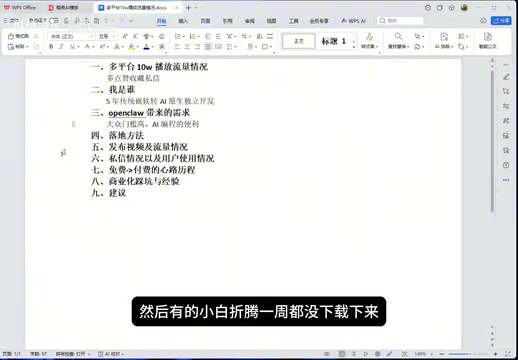
He identified a clear pain point: a massive number of non-technical users wanted to try Open WebUI but couldn't even use the command line. More critically, Mac already had a one-click installation tool, while Windows was virtually a blank slate—despite Windows users having significantly higher demand. Multiple developers said Windows compatibility was too poor and they didn't want to deal with it, but leveraging his embedded development experience and proficiency with AI programming tools like Cursor and Cline, he completed development in just three days.
The Real Moat Isn't Technical—It's Cognitive
Here's a cognitive bias many programmers easily overlook: What seems simple to you may be an insurmountable chasm for non-technical users. Many programmers say "Setting up an environment isn't hard—just follow a tutorial and type a few commands." But put yourself in their shoes—someone with zero technical knowledge, facing command lines, environment variables, and dependency conflicts, will genuinely be at a complete loss.
Background: The Capabilities of AI Programming Tools Cursor and Cline
Cursor is an AI code editor deeply rebuilt on VS Code, with native integration of large models like GPT-4 and Claude, supporting code completion, multi-file context understanding, and natural language instruction-to-code generation. Cline (formerly Claude Dev) is a VS Code plugin that can autonomously execute multi-step programming tasks in "agent mode," including creating files, running terminal commands, and launching browsers. These tools made "building a Windows installation tool in three days" possible—developers only need to describe requirements, and AI can automatically generate packaging scripts, handle dependencies, and create installation wizard interfaces. This "AI-assisted development" capability was still an information asymmetry in 2024, with most developers not yet realizing its actual productivity ceiling—this is the technical source of the "cognitive moat" mentioned in the article.
At the time, most developers still didn't understand what AI programming tools like Cursor and Cline were capable of. This information asymmetry itself constituted a brief but real market window.
The Bittersweet Reality Behind Viral Traffic
A Single Short Video Generates 100K Views
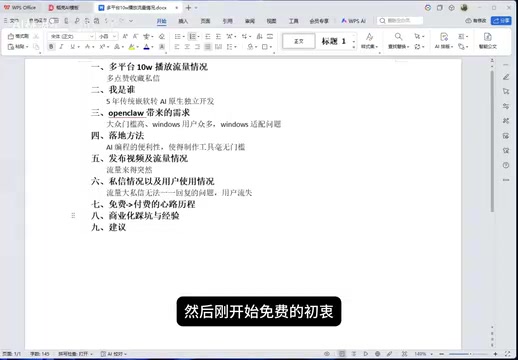
After building the tool, he "casually" posted a short video. The first evening, private messages flooded in and views hit several thousand; the next day it broke 10K; within days it reached 90K views on one platform, with about 10K on Bilibili. Combined across platforms, it exceeded 100K total views.
One Person Can't Handle It All
Traffic arrived, and so did problems. As a solo developer, he had to simultaneously handle:
- Pre-sales: Responding to private message inquiries across multiple platforms
- Post-sales: Answering user questions in groups
- Technical: Fixing bugs and iterating features
- Operations: Repackaging for distribution and maintaining communities
Initially he sent download links one by one via private messages, only later thinking to create a group for unified distribution. But one platform triggered its defense mechanism due to excessive private messaging and directly banned his messaging function, causing massive user loss. Ultimately, about 200+ users actually used the tool, plus secondary distribution (some people took the tool to deploy for enterprises), totaling roughly 500+ users by incomplete count.
Background: The Commercial Reality of Indie Hackers and One-Person Businesses (OPB)
Indie Hacker culture originated in Silicon Valley, with the core philosophy of individuals or tiny teams achieving financial freedom through internet products, represented by the Indie Hackers community. The One-Person Business (OPB) is its extreme form, emphasizing a single person handling all product, operations, and sales functions. This model seems extremely low-barrier during the AI tool explosion, but its hidden costs are often underestimated: user support (customer service) typically consumes over 50% of a founder's energy, especially for tool products targeting non-technical users. The SaaS industry has an empirical benchmark—every 100 free users requires approximately 1-2 hours/day of support time. When user volume reaches 500, solo operation is already near its limit. The author's firsthand experience confirms this pattern and reveals the structural bottleneck of "one-person companies" at the scaling stage.
He deeply realized: A one-person business sounds wonderful, but when user volume increases, one person simply can't sustain it. Just 500 users already left him mentally and physically exhausted—completely different from the earlier fantasy of "I can do everything myself."
The Fatal Mistakes in Monetization
Missing the Free-to-Paid Transition Window
Initially, with a programmer's "sharing mentality," he chose free distribution, wanting to help more beginners quickly experience AI. But when traffic surged and his energy was severely drained, he realized he needed to charge money to filter users and reduce service pressure.
However, by then it was too late to develop an activation system and design differentiated paid features. He ended up simply opening up paid access at 29.9 RMB (~$4)—while other Windows platform tools on the market were already priced at or above 100 RMB, and some offered on-site deployment services for 499-699 RMB, earning over 10,000 RMB from just a few clients.
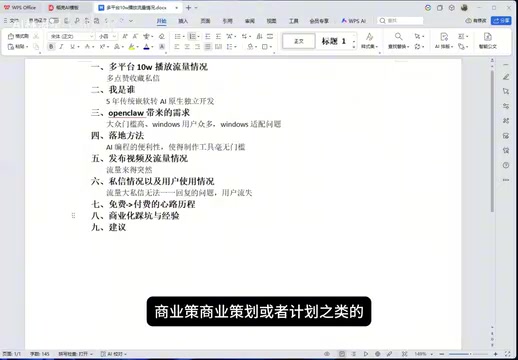
Final result: 29.9 RMB × 20 people ≈ 598 RMB (~$80). That was the entire commercial return from 100K views.
Post-Mortem: Four Root Causes of Monetization Failure
Background: Conversion Funnels and the Economics of Monetization Timing
The conversion chain from traffic to revenue is called the "Conversion Funnel" in marketing, typically including stages like exposure → click → retention → payment → repurchase. 100K views converting to 20 sales represents a conversion rate of approximately 0.02%, far below industry benchmarks (the average free-to-paid conversion rate for SaaS products is approximately 2%-5%). The core reason for such a low conversion rate is the "free anchoring effect"—when users have already obtained a product at zero cost, requesting payment creates strong psychological resistance, known in behavioral economics as the reverse effect of the "endowment effect." In contrast, designing a "free trial + paid unlock" Freemium model from the start establishes payment expectations before users form a free-product mindset. Missing this window often means monetization costs multiply.
Looking back at the entire process, the root causes of monetization failure can be summarized as follows:
- No pre-designed business model: The boundary between free and paid versions should have been determined before product launch
- Broken user acquisition loop: The path from "seeing the video" to "using the tool" was severely fragmented
- Severely underpriced: 29.9 RMB couldn't cover service costs nor reflect product value
- Mindset issues: A fundamental conflict exists between a programmer's "sharing spirit" and commercialization
Four Practical Tips for Indie Developers
1. Figure Out How to Make Money Before Launch
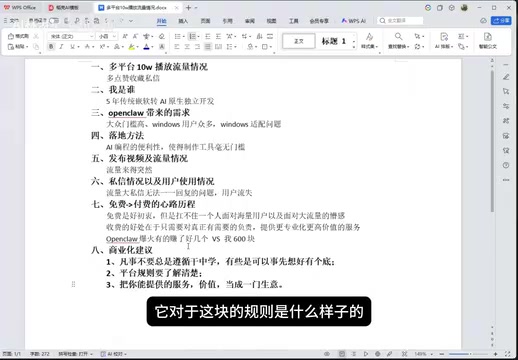
Many people believe in "figure it out as you go," but reality is: When you're mentally and physically exhausted dealing with users, you have zero energy to think about business strategy. At minimum, before product launch, use AI tools to help simulate a basic business model—what's the payment path, what's the minimum viable monetization method, what differentiates free from paid. It doesn't need to be perfect, but you need a foundation.
2. Understand Platform Rules and Plan Distribution Channels in Advance
Different platforms have vastly different rules for commercial promotion. Douyin, Bilibili, and Xiaohongshu each have their own restrictions. If you don't research in advance, you might build a great product but be unable to promote it, or get banned for violations. Every indie developer should have at least one personal website—it's your own territory, free from platform constraints.
3. Prepare Business Licenses and Other Infrastructure in Advance
If you're targeting the domestic Chinese market, a business license is virtually unavoidable. Website ICP filing, payment integration, and qualification reviews for sales functions all require a business license.
Background: Compliance Infrastructure for Indie Developers in China
For indie development in mainland China, compliance infrastructure is far more important than in overseas markets. Website ICP filing requires domains to be bound to a registered entity (individual or company), and unfiled websites face the risk of being shut down by the Ministry of Industry and Information Technology at any time. WeChat Pay and Alipay commercial payment interfaces require binding to a business license—personal collection has limits and cannot issue invoices. If software sales are involved, the business scope must also be registered in the commercial system. The registration cost for an individual business license has dropped to 300-500 RMB in most cities, with some regions even offering it for free, but the process from application to certificate typically takes 5-15 business days. This means if you wait until your product goes viral to apply for licenses, you'll often miss the golden window when traffic is at its peak—exactly as demonstrated in this case.
The cost is low now (a few hundred RMB), but if you wait until you need it, you'll often miss the optimal timing.
4. Treat Your Professional Skills as a Business
This is the most important and hardest breakthrough. A tool that can solve a user's week-long deployment problem in minutes inherently has high commercial value. But if you always operate with a "doing charity" mentality, you'll never establish a healthy business cycle.
To commercialize, you must complete a psychological transformation: you're providing professional services, and services should have reasonable prices. This isn't greed—it's the foundation for sustainable product development.
Conclusion: Technology Is the Starting Point; Business Acumen Determines the Destination
The value of this case isn't in its success, but in how it authentically shows a technical person's complete journey from "spotting an opportunity" to "failing at monetization." 100K views, 500 users, 598 RMB in revenue—behind these numbers is the most authentic growth cost of an indie developer.
For those currently on or about to embark on the indie development path, technical ability is just the starting point. Business acumen, operational capability, and mindset transformation are the key factors that determine how far you can go. The pitfalls others have already fallen into represent time and energy you can save.
Related articles
 Expert Opinions
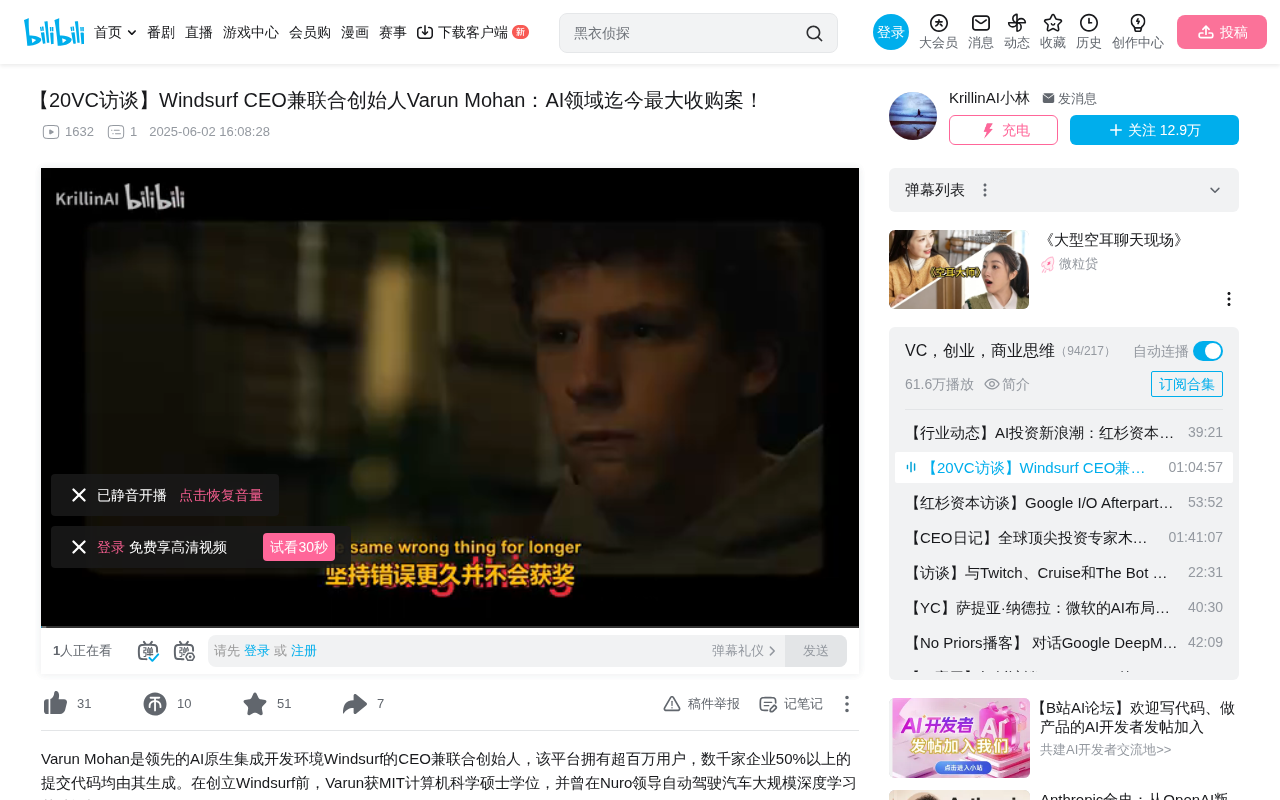
Windsurf CEO Deep Dive Interview: Speed Is the Only Moat
Windsurf CEO Varun Mohan shares insights on AI coding IDE pivots, product methodology, async Agent challenges, and differentiation strategy vs Cursor. Speed is the only moat.
 Expert Opinions
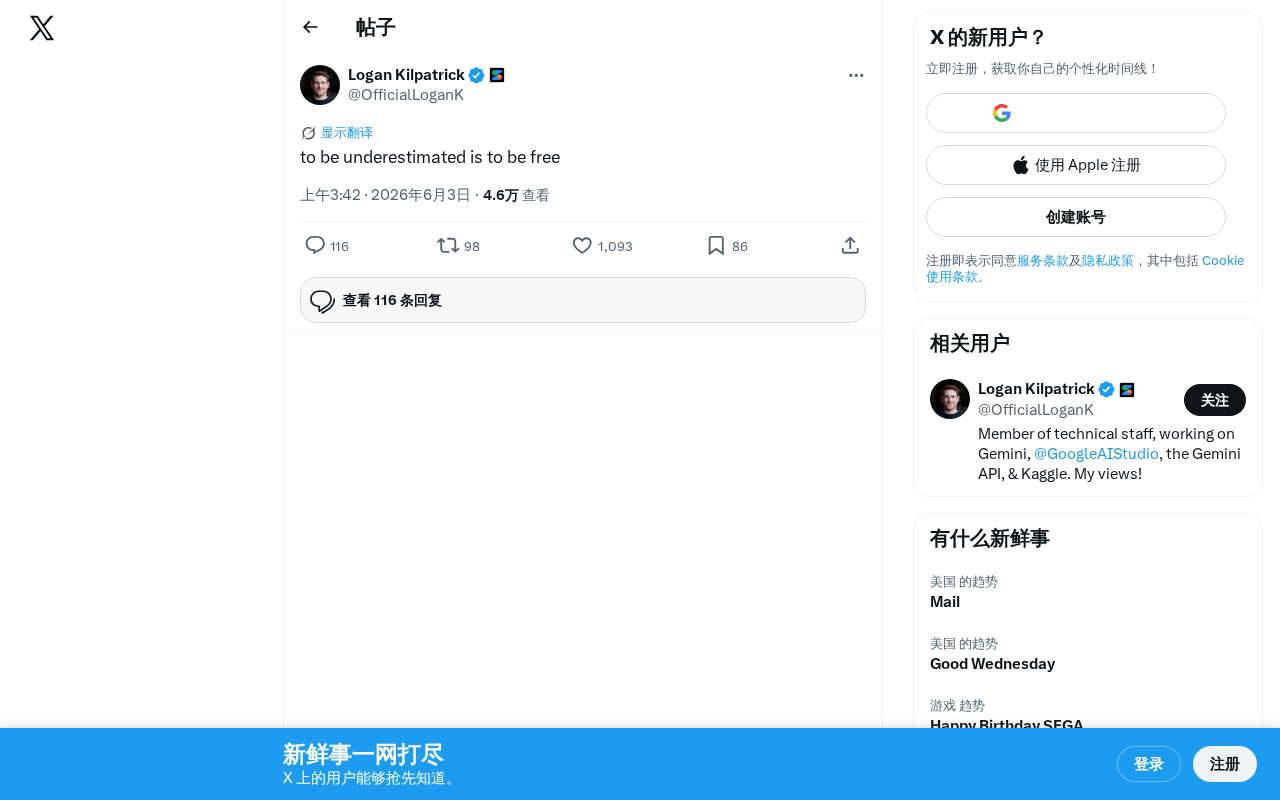
Being Underestimated Is Freedom: A Contrarian Competition Philosophy for the AI Era
Exploring the contrarian strategy of 'being underestimated is freedom' in AI. From OpenAI to DeepSeek to Cursor, why staying under the radar beats standing in the spotlight.
How the Protestant Work Ethic Was Hija…
How the Protestant Work Ethic Was Hijacked: From Protecting Workers to Oppressing Them
Philosopher Elizabeth Anderson reveals how the Protestant work ethic was twisted from a worker-protecting ideal into a tool of oppression—and what it means for the AI era.