AI Agent Framework Selection in 2025: Pros and Cons of Coze, AutoGPT, LangChain, and AutoGen

A comprehensive 2025 comparison of Coze, AutoGPT, MetaGPT, LangChain, and AutoGen for AI Agent development.
This article compares four major AI Agent frameworks in 2025: Coze is ideal for zero-experience users but lacks self-hosted deployment; AutoGPT, MetaGPT, and LangChain target professional developers with powerful flexibility but high barriers; Microsoft AutoGen balances usability with self-hosted deployment for enterprise use. The article recommends choosing based on technical background, use case, and long-term goals, with a systematic learning path from fundamentals to production.
With the explosive growth of AI Agent technology in 2025, a vast number of agent development frameworks have emerged. An AI Agent is an artificial intelligence system capable of autonomously perceiving its environment, formulating plans, and executing actions to achieve specific goals — unlike traditional single-turn Q&A AI, Agents possess capabilities such as autonomous decision-making, tool invocation, multi-step reasoning, and persistent memory. 2025 has been dubbed the "Year of the Agent" by the industry, and the core driving force behind this explosion is the leap in reasoning capabilities of Large Language Models (LLMs): models like GPT-4o, Claude 3.5, and DeepSeek-V3 now offer reliable Function Calling and structured output capabilities, enabling Agents to interact stably with external tools and APIs, transitioning from lab concepts to production-grade applications.
Faced with choices like Coze, AutoGPT, LangChain, and AutoGen, developers and business professionals from different backgrounds often don't know where to start. This article provides a comprehensive comparison of the four major AI Agent frameworks from a practical usage perspective, helping you find the technical path that best matches your needs.
Why AI Agent Framework Selection Matters So Much
In the AI Agent space, your choice of framework directly determines development efficiency, product ceiling, and future scalability. A poor choice can lead to scrapping a project midway, wasting significant time and resources.
Current mainstream AI Agent frameworks fall roughly into three categories:
- Low-Code/No-Code Platforms: Such as Coze, targeting users with zero programming background. The Low-Code/No-Code development paradigm isn't unique to AI — it originated in enterprise software development, and Gartner introduced the concept as early as 2014. The core idea is to enable non-technical users to build applications through visual drag-and-drop, pre-built modules, and configuration-based operations. In the AI Agent space, Coze is a flagship product from ByteDance. Similar platforms include Baidu's AppBuilder, Dify, and others. These platforms typically monetize through API call volume billing or premium feature subscriptions.
- Developer-Oriented Frameworks: Such as AutoGPT, MetaGPT, and LangChain, targeting professional developers
- Open-Source Self-Hosted Solutions: Such as Microsoft AutoGen, targeting enterprise-level applications
Different types of frameworks serve different user groups, each with its own applicable scenarios and limitations. Understanding your core needs is the key to avoiding pitfalls.
In-Depth Comparison of Four Major AI Agent Frameworks
Coze: The Zero-Barrier Entry-Level Choice
Core Advantages:
- Ready to use out of the box, extremely easy to get started
- No programming skills required — build agents with drag-and-drop operations
- Ideal for quickly validating ideas and creating prototypes
Coze abstracts the Agent-building process into four steps: "Select Model → Configure Plugins → Orchestrate Workflow → Publish." Users can complete the entire journey from concept to deployment without writing a single line of code.
Key Drawbacks:
- No self-hosted deployment option — this is the most critical limitation. All runtime environments, data storage, and model calls depend on the platform provider's infrastructure. Integrating a built AI product into your own business systems or deploying it commercially is essentially a dead end.
- Limited data security, as all data is hosted on a third-party platform
- Limited customization capabilities, making it difficult to handle complex scenarios
Best For: Individual users who want to quickly understand what AI Agents are and experience their capabilities. It's an excellent starting point for learning and exploration, but not recommended as a long-term technology choice for enterprise projects.
AutoGPT / MetaGPT / LangChain: The Developer's Standard Arsenal
These three frameworks are the current "big three" for developers building AI products. Each has its own focus, but they share common characteristics.
It's worth noting that although they're often mentioned together, their technical positioning is fundamentally different. AutoGPT was one of the earliest autonomous Agent projects (open-sourced in March 2023), with the core idea of letting LLMs autonomously decompose tasks, execute them, and iterate, emphasizing "full automation." MetaGPT introduces the concept of "Standard Operating Procedures (SOPs)" from software engineering, having multiple Agents play different roles such as product manager, architect, and programmer, simulating real team collaboration to complete complex projects. LangChain is a more foundational development framework — it's not an Agent itself but provides the building blocks needed to construct Agents: Chains, Tools, Memory, Retrieval, and other base components. Developers can use it like building blocks to assemble various types of Agents. In simple terms, AutoGPT is an Agent product, MetaGPT is a multi-Agent collaboration framework, and LangChain is an Agent development toolkit.
Core Advantages:
- Highly flexible with extreme customizability
- Active community with a rich open-source ecosystem
- Support for complex multi-Agent collaboration scenarios
- Deep integration with existing tech stacks
Key Drawbacks:
- High technical barrier — solid Python programming skills and AI fundamentals are required. Without decent coding ability, these frameworks are essentially inaccessible.
- Tedious configuration and debugging processes
- Steep learning curve, requiring a long ramp-up period from beginner to productive
Best For: Developers and technical teams with strong programming skills. If you're a professional software engineer looking to build production-grade AI applications, pick one of these three frameworks and dive deep.
Microsoft AutoGen: An Enterprise-Grade Solution Balancing Usability and Self-Hosting

AutoGen is an open-source agent framework from Microsoft Research that strikes an excellent balance between usability and extensibility. Its core design philosophy is the "Conversable Agent" — in AutoGen's architecture, each Agent is an independent conversation participant, and Agents collaborate through message passing. The framework includes two built-in base Agent types: AssistantAgent (LLM-driven, responsible for reasoning and generation) and UserProxyAgent (representing the human user, capable of executing code and providing feedback). AutoGen version 0.4 underwent a major refactoring, introducing an event-driven architecture and more flexible Team orchestration patterns, supporting multiple Agent scheduling strategies such as RoundRobin and Selector.
Core Advantages:
- Open-source and free, with full freedom to use and modify the source code
- Minimal coding required — after setting up the environment, you can build agents by writing Skills, Roles, and Workflows. Its "Skills" mechanism allows users to define Agent capabilities as Python functions, significantly reducing development complexity
- Provides a standardized UI, similar to OpenAI's GPTs but more open
- Supports self-hosted deployment and commercial applications, with full data sovereignty
- Suitable for enterprises with technical teams to wrap and customize further
Regarding self-hosted deployment, it's worth elaborating here. Self-hosted deployment (On-Premise Deployment) means deploying software systems on an enterprise's own servers or private cloud environment, rather than relying on third-party public cloud services. In the AI Agent context, its importance manifests at three levels: First, data security — enterprise customer data, business data, and knowledge base content never leave the internal network, which is especially critical for heavily regulated industries like finance, healthcare, and government. Second, compliance requirements — China's Data Security Law, Personal Information Protection Law, and the EU's GDPR all impose strict restrictions on cross-border data transfer and third-party hosting. Third, cost predictability — while self-hosted deployment requires higher upfront investment, it avoids the unpredictable costs of per-call billing in the long run, with particularly clear advantages in high-frequency usage scenarios.
Key Drawbacks:
- Still requires a certain level of technical understanding; pure business users may find it challenging to get started
- Chinese-language documentation and community resources are relatively limited
- Some advanced features need to be developed independently
Best For: Business-oriented teams and enterprise users. You don't need to be a senior developer, but you need to understand basic AI concepts. Especially suitable for mid-to-large enterprises that want to integrate AI capabilities into their own products while requiring data privacy.
Framework Selection Decision Tree: Quickly Find the Right Solution
To help you make a more efficient choice, here's a straightforward decision logic:
- Just want to try out AI Agents? → Choose Coze — zero barrier, instant access
- You're a developer building production-grade applications? → Pick one from AutoGPT, MetaGPT, or LangChain and go deep
- You're a business professional needing self-hosted deployment? → Choose Microsoft AutoGen
- Your enterprise needs a commercial AI product? → AutoGen or developer-oriented frameworks, paired with a professional technical team
The core principle of framework selection boils down to one thing: Start from your actual needs, not by chasing the hottest framework.
Recommended AI Agent Learning Path
Regardless of which framework you choose, a systematic learning path will help you avoid detours. Here are stage-by-stage learning recommendations:
Foundation Stage: Building a Cognitive Framework
- Understand the basic working principles of Large Language Models (LLMs)
- Master core Prompt Engineering techniques
- Learn the basic architecture of AI Agents: the four core modules of Perception, Planning, Action, and Memory
The standard architecture of modern AI Agents consists of these four core modules, and understanding them is the foundation for deeper learning. The Perception Module is responsible for receiving and understanding external inputs, including natural language text, images, speech, and even structured data — advances in multimodal large models have significantly enhanced Agent perception capabilities. The Planning Module is the Agent's "brain," responsible for decomposing complex tasks into executable sub-task sequences. Common planning strategies include ReAct (alternating reasoning and action), Chain-of-Thought, and Tree-of-Thought. The Action Module handles calling external tools to perform specific operations, such as search engines, code executors, database queries, and API calls. The Memory Module is divided into short-term memory (current conversation context) and long-term memory (persistently stored historical interactions and knowledge), with vector databases being the mainstream technical solution for implementing long-term memory.
Intermediate Stage: Going Deep with a Single Framework
- Choose one framework and complete the full pipeline from setup to deployment
- Master RAG (Retrieval-Augmented Generation) technology to give your Agent knowledge base capabilities
- Learn multi-Agent collaboration patterns and workflow orchestration
RAG (Retrieval-Augmented Generation) is the core technology for AI Agents to access external knowledge and deserves focused study. Its working principle involves three steps: First, enterprise documents, knowledge bases, and other unstructured data are converted into vectors through an Embedding model and stored in a vector database (such as Milvus, Pinecone, or Chroma). Second, when a user asks a question, the system converts the question into a vector as well and retrieves the most semantically similar document fragments from the vector database. Finally, the retrieved relevant content is fed as context along with the user's question into the LLM to generate answers grounded in real knowledge. RAG addresses two core pain points of LLMs: the knowledge cutoff date limitation (training data has a time boundary) and hallucination (the model may fabricate non-existent information). Mastering RAG technology is an essential skill for building enterprise-grade Agent applications.
Practical Stage: Business-Oriented Implementation
- Build Agent applications based on real business scenarios
- Learn self-hosted deployment strategies and performance optimization
- Explore Agent integration with external tools and third-party APIs

Conclusion: Choosing the Right Framework Matters More Than Choosing the Best One
There's no absolute "optimal solution" when selecting an AI Agent framework. The key is matching your technical background, use case, and long-term goals.
- Seeking a quick experience → Coze is the lowest-cost option
- Seeking technical depth → AutoGPT / MetaGPT / LangChain is the way to go
- Seeking practical deployment → Microsoft AutoGen offers the best value
One final piece of advice: don't spend too much time deliberating over your choice. AI Agent technology iterates extremely fast. Picking a direction and getting hands-on quickly — learning through practice — is far more valuable than endlessly comparing options. The AI Agent ecosystem in 2025 is mature enough that no matter which entry point you choose, you'll find your own path forward.
Key Takeaways
- Coze is great for zero-experience exploration but lacks self-hosted deployment, making it unsuitable for commercial scenarios
- AutoGPT, MetaGPT, and LangChain are mainstream choices for developers building AI products, but have high technical barriers — each with distinct positioning: autonomous execution, multi-role collaboration, and foundational component development, respectively
- Microsoft AutoGen, as an open-source framework, strikes a balance between usability and extensibility, suitable for business users and enterprise self-hosted deployment
- Framework selection should consider technical background, use case, and long-term goals holistically — there is no absolute best choice
- RAG technology is the core capability for Agents to access external knowledge and an essential milestone in the learning journey
- Getting hands-on quickly matters more than endlessly comparing frameworks — AI Agent technology evolves fast and demands learning through practice
Related articles
 Product Reviews
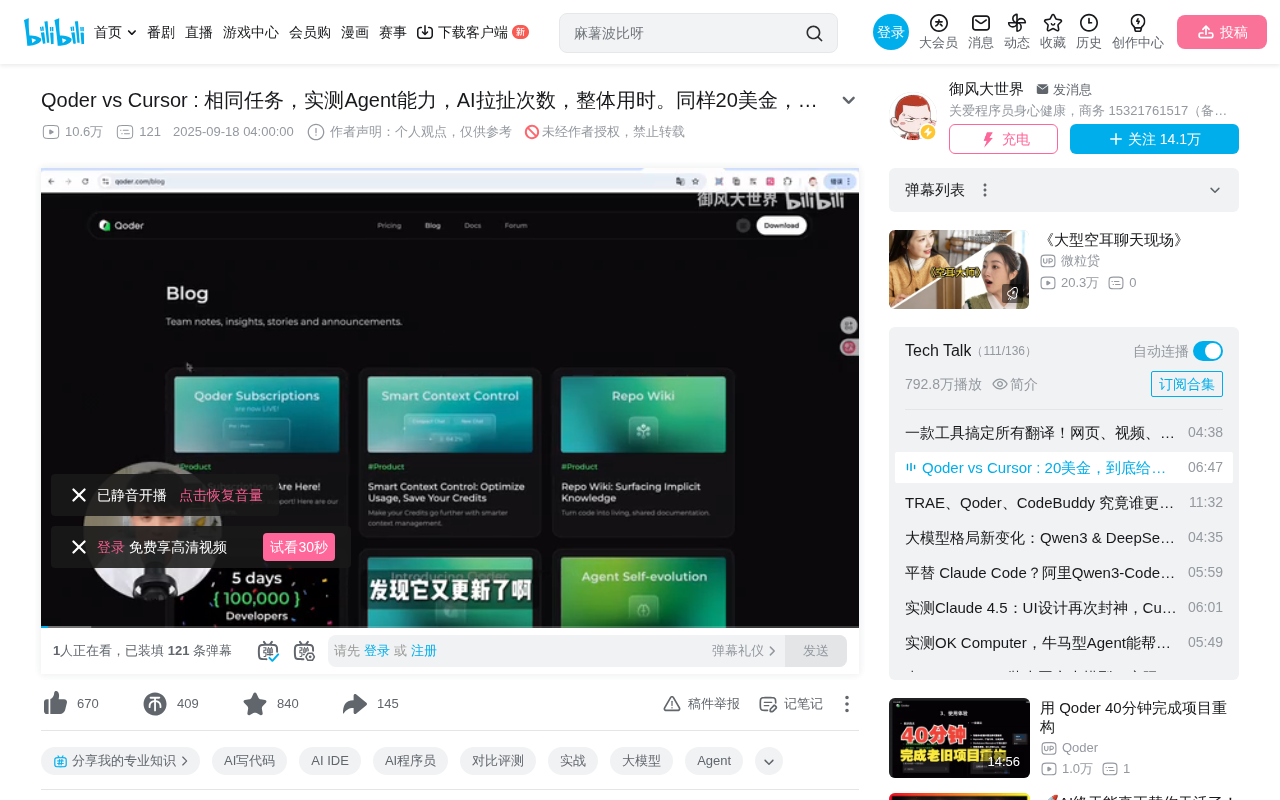
Qoder vs Cursor Real-World Comparison: Which $20/Month AI IDE Is Better?
Hands-on comparison of Qoder vs Cursor AI IDEs: Agent autonomy, human interaction count, and architecture decisions. Qoder needed only 2 interactions vs Cursor's 8.
 Product Reviews
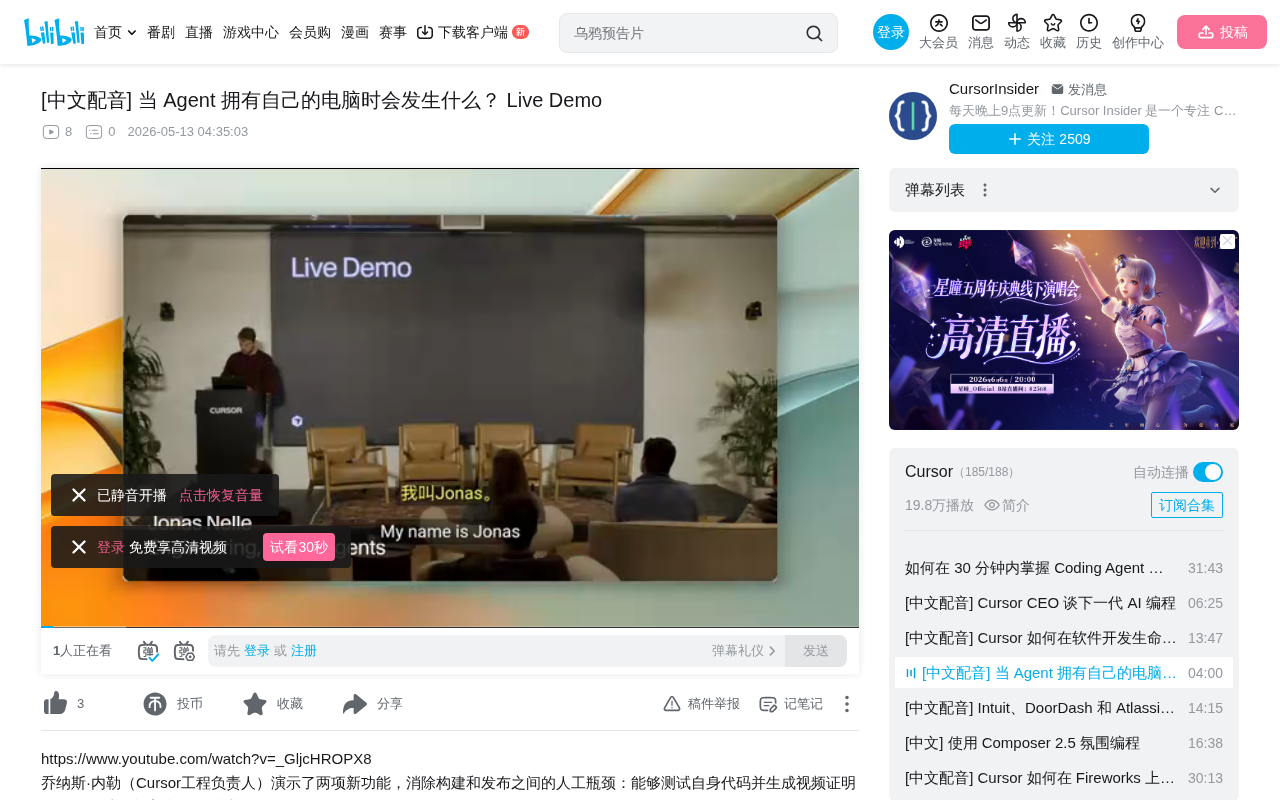
Cursor Cloud Agent Demo: Eliminating Bottlenecks Across the Entire Software Development Lifecycle
Deep analysis of Cursor's Cloud Agent demo showing how cloud VMs, automated test artifacts, and a full-chain control plane systematically eliminate human bottlenecks across the software development lifecycle.
 Product Reviews
Cursor 3.0 Deep Dive: Multi-Agent Parallelism, Design Mode, and Best-of-N Model Comparison
Cursor 3.0 evolves from an AI coding assistant into an Agent fleet command center. Explore multi-agent parallelism, Design Mode, and Best-of-N model comparison.