AI Tool Rankings for Solo Businesses: Top Picks, Alternatives & Open-Source Options Across 7 Categories
AI Tool Rankings for Solo Businesses: …
Solo business AI tool guide: a three-tier recommendation matrix across seven categories.
This article organizes AI tools across seven categories—Text, Image, Video, Audio, Digital Avatars, Coding, and Agents—into three tiers: Top Pick (best results), Alternative (best value), and Open-Source (local deployment). The overall landscape shows Google's ecosystem leading on quality, ByteDance's ecosystem on value, and Qwen's ecosystem on open-source freedom. The core philosophy is choosing tools based on actual work scenarios rather than blindly chasing technological novelty.
As a solo business operator, the core logic for choosing AI tools boils down to one thing: use the right AI for the right job. If an AI tool doesn't fit into your daily workflow, it's irrelevant no matter how cutting-edge it is.
This article covers seven major categories—Text, Image, Video, Audio, Digital Avatars, Coding, and Agents—organized into three tiers: "Top Pick (best results)," "Alternative (best value)," and "Open-Source (local deployment)." Together, they form the most practical AI tool matrix available today.
AI Text Tools: The Most Frequently Used Foundational Capability
Text-based conversational tools are most people's first point of contact with AI—you send a message, it replies. But don't treat it like a search engine. Learning to ask good questions is the key to getting the best results.
- Top Pick: Gemini — Google's Gemini excels at semantic understanding and multi-turn conversations. The subscription costs about $20/month, but the output quality justifies the price.
- Alternative: Doubao — Many people's first thought is DeepSeek, but Doubao's advantage lies in stronger multimodal capabilities—it can generate images and videos, leverages ByteDance's ecosystem for accurate information retrieval, and it's completely free.
- Open-Source: Qwen (通义千问) — The Qwen family offers open-source models in various sizes (7B, 80B, etc.), so you can choose based on your local GPU memory. Ideal for handling sensitive information you don't want to send to external servers—mainly limited by VRAM.
AI Image Tools: From Semantic Understanding to Precise Generation
The core differentiator among image generation tools is semantic recognition accuracy. Whether AI truly understands your intent when you describe a scene determines the upper limit of output quality.
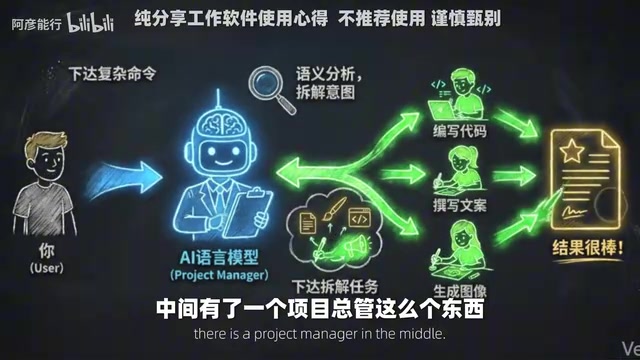
- Top Pick: Midjourney / Nano Banana Pro — Extremely high accuracy in semantic recognition. Taking Gemini 3 as an example, it first analyzes your true intent, breaks it down, then issues precise generation tasks—essentially adding a "project manager" between you and the executor. For generating blackboard illustrations, mind maps, journal-style content, and other detail-rich visuals, the results far surpass other tools.
- Alternative: Jimeng AI (即梦AI) — Solid art style overall, and better suited for scene descriptions in Chinese contexts. While Midjourney has strong artistic capabilities, it's not localized enough for Chinese-specific semantic scenarios, making Jimeng the better choice for domestic users.
- Open-Source: ZImage / Stable Diffusion — ZImage supports natural language image generation with minimal learning curve. For more granular control over visuals, Stable Diffusion offers both Web UI and ComfyUI interfaces, with results that have matured significantly over years of iteration.

Tips: All locally deployed tools can also run on cloud servers. Think of it like the old internet café days—if you don't have the hardware at home, rent someone else's machine for a few bucks an hour. Same logic.
AI Video Tools: First and Last Frames Are the Core Productivity Feature
- Top Pick: Google Veo 3 — Again leveraging the Gemini ecosystem's advantages, it automatically supplements scene design through semantic analysis, all happening in the backend while users simply describe their needs.
- Alternative: Kling AI (可灵AI) / Jimeng AI (即梦AI) — Both support a killer feature: first-and-last-frame generation. Provide the first and last frames, and AI automatically generates the transition frames in between; you can also animate a static image. If you must choose one, Kling currently produces higher-quality video output, while Jimeng offers more creative versatility.
- Open-Source: Qwen Video Model — Requires approximately 12GB of VRAM for local deployment, but current video quality shouldn't be expected to be too high—results are inconsistent.
By this point, a clear pattern emerges: Top picks are Google's ecosystem, alternatives are ByteDance's ecosystem, and open-source is Qwen's ecosystem—a three-way competitive landscape has formed.
AI Audio & Digital Avatars: Efficiency Multipliers for Vertical Scenarios
Audio & Music Tools
- Top Pick: SUNO — The benchmark product in AI music, delivering highly natural results whether generating BGM or complete songs.
- Alternative: Haimian Music (海绵音乐) — Better suited for short-video loop BGM, though chord progressions tend to be formulaic.
- Sound Effects: ElevenLabs — Excels at generating sound effects like door opening, explosions, rain, and high-quality English voice synthesis, though Chinese performance still lags behind.
Digital Avatar Tools
- Top Pick: HeyGen — Built by a Chinese-American founder for the global market, with excellent visual naturalness.
- Alternative: Chanjing (蝉镜) — Backed by a major tech company, ensuring stability. Focused on e-commerce "people-product-scene" scenarios with rich built-in character models and background templates.
- Open-Source: Infinite Talk — Feed it an audio clip, and it animates a static image to match the audio. Many viral meme videos use this tool.
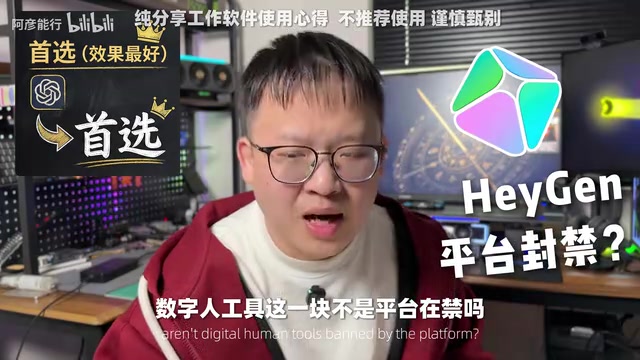
Regarding concerns about "platforms banning digital avatars"—platforms ban low-quality content, not digital avatar technology itself. If you use avatars to mass-produce spam, you'll naturally get no traffic. But if you create quality content like scenario dramas or AI comics, it will be recognized just the same.
AI Coding Tools: From Writing Code to Expressing Requirements
Code was never something humans were meant to learn—it's something machines were meant to learn. Why else would it be called "machine language"? In the future, we won't need people who write code; we'll need people who express requirements.
- Top Pick: Cursor — Its workflow is fascinating: a "supervisor" role distributes tasks to different modules like frontend and backend, forming team collaboration. As long as you provide the right reference direction, it progressively refines the code, delivering the best production results.
- Alternative: Trae (ByteDance) — When switched to IDE mode, it matches Cursor's complete workflow through supervisor distribution, task decomposition, step-by-step confirmation, and execution logic chains. It can also read local files for reference integration.
- Claude Code — Born to write code, but primarily used via web interface. It needs third-party client integration to reach its full potential.
AI Agent Tools: Big Ambitions, Still a Work in Progress
The hottest topic this year is AI Agents, but honestly—current Agents aren't agent enough.
- Top Pick: Dify — Relatively mature ecosystem with rich modules, capable of building workflows for viral copywriting generation, batch processing, and more.
- Alternative: Coze (扣子) — The domestic counterpart to Dify, with a rapidly maturing ecosystem and plenty of tutorials available.
- Open-Source: n8n — Maximum flexibility, but deployment requires solving numerous environment configuration issues, node conflicts, and errors—better suited for technical professionals.
A Reality Check on AI Agents
Current Agents remind me of early computing's "red configuration screens": step one do this, step two click here, step three click there—every path must be manually configured. They can batch-process similar documents, but switch formats (Excel to image, image to video) and they fall apart.
Essentially, we've just replaced "program nodes" with "AI nodes." At key junctions, AI can decide which downstream process to route to, but you still need to spend significant time learning and arranging workflows, and can only handle single-category tasks.
A true Agent should be: one entry point, one command—whether you need images, videos, or documents, the backend automatically handles all orchestration. Users only need to judge whether the result is acceptable and provide revision feedback if not. Instead of building ten different workflows just to handle one task across different stages.
Summary: AI Doesn't Require You to "Study"
AI's development trajectory inevitably trends toward simplicity. Whether you're using image, video, digital avatar, or Agent tools, they all follow a common production logic: Define requirements → Choose tools → Iterate and optimize. This logic applies to any AI tool and represents the core competency we truly need to master.
| Category | Top Pick (Best Results) | Alternative (Best Value) | Open-Source (Local Deploy) |
|---|---|---|---|
| Text | Gemini | Doubao | Qwen |
| Image | Nano Banana Pro | Jimeng AI | ZImage / SD |
| Video | Veo 3 | Kling AI | Qwen Video |
| Music | SUNO | Haimian Music | - |
| Digital Avatar | HeyGen | Chanjing | Infinite Talk |
| Coding | Cursor | Trae | Claude Code |
| Agent | Dify | Coze | n8n |
The three-way competitive landscape is clear: Google's ecosystem wins on quality, ByteDance's ecosystem wins on value, and Qwen's ecosystem wins on open-source freedom. Choosing the right combination for your specific work scenarios is the optimal strategy for solo businesses.
Related articles
 Product Reviews
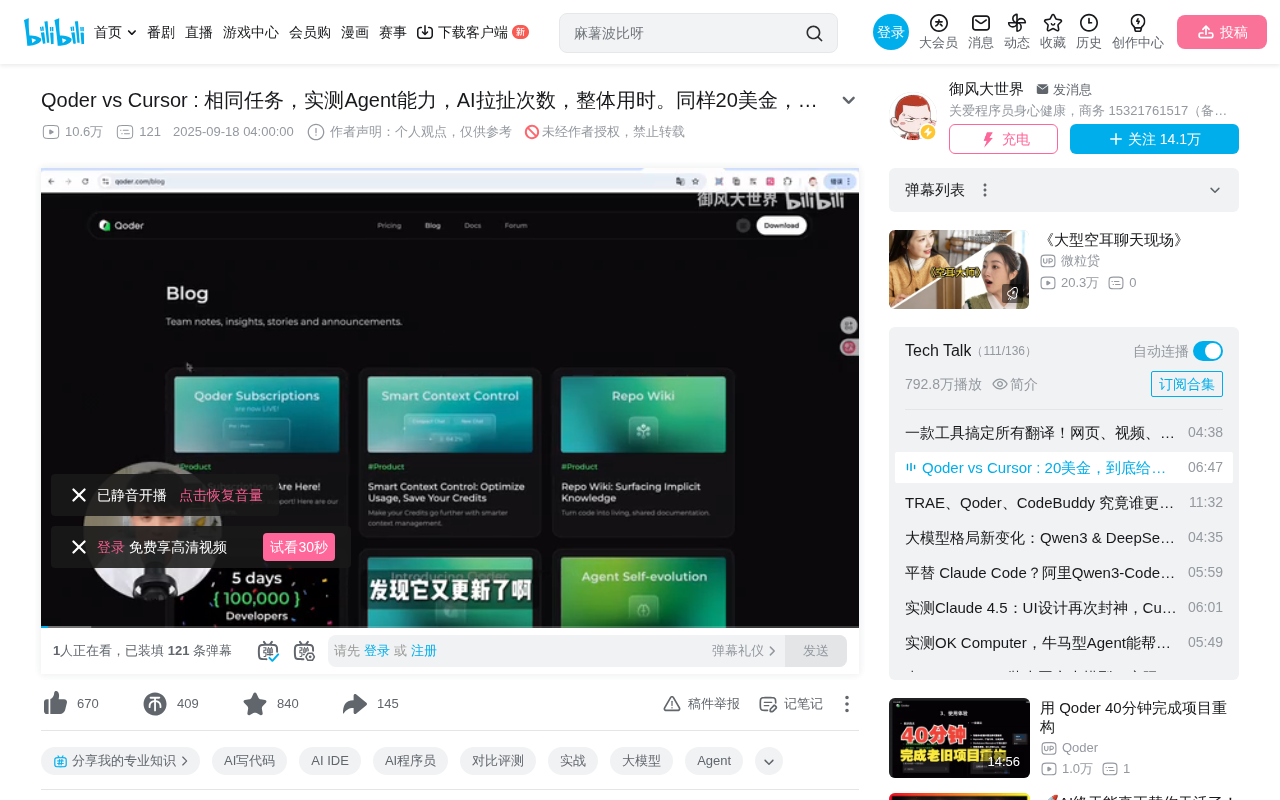
Qoder vs Cursor Real-World Comparison: Which $20/Month AI IDE Is Better?
Hands-on comparison of Qoder vs Cursor AI IDEs: Agent autonomy, human interaction count, and architecture decisions. Qoder needed only 2 interactions vs Cursor's 8.
 Product Reviews
Cursor Cloud Agent Demo: Eliminating Bottlenecks Across the Entire Software Development Lifecycle
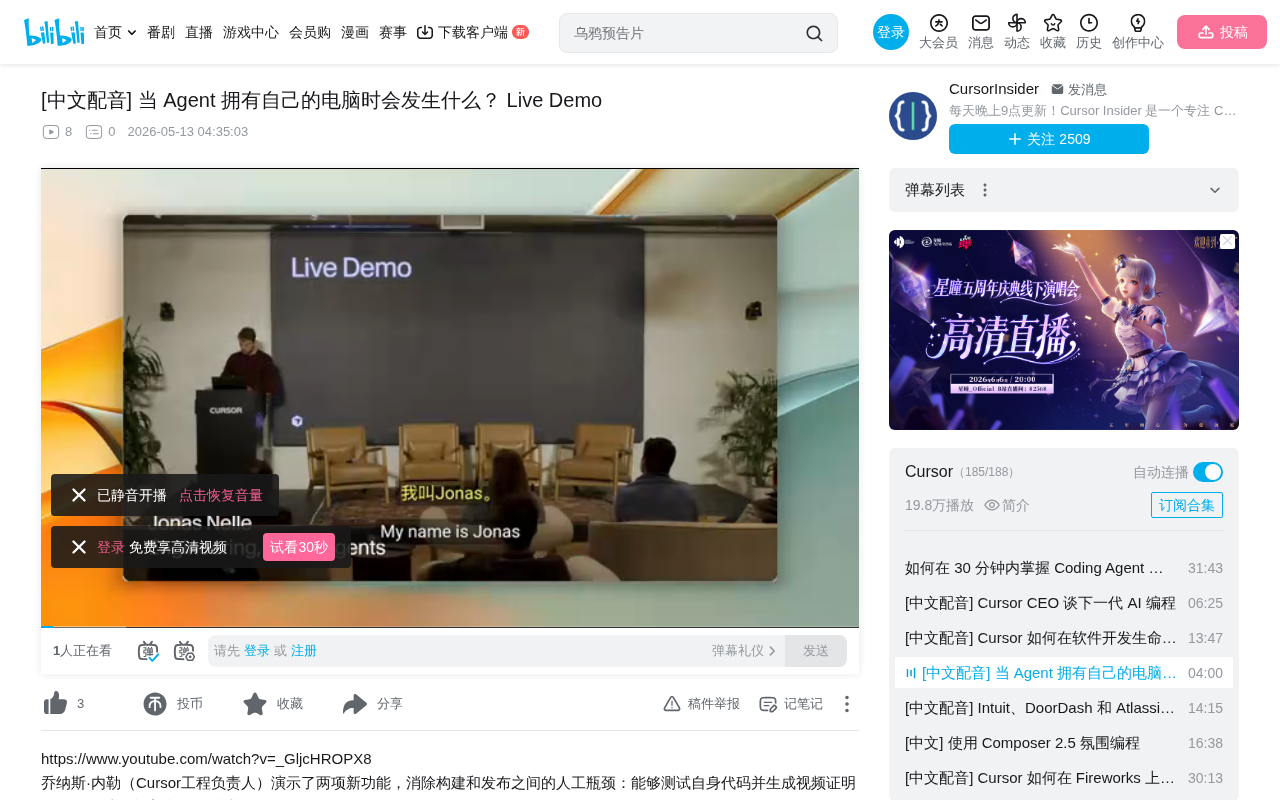
Deep analysis of Cursor's Cloud Agent demo showing how cloud VMs, automated test artifacts, and a full-chain control plane systematically eliminate human bottlenecks across the software development lifecycle.
 Product Reviews
Cursor 3.0 Deep Dive: Multi-Agent Parallelism, Design Mode, and Best-of-N Model Comparison
Cursor 3.0 evolves from an AI coding assistant into an Agent fleet command center. Explore multi-agent parallelism, Design Mode, and Best-of-N model comparison.