Claude Code 2.1 Deep Dive: Hooks Automation, MCP Ecosystem & Multi-Agent Collaboration Fully Explained

Claude Code 2.1 evolves into a full AI dev platform with automation, multi-agent, and MCP ecosystem.
Claude Code 2.1.74 has evolved from a command-line tool into a mature AI development platform. Key upgrades include: the Opus 4.6 model supporting a 1-million-token context window for analyzing entire large projects at once; a Hooks system providing deterministic automated workflows; multi-agent Agent Teams enabling parallel collaboration; the MCP protocol connecting external tool ecosystems; and rich IDE integration with practical commands that comprehensively boost development efficiency.
Overview
Claude Code is Anthropic's official command-line AI programming assistant. The latest version, 2.1.74, has evolved from a simple terminal tool into a fully-featured AI development platform. From the Opus 4.6 model upgrade to Hooks-based automated workflows, from MCP ecosystem integration to multi-agent parallel collaboration, this article breaks down each core feature to help developers get up to speed quickly.
Model & Performance: A Quantum Leap with Opus 4.6
Claude Code's default model has been upgraded to Opus 4.6, supporting a full 1-million-token context window. A context window refers to the maximum length of text a model can process simultaneously in a single inference pass — early GPT-3 supported only about 4,000 tokens (roughly 3,000 English words), while a 1-million-token window means you can load approximately 500,000 lines of code at once, equivalent to the entire codebase of a medium-to-large open-source project. This means developers can feed an entire large project to the model for analysis in one go, without manually splitting code into fragments. The old approach of feeding code piece by piece often lost cross-file dependency relationships and architectural context, but now the model can understand the full picture of an entire project — including inter-module call relationships, type definitions, and business logic flows — delivering more accurate, globally-informed suggestions.
On the speed front, the new Fast Mode uses the same Opus 4.6 model but with faster output, toggled with a single /fast command. Effort levels have been simplified to low, medium, and high, corresponding to different reasoning depths, adjustable anytime with the /effort command. "Reasoning depth" here refers to the extent of internal Chain-of-Thought reasoning the model performs before generating a response: in deep reasoning mode, the model spends more computational resources on multi-step logical verification, ideal for complex architectural design or bug investigation; shallow reasoning skips some intermediate reasoning steps in exchange for faster response times, suitable for simple code completion or formatting adjustments. If you need the deepest level of thinking, adding the think keyword to your prompt forces deep reasoning mode — this essentially forces the model to unfold its complete chain of thought, similar to the reasoning paradigm of OpenAI's o1 series models.
Memory optimizations are also noteworthy:
- Mechanical memory reduced by approximately 16MB
- Memory usage when resuming sessions reduced by 68%
- Optimized cache hit rates reduce input tokens by up to 12x
In API-based usage, large language models charge by the number of input and output tokens. When developers repeatedly send similar context within the same session (such as fixed portions of a project codebase), the caching mechanism can reuse previously processed token encoding results, avoiding redundant computation and billing. "Input tokens reduced by 12x" means that in ideal scenarios, a request that originally required sending 120,000 tokens only needs to process 10,000 tokens of incremental content after cache hits. The dramatic reduction in memory usage when resuming sessions is thanks to optimized session state serialization — retaining only essential context snapshots rather than the complete conversation history. These optimizations directly translate to lower usage costs and a smoother development experience.
Automation: The Hooks System for Deterministic Workflows
Automation is the most noteworthy evolution in Claude Code. The Hooks system, as a deterministic automation engine, guarantees execution when specific lifecycle events are triggered, injecting reliable automation capabilities into the development workflow.
The design philosophy of Hooks draws from the mature lifecycle hook pattern in software engineering — similar to Git Hooks (pre-commit, post-merge) or React lifecycle methods. Its core value lies in "determinism": unlike an AI Agent's autonomous decision-making, Hooks are guaranteed to execute when trigger conditions are met, with no possibility of the model "forgetting" or "skipping" them. This solves a fundamental pain point of AI programming assistants — when you need certain operations to be executed 100% of the time (such as code formatting, security checks, or logging), you can't rely on AI's probabilistic judgment; you need deterministic automation guarantees.
Four Types of Hooks
- Command: Runs small scripts — for example, automatically running Prettier to format code after every file edit
- HTTP: Sends requests to external services, enabling integration with third-party platforms
- Prompt: Uses Haiku for single-turn judgments, suitable for lightweight AI decision scenarios. Haiku is Anthropic's lightweight model with fast inference speed and low cost, perfect for simple yes/no decisions like "does this change involve a database schema modification?"
- Agent: Launches multi-turn tool verification for handling complex automation tasks
Over 15 lifecycle events are currently supported, from session start to tool execution, from context compression to Worktree creation, covering virtually all critical nodes. For example: you can set up a Hook that automatically blocks and issues a warning when sensitive files are modified, fundamentally preventing accidental changes.
Other Automation Features
- The
/loopcommand supports timed recurring task execution — for example, checking deployment status every 5 minutes - Auto Memory lets Claude automatically record and recall project context during work, maintaining coherence across sessions
Skills & Agent System: Multi-Agent Collaboration
Starting from version 2.1.3, slash commands and Skills have been unified and merged. Developers can create custom Skills in the .claude/skills directory of their project, defining workflows in Markdown files with support for advanced configurations like parameter passing, tool restrictions, and model overrides.
Agent Teams (Research Preview)
This is a highly forward-looking feature — supporting multiple Agents collaborating on complex tasks with shared messaging and task assignment. Multi-Agent collaboration is a cutting-edge direction in AI engineering. The core idea is to decompose a complex task among multiple specialized AI Agents, each responsible for a specific domain (such as frontend development, backend API, database migration, test writing), coordinated through message passing and task dependency graphs. This paradigm is inspired by distributed systems and microservices architecture — just as microservices split a monolithic application into independently deployable services, Agent Teams split a single AI assistant into multiple collaborating intelligent agents.
Combined with the new Task Management system, which supports task creation, dependency tracking, and progress statistics, managing large projects becomes well-organized. The dependency tracking feature ensures tasks execute in the correct order (for example, database schema changes must be completed before API layer modifications), which is analogous to Gantt charts and critical path analysis in project management tools.
The /batch command supports parallel large-scale modifications: Claude automatically analyzes the codebase, splits the work, and executes tasks in parallel within independent Worktrees, dramatically improving processing efficiency. Worktree is a native Git feature (git worktree) that allows creating multiple independent working directories under the same repository, each capable of checking out different branches and making independent modifications. When the /batch command splits a large task into multiple subtasks, each subtask runs in an independent Worktree without interference. Once completed, modifications from each Worktree can be merged back to the main branch via Git. This design avoids conflicts caused by multiple Agents modifying the same file simultaneously and serves as the foundational architecture for multi-agent parallel collaboration.
MCP & Plugin Ecosystem: Connecting the Tool Chain
MCP (Model Context Protocol) is the standard protocol for connecting external tools. MCP is an open protocol launched by Anthropic in late 2024, designed to provide large language models with a standardized way to connect to external data sources and tools. Before MCP, every AI application needed to write dedicated integration code for each external service, creating an M×N complexity problem (M AI applications connecting to N external services). MCP reduces this complexity to M+N by defining a unified client-server communication specification: any AI application supporting MCP can connect to any MCP Server.
Claude Code supports two main transport methods:
- HTTP: For remote service connections, suitable for cloud-deployed services (such as GitHub API, Sentry error tracking)
- Stdio: For local process communication, interacting with local processes via standard input/output, suitable for local tools like database queries and file system operations
Installation requires just a single command, with an extremely low barrier to entry.
Popular MCP Servers currently include GitHub, Sentry, PostgreSQL, Slack, and more, covering the most commonly used tools in developers' daily workflows. The MCP ecosystem is expanding rapidly, with hundreds of community-contributed Server implementations covering a wide range of scenarios from databases to design tools. The Plugin system, together with Skills, Hooks, Agents, and MCP, forms a complete extension ecosystem that developers can flexibly combine according to project needs.
IDE Integration & Keyboard Shortcuts
The VS Code extension supports a graphical chat panel, side-by-side Diff viewing, full-line mode switching, and remote session recovery. The full JetBrains suite is also supported.
Common keyboard shortcuts at a glance:
Shift+Tab: Toggle plan modeCtrl+B: Run tasks in the backgroundOption+T: Toggle deep thinking- Vim mode and custom key bindings supported
This keyboard shortcut system lets developers complete most operations without leaving the keyboard, noticeably boosting efficiency.
Practical Utility Commands
/context: Analyzes context bottlenecks to help optimize token usage. When the 1-million-token window is filled with code files, this command helps developers visualize the current context window usage, identify what content can be removed to free up space — critical for maintaining the model's reasoning quality/copy: Interactive code block selection/btw: Side questions that don't pollute the main context- Chat Checkpointing: Automatic archiving for easy rollback to any point. This is similar to snapshots in version control systems or virtual machine snapshots, allowing developers to roll back to any point in the conversation history and restart exploring different approaches from there, solving the "point of no return" problem in traditional AI conversations
These commands may seem minor, but in actual development they significantly reduce repetitive operations and the mental overhead of context management.
Conclusion
Claude Code 2.1 has completed its transformation from a command-line assistant to a mature AI development platform. Opus 4.6 delivers powerful reasoning capabilities, Hooks and Skills build flexible automated workflows, MCP and Plugins connect the tool ecosystem, and Worktrees and Agent Teams support complex parallel development scenarios.
Whether you're an independent developer or part of a collaborative team, Claude Code demonstrates the potential to become the next generation of development infrastructure. If you're still using traditional command-line tools or simple AI code completion, give Claude Code a try — it might redefine your understanding of AI programming assistants.
Related articles
 Product Reviews
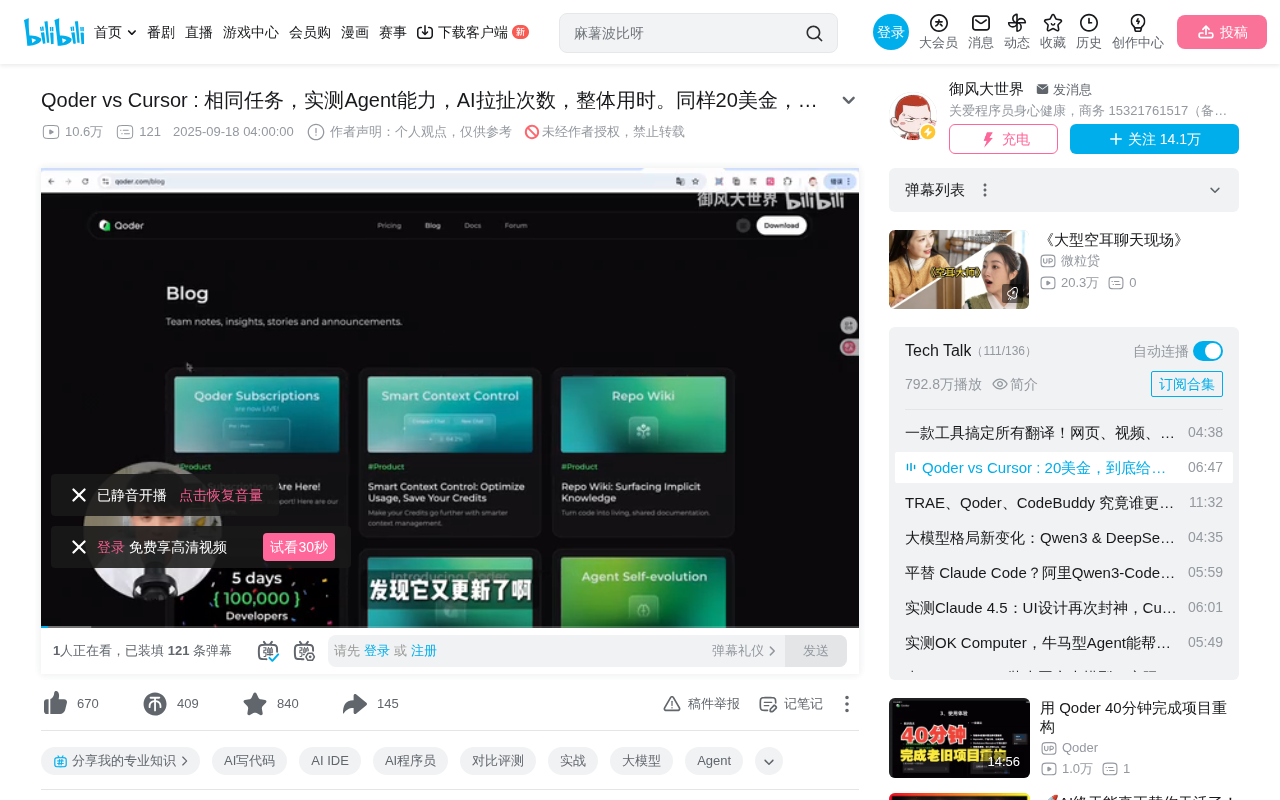
Qoder vs Cursor Real-World Comparison: Which $20/Month AI IDE Is Better?
Hands-on comparison of Qoder vs Cursor AI IDEs: Agent autonomy, human interaction count, and architecture decisions. Qoder needed only 2 interactions vs Cursor's 8.
 Product Reviews
Cursor Cloud Agent Demo: Eliminating Bottlenecks Across the Entire Software Development Lifecycle
Deep analysis of Cursor's Cloud Agent demo showing how cloud VMs, automated test artifacts, and a full-chain control plane systematically eliminate human bottlenecks across the software development lifecycle.
 Product Reviews
Cursor 3.0 Deep Dive: Multi-Agent Parallelism, Design Mode, and Best-of-N Model Comparison
Cursor 3.0 evolves from an AI coding assistant into an Agent fleet command center. Explore multi-agent parallelism, Design Mode, and Best-of-N model comparison.