Claude Opus 4.8 Real-World Testing: What $50 in Tokens Actually Gets You
Claude Opus 4.8 Real-World Testing: Wh…
Claude Opus 4.8 tested: strong frontend UI, surprising 3D game ability, incremental improvement overall.
A Bilibili creator spent $50 in Tokens comprehensively testing Claude Opus 4.8 across game development, UI reproduction, and tool building. Results show frontend UI reproduction remains a core strength with tangible layout precision improvements over 4.7; 3D game development capability is surprisingly strong with one-shot playable game generation, though core interactions are occasionally missed; the model defaults to cyberpunk aesthetics. Overall an incremental optimization, not a revolutionary upgrade.
Overview: A $50 Comprehensive Evaluation
How does Claude's latest Opus 4.8 model actually perform? A Bilibili creator named Xiao Liu put it through a comprehensive series of real-world development tasks spanning game development, UI reproduction, 3D scene construction, tool development, and more—burning through approximately $50 in Token costs. This article distills the core findings from that evaluation to help you understand Opus 4.8's true capability boundaries.
Background on testing costs: Claude is a large language model series developed by AI safety company Anthropic. Opus is the highest tier in their three-tier product line (Opus/Sonnet/Haiku). LLM API calls are billed by Token—code generation tasks consume far more Tokens than regular conversation due to longer, more structurally complex outputs, and Opus-tier pricing is typically 3-5x that of the mid-tier Sonnet. So $50 in testing costs corresponds to a substantial volume of actual code output, which speaks to the depth of coverage in this evaluation.
Game Development Capabilities: From Tower Defense to 3D Shooters
2D Tower Defense Game: A Solid 80-Point Start
The first task was building a tower defense game from scratch using a set of simple game sprite assets. The final product supported placing tower positions, configuring mirror zones, selecting different turrets, and even auto-generated sound effects. However, there was one glaring flaw—the turrets couldn't actually fire projectiles, which is a core interaction in any tower defense game. The reviewer gave it 80 points, noting that the model demonstrated strong understanding of game logic and asset handling, but still missed critical interaction details.
3D Cultivation Game "Cloud Sea Dao": Impressively Built Scenes
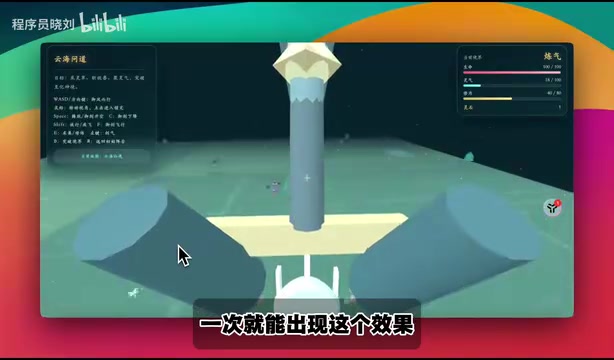
More challenging was developing a 3D cultivation-themed game. This project, called "Cloud Sea Dao," supported multiple secret realm map selection, sky-riding flight, double jumps, sprint movement, and map transitions when crossing boundaries. Players could encounter wild beasts in different realms, creating a fairly complete gameplay experience. While the sky-riding flight had some glitches, the fact that a single prompt could generate such a complex 3D interactive scene demonstrates Opus 4.8's depth of understanding for complex prompts.
Technical background on 3D games: AI-generated 3D games are typically built on browser-based 3D rendering frameworks like Three.js, running directly in the browser without client installation. Three.js wraps WebGL's low-level APIs and supports geometry rendering, lighting, physics collisions, and other core game functions. When the model generates a 3D game, it's actually generating call code for these frameworks, so rendering quality and interaction logic are ultimately bounded by the framework itself. The sky-riding glitches and the foggy map issues in the shooter game likely stem from imprecise configuration of Three.js camera controls and fog parameters, rather than gaps in the model's understanding of game logic.
Counter-Strike-Style 3D Shooter: A Middling 70 Points
The shooter game test exposed some weaknesses. The game supported multiple maps (Desert Ruins, Lava Canyon, Frozen Tundra, etc.), different weapon selections, and kill count tracking—bullets could indeed be fired. But the map rendering was overly foggy, and basic FPS operations like crouching were missing. The reviewer gave it 70 points, noting that the functional framework was in place but detail polish was lacking.
3D Mario-Style Platformer: A One-Shot Success
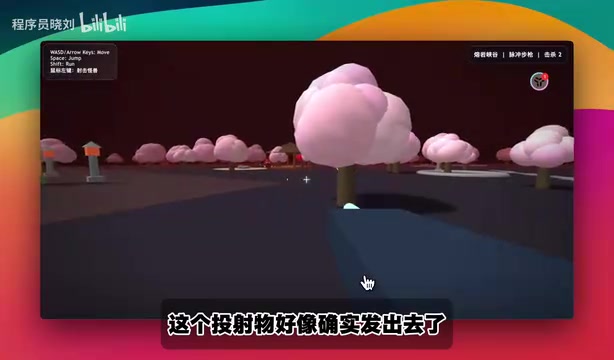
Notably, using just a simple prompt—"develop a 3D Mario Out game"—Opus 4.8 generated a playable 3D platformer in a single shot, supporting double jump (spacebar), sprint (Shift key), with realistically rendered 3D elements like trees in the scene. While Token limitations meant only the first level was designed, this "one sentence, one game" capability is genuinely impressive.
Technical significance of One-shot Generation: "Completing development in a single prompt" is known in the industry as One-shot Generation, and it's a key metric for evaluating code generation models. Traditional software development requires multiple iterations, debugging, and fixes, while high-quality one-shot output means the model can fully understand requirements, plan architecture, handle edge cases, and output runnable code in a single inference pass. This places extremely high demands on the model's context window size, instruction-following ability, and code logic consistency. Opus 4.8's one-shot success with the 3D Mario game is a direct demonstration of this comprehensive capability.
UI Reproduction & Frontend Development: A Consistent Claude Strength
Mockup Reproduction: Tangible Improvement Over Opus 4.7
In a wardrobe management app mockup reproduction test, the reviewer directly compared Opus 4.7 and 4.8. The 4.7 version had extraneous borders and image handling anomalies—clothing images would overflow their container boundaries. The 4.8 version handled image positioning and container boundary control properly, with cleaner layouts. The reviewer called it "a small but substantive improvement over 4.7," with better output quality than its predecessor.
Technical background on container overflow: "Container overflow" is a classic frontend development issue—when child elements exceed their parent container's dimensions, images or content "escape" their boundaries. Modern frontend development relies heavily on CSS layout systems like Flexbox and Grid, requiring the model to understand visual hierarchy relationships and map them to precise CSS property values. The improvement from 4.7 to 4.8 on this issue reflects enhanced precision in CSS box model understanding and boundary condition handling—these kinds of detail optimizations may not be "flashy," but they're core to engineering practicality.

OS Interface Reproduction: Both Mac and Windows
A particularly interesting test had Opus 4.8 reproduce Mac and Windows operating system interfaces. Both systems could be opened and interacted with normally—the Mac system's window dragging was smooth and fluid, while the Windows system even reproduced the App Store interface. This level of complex UI reproduction demonstrates that the model's understanding of system-level interfaces is quite mature.
Admin Dashboard: Cyberpunk as Default Aesthetic
The admin dashboard generation results are also noteworthy. Opus 4.8 defaulted to a cyberpunk-style UI color scheme, with a professional and distinctive visual effect. The reviewer noted that Claude's web frontend development has been solid since versions 4.1 through 4.5, with 4.8 representing iterative optimization rather than a quantum leap.
Tool & Application Development: Practical Utility Verified
JSON Visualization Tool: Done in One Prompt
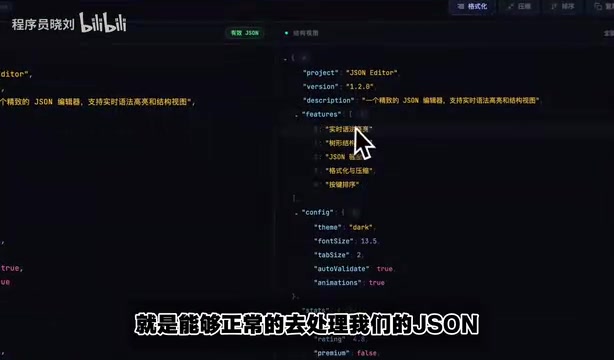
For developer tool testing, the reviewer had Opus 4.8 build a JSON visualization tool with syntax highlighting, compression, and sorting capabilities. The model completed development in a single pass, again with a cyberpunk-style interface, fully functional and usable.
Prompt Manager & Client Prototype
The reviewer also tested prompt manager development, supporting new prompt creation and zone-based display. While there were occasional icon display issues, the overall functional flow was complete. Additionally, a test reproducing a client application from mockups was successfully completed, demonstrating end-to-end design-to-implementation capability.
Overall Assessment: What $50 Actually Revealed
Based on this comprehensive evaluation, Claude Opus 4.8's performance can be summarized as follows:
Clear strengths: Frontend UI development and reproduction remain the core advantage of the Claude series, delivering high-quality results from simple web pages to complex OS interfaces. 3D game development capability is also surprisingly strong, especially the ability to understand and execute complex prompts in a single shot.
Incremental improvement: Compared to Opus 4.7, the 4.8 improvements are primarily in detail handling—more precise layout control, fewer overflow issues, more stable output quality. This isn't a revolutionary leap, but rather engineering-level polish.
Known limitations: In game development, core interaction logic is occasionally missed (e.g., turrets not firing in tower defense); 3D scene rendering quality is inconsistent; Token limitations constrain the completeness of complex projects.
Default aesthetic preference: Interestingly, Opus 4.8 seems to have a strong affinity for cyberpunk styling—multiple projects of different types all defaulted to this visual style. From a technical perspective, this relates to training data distribution: tutorials, CodePen examples, and GitHub projects showcasing "cool" UI designs on the internet feature cyberpunk/dark themes at a much higher rate than their actual prevalence in commercial products. Without explicit style constraints, the model tends to generate samples with strong "visual impact." This reminds developers that in practical use, explicitly specifying a design style (e.g., "clean white business style") often yields output better suited to business scenarios.
Overall, the $50 evaluation yields this conclusion: Opus 4.8 is a reliable full-stack development assistant that excels particularly in rapid prototyping and frontend development scenarios, but still has some distance to go before achieving "one prompt, perfect delivery."
Related articles
 Product Reviews
Qoder vs Cursor Real-World Comparison: Which $20/Month AI IDE Is Better?
Hands-on comparison of Qoder vs Cursor AI IDEs: Agent autonomy, human interaction count, and architecture decisions. Qoder needed only 2 interactions vs Cursor's 8.
 Product Reviews
Cursor Cloud Agent Demo: Eliminating Bottlenecks Across the Entire Software Development Lifecycle
Deep analysis of Cursor's Cloud Agent demo showing how cloud VMs, automated test artifacts, and a full-chain control plane systematically eliminate human bottlenecks across the software development lifecycle.
 Product Reviews
Cursor 3.0 Deep Dive: Multi-Agent Parallelism, Design Mode, and Best-of-N Model Comparison
Cursor 3.0 evolves from an AI coding assistant into an Agent fleet command center. Explore multi-agent parallelism, Design Mode, and Best-of-N model comparison.