Cross-Agent State Sharing: A More Practical Context Solution Than Memory Management

Cross-Agent state sharing solves context fragmentation better than memory management
This article analyzes the pain point of context fragmentation when switching between AI Agents, arguing that existing shared memory solutions (like Mem0) can only provide summary-level briefs without truly restoring progress state. The author distinguishes between memory management (helping Agents recall the past) and state management (bringing Agents back to the past), concluding that state sharing is more practical short-term while both approaches will converge long-term, and introduces the open-source tool Opal Bridge as a practical solution.
The Problem: Context Fragmentation When Switching Agents
If you're subscribed to a Coding Plan and burn through large amounts of tokens daily, you've definitely encountered this scenario: you're halfway through a project with Claude Code when you suddenly hit the rate limit. You either wait five hours for the quota to refresh, or switch to another Agent to keep pushing forward.
But here's the problem — session states between different Agents are not interoperable. You can't use a resume command in Codex to continue Claude Code's state, just like you can't continue a conversation with Doubao or GPT inside DeepThink.
The session state referred to here includes the complete Context Window content of the current conversation — all user instructions, model responses, tool call records, file read/write history, and more. Modern large language models typically have context windows between 128K-200K tokens. A deep programming session might accumulate tens of thousands of tokens of precise state information, including the sequence of code modifications, hypothesis validation during debugging, and reasoning chains behind architectural decisions. This information forms the complete cognitive foundation for an Agent to understand the current project state. Once lost, it means the new Agent needs to rebuild its understanding of the project from scratch.

This pain point seems simple, but when we dig deeper into existing solutions, we discover a more fundamental issue: all current multi-Agent context sharing solutions approach the problem from memory management, not state management.
Why Memory Management Can't Solve Context Fragmentation
How Existing Shared Memory Solutions Work
Tools like Mem0 and Letta are essentially doing the same thing: writing summaries of your previous projects into a knowledge base — what the project goal is, what phases it's divided into, how far you've gotten, what's next, and what pitfalls you've encountered.
When you start a new session or connect a new Agent, the system first briefs you on previous project memories through RAG, saving you the time of re-introducing project background in every new session. RAG (Retrieval-Augmented Generation) works as follows: historical information is split into text chunks, converted into vectors via an Embedding model, and stored in a vector database. When recall is needed, the system converts the current query into a vector, finds the most relevant historical fragments through similarity search, and injects those fragments into the model's prompt. The inherent limitation of this approach is that retrieval granularity is constrained by the text chunking strategy, and similarity matching cannot perfectly capture complex causal reasoning chains and temporal dependencies — you might retrieve "ultimately decided to go with Plan B" but lose the complete reasoning process of "why Plan A was abandoned."
A Common Contradiction
When the AI industry discusses Vibe Coding, everyone talks about externalizing state and managing projects by treating Agents as stateless machines. A Stateless Machine is a classic design pattern in distributed systems. The core idea is that service instances themselves don't store any session state — all state is externalized to external systems. This enables any instance to handle any request, achieving horizontal scaling and fault recovery. Applying this concept to Agent management means treating Agents as replaceable compute units, with project state fully externalized so that any Agent can continue work by loading external state — analogous to externalizing Sessions to Redis in microservice architectures.
But in practice, engineers are very actively managing sessions manually: when to branch off to explore different approaches, when to rewind to remove polluted context — these are all state management operations, not memory management.
This shows that memory management doesn't truly serve this use case, and everyone still relies on state management.
State Management vs. Memory Management: What's the Essential Difference?
The difference between the two can be summarized in one sentence:
Memory management helps an Agent better recall the past; state management directly brings the Agent back to the past.
A Human Collaboration Analogy
Imagine a colleague is leaving the company and you need to take over their project:
Memory management logic: Have the colleague write a detailed project handover document. For efficient handover, the document is usually concise, covering only the project goals, plans, and key information. But a project plan typically goes through multiple rounds of discussion and revision before being finalized. In the handover document, you can only see the final version — not the decision context behind it.
State management logic: It's like saving a game. Before leaving, your colleague saves their state and the entire game state. When you take over, you simply click "Continue Game," load the save file, automatically inherit all project memory, and push forward directly.
For humans, collaboration can only happen through documents. But for Agents, directly sharing "game saves" is entirely feasible — because an Agent's "cognitive state" is essentially a structured token sequence that can be fully serialized, transmitted, and deserialized.
Limitations of State Sharing
State sharing is not a perfect solution either. It can bring in unnecessary or even harmful "polluted context."
Context Pollution refers to the phenomenon where irrelevant or harmful information occupies the model's limited context window space, causing the model's attention to be dispersed and reasoning quality to decline. In the Transformer architecture, the self-attention mechanism performs weighted calculations across all tokens in the context. While irrelevant information receives lower weights, it still consumes computational resources and may cause interference. More seriously, when the context approaches the window limit, polluted content crowds out truly valuable information space, forcing the system to discard useful context.
Continuing the analogy: on the day you load your colleague's save file, they might have been spending a lot of mental energy worrying about stock losses. You'd inherit these project-irrelevant memories — they're not only unhelpful but also occupy precious context space. This is also why engineers actively rewind sessions — it's essentially manually clearing polluted context segments to refocus limited attention resources on truly important information.
A Deeper Thought: Memory Management and State Management Will Eventually Converge
Upon deeper reflection, shared memory and shared state should be equivalent in the long run.
As long as the departing colleague is thorough enough in writing and your reading comprehension is strong enough, they could write a "ten million page" handover document. After you quickly read through it, you could reproduce their project state at extremely high granularity — this isn't much different from directly loading a game save, and might even be better, because they won't write their personal frustrations into the document, so your context won't be polluted.
From an information theory perspective, the difference between these two approaches lies in the encoding format and transmission efficiency of information. State management is lossless transmission — completely copying all bits. Memory management is lossy compression — reconstructing an approximate state through summaries and retrieval. As model context windows continue to expand (from 4K to 128K to potentially millions of tokens in the future) and models' long-text comprehension abilities improve, the information density that memory management can convey will increasingly approach complete state, and the practical gap between the two will gradually narrow.
So, engineers actively managing session state and coordinating Agent context through external memory may seem like two different things, but they are essentially solving the same problem with two different emphases: how to give an Agent the most appropriate context to complete its task.
Practical Solution: Seamless Cross-Agent Switching with Opal Bridge
To address this problem, the video author developed an open-source tool called Opal Bridge (available on GitHub) that enables seamless state and session sharing between Agents like Claude Code, Codex, and others.
The core value of this approach is: when you hit the rate limit on one Agent, you can seamlessly switch to another Agent to continue pushing forward without losing any project context or progress state. From a technical implementation perspective, such tools need to solve several key problems: standardizing session formats across different Agents, state serialization and deserialization, and handling comprehension differences when different models interpret the same context. Since different Agents may use different underlying models (e.g., Claude vs GPT-4), the same context may produce different understanding biases in different models — this is an area that cross-Agent state sharing needs to continuously optimize.
Summary
Current multi-Agent collaboration context management has two paths: memory management pursues concise and efficient information transfer, while state management pursues complete and lossless context inheritance. In the short term, state management is more practical for Agent switching scenarios; in the long term, the two will converge as model capabilities improve. For developers who intensively use AI programming tools daily, state sharing solutions are worth paying attention to and trying out.
Related articles
 Expert Opinions
Windsurf CEO Deep Dive Interview: Speed Is the Only Moat
Windsurf CEO Varun Mohan shares insights on AI coding IDE pivots, product methodology, async Agent challenges, and differentiation strategy vs Cursor. Speed is the only moat.
 Expert Opinions
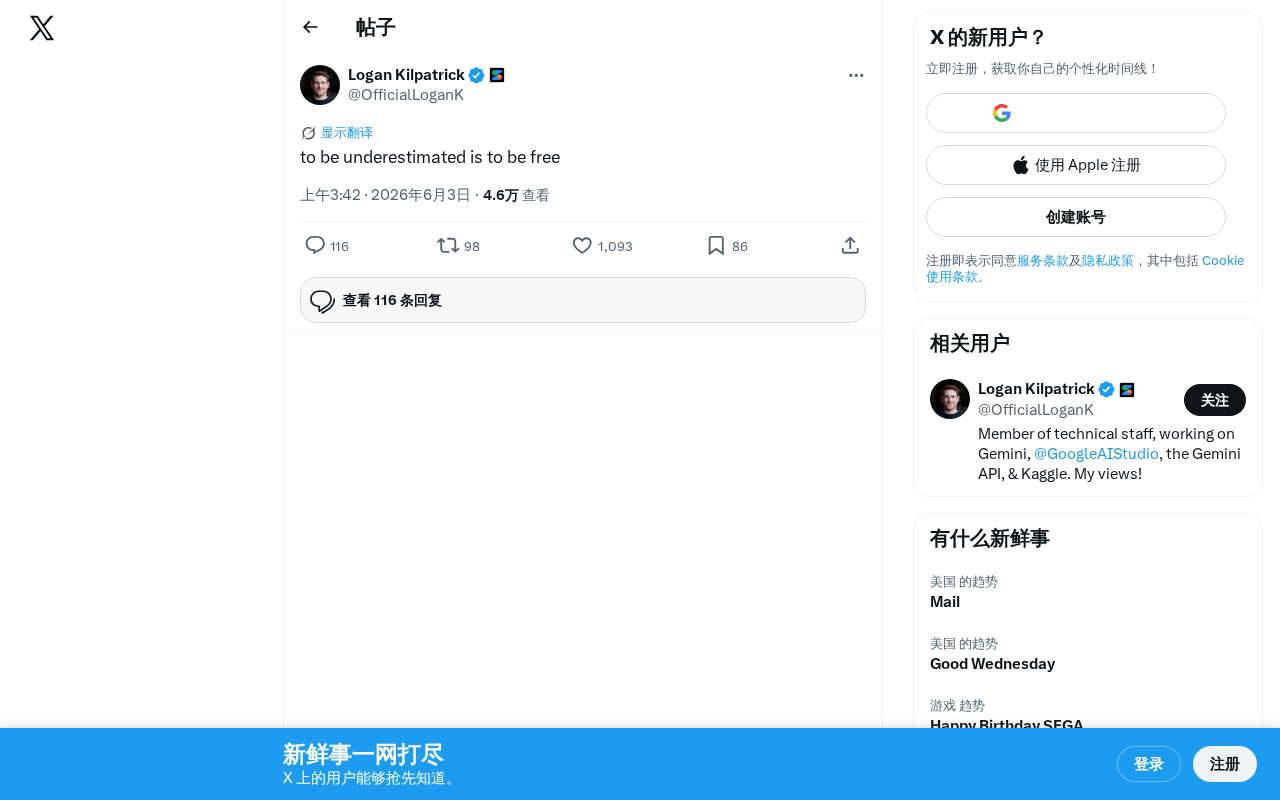
Being Underestimated Is Freedom: A Contrarian Competition Philosophy for the AI Era
Exploring the contrarian strategy of 'being underestimated is freedom' in AI. From OpenAI to DeepSeek to Cursor, why staying under the radar beats standing in the spotlight.
How the Protestant Work Ethic Was Hija…
How the Protestant Work Ethic Was Hijacked: From Protecting Workers to Oppressing Them
Philosopher Elizabeth Anderson reveals how the Protestant work ethic was twisted from a worker-protecting ideal into a tool of oppression—and what it means for the AI era.