Deepin Code Hands-On Review: Is This China-Accessible Claude Code Alternative Worth It?
Deepin Code Hands-On Review: Is This C…
Deepin Code offers a low-barrier Claude Code alternative for China, but still needs more validation.
Deepin Code is a terminal-based AI coding tool positioned as a domestic alternative to Claude Code, offering direct access from China, multi-model switching, and one-command installation. In hands-on testing, it completed the full workflow from requirement description to code generation and supported natural language iterative refinement. However, concerns around data security, performance on complex projects, and the gap in underlying Agentic capabilities compared to Claude Code remain. It's best suited for Chinese developers hindered by network issues and non-professional users looking to build tools with AI.
For developers in China, Claude Code is widely recognized as the most powerful AI coding tool available today, but network restrictions, complex setup procedures, and overseas identity verification requirements have kept many at bay. Recently, a tool called Deepin Code has been gaining attention — it claims to offer a Claude Code-equivalent experience while being directly accessible from within China. Based on hands-on testing, here's how this tool actually performs.
Claude Code Is Great, but the Barrier to Entry Is High
Claude Code is an AI coding Agent built by Anthropic on top of the Claude large language model. Anthropic, a spinoff founded by former core members of OpenAI, focuses on AI safety research. Claude Code's core capabilities stem from its underlying model's ability to handle long contexts (supporting a 200K token context window) and Anthropic's Tool Use framework designed specifically for coding scenarios, enabling it to read files, execute commands, debug errors, and iteratively modify code — much like a human programmer.
It's worth noting that Claude Code is fundamentally different from traditional code completion tools like GitHub Copilot. Traditional code completion tools are "passively responsive," only offering suggestions as developers type. Claude Code, on the other hand, is a "proactively executing" AI Agent capable of understanding high-level goals, decomposing tasks, invoking external tools, and autonomously adjusting strategies when encountering errors. This Agentic paradigm represents the next generation of AI coding tools.
With its outstanding code comprehension and end-to-end development experience, Claude Code quickly became the go-to tool in developer circles. It can not only write code but also understand project context, execute terminal commands, and autonomously complete complex development tasks — many consider it an essential productivity tool.
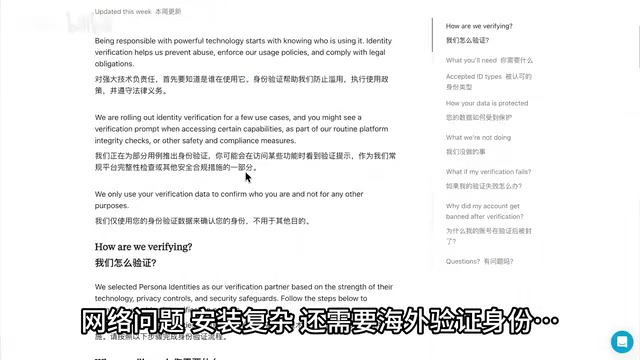
However, the reality for users in China is harsh: you need a stable overseas network connection, a complex installation and configuration process, and overseas identity verification (foreign phone numbers, credit cards, etc.). The obstacles Chinese developers face when using overseas AI services include both network-level access restrictions and some platforms' active blocking of Chinese IPs. Many users who manage to get everything configured still face the risk of account bans. These barriers have locked out a large number of potential users.
What Is Deepin Code? What Can It Do?
Deepin Code is a terminal-based AI coding tool positioned as an alternative to Claude Code / OpenAI Codex. Its core selling points include:
- Direct access from China: No VPN needed — works out of the box
- Multi-model switching: Supports the latest versions of mainstream models including GPT, Claude, and Gemini
- Native terminal experience: Command-line interaction similar to Claude Code
- Simple installation: Just paste a single command in your terminal
Deepin Code's multi-model switching design is essentially a "model routing" architecture — decoupling the user interface layer from the model inference layer and connecting to different model providers through a unified API interface (typically compatible with the OpenAI API format). The advantage of this architecture is that users can choose the most cost-effective model based on task complexity (e.g., lightweight models for simple tasks to reduce costs, switching to GPT-4o or Claude 3.5 Sonnet for complex tasks), while also mitigating the risk of dependency on a single model provider. However, it's important to note that different models exhibit significant differences in code generation, instruction following, and tool-calling capabilities, so switching models may lead to inconsistent behavior.
From a product perspective, Deepin Code follows the same approach as Claude Code — a terminal-based AI Agent that understands your requirements, formulates development plans, and autonomously writes and modifies code.
Hands-On Experience: From Requirement Description to Finished Product
A Real-World, Everyday Use Case
The video author presented a very relatable requirement: being forgetful, they often write memos but forget to check them. They wanted a desktop widget similar to a "quest tracker" in video games — a transparent task panel that always stays in a corner of the screen.
Deepin Code's Development Process
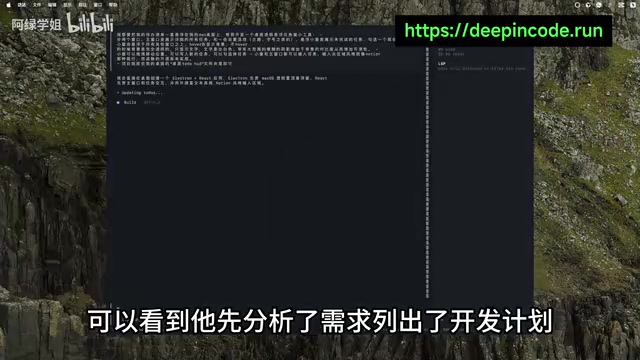
After inputting the requirement into Deepin Code, the tool's workflow went as follows:
- Requirement analysis: Automatically parsed the user's description and identified core feature requirements
- Planning: Listed detailed development steps and technical approach
- Autonomous development: Without manual intervention, automatically wrote code and generated a runnable program
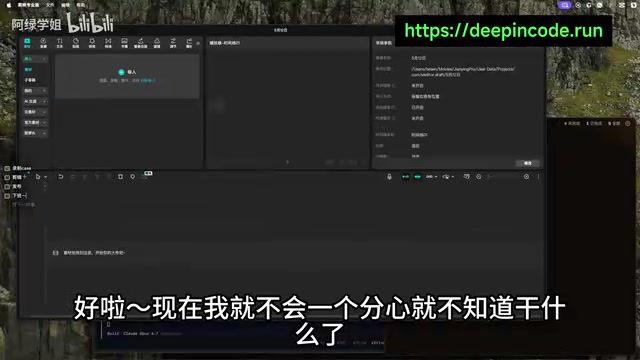
The final result was a transparent task panel anchored to the top-right corner of the desktop, largely achieving the expected functionality. When the author felt that "the effect when clicking to complete a task feels a bit bland," they simply told it in natural language to "add smooth animations," and the tool quickly iterated and optimized.
The entire process truly demonstrated the core value of AI coding tools: lowering the barrier to software development to simply "describing what you want clearly."
A Sober Analysis: Several Potential Concerns with Deepin Code
While the experience looks promising, as a tech professional, several issues deserve deeper consideration:
Where Are the Limits of Model Capability?
Deepin Code itself is essentially a "shell" — the quality of the generated code is ultimately determined by the underlying large models it calls. Multi-model switching is an advantage, but different models perform very differently on complex projects. The video demonstrated a relatively simple desktop widget; performance on large-scale projects with complex architectures remains to be verified.
Data Security and Privacy Risks
Terminal-based AI coding tools typically need access to the local file system and the ability to execute Shell commands, which introduces unique security considerations. Mainstream tools handle data in two ways: "local processing + cloud inference," where code snippets are sent to cloud models for inference but not persistently stored; or "fully cloud-based," where code and context are entirely uploaded to servers. For users working with sensitive code or commercial projects, it's recommended to prioritize tools that provide a clear Data Processing Agreement (DPA), limit the tool's file access scope through permission isolation before use, and verify whether code is being uploaded to third-party servers.
How Big Is the Real Gap with Claude Code?
Claude Code's strength lies not only in model capability but also in the extensive engineering optimizations Anthropic has made for coding scenarios — including context management, tool-calling strategies, error recovery mechanisms, and more. These underlying Agentic capabilities are the result of long-term engineering accumulation and are difficult to replicate through simple API wrapping. Whether Deepin Code has achieved the same level of sophistication in these underlying capabilities is hard to judge from a single simple demo.
Who Is Deepin Code Best Suited For?
Overall, Deepin Code is a good fit for the following types of users:
- Chinese developers frustrated by network issues: Those who want to experience AI coding but can't reliably access Claude Code
- Non-professional developers: Regular users who want to quickly build small tools or automation scripts with AI
- Users who need multi-model comparison: Those who want to switch between different models for testing within the same terminal environment
For users who already have stable access to Claude Code and are engaged in professional development, whether to switch depends on actual experience comparisons.
Conclusion: A Low-Barrier Entry Point for AI Coding, but More Real-World Validation Is Needed
Deepin Code addresses a real pain point — giving users in China low-barrier access to terminal-based AI coding tools. Based on the demo, it has the fundamental capabilities for requirement understanding, plan formulation, and code generation. However, the true value of an AI tool needs to be validated across more complex and diverse scenarios.
The rise of domestic alternative tools also reflects that China's AI developer ecosystem is forming its own independent toolchain — gradually filling the usage gaps left by overseas tools through deploying API proxy nodes domestically, partnering compliantly with domestic cloud service providers, and other approaches.
Regardless, the proliferation of AI coding tools is an irreversible trend. Whether it's Claude Code, Codex, or Deepin Code, the core logic is the same: AI is transforming "programming" from a specialized skill into a way of expressing requirements. Finding the tool that works best for you and getting started early is what matters most.
Related articles
 Product Reviews
Qoder vs Cursor Real-World Comparison: Which $20/Month AI IDE Is Better?
Hands-on comparison of Qoder vs Cursor AI IDEs: Agent autonomy, human interaction count, and architecture decisions. Qoder needed only 2 interactions vs Cursor's 8.
 Product Reviews
Cursor Cloud Agent Demo: Eliminating Bottlenecks Across the Entire Software Development Lifecycle
Deep analysis of Cursor's Cloud Agent demo showing how cloud VMs, automated test artifacts, and a full-chain control plane systematically eliminate human bottlenecks across the software development lifecycle.
 Product Reviews
Cursor 3.0 Deep Dive: Multi-Agent Parallelism, Design Mode, and Best-of-N Model Comparison
Cursor 3.0 evolves from an AI coding assistant into an Agent fleet command center. Explore multi-agent parallelism, Design Mode, and Best-of-N model comparison.