Devin Cloud Deep Dive: A Cloud-Based AI Development Platform That Replaces All IDEs with a Single Web Page

Devin Cloud is a fully cloud-based AI development platform—any device with internet becomes a top-tier dev environment.
Devin Cloud leverages cloud VM technology to completely migrate the development environment from local machines to the cloud, enabling a device-agnostic development experience. Users can perform full development on any internet-connected device including phones and tablets, with support for GitHub repository connections, MCP tool integration, API terminal access, and Linux VM desktop control. It represents the paradigm shift in AI development tools from heavy local dependency to lightweight cloud-native architecture.
What is Devin Cloud?
Devin is a cloud-based AI development platform with core capabilities similar to ChatGPT, but far superior in development scenarios. Recently, Devin introduced two important modes: Devin Cloud (cloud mode) and Devin Local (local mode), with cloud mode being the most revolutionary feature.
The core of cloud mode is this: it's completely independent of your local computer environment. Traditional IDEs run locally, with all code executing on your machine. Devin Cloud has a cloud-based virtual machine where all command execution, environment operations, and development tasks are completed on a remote VM. Even if your computer is shut down, it continues running in the cloud.
From a technical architecture perspective, the cloud VM technology that Devin Cloud relies on is essentially an application of the IaaS (Infrastructure as a Service) layer of cloud computing. Traditional VMs use Hypervisors (such as VMware ESXi, KVM) to simulate complete computer hardware environments on physical servers, while cloud VMs host this process in data centers, with users accessing them remotely over the network. The advantage of this architecture lies in elastic scaling—computing resources can be allocated on demand without being limited by local hardware. Devin Cloud leverages this technology to allocate an independent runtime environment for each development session, ensuring isolation and security.
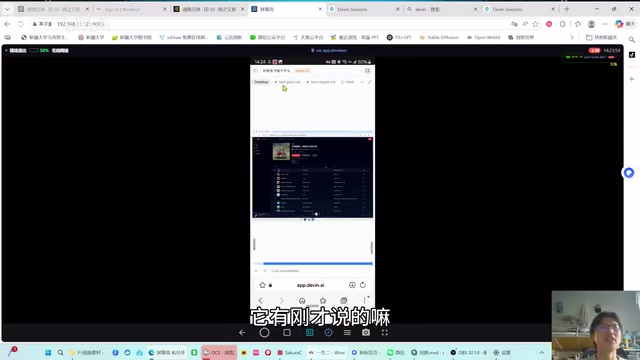
Core Advantage: Device-Agnostic Development Experience
Develop on Any Device
The most exciting feature of Devin Cloud is its device agnosticism. You can develop on any internet-connected device—a phone, tablet, or even an old low-spec computer. As long as you have internet access, you have access to a top-tier development environment.
Specifically:
- Mobile development: Complete all development operations on your phone
- Network-friendly: Directly accessible from networks in China without special network tools
- Terminal mode support: An experience similar to Cloud Code—a single terminal handles everything
- 24/7 uninterrupted operation: It continues working in the cloud while you sleep
Accessible Directly via Web Browser
This feature requires no complex configuration—the official platform provides a web version out of the box. Simply search for "Devin," go to the official website, log in, and you can use all features. Account acquisition costs are minimal, and once logged in, you can access top-tier AI models like Claude.
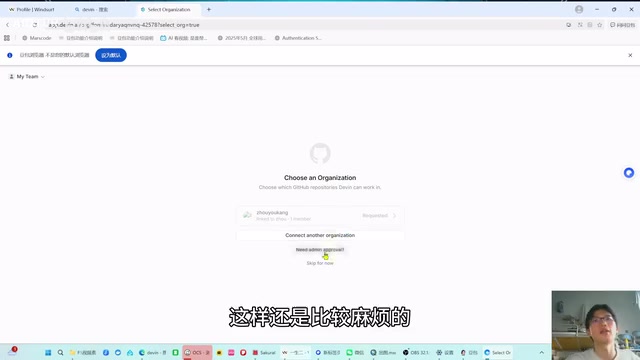
Feature Overview: Far Beyond Traditional IDEs
GitHub Repository Connection
Devin Cloud supports connecting to multiple mainstream code hosting platforms including GitHub, GitLab, and Bitbucket. All your development work can be pushed directly to remote repositories without relying on local devices for code management. This is especially practical for team collaboration. These platforms are based on the Git distributed version control system, hosting code repositories in the cloud to enable code merging, version rollback, and branch management in multi-person collaborative development. Devin Cloud's deep integration with these platforms means AI-generated code can flow directly into a team's standard workflow without additional manual operations.
MCP Tool Integration
You can add MCP (Model Context Protocol) tools directly in the web interface without installing or configuring anything on your local machine. Compared to the frequent errors and environment conflicts of local installation, Devin Cloud's cloud integration is virtually zero-barrier.
MCP is an open standard protocol released by Anthropic in late 2024, designed to unify communication between AI models and external tools and data sources. Before MCP, every AI tool needed custom integration code for different external services, leading to severe ecosystem fragmentation. MCP defines standardized request-response formats that allow AI models to invoke database queries, file operations, API requests, and other tools in a unified manner. This is similar to how the USB protocol unified peripheral connection standards—with MCP, developers only need to write a tool adapter once for it to be callable by all MCP-supporting AI platforms. Devin Cloud provides MCP tool addition and management directly in the web interface, dramatically reducing the complexity of tool integration.
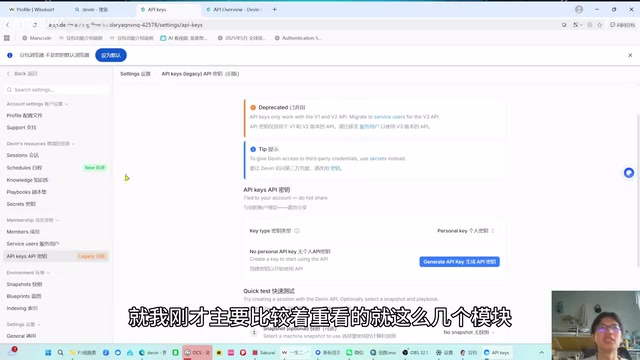
API Keys and Terminal Access
The platform provides API Keys with terminal mode support. You can connect to Devin's cloud resources directly from PowerShell or other terminals, just like using Cloud Code. This means you can invoke all of Devin's capabilities—all tools, all environments, all models—from any third-party platform like Cherry Studio, offering extremely high flexibility.
Cloud Code is a cloud development tool from Google that allows developers to interact with cloud resources directly through local terminals or IDEs. Devin's terminal mode shares a similar philosophy, with the core being sending commands to the cloud directly from a command-line interface after authenticating via API Key. The technical foundation of this mode is RESTful APIs and WebSocket long connections—the former for sending development commands, the latter for real-time synchronization of cloud execution status. For developers accustomed to command-line workflows, terminal mode avoids the overhead of a GUI while retaining the full power of cloud computing.
Cloud VM Desktop
One of the most impressive features is the real-time VM desktop. You can directly control a Linux virtual machine—deploy your own environment, log into accounts, and install software on it. Traditionally, setting up a VM requires partitioning hard drives, installing an OS, and configuring environments—a tedious and error-prone process. Devin handles all these steps for you in one go.
This remote desktop experience is based on VNC (Virtual Network Computing) or similar remote framebuffer protocols, streaming the cloud VM's graphical interface to the user's browser in real time. User keyboard and mouse operations are transmitted back to the cloud via WebSocket for execution. This means what you see in your browser is a real running Linux machine capable of any Linux-supported operation—from installing Docker containers to running graphical applications—with capabilities fully equivalent to a physical machine.
A Fundamental Shift in Development Paradigm
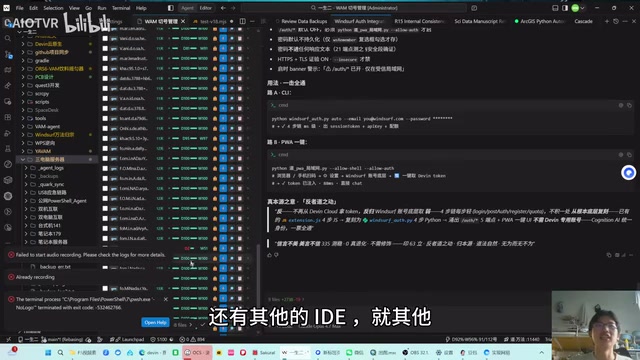
The Evolution from Heavy to Light
Looking back at the evolution of AI-assisted development, three distinct phases emerge:
- Phase One: Required a dedicated IDE + local environment + various plugin configurations—high barrier to entry and complex setup
- Phase Two: AI IDEs like Windsurf and Cursor appeared, lowering the coding barrier but still relying on local execution
- Phase Three: A single web page or terminal delivers all functionality—fully cloud-based with zero device dependency
This evolutionary trend is unmistakable—fewer dependencies, greater capabilities. Devin Cloud sits at the forefront of Phase Three.
From an industry landscape perspective, the AI-assisted development space is highly competitive. The first tier includes GitHub Copilot (Microsoft ecosystem), Cursor (independent AI IDE), Windsurf (formerly Codeium), and others, primarily existing as local IDE plugins or standalone clients. The second tier consists of fully cloud-based solutions like Devin, Replit Agent, and Google Project IDX. The core divergence between the two approaches is: local solutions offer faster response times but are limited by device performance, while cloud solutions are device-agnostic but depend on network quality. From an industry trend perspective, as 5G and edge computing become widespread, the latency disadvantage of cloud solutions is rapidly shrinking, while their advantages in collaboration and scalability become increasingly apparent. Devin Cloud has chosen the fully cloud-based route, betting on the long-term direction of this trend.
Practical Usage Tips
If you're planning to get started with Devin Cloud, here are some suggestions:
- Conversation management: The platform's conversation management is well-designed, allowing you to manage multiple development sessions simultaneously
- Rule customization: Supports custom rule files—you can replace system prompts to adapt to different project requirements
- Progressive learning: Start by familiarizing yourself with features in the web interface before trying API and terminal modes
- Cost control: Account costs are minimal, making it suitable for individual developers and small teams to experiment with
Conclusion
Devin Cloud represents an important direction for AI development tools: fully cloud-based development environments. It eliminates all dependencies on local hardware, operating systems, and development environments, giving anyone on any device access to top-tier AI-assisted development capabilities.
While the login process and account management still have room for optimization, its core functionality already demonstrates enormous potential to replace traditional IDEs. If you're tired of the hassle of local environment configuration, or want to develop efficiently on mobile devices, Devin Cloud is worth trying.
Key Takeaways
- Devin Cloud achieves a development environment completely independent of local computers through cloud VMs, continuing to run even when your machine is off
- Supports full development operations on any internet-connected device (phones, old computers), directly accessible from networks in China
- Provides API Keys for terminal access, enabling integration of all Devin cloud resources on any third-party platform
- Allows direct addition of MCP tools, GitHub repository connections, and Linux VM desktop control from the web interface
- Represents the paradigm shift in AI development tools from heavy local dependency to lightweight cloud-native architecture
Related articles
 Product Reviews
Qoder vs Cursor Real-World Comparison: Which $20/Month AI IDE Is Better?
Hands-on comparison of Qoder vs Cursor AI IDEs: Agent autonomy, human interaction count, and architecture decisions. Qoder needed only 2 interactions vs Cursor's 8.
 Product Reviews
Cursor Cloud Agent Demo: Eliminating Bottlenecks Across the Entire Software Development Lifecycle
Deep analysis of Cursor's Cloud Agent demo showing how cloud VMs, automated test artifacts, and a full-chain control plane systematically eliminate human bottlenecks across the software development lifecycle.
 Product Reviews
Cursor 3.0 Deep Dive: Multi-Agent Parallelism, Design Mode, and Best-of-N Model Comparison
Cursor 3.0 evolves from an AI coding assistant into an Agent fleet command center. Explore multi-agent parallelism, Design Mode, and Best-of-N model comparison.