Gumloop Founder: 50 AI Agents Running Your Company? Don't Fall for It

Gumloop founder debunks the AI Agent myth: only automate what you truly understand.
Gumloop founder Max dismantles the social media myth of "50 AI Agents running a company," calling it an anti-pattern that creates uncontrollable complexity. He advocates only automating domains you truly understand, using AI to accelerate rather than replace human capability. After being deported from the US and failing ten consecutive startups, Max discovered through the AutoGPT community that users need reliable automation, not intelligent Agents — ultimately building a platform processing 4 million daily workflows for clients like Instacart.
"I have 50 AI Agents running my company" — this kind of claim is all over social media. But Max, the founder of Gumloop, which processes 4 million automated workflows daily and serves major clients like Instacart, Shopify, and DoorDash, says: That's just building a slot machine.
In this EO interview, Max shares his real journey — from being deported from the US, to failing ten times in a row, to building a platform that processes millions of automated workflows daily. His sober reflections on AI automation are worth serious consideration for anyone looking to boost productivity with AI.

50 AI Agents Running a Company? The Biggest Lie in AI Automation
Max bluntly calls out the biggest anti-pattern in the current AI landscape:
"Everyone on Twitter is saying, I automated everything, I only work one hour a week, I make $10 million on weekends with SaaS apps. Most of this is marketing speak. They're lying to you."
The concept of "anti-pattern" originates from software engineering, first proposed by Andrew Koenig in 1995 and later systematized in the book AntiPatterns. It refers to solutions that seem reasonable in practice but actually create more problems. In software development, classic anti-patterns include the "God Object" (a single class taking on too many responsibilities) and "Spaghetti Code" (tangled logic that's impossible to maintain). Max defines "50 AI Agents running a company" as an anti-pattern, meaning that while it appears efficient and modern on the surface, it actually creates uncontrollable complexity — every Agent becomes a potential point of failure, and when you don't understand the underlying logic, the entire system becomes a slot machine whose outcomes you can't predict.
He calls these people "course bros" — dream sellers. They peddle the illusion of "skipping the hard work and jumping straight to value," which never materializes. But ironically, the course sellers themselves have indeed found their money-printing formula.
Max believes that whenever a hype bubble emerges — whether it's crypto, NFTs, or AI — there's always a vulnerable group that's easily persuaded, and "hope" is the easiest commodity to sell. Those "wantrepreneurs" who think buying a course gives them a recipe for making millions a year — that mindset itself is the problem.
The Real AI Philosophy: Acceleration, Not Replacement
Max proposes a clear principle: Only automate what you truly understand.
"If you're automating something you don't understand, you're building a slot machine. If you use AI to write code but don't understand programming at all, what you'll end up building is malware."
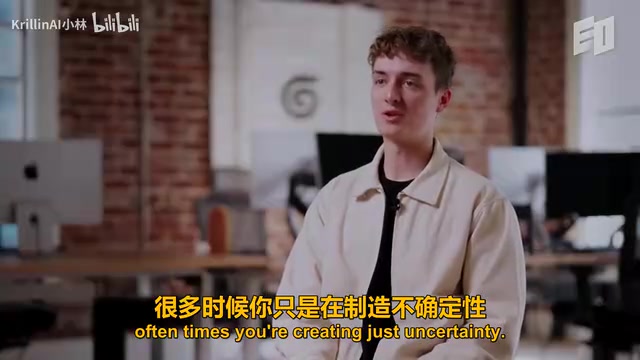
He observes that the best users are "AI-augmented" — they use AI to accelerate things they're already good at, rather than letting AI completely replace them. The key distinction:
- The right approach: Apply AI to domains you deeply understand, accelerate execution, then scale
- The wrong approach: Use AI to skip the understanding phase and chase results directly
Max even makes a bold prediction: The last generation of great engineers may have already been born. Past engineers had to understand underlying principles first, then get accelerated by AI; now people can skip the understanding phase entirely. The future will see greater divergence — truly exceptional people will use AI as a learning tool to deepen understanding, while average people will drown in AI "slop."
From Deportation to Processing 4 Million Automated Workflows Daily
Max's entrepreneurial story is far less glamorous than the "effortless success" narratives on social media.
After leaving Microsoft, he moved back to Vancouver, planning to build products from his bedroom. During a trip to Seattle to visit friends, he was denied entry at the border and banned from entering the US for five years.

"I was almost in shock driving back to my girlfriend's apartment. It took days to calm down. But after that, it was all-in."
Over the next six months, he tried roughly one new idea per week: VR video game moderation software, trust and safety tools, bot detection software, anti-fraud platforms... He'd build an MVP, try to sell it, and quickly validate market response.
What Ten Startup Failures Taught Him
The most important mindset shift: Entrepreneurship isn't about finding reasons you're right — it's about finding reasons you're wrong.
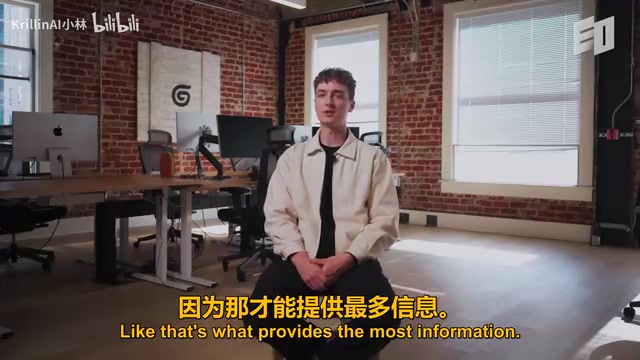
"If you can't find a reason why it won't work, then you truly have an idea worth pursuing."
His initial mistake was spending months building an idea, then praying someone would say "this is worth doing." Later he learned to actively seek negative feedback — that's the most valuable information. Every time he was proven wrong, it saved weeks or even months of time.
The Birth of Gumloop: From the AutoGPT Open-Source Community to an Automation Platform
The turning point came from AutoGPT. When this open-source Agent framework went viral on Twitter, Max joined its Discord community and found masses of users asking the most basic questions: What is GitHub? How do I use the terminal? How do I install this locally?
AutoGPT was released in March 2023 by Toran Bruce Richards as an open-source project that broke 100,000 GitHub stars at record speed, becoming a landmark event in the AI Agent space. Its core concept was enabling GPT-4 to autonomously decompose goals, invoke tools, and execute tasks in loops without step-by-step human intervention. AutoGPT's viral success spawned the entire "autonomous Agent" category but also exposed a core problem: LLM hallucination rates and instability in long-chain reasoning made fully autonomous Agents extremely unreliable in production environments. Max discovered his opportunity precisely in the chaos of the AutoGPT community — users didn't need "autonomous intelligence" but rather "predictable automation." This insight directly catalyzed Gumloop's product pivot.
He built a simple UI for these users — Agent Hub. But he quickly discovered a key insight: AI Agents themselves aren't reliable; what users actually need is reliability and predictability.
Users' use cases were actually simple — they just needed step-by-step process automation. So Max built a framework that let users orchestrate automation steps sequentially, which naturally evolved into today's Gumloop.
Even more interesting was the audience shift. Although initially designed as an open-source project for developers, the people who used it most enthusiastically were non-technical — company admins, operations staff, HR. 80% of users had non-technical backgrounds, which made Max realize he needed to build a product that was friendly, fun, and non-frustrating for them.
The Focus Principle During YC: Stay Off Social, Stay on Product

After entering YC (Y Combinator), Max was stuck in Canada due to visa issues. This actually became an advantage — he had zero social distractions, just coding furiously in his small Vancouver apartment.
Y Combinator was founded in 2005 by Paul Graham and others, and is the most influential startup accelerator in Silicon Valley and arguably the world. Its portfolio includes companies that have reshaped industries — Airbnb, Stripe, Dropbox, Reddit, OpenAI — with a combined valuation exceeding $600 billion. YC's core methodology is "Make something people want" and "Talk to users," emphasizing rapid iteration and direct market validation. Each YC batch lasts approximately three months, culminating in Demo Day where hundreds of investors watch startup teams pitch. For Gumloop, getting into YC meant not just initial investment but, more importantly, top-tier startup network endorsement — particularly valuable for a founder stuck in Canada who couldn't enter the US.
Their first paying customer was a user named Kai, who paid $20. "We were ecstatic. The moment we saw that Stripe notification pop up — it was the greatest moment." Kai is still a user today.
Max drew a counterintuitive lesson from this:
"People who are truly building great products don't show up at social events. If you're really doing something valuable, you don't need to network. Your network will form naturally. If you build something exceptional, investors will come to you."
His co-founder almost never attends any events — most people have never even seen him — because he's always working.
Hiring Philosophy: Turn Customers into Employees
Nearly all of Gumloop's employees were hired through personal networks, and many of them were originally customers. A customer from Instacart quit to join them. A customer from Webflow did the same. So did one from Shopify.
These people already had conviction — they loved the platform and were willing to give up everything to contribute. Max compares it to dating:
"You have to become someone others want to date. You can't beg someone to date you, just like you can't beg someone to join your company. You have to build something exceptional that makes the best people on earth want to join you."
It's worth noting that Gumloop's major clients — Instacart, Shopify, DoorDash — are themselves platform companies with extremely high automation demands. Their operations involve massive data flows, order processing, and supply chain coordination, creating genuine rigid demand for reliable, predictable workflow automation — which validates Max's product judgment that "reliability trumps intelligence."
The Core Quality of Entrepreneurs: Blind Confidence
Max closes with a seemingly simple but profound observation:
"The biggest quality that gets founders to start is believing they can do it. If you don't think you're the person who can make this happen, you'll never start. It requires a kind of blind confidence."
He could have listed a hundred reasons on day one why Zapier would do it better or why OpenAI would crush them. Zapier was founded in 2011 and is a pioneer in workflow automation, currently connecting over 6,000 apps, serving millions of users, with a valuation of approximately $5 billion. Facing such a behemoth, Gumloop's differentiation lies in: AI-native workflow orchestration, stronger non-technical user friendliness, and deep integration of "intelligent nodes" in the LLM era. Gumloop's 4 million daily workflow processing means it has established real scale barriers in a specific market segment (AI-augmented automation), rather than being just another Zapier alternative.
But if Max had been convinced by those reasons on day one, there would be no Gumloop today, no 4 million daily workflows, no automation platform serving top tech companies.
The answer is simple: you try, you succeed; you fail, you try again.
Key Takeaways
- 50 AI Agents running a company is an anti-pattern; most AI automation success stories on social media are marketing lies
- Only automate what you truly understand — automating without understanding is building a slot machine
- Gumloop discovered from the AutoGPT community that users actually need reliability, not intelligent Agents, pivoting to become a platform processing 4 million workflows daily
- The core entrepreneurial methodology is rapid falsification rather than seeking validation; Max went through at least ten failures before succeeding
- The best AI users are people augmented by AI, not replaced by it — the divergence between exceptional and mediocre will only intensify
Related articles
 Expert Opinions
Windsurf CEO Deep Dive Interview: Speed Is the Only Moat
Windsurf CEO Varun Mohan shares insights on AI coding IDE pivots, product methodology, async Agent challenges, and differentiation strategy vs Cursor. Speed is the only moat.
 Expert Opinions
Being Underestimated Is Freedom: A Contrarian Competition Philosophy for the AI Era
Exploring the contrarian strategy of 'being underestimated is freedom' in AI. From OpenAI to DeepSeek to Cursor, why staying under the radar beats standing in the spotlight.
How the Protestant Work Ethic Was Hija…
How the Protestant Work Ethic Was Hijacked: From Protecting Workers to Oppressing Them
Philosopher Elizabeth Anderson reveals how the Protestant work ethic was twisted from a worker-protecting ideal into a tool of oppression—and what it means for the AI era.