How to Use Claude in China: Stable Access Solutions & Full Risk Analysis
How to Use Claude in China: Stable Acc…
A complete guide to accessing Claude from China: stable solutions and risk analysis
Claude is one of the most powerful AI models available, but users in China face three major obstacles: difficult registration, limited payment options, and frequent account bans. Third-party mirror sites can bypass these restrictions and offer full-featured access, but they come with data privacy, service stability, and compliance risks. Users with technical capabilities should prioritize Anthropic's official API combined with open-source frontend projects, using third-party sites only as a temporary solution.
The Challenges of Using Claude in China
Claude is Anthropic's AI assistant, widely regarded as one of the most powerful AI conversational models available today. Anthropic was founded in 2021 by former core members of OpenAI, including siblings Dario Amodei and Daniela Amodei. The company's core philosophy centers on "responsible AI development." In model training, Anthropic introduced an alignment method called "Constitutional AI" — using a predefined set of value principles to constrain model behavior, making it safer and more controllable. Claude is the product of this philosophy, and its name pays tribute to Claude Shannon, the father of information theory. Whether it's coding, creative writing, or logical reasoning, Claude delivers impressive results, even outperforming GPT and Gemini in many scenarios.
However, it's far from easy for users in China to access Claude — newly registered accounts may be immediately banned, and even those who successfully subscribe to Claude Max face the constant risk of account suspension.

This experience of "paying but not being able to use it" has deterred many users. Specifically, users in China face three major obstacles:
- Complicated registration process: Requires overseas phone number verification, creating a high barrier to entry
- Limited payment options: Common domestic payment methods are not supported
- Poor account stability: Accounts can be banned at any time due to region detection
So, is there a way to use all of Claude's features reliably and completely?
Third-Party Mirror Sites: An Alternative to Bypass Restrictions
A number of third-party Claude mirror sites have emerged in the community, claiming to offer a "full-featured" Claude experience. The core approach of these sites is to use a middleware proxy layer, allowing users in China to bypass regional restrictions and ban issues without directly accessing Anthropic's official services.
From a technical architecture perspective, third-party mirror sites typically consist of three layers: a frontend user interface, a middleware proxy server deployed on an overseas VPS, and a backend service connected to Anthropic's official API. This architecture means that all user conversation content is routed through third-party servers rather than communicating directly with Anthropic. Some sites also layer their own functional modules on top of the middleware, such as document parsing and web search plugins, to enrich the user experience.
Feature Coverage
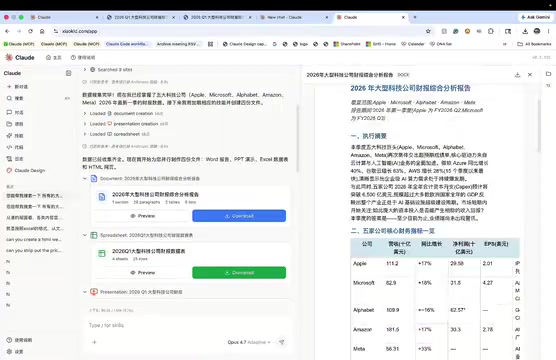
Based on actual usage, mainstream mirror sites typically support the following features:
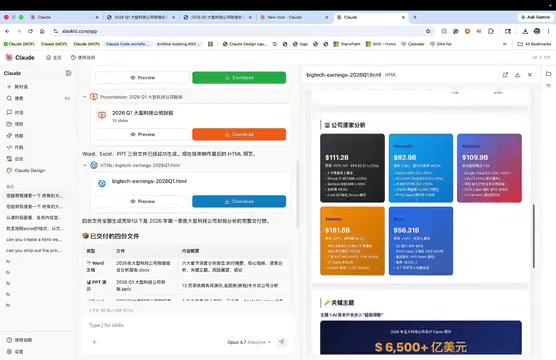
- Document generation: AI-assisted generation of Word, Excel, PPT, and other office documents
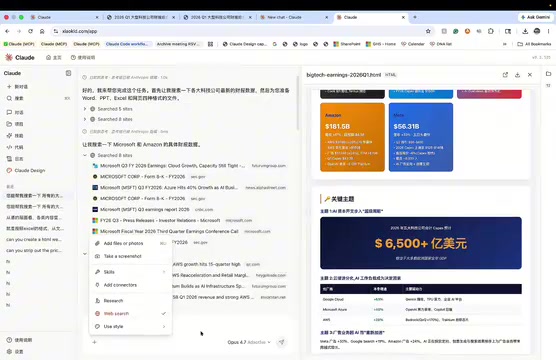
- Web search: Integrated online search capability for accessing real-time information
- Deep Research: In-depth research functionality suited for academic and professional scenarios
- Multi-model switching: Support for the full Claude model lineup, including Opus, Sonnet, Haiku, and more
- Extended Thinking: Support for the Extended Thinking feature to enhance complex reasoning capabilities
Extended Thinking is a reasoning enhancement mechanism introduced by Anthropic in the Claude 3 series. It essentially allows the model to perform an explicit internal Chain-of-Thought before generating a final answer. Similar to the reinforcement learning-based reasoning training used in OpenAI's o1/o3 series, Extended Thinking enables the model to break complex problems into multiple sub-steps and progressively verify intermediate conclusions, significantly improving accuracy on challenging tasks such as mathematical proofs, code debugging, and logical reasoning. Users can view the model's "thinking process" in interfaces that support this feature, which also increases the explainability of AI decisions.
Key Experience Metrics for Daily Use
Having a full feature set is just the baseline. Several metrics directly affect the quality of daily use:
- Conversation stability: Whether long conversations suddenly crash or disconnect
- History preservation: Whether conversation records are persistently saved for future reference
- Response speed: Whether the middleware proxy introduces noticeable latency
- Model version updates: Whether the site keeps up with Anthropic's official model iterations in a timely manner
How to Choose a Claude Model: Opus vs. Sonnet vs. Haiku
Claude's Opus, Sonnet, and Haiku naming system draws from literary poetry forms, implying different levels of complexity — Opus (a large symphonic work) represents the highest-capability flagship model; Sonnet (a fourteen-line poem) strikes a balance between performance and efficiency; and Haiku (a minimalist Japanese poem) is known for its simplicity and speed. This tiered architecture mirrors Google Gemini's Ultra/Pro/Nano and OpenAI's GPT-4o/mini systems, reflecting the mainstream strategy for commercializing large language models.
The current Claude model family includes multiple versions, and the optimal choice varies by scenario:
| Model | Characteristics | Best Use Cases |
|---|---|---|
| Claude Opus | Flagship-tier, most capable | Complex reasoning, code generation, creative writing |
| Claude Sonnet | Balanced performance and speed | Daily conversations, document processing, general tasks |
| Claude Haiku | Lightweight and fast | Simple Q&A, batch processing, low-latency needs |
For most users, Sonnet is the best value choice for daily use, while switching to Opus when tackling high-difficulty tasks. As Anthropic continues to iterate, the community has high expectations for the next-generation Opus model — it's worth keeping an eye on model update announcements.
Risk Warnings for Using Third-Party Sites
While third-party sites offer convenience, it's essential to understand the following risks before using them:
- Data privacy risks: Conversation content passes through third-party servers, so extra caution is needed when dealing with sensitive information. Since the data security of such services depends entirely on the integrity and technical capabilities of the third-party operators, users have no way to verify whether their data is being logged or misused
- Uncertain service continuity: The operational stability of third-party sites cannot be guaranteed — they may shut down at any time
- Questionable compliance: The legal compliance of such services remains unclear
- Exercise caution with payments: Site quality varies widely — beware of scams or false advertising
A more reliable alternative: If conditions permit, prioritize accessing Claude through Anthropic's official API — this is the most stable and secure approach. Anthropic's official API uses a per-token billing model, and developers can apply for an API Key through console.anthropic.com. A token is the basic unit of text processing for large language models — roughly every 750 English words or 500 Chinese characters corresponds to 1,000 tokens, and the overall cost is significantly lower than a Claude Max subscription. For users with some technical background, open-source projects like LobeChat and NextChat can be used to build a personal Claude frontend interface on a local machine or private server, ensuring data privacy while maintaining flexible cost control. Third-party mirror sites can serve as a temporary transitional solution, but long-term reliance is not recommended.
Conclusion: How to Make a Rational Choice for Using Claude
As one of today's top-tier AI models, Claude's capabilities in coding, writing, reasoning, and more are genuinely worth experiencing. The access barriers faced by users in China are real, and third-party mirror sites offer a viable alternative path.
However, while enjoying the convenience, be sure to follow these guidelines:
- Do not enter highly sensitive personal or business information on third-party platforms
- Prioritize sites with good reputations and long track records
- Migrate to the official API solution as soon as conditions allow
With the rapid development of the AI industry, more compliant and convenient access channels will very likely emerge in the future. Until then, choosing a solution that fits your needs while staying vigilant about security and reliability is the most pragmatic approach.
Related articles
 Product Reviews
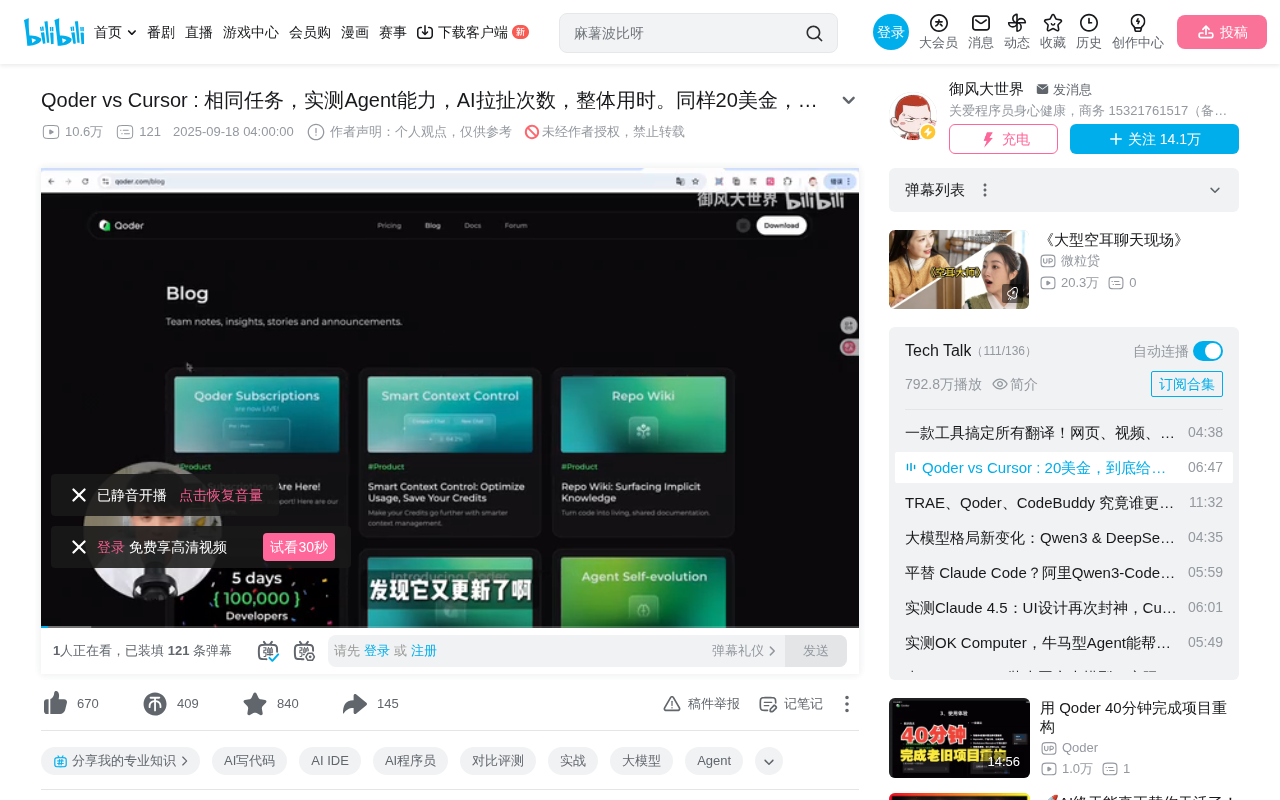
Qoder vs Cursor Real-World Comparison: Which $20/Month AI IDE Is Better?
Hands-on comparison of Qoder vs Cursor AI IDEs: Agent autonomy, human interaction count, and architecture decisions. Qoder needed only 2 interactions vs Cursor's 8.
 Product Reviews
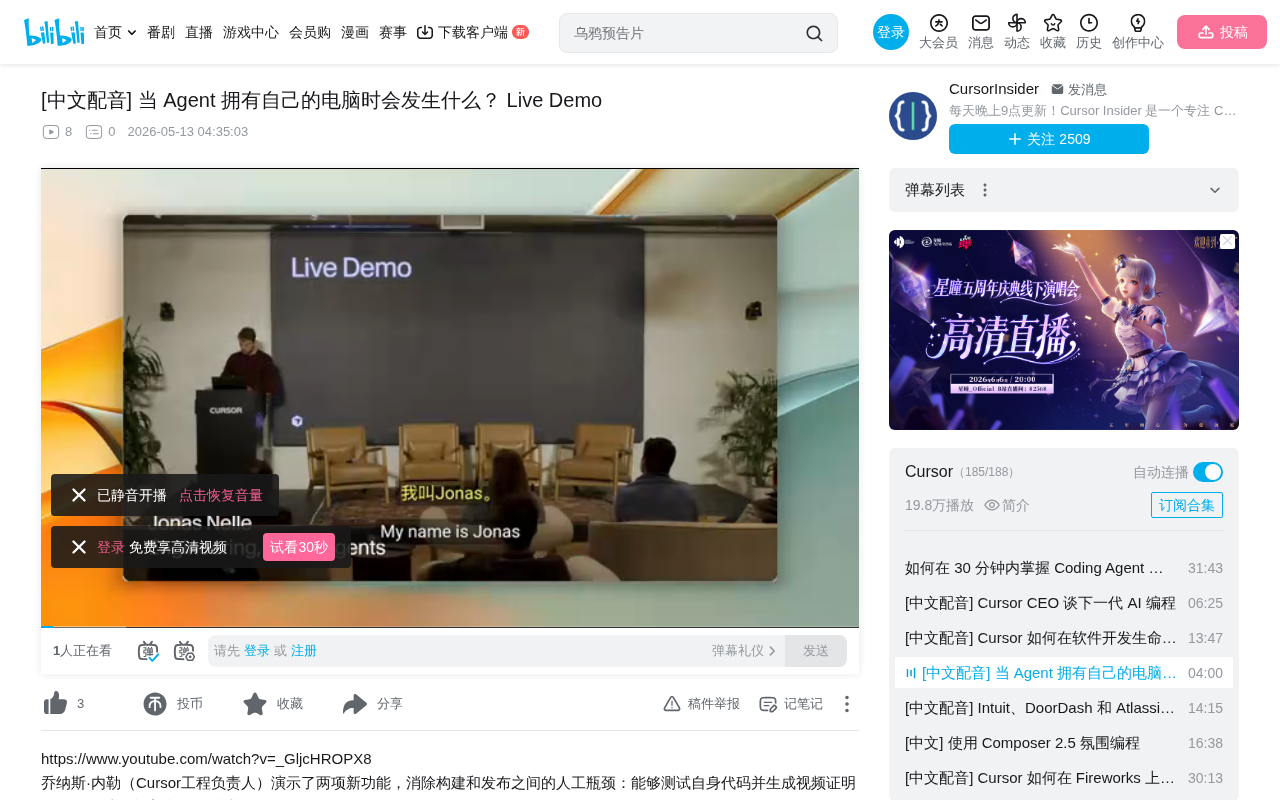
Cursor Cloud Agent Demo: Eliminating Bottlenecks Across the Entire Software Development Lifecycle
Deep analysis of Cursor's Cloud Agent demo showing how cloud VMs, automated test artifacts, and a full-chain control plane systematically eliminate human bottlenecks across the software development lifecycle.
 Product Reviews
Cursor 3.0 Deep Dive: Multi-Agent Parallelism, Design Mode, and Best-of-N Model Comparison
Cursor 3.0 evolves from an AI coding assistant into an Agent fleet command center. Explore multi-agent parallelism, Design Mode, and Best-of-N model comparison.