Is OpenAI Codex Becoming More Like Claude Code? Developers Complain About Product Homogenization

Developers complain Codex increasingly resembles Claude Code, reflecting AI coding tool homogenization
A developer on Bilibili complained that OpenAI Codex is becoming increasingly similar to Claude Code, reflecting the homogenization trend in the AI coding tools market. This convergence stems from user needs convergence, similar underlying large model technical paths, and competitive pressure. Despite rapid market growth, user retention remains low, making differentiated competition more important than feature stacking.
Developer Community Speaks Up: Codex and Claude Code Are Converging
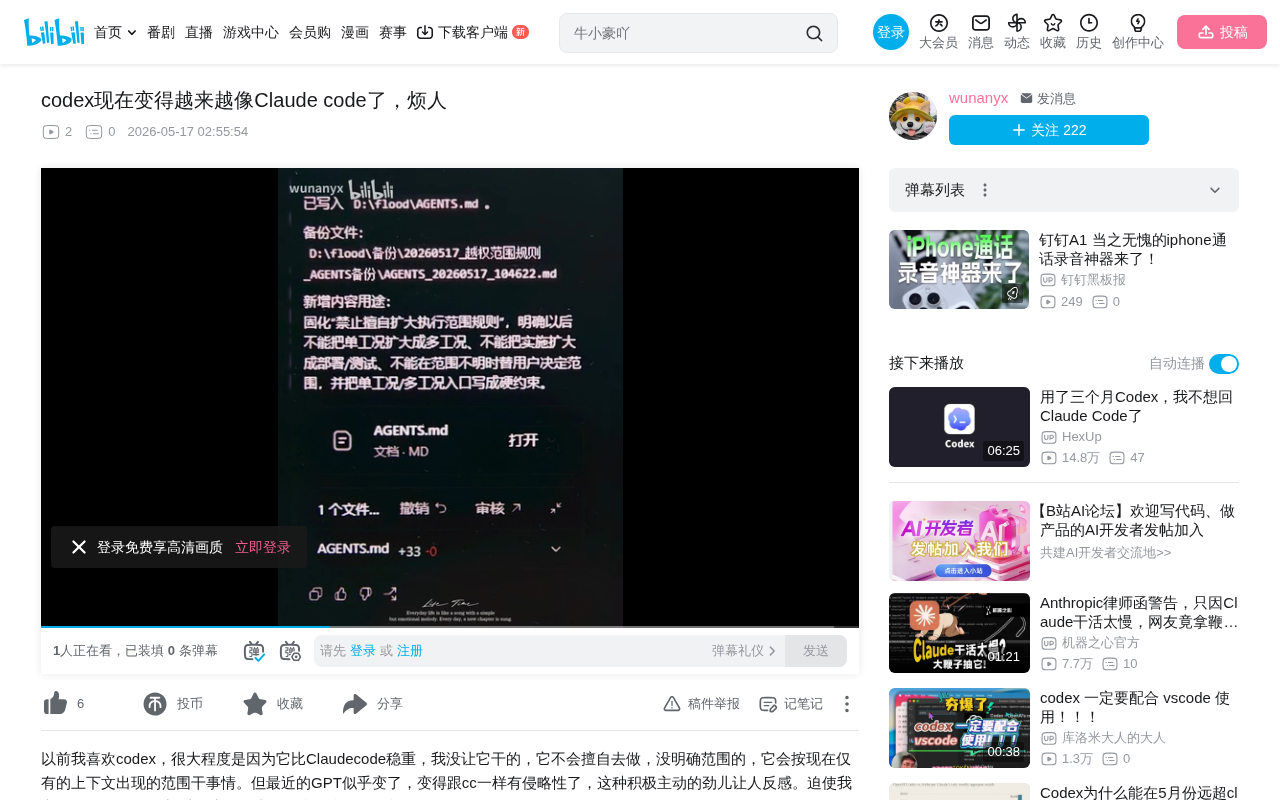
Recently, a developer posted on Bilibili complaining that "Codex is becoming more and more like Claude Code now, it's annoying." While brief, this observation reflects a noteworthy phenomenon in the AI coding tools space — the trend toward product homogenization.
The Homogenization Dilemma in AI Coding Tools
From Differentiation to Convergence
OpenAI's Codex and Anthropic's Claude Code represent the flagship programming assistant products from two top AI companies. Early on, the two had clearly differentiated positioning in terms of interaction methods, code generation style, and context handling:
- Codex: Originally featured cloud-based asynchronous execution, emphasizing autonomous coding capabilities in a sandboxed environment
- Claude Code: Known for its terminal-based interactive experience, emphasizing real-time collaboration between developers and AI
OpenAI Codex was initially released in 2021 as a code-specific fine-tuned version of GPT-3, later evolved into ChatGPT's built-in code interpreter, and then returned in 2025 as a standalone cloud-based coding agent. Its core feature was asynchronous code task execution in Docker sandbox containers — developers could submit requirements and walk away to do other things while waiting for results. Claude Code, launched by Anthropic in 2025, is a command-line programming tool that runs directly in the developer's terminal environment, capable of reading project files, executing shell commands, and performing git operations, emphasizing a real-time "pair programming" experience. The architectural philosophy difference between the two — cloud async vs. local sync — was once their most distinctive label.
However, as both products have iterated, they seem to be converging in functional design and interaction logic. This convergence manifests across multiple dimensions including code generation style, conversational interaction patterns, and task execution workflows.
Why Are AI Coding Tools Converging?
Product convergence is not uncommon in the tech industry, driven by several core factors:
- User needs convergence: Once the market validates the effectiveness of a certain interaction model, competitors naturally gravitate toward the optimal solution
- Technical path convergence: Similar directions in underlying large model capability improvements lead to consistent upper-layer application behavior
- Competitive pressure: When one side launches a popular feature, rapid follow-up by the other has become industry standard
At the technical path level, the convergence in code generation capabilities among mainstream large language models has deep-rooted causes. Whether it's the GPT series or the Claude series, both extensively use GitHub open-source code, Stack Overflow Q&A, technical documentation, and other public data for training. During the reinforcement learning phase, both companies employ RLHF (Reinforcement Learning from Human Feedback) and code execution feedback to optimize their models' programming performance. Additionally, model scaling strategies guided by Scaling Laws are highly consistent — more parameters, more data, longer context windows. When the capability boundaries of underlying models converge, upper-layer application performance naturally converges as well. This is an inevitable result of technological evolution rather than simple product copying.
Homogenization in tech products has repeatedly appeared throughout history. In the early smartphone era, iOS's grid icon layout and Android's diverse desktop formed a stark contrast, but after more than a decade, the two have become highly similar in interaction logic. In social media, Instagram's launch of Stories was essentially a replication of Snapchat, after which short videos, livestreaming, and other features rapidly spread across platforms. This phenomenon is known in economics as "Competitive Convergence" — in fully competitive markets, products converge toward Pareto-optimal feature combinations. But history also shows that the real winners are often players who find unique entry points within the convergence.
What Do Developers Really Care About?
This developer's use of "annoying" to describe the convergence likely reflects several layers of meaning:
- Diminished value of choice: When two tools become increasingly similar, the significance of switching or choosing between them is weakened
- Loss of personalized experience: Developers may have preferred certain unique design philosophies from Codex's earlier iterations
- Signal of slowing innovation: Convergence may suggest both companies are "copying homework" rather than exploring new directions
Implications for the AI Coding Tools Market
The AI programming assistant market is currently in a period of rapid development. Beyond Codex and Claude Code, there are multiple players including Cursor, GitHub Copilot, and Windsurf.
The 2025 AI coding tools market has formed a multi-tiered competitive landscape. The first tier consists of integrated development environment products: Cursor (an AI-native editor based on VS Code with over a million monthly active developers), GitHub Copilot (a Microsoft ecosystem product leveraging GitHub's ecosystem advantages), and Windsurf (built by the former Codeium team, focusing on streaming editing experience). The second tier includes command-line/agent tools: Claude Code, Codex CLI, Aider, etc., which run directly in the terminal and are suited for large-scale code refactoring and automation tasks. The third tier comprises vertical scenario tools, such as v0 for frontend development and Code Interpreter for data analysis. This market has an annual growth rate exceeding 200%, but user retention rates are generally low, indicating that developers are still frequently experimenting with and switching between tools, without yet forming stable usage habits.
At this stage, differentiated competition matters more than feature stacking. For developers, choosing an AI coding tool shouldn't be based solely on feature list similarity, but should focus on:
- Fit with your own workflow
- Depth of support for specific programming languages and frameworks
- Long-term product evolution direction and ecosystem development
While this is just a brief community complaint, it reminds us that in today's era of rapid AI tool iteration, maintaining a unique value proposition may be more important than chasing every feature of the competition.
Key Takeaways
- A developer complained that OpenAI Codex is becoming increasingly similar to Claude Code in product experience
- The AI coding tools market shows a clear homogenization trend
- Product convergence is driven by the combined forces of user needs convergence, similar technical paths, and competitive pressure
- The high overlap in underlying large model training data and technical approaches is the technical root cause of convergence
- Differentiated competition is more valuable to developers than feature stacking
- Despite rapid growth in the AI coding tools market, user retention rates remain generally low and the competitive landscape has yet to stabilize
Related articles
 Product Reviews
Qoder vs Cursor Real-World Comparison: Which $20/Month AI IDE Is Better?
Hands-on comparison of Qoder vs Cursor AI IDEs: Agent autonomy, human interaction count, and architecture decisions. Qoder needed only 2 interactions vs Cursor's 8.
 Product Reviews
Cursor Cloud Agent Demo: Eliminating Bottlenecks Across the Entire Software Development Lifecycle
Deep analysis of Cursor's Cloud Agent demo showing how cloud VMs, automated test artifacts, and a full-chain control plane systematically eliminate human bottlenecks across the software development lifecycle.
 Product Reviews
Cursor 3.0 Deep Dive: Multi-Agent Parallelism, Design Mode, and Best-of-N Model Comparison
Cursor 3.0 evolves from an AI coding assistant into an Agent fleet command center. Explore multi-agent parallelism, Design Mode, and Best-of-N model comparison.