MiniMax M2.5 Hands-On Review: How 10B Parameters Deliver Flagship-Level Coding Performance

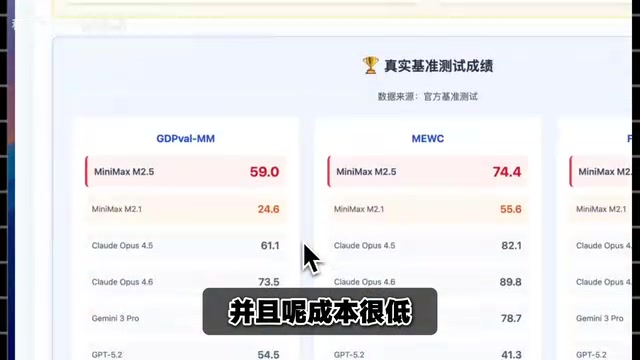
MiniMax M2.5 achieves near-flagship coding performance with only 10B active parameters
MiniMax has released the M2.5 model, which uses a MoE architecture with only 10B active parameters to approach flagship models like Claude Opus 4.6 and GPT-5.2 on coding tasks. The article evaluates its real-world coding capabilities in the Claude Code environment through practical scenarios including 3D game development, AI translation platform building, and blog project creation.
Overview: How Can 10B Parameters Compete with Flagship Models?
MiniMax recently released its latest-generation model, M2.5, which achieves performance on coding tasks approaching flagship models like Claude Opus 4.6 and GPT-5.2 — with only 10B active parameters.
The MoE Architecture Behind 10B Active Parameters
To understand this achievement, you first need to grasp the difference between "active parameters" and "total parameters." M2.5 uses a Mixture of Experts (MoE) architecture — unlike traditional dense models that activate all parameters during every inference pass, MoE models dynamically route each token through a Gating Network, selectively activating only a small subset of "expert" sub-networks. M2.5's total parameter count likely far exceeds 10B, but only 10B parameters are actually involved in computation during each inference. This design brings significant engineering advantages: memory usage and inference latency are calculated based on active parameters, not total parameters. Mainstream large models like GPT-4 and Mixtral also adopt a similar MoE approach, making it the dominant technical pathway for "reducing costs while boosting efficiency" in large models.
What does 10B active parameters mean in practice? Given the same memory and compute budget, while others can only run one model, you can run three — inference speed is three times that of Opus, while pricing maintains a "more for the same price" strategy.
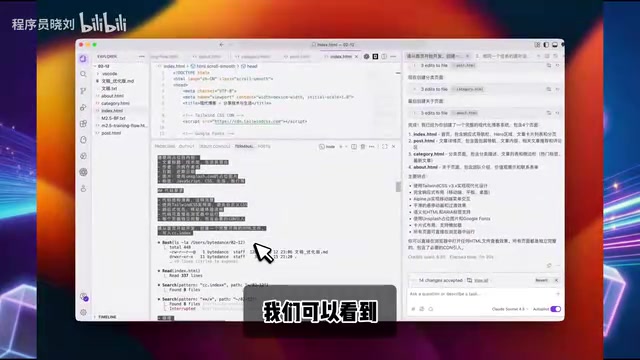
This article comprehensively evaluates M2.5's real-world coding capabilities in the Claude Code environment through multiple practical scenarios, including 3D game development, AI translation platform development, and blog project creation.


Test 1: 3D Flight Racing Game Development
The first test task was a fairly complex game requirement: create a 3D flight racing game using Three.js with keyboard controls, sound effects, and no external audio assets.
Three.js and the Unique Challenges of Web-Based 3D Development
Three.js is currently the most popular WebGL wrapper library, created and open-sourced by Ricardo Cabello (Mr.doob) in 2010. It abstracts the low-level WebGL graphics API into a more accessible Scene Graph model, allowing developers to handle complex operations like 3D scene construction, lighting and rendering, and physics collision without writing GLSL shader code directly. Implementing 3D games on the web presents unique challenges: the browser sandbox environment restricts local file access, so M2.5 opted to dynamically synthesize sound effects using the Web Audio API's OscillatorNode rather than loading external audio files — a classic example of "constraint-driven innovation."
Related articles
 Product Reviews
Qoder vs Cursor Real-World Comparison: Which $20/Month AI IDE Is Better?
Hands-on comparison of Qoder vs Cursor AI IDEs: Agent autonomy, human interaction count, and architecture decisions. Qoder needed only 2 interactions vs Cursor's 8.
 Product Reviews
Cursor Cloud Agent Demo: Eliminating Bottlenecks Across the Entire Software Development Lifecycle
Deep analysis of Cursor's Cloud Agent demo showing how cloud VMs, automated test artifacts, and a full-chain control plane systematically eliminate human bottlenecks across the software development lifecycle.
 Product Reviews
Cursor 3.0 Deep Dive: Multi-Agent Parallelism, Design Mode, and Best-of-N Model Comparison
Cursor 3.0 evolves from an AI coding assistant into an Agent fleet command center. Explore multi-agent parallelism, Design Mode, and Best-of-N model comparison.