One Month After GPT5.5 Launch: People Who Use AI Are Quietly Getting Raises

GPT5.5 isn't a threat but an opportunity — AI users get raises while action beats anxiety.
With its mature AI Agent architecture, GPT5.5 can autonomously write code, operate computers, and conduct research, driving an industry divide: AI users are getting raises while non-users stay stuck. The article argues AI's correct role is as a super assistant rather than a competitor, handling repetitive work so people can focus on high-value tasks. The recommended strategy is to quickly build an "Identify-Delegate-Verify-Iterate" AI workflow and invest saved time into amplifying core competencies.
Anxiety or Opportunity? The Real GPT5.5 User Experience
It's been a month since GPT5.5 launched, and the "programmers are going to lose their jobs" narrative is louder than ever. However, practitioners who have actually used this product in depth offer a completely different answer — the more they use it, the less worried they are.

According to the real-world experience shared by Bilibili creator Lao Ye, GPT5.5 can now autonomously write code, operate computers, and conduct research — handling most tasks without any human guidance. That sounds alarming, but the key question is: Is this capability replacing people, or empowering them?
It's worth understanding that GPT5.5's core breakthrough over previous models lies in the maturation of its "Autonomous Agent" capabilities. Earlier GPT models were essentially conversational — users asked questions, the model answered, and interactions consisted of single or multi-turn text generation. GPT5.5's ability to "autonomously write code, operate computers, and conduct research" means it has evolved from a pure language model into an AI Agent with planning, execution, and feedback loop capabilities. This Agent architecture typically includes three core modules: task decomposition (breaking complex goals into subtasks), tool calling (operating browsers, terminals, file systems, etc.), and self-correction (detecting execution results and adjusting strategies). This is why it can complete work "without human guidance" — it possesses goal-directed behavioral capabilities similar to humans.
The Divide Has Already Begun: AI Users Get Raises, Non-Users Stay Stuck
A noteworthy phenomenon is unfolding: people who use AI are quietly getting raises, while those who don't are stuck in place, paralyzed by anxiety.

This divide is not alarmist. In economics, this phenomenon is called "Skill-Biased Technological Change" (SBTC). Every major technological revolution in history has produced similar effects: during the Industrial Revolution, workers who mastered machine operation earned far more than manual laborers; in the Internet era, knowledge workers proficient in digital tools saw significantly faster salary growth than those in traditional roles. What's unique about the AI era is the unprecedented speed of this divergence — it took less than four years from GPT-3 to GPT5.5, while the Industrial Revolution's technology diffusion took decades. This means the adaptation window is extremely short, and the cost of "waiting and watching" is higher than in any previous era.
When AI can autonomously complete large volumes of repetitive work, real value no longer lies in "what you can do" but in "what you can think of." People who master AI tools gain massive amounts of freed-up time and energy, allowing them to focus on higher-value work:
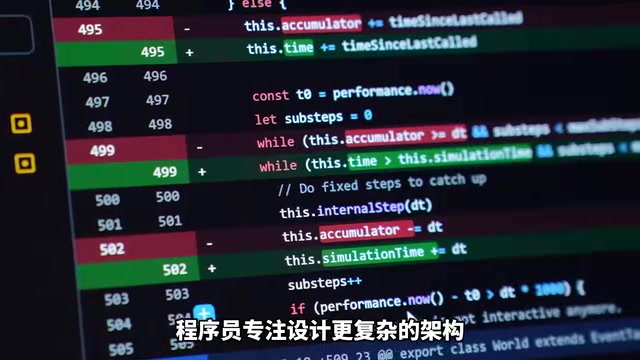
- Programmers: Liberated from repetitive coding, they can focus on designing more complex system architectures
- Data Analysts: Freed from the drudgery of data cleaning, they can dive deep into business logic and insights
- Customer Service Staff: Let AI handle standardized issues while they tackle the trickiest user problems
AI Is Your Super Assistant, Not Your Competitor
Think about it from a different angle: AI is taking over precisely those repetitive tasks that drive people crazy. These tasks consume enormous amounts of time but don't truly reflect your personal value.

The correct framing should be: AI is your super assistant. Its core capabilities are:
- Making the impossible possible — Work volumes that one person couldn't handle before can now be achieved with AI
- Making the slow fast — Tasks that used to take days can now be completed in hours
This means individual output ceilings have been dramatically raised. A programmer who effectively leverages AI might produce output equivalent to three to five people's work. For such individuals, a raise is inevitable.
From an economics perspective, "one person producing the output of three to five" involves the concept of "marginal productivity." When AI serves as a capital tool combined with human labor, output per unit of labor (i.e., labor productivity) increases dramatically. This is similar to the relationship between Excel and accountants, or CAD and architects, but AI's leverage effect is far more significant because it not only accelerates execution-level efficiency but can also participate in creative generation, solution evaluation, and other work previously considered "purely human domains." From a corporate perspective, this means the same business scale requires fewer people, but each remaining person creates more value — so salary increases are a natural result of market supply and demand.
How to Respond: A Three-Step Strategy from Anxiety to Action
Facing a powerful tool like GPT5.5, rather than being anxious, it's better to build your AI workflow as soon as possible. Here are some practical suggestions:
1. Start Using It — Don't Stay on the Sidelines
Don't remain at the "I've heard it's impressive" stage. Identify the most time-consuming, repetitive parts of your work and try letting AI step in. Even if the results aren't perfect, it's better than not using it at all.
2. Use the Time You Save to Amplify Your Core Competencies
When AI saves you time, invest that time in capabilities that truly create barriers. For programmers, that's architecture design and systems thinking. For analysts, it's business understanding and decision-making judgment.
3. Maintain a Learning Rhythm and Keep Up with AI's Iteration Speed
AI tools iterate extremely fast. GPT5.5's capability boundaries today might be refreshed again in three months. Staying sensitive to new tools and new use cases is the key to long-term relevance.
It's important to emphasize that building a personal AI workflow isn't simply "throwing tasks at ChatGPT." A mature AI workflow typically follows a four-step framework of "Identify-Delegate-Verify-Iterate": first, identify high-frequency, low-creativity tasks in your work (such as code template generation, data format conversion, document first drafts); then design appropriate prompts or automation processes to delegate them to AI; next, establish quality verification mechanisms to ensure AI output meets standards; finally, continuously optimize the process based on actual results. Currently, common tool chains in the industry include Cursor (AI-assisted programming), Notion AI (knowledge management), and n8n/Zapier (process automation). The combined use of these tools can form an AI-assisted system covering over 80% of daily work tasks.
Conclusion: Anxiety Is Useless — Action Is the Cure
The launch of GPT5.5 indeed marks another leap in AI capabilities, but the "replacing humans" narrative is overly simplistic. A more accurate description is: AI is redefining what work is valuable. Those who can harness AI and use it as leverage to amplify their own capabilities are entering a new era of career opportunity. Anxiety is useless — action is the cure.
Key Takeaways
- GPT5.5 can autonomously write code, operate computers, and conduct research. Its core breakthrough lies in the maturation of the AI Agent architecture, with task decomposition, tool calling, and self-correction capabilities
- Industry divergence is intensifying: this is a classic manifestation of "Skill-Biased Technological Change" in economics — AI users are already getting raises while non-users remain anxious
- AI's correct positioning is as a super assistant, not a competitor — it handles repetitive work so people can focus on high-value tasks
- Each role should use the time freed by AI to amplify core competencies: programmers focus on architecture, analysts dive deep into business logic
- Building an AI workflow should follow the "Identify-Delegate-Verify-Iterate" framework, combining tools like Cursor and Notion AI to form a complete assistance system
- Facing the AI wave, action matters more than anxiety — building a personal AI workflow as soon as possible is key
Related articles
 Expert Opinions
Windsurf CEO Deep Dive Interview: Speed Is the Only Moat
Windsurf CEO Varun Mohan shares insights on AI coding IDE pivots, product methodology, async Agent challenges, and differentiation strategy vs Cursor. Speed is the only moat.
 Expert Opinions
Being Underestimated Is Freedom: A Contrarian Competition Philosophy for the AI Era
Exploring the contrarian strategy of 'being underestimated is freedom' in AI. From OpenAI to DeepSeek to Cursor, why staying under the radar beats standing in the spotlight.
How the Protestant Work Ethic Was Hija…
How the Protestant Work Ethic Was Hijacked: From Protecting Workers to Oppressing Them
Philosopher Elizabeth Anderson reveals how the Protestant work ethic was twisted from a worker-protecting ideal into a tool of oppression—and what it means for the AI era.