OpenHuman Deep Dive: A Context-First Open-Source Personal AI Agent
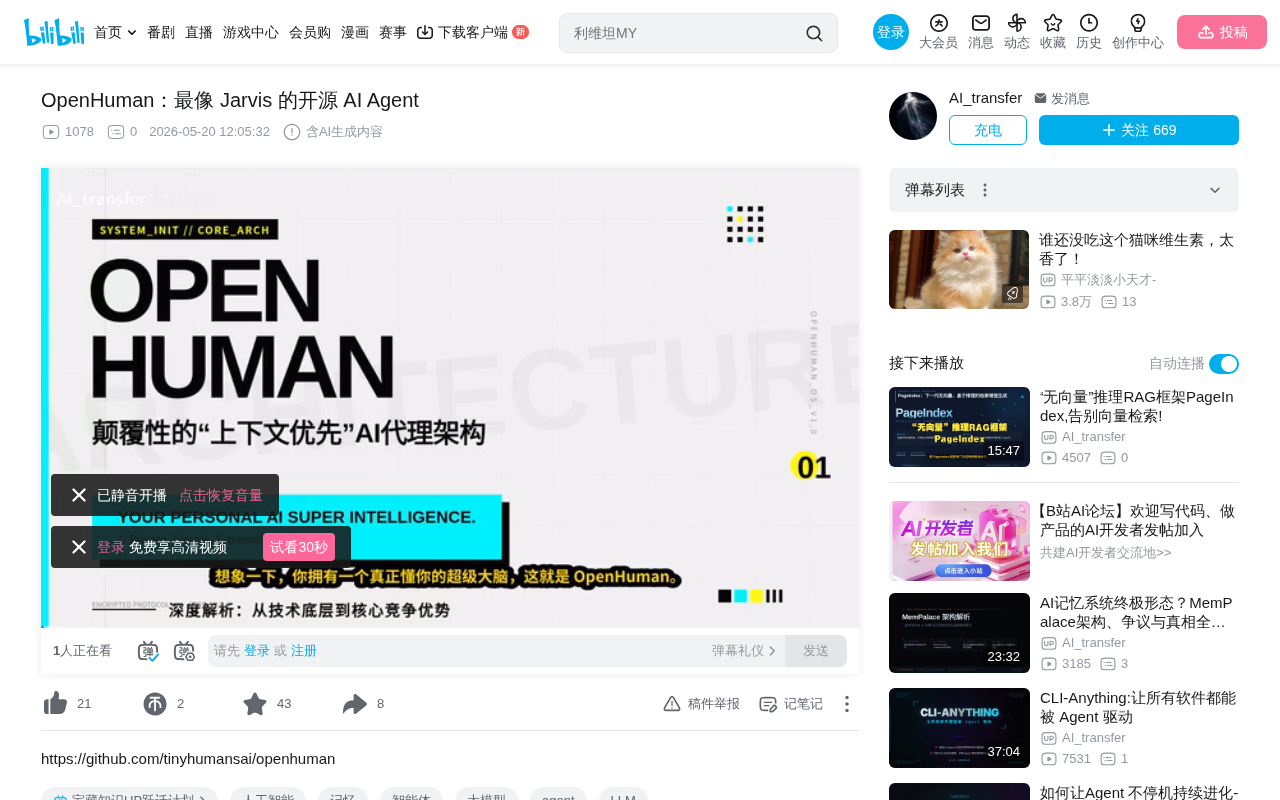
OpenHuman solves AI Agent amnesia with a local-first persistent memory architecture.
OpenHuman is an open-source AI Agent project addressing the cold-start amnesia problem caused by stateless AI architectures. It uses a Rust+React hybrid desktop architecture with a three-layer Memory Tree system (element layer, topic tree, global tree) and Markdown+SQLite local-first storage for persistent memory. Key capabilities include a Token Juice compression engine (85% cost reduction), multi-model dynamic routing, and custom Chromium deep integration, balancing performance, privacy, and cost control as a new context-first personal AI paradigm.
The "Amnesia" Problem of AI Agents: Why We Need OpenHuman
The AI agent space faces an awkward reality: no matter how many conversations you've had with an AI, every time you open a new chat, it acts like it has amnesia—you have to re-explain who you are and what you want. This is the well-known "cold start problem," and it's the biggest pain point preventing AI Agents from truly delivering on their promise.
This problem has deep technical roots. Current mainstream large language models (like GPT, Claude, etc.) use a stateless architecture—every API call is independent, and the model doesn't retain any user history on the server side. While some products simulate memory by concatenating conversation history, this approach is limited by the context window's Token cap, typically ranging from a few thousand to a few hundred thousand Tokens. Once a conversation exceeds the window length, earlier information gets truncated and lost. More critically, cross-session and cross-application user preferences and behavioral patterns simply cannot persist. This means users must re-establish context every time they start a new conversation—not only wasting time but fundamentally preventing AI from evolving from a "tool" into an "assistant."
OpenHuman aims to solve this problem at the architectural level. It proposes a "Context-First" design philosophy: before you even speak, the AI has already pre-loaded your background information through your digital footprint. It's not guessing what you want—it genuinely "knows you." The project has already earned over 200,000 stars on GitHub, reflecting global developer enthusiasm for a truly personalized AI.
Hybrid Desktop Architecture: The Hardcore Rust + React Combination
Why Rust as the Foundation
OpenHuman's underlying architecture uses a Rust + React hybrid approach. Rust handles the most critical compute-intensive tasks, while React handles UI rendering. Over 60% of the project's codebase is Rust, pursuing extreme performance and stability.
Rust is a systems programming language initiated by Mozilla in 2010, with its core innovation being the "Ownership System"—using a compile-time Borrow Checker to guarantee memory safety without garbage collection (GC). This means Rust programs achieve C/C++-level runtime performance while eliminating classic memory errors like null pointers and data races at compile time. Rust has rapidly gained traction in infrastructure: the Linux kernel, Android system, Cloudflare edge computing, and more have all adopted Rust components. Tauri (a Rust-powered desktop application framework) has become a lightweight alternative to Electron. OpenHuman leverages this trend, choosing Rust as a dual foundation for performance and safety.
The tangible benefits of this combination are clear:
- Sub-1-second startup: Click and it's ready—no sluggish loading
- Minimal memory footprint: Even with multiple professional applications running simultaneously, it barely consumes background resources
- Zero-Cost Abstraction: This means high-level language features (generics, iterators, pattern matching) produce no additional runtime overhead after compilation, generating machine code as efficient as hand-written low-level code. Every line of logic fully leverages hardware performance
Deep Integration with a Custom Chromium Kernel
To let AI truly understand web applications, OpenHuman doesn't use the system's restricted built-in browser. Instead, it ships a custom Chromium kernel with full access via CDP (Chrome DevTools Protocol).
CDP is the low-level debugging protocol exposed by Chrome/Chromium browsers, allowing external programs to programmatically control the browser via WebSocket connections. It provides complete interfaces for DOM manipulation, network request interception, JavaScript execution, performance profiling, storage access, and virtually all internal browser capabilities. Mainstream automation tools like Puppeteer and Playwright are built on CDP. OpenHuman chose a custom Chromium over the system WebView specifically to gain full CDP permissions—system WebViews restrict many low-level interfaces for security reasons.
Through this deep integration, it achieves four critical capabilities:
- 24/7 Monitoring: Real-time capture of background scripts and hidden tasks—no data slips through
- Direct Local Storage Access: Access IndexedDB and LocalStorage data at the low level without webpage authorization—works even offline
- Visual Snapshots: Captures complete page layouts from a human-eye perspective, rather than parsing messy DOM code
- Rule Rewriting: Injects Content Scripts and custom rules before pages load, intercepts Service Workers, making applications respond on demand
This low-level integration transforms AI from a "bystander" into a "super assistant" that can actually operate inside web pages—far beyond what ordinary browser extensions can achieve.
Core Engine: Memory Tree and Knowledge Compression
Local-First Dual-Engine Storage
OpenHuman built a storage engine called the "Memory Tree," with a core philosophy of local-first. It's essentially a dual-engine system:
- SQLite: Handles metadata, search indexes, and task queues—optimized for speed and precision. SQLite is the world's most deployed embedded relational database, requiring no separate server process—the entire database is a single file with excellent single-machine read/write performance. It's widely used in mobile (iOS/Android system storage), browsers (Chrome history), and embedded devices. OpenHuman leverages its ACID transaction guarantees and FTS5 full-text search engine for structured queries.
- Markdown File Tree: Serves as AI's long-term memory carrier
Why Markdown instead of a vector database? This reflects a "human-readability first" design philosophy. Vector databases (like Pinecone, Weaviate, Chroma) store text as high-dimensional floating-point vectors—completely unreadable to humans, with retrieval results depending on uncertain similarity thresholds. Markdown files are plain text—you can open and read them directly, or edit them manually. They're perfectly compatible with note-taking apps like Obsidian; when you modify files with an external editor, the AI's cognition reconstructs in real time. This design achieves complete transparency of AI memory and user sovereignty.
Data entering the system goes through a standardized pipeline: normalization → deterministic chunking (under 3000 tokens) → content fingerprint deduplication → atomic storage. The entire process ensures memory is both complete and non-redundant.
Three-Layer Memory Architecture Explained
The Memory Tree organizes all information through three layers:
- Element Layer (Bottom): Like a real-time recorder, storing raw inputs in a buffer. When full, it auto-archives and compresses/merges based on access frequency
- Topic Tree (Middle): Clusters information by people, projects, or specific matters, using lazy loading—detailed data is only retrieved when needed
- Global Tree (Top): Executes a full summary at midnight daily, linking scattered memories into weekly and monthly macro timelines
More importantly, this architecture supports standard REST server interfaces, allowing different AI tools to connect simultaneously for seamless memory alignment across multiple agents.
Token Juice Compression Engine: Cutting API Bills by 85%
When processing massive data, API costs and context overflow are developers' biggest headaches. To understand this pain point, you need to grasp Token economics: Tokens are the basic unit LLMs use to process text—one English word typically splits into 1-3 Tokens, while each Chinese character is about 1.5-2 Tokens. Mainstream APIs charge by Token count; for example, GPT-4o's input price is roughly $2.5-5 per million Tokens. When processing large volumes of historical data (like six months of emails), the raw text might contain millions of Tokens—sending it directly to the model is not only expensive but can exceed context window limits, causing information loss.
OpenHuman designed the Token Juice compression engine, squeezing out redundancy through a three-layer filtering mechanism:
- System Layer: Handles generic code and document structure, removing repetitive boilerplate (email signatures, headers/footers)
- User Layer: Remembers your business terminology and expression habits, semantically compressing frequently recurring fixed phrases
- Project Layer: Fine-grained trimming for specific tasks
These three layers are essentially a domain-adaptive information distillation strategy, combined with semantic weighting algorithms that assign importance scores to different content fragments, prioritizing high-value information. On average, it compresses Token counts by over 85%. A compelling real-world example: processing six months of historical emails originally cost over $140 in API calls—after optimization, just $23. The entire engine processes with under 15ms latency.
Multi-Model Dynamic Routing: Balancing Speed, Cost, and Security
OpenHuman's intelligent routing system acts as an "expert team dispatcher," drawing from the Mixture of Experts (MoE) concept—different tasks go to the most capable model rather than using one general-purpose model for everything. In practice, the system must determine the request type within milliseconds and route to the appropriate model endpoint:
- Hardcore coding tasks → Top-tier logic models
- Routine semantic search/UI updates → Millisecond-response small models
- Image analysis → Vision models automatically activate
- Sensitive data processing → Cloud connection severed, handed to local models (e.g., Ollama)
Ollama is one of the most popular local LLM runtime frameworks, supporting open-source models like Llama, Mistral, and Phi on consumer hardware. Through quantization techniques (such as 4-bit quantization in GGUF format), models that originally required tens of GBs of VRAM can run with just 4-8GB of RAM. When OpenHuman detects sensitive data (medical records, financial information), it automatically switches inference from cloud APIs to local Ollama instances—data never leaves the machine, achieving privacy protection at the architectural level.
This hybrid collaboration approach delivers cloud-scale model capabilities while maintaining absolute local data privacy.
Innovative Use Cases: Virtual Avatars and Subconscious Loops
Intelligent Meeting Agent
OpenHuman bridges the camera at the system level, replacing your physical image with a digital avatar. By intercepting audio streams with streaming speech recognition and voice separation, all meeting conversations are stored in the Memory Tree in real time. When you zone out or join mid-meeting, you can quietly ask "What was the key figure the boss just mentioned?"—and it instantly retrieves it from memory, like a secretary with perfect recall.
Subconscious Loop System
Even without explicit commands, background daemon processes keep running: monitoring to-do items, predicting schedule risks, and drafting documents in silent mode. When the system is idle, it "dreams"—performing deep associations across scattered emails, meeting notes, and documents, automatically assembling a long-term knowledge graph.
Furthermore, it integrates prediction market interfaces, executing trading strategies on your behalf based on analysis results. Of course, robust task interruption management ensures that the moment you say stop, all resources are instantly released.
Security Design and Known Risks
Security Mechanisms
- Core security rules are hardcoded at the top of system prompts, anchored with special Tokens for strong injection resistance
- AI tool calls must explicitly declare permissions, preventing silent data exfiltration
- High-risk logic runs in sandboxed containers with physical-level network and storage isolation. A sandbox is a security isolation mechanism that restricts untrusted code to a controlled environment, preventing access to the host system's files, network, and other resources. Container technologies (like Docker, gVisor) use Linux kernel namespaces and cgroups to create independent process spaces, network stacks, and filesystem views for each container. Even if code inside the sandbox is exploited maliciously, attackers cannot breach the container boundary to access local data or networks—this "defense in depth" strategy is a core practice in modern security architecture.
- AES-256 encryption + GDPR-level compliance support. AES-256 (Advanced Encryption Standard, 256-bit key length) is the recognized highest-strength symmetric encryption standard, approved by the NSA for protecting top-secret information—brute-force cracking with current computing power would take far longer than the age of the universe. GDPR (General Data Protection Regulation) is the EU's strictest personal data protection regulation implemented in 2018, with core principles including data minimization, purpose limitation, the right to be forgotten, and 72-hour breach notification obligations. OpenHuman's GDPR-level compliance means users have complete control and deletion rights over their memory data.
Known Risks and Caveats
The project team has transparently disclosed historical vulnerabilities: the RPC service once had a cross-origin vulnerability that nearly allowed third-party scripts to read local data—patched via origin verification; the underlying email component had a remote code execution risk—fixed with a mandatory update. Windows 11 preview builds may encounter cold-start crashes, and Ubuntu 24.04 running AppImage may have issues due to missing legacy libraries.
Practical advice: Before connecting core accounts like Gmail or Notion, it's strongly recommended to test with a secondary/burner account first.
Competitive Comparison: What Sets OpenHuman Apart
| Dimension | OpenHuman | Competitors (e.g., Hermes/OpenCloud) |
|---|---|---|
| Deployment Speed | Under 5 minutes, one-click setup | Often 2-4 hours of environment wrangling |
| Design Philosophy | Deep context-first | Plugin stacking |
| Memory Mechanism | Markdown + SQLite, fully transparent | Vector database black box |
| Hardware Requirements | 4-16GB RAM sufficient | Often requires 64GB+ VRAM |
Deterministic architecture beats random chaos—OpenHuman delivers a clear dimensional advantage over traditional approaches in efficiency and resource usage.
Conclusion: Context-First Ushers in a New Paradigm for Personal AI
OpenHuman represents an important direction in AI Agent development: moving from stateless "stranger every time" interactions toward personal intelligence with persistent memory and deep understanding. It uses Rust to guarantee performance, Markdown to guarantee data transparency, local-first to guarantee privacy, and Token compression to guarantee cost control.
While the project is still rapidly iterating with some platform compatibility issues to resolve, its "Context-First" core philosophy and engineering implementation have set a noteworthy new benchmark for open-source AI Agents. A private, transparent, and efficient era of personal intelligence may truly be arriving.
Related articles
 Product Reviews
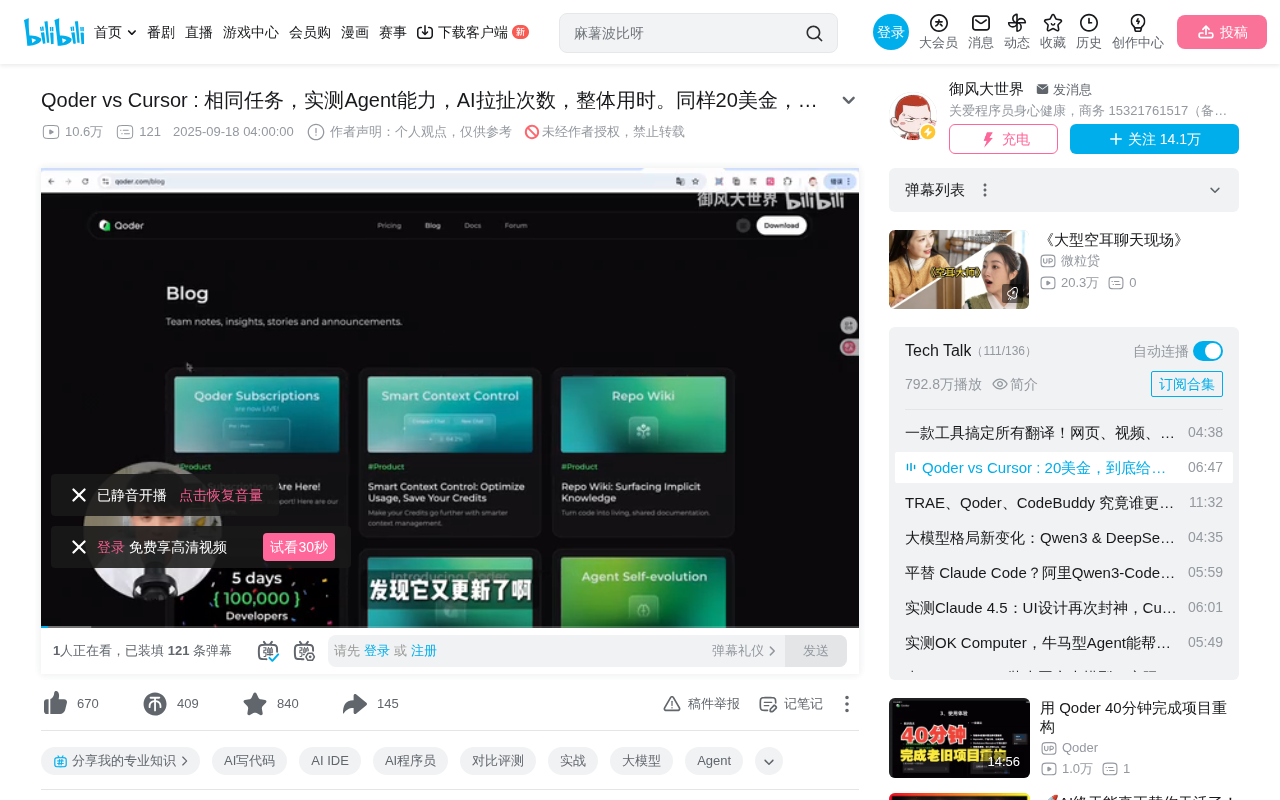
Qoder vs Cursor Real-World Comparison: Which $20/Month AI IDE Is Better?
Hands-on comparison of Qoder vs Cursor AI IDEs: Agent autonomy, human interaction count, and architecture decisions. Qoder needed only 2 interactions vs Cursor's 8.
 Product Reviews
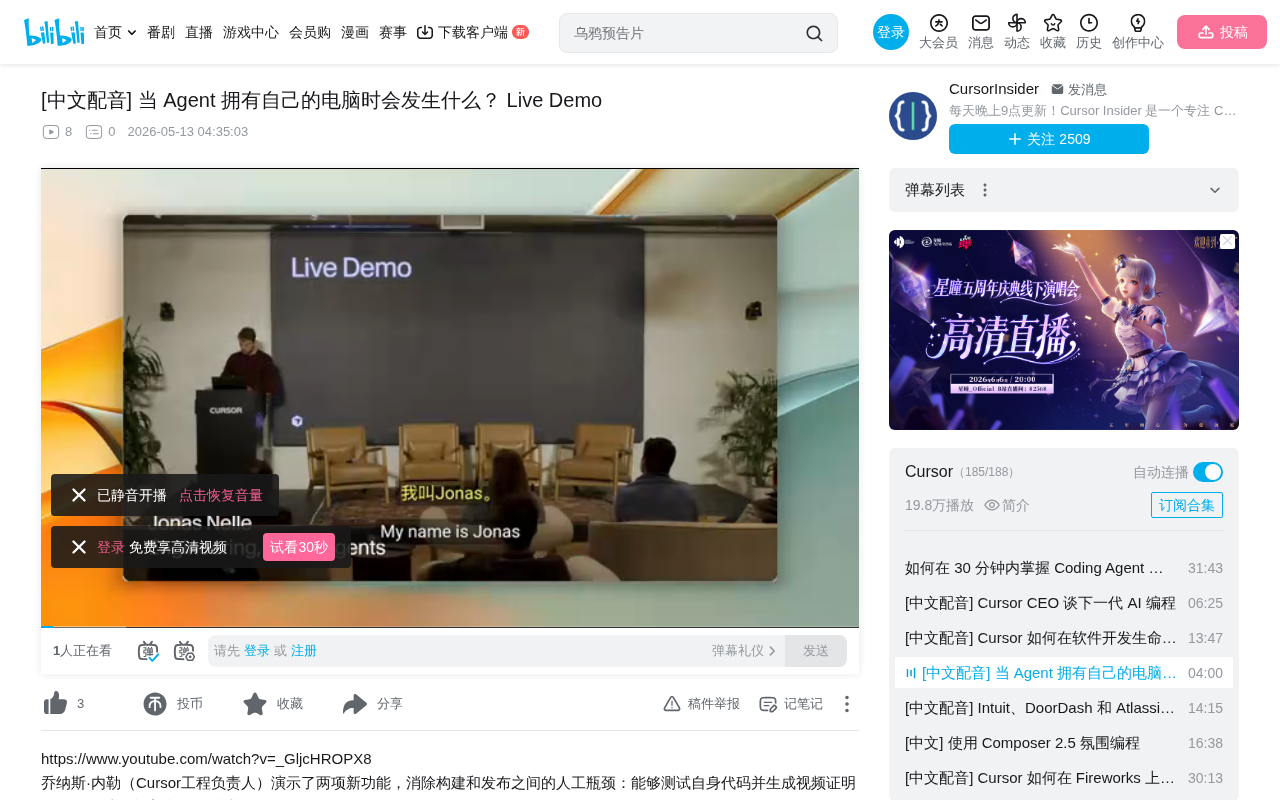
Cursor Cloud Agent Demo: Eliminating Bottlenecks Across the Entire Software Development Lifecycle
Deep analysis of Cursor's Cloud Agent demo showing how cloud VMs, automated test artifacts, and a full-chain control plane systematically eliminate human bottlenecks across the software development lifecycle.
 Product Reviews
Cursor 3.0 Deep Dive: Multi-Agent Parallelism, Design Mode, and Best-of-N Model Comparison
Cursor 3.0 evolves from an AI coding assistant into an Agent fleet command center. Explore multi-agent parallelism, Design Mode, and Best-of-N model comparison.