Practical Tutorial: Developing a Farm Game with Godot Engine + AI-Generated Assets

Indie dev builds a farm management game using Godot engine with AI-generated art assets
An indie developer shared their experience building a farm management game with the Godot engine, featuring a classic breed → earn → unlock gameplay loop. The project's core highlight is using AI image generation technology to create game assets, effectively solving the common art resource bottleneck for indie developers and demonstrating a practical case of AI tools lowering game development barriers.
Project Overview: An AI-Assisted Farm Management Game
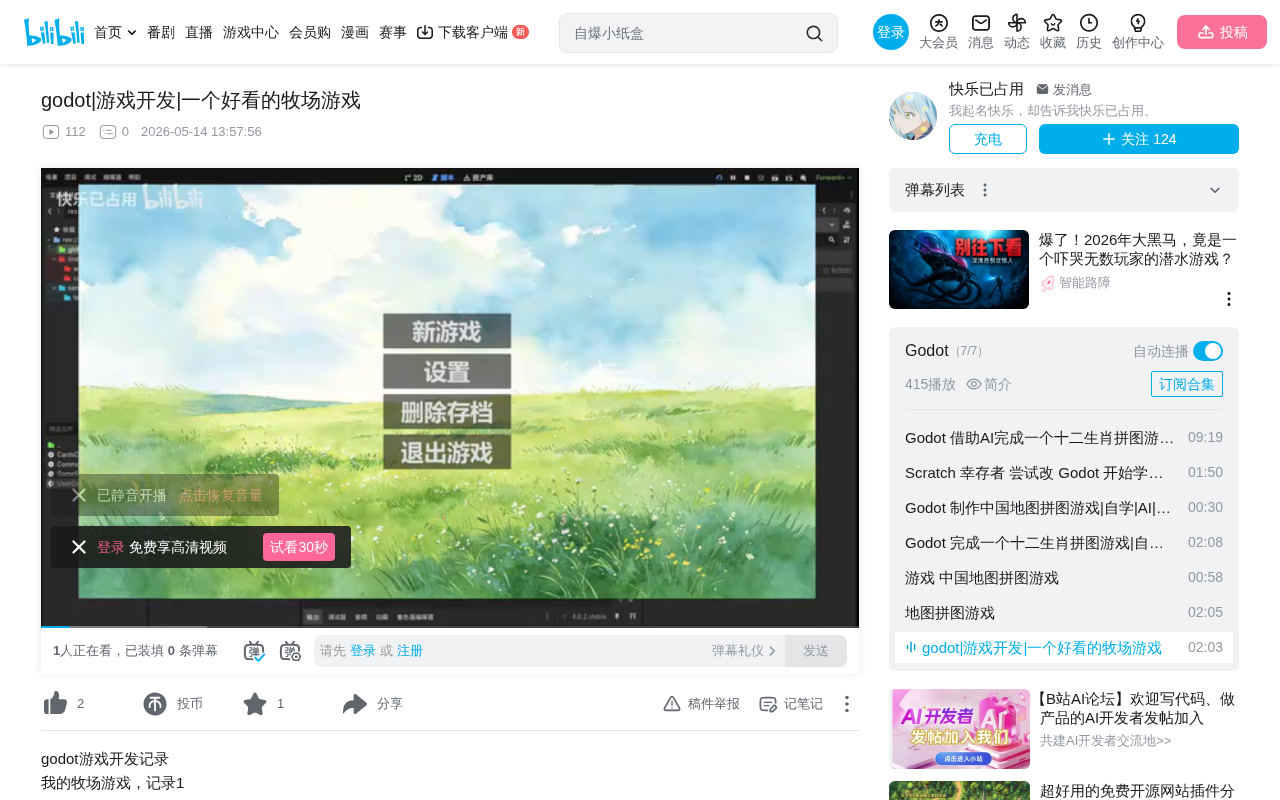
An indie developer recently shared their experience developing a farm management game using the Godot engine. The core highlight of this project is how the developer integrated AI image generation technology into the game asset creation pipeline, effectively solving the common art resource bottleneck that indie developers face.
Core Gameplay Design of the Farm Game
Business Loop Mechanics
This farm game follows the classic management game framework:
- Multi-farm system: The game includes multiple different farm areas
- Animal breeding: Each farm can raise different types of animals
- Economic system: Earn revenue through animal husbandry
- Unlock mechanism: Accumulate funds to unlock new farms
This "breed → earn → unlock → expand" loop is a classic design pattern for idle management games — simple yet effective in providing players with a continuous sense of purpose and achievement. The core design philosophy of idle management games can be traced back to 2013's Cookie Clicker. At its essence, it's a positive feedback loop system — players obtain resources through simple actions, resources are used to purchase facilities that produce more resources, forming an exponential growth curve. Key design elements of this genre include: a well-balanced numerical inflation curve (typically using logarithmic or power functions to control pacing), multi-layered unlocks that introduce freshness, and offline earnings mechanics to maintain player retention. The farm management theme is naturally suited to this model because the concepts of animal reproduction and output are intuitive — players need no additional learning cost to understand the game logic.
Technical Choice: Why Godot Engine
As an open-source game engine, Godot has been gaining increasing attention in the indie game development community. For 2D management games like this, Godot offers the following advantages:
- Completely free and open-source, no licensing fees required
- Lightweight architecture with fast startup and compilation
- Comprehensive 2D development toolchain
- Active community with abundant learning resources
The Godot engine was open-sourced in 2014 by Argentine developers Juan Linietsky and Ariel Manzur under the MIT license. Unlike Unity and Unreal Engine, Godot charges no revenue share or licensing fees whatsoever, which is particularly important for budget-constrained indie developers. Its unique scene-node architecture makes game object organization very intuitive — every game element is a node, nodes combine into scenes, and scenes can be nested and reused. The GDScript scripting language has Python-like syntax with a gentle learning curve, making it ideal for rapid prototyping. The Godot 4.x versions in 2024 brought significant improvements in rendering performance and toolchain, especially in 2D game development. Its built-in TileMap system, AnimationPlayer, and Signal system make management game development highly efficient, allowing developers to implement complex game logic interactions with relatively little code.
Practical Applications of AI in Game Asset Creation
Solving the Art Challenge for Indie Developers
For indie developers, art resources are often one of the biggest pain points. The developer candidly admitted that "the assets are mainly the hard part to deal with" — this is a shared struggle for the vast majority of solo developers who have sufficient programming skills but lack art expertise or face prohibitively long production cycles.
Before AI generation technology emerged, indie developers traditionally had several approaches to solving art problems: purchasing ready-made asset packs (such as Asset Packs on itch.io, ranging from free to tens of dollars), using pixel art style to lower the art barrier, outsourcing to freelance artists (typically $50-200 per character design), or spending significant time learning basic art skills to create assets themselves. Each approach has obvious limitations — purchased asset packs are difficult to unify stylistically, outsourcing is expensive with low communication efficiency, and self-learning art requires months or even years of accumulation.
This developer's solution was to use AI to generate the image assets needed for the game, then add simple animation effects on top. Judging from the final results, the quality of AI-generated assets was satisfactory — the developer noted that "the images generated this time all worked quite well."
Advantages of AI-Generated Assets
Using AI-generated static images combined with simple animations is a pragmatic strategy for indie developers leveraging AI-assisted development today. Current mainstream AI image generation tools include Stable Diffusion, Midjourney, DALL-E, and others, each with distinct characteristics: Stable Diffusion is open-source, free, and can be deployed locally, suitable for scenarios requiring bulk generation and fine-grained control; Midjourney excels in artistic style, ideal for concept design; DALL-E performs well in understanding complex prompts.
In the specific practice of game asset creation, developers need to address several key technical challenges: maintaining style consistency across multiple images (achievable through LoRA model fine-tuning or fixed random seeds), generating transparent background assets suitable for game use (requiring post-processing cutouts or dedicated background removal tools), and ensuring generated image resolution and aspect ratios meet game UI requirements. Some advanced developers also use techniques like ControlNet to precisely control composition and poses in generated images, achieving more controllable output.
The advantages of this approach include:
- Dramatically reduced art costs: No need for professional artists or outsourcing fees
- Rapid iteration: Unsatisfied results can be regenerated with extremely low trial-and-error costs
- Style consistency: Proper prompts can maintain overall visual style coherence
- Suitable for prototype validation: Quickly produce usable assets to prioritize validating whether gameplay works
Of course, AI-generated assets also have limitations, including potential copyright disputes, uncontrollable details, and difficulty ensuring consistency between animation frames. The current industry best practice is to use AI generation as the initial asset foundation, then refine details through manual editing, striking a balance between efficiency and quality.
Insights and Recommendations for Indie Developers
The AI + Game Engine Workflow Trend
Although this case is small in scale, it represents a clear trend: AI tools are tangibly lowering the barriers to game development, especially in art asset production. For developers with programming skills but lacking art expertise, AI image generation tools can already serve as a reliable asset source.
It's worth noting that AI-assisted game development workflows are evolving rapidly. Beyond image generation, AI applications in game development extend to sound effect generation (such as Elevenlabs' audio tools), code assistance (such as GitHub Copilot helping write game logic), level design suggestions, and game copywriting across multiple areas. Future indie developers may only need to focus on core creativity and system design, delegating much of the execution-level work to AI tools.
Building Experience Through Small Projects
The developer defined this attempt as "an AI experiment" — this mindset is worth emulating. Validating the usability of AI tools in actual development workflows through small projects, then applying accumulated experience to more complex projects, is a sound learning path.
Specifically, this progressive learning strategy includes: first trying AI tools in Game Jams (typically 48-72 hour time-limited game development events) to understand their capability boundaries; then establishing a mature AI asset workflow in small complete projects; and finally applying the validated process to commercial projects. Each stage helps developers better understand the strengths and limitations of AI tools, avoiding pitfalls in important projects.
Conclusion
This Godot farm game demonstrates how indie developers can leverage AI tools to break through art bottlenecks and complete a full game project at relatively low cost. As AI image generation technology continues to advance, more indie developers will adopt similar workflows, ensuring game creativity is no longer constrained by a lack of art resources. For programmers looking to try game development, the combination of Godot + AI asset generation is a starting point worth exploring.
Key Takeaways
- The developer used Godot engine to build a farm management game with the classic breed → earn → unlock business loop design
- AI-generated game art assets effectively solved the indie developer's art resource bottleneck
- The approach of AI-generated images combined with simple animations performed well in practice
- AI tools are lowering game development barriers, especially suited for indie developers with programming skills but lacking art expertise
- Validating AI tool usability through small projects is a sound learning path
Related articles
 Product Reviews
Qoder vs Cursor Real-World Comparison: Which $20/Month AI IDE Is Better?
Hands-on comparison of Qoder vs Cursor AI IDEs: Agent autonomy, human interaction count, and architecture decisions. Qoder needed only 2 interactions vs Cursor's 8.
 Product Reviews
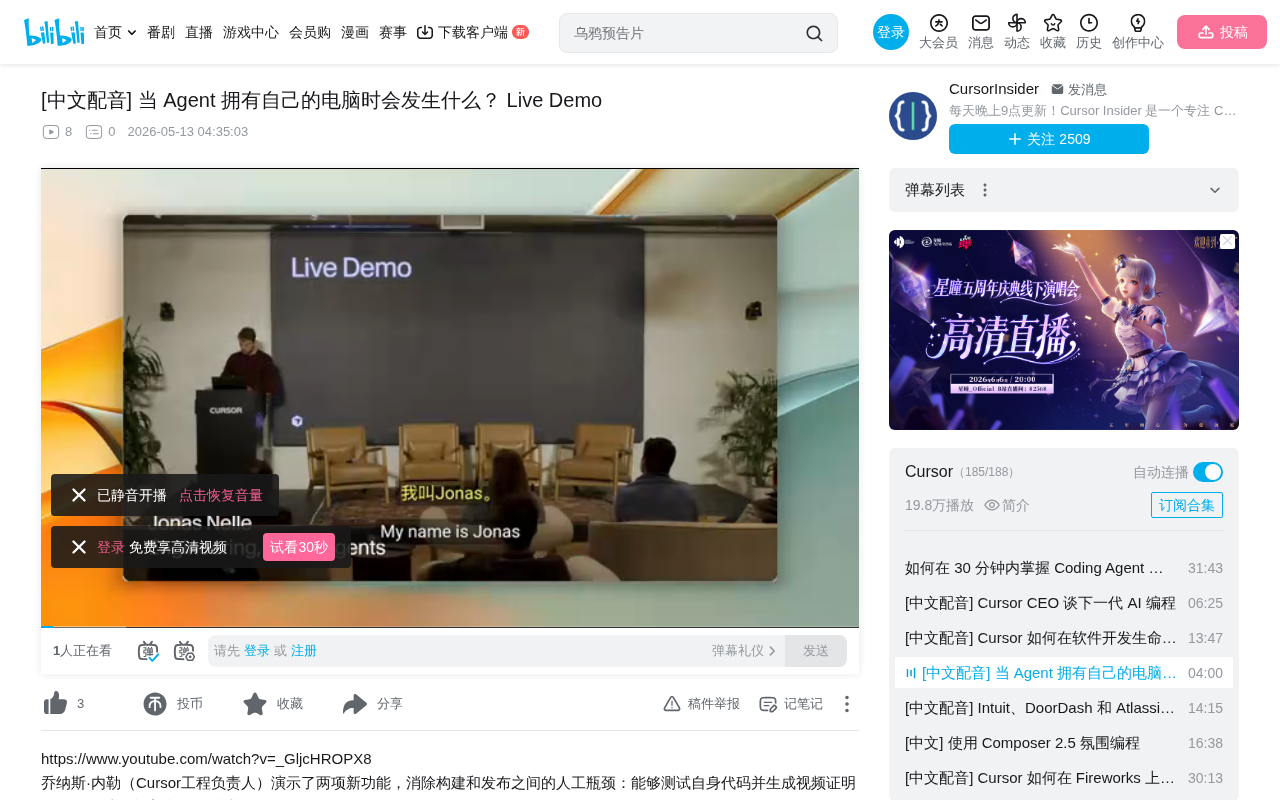
Cursor Cloud Agent Demo: Eliminating Bottlenecks Across the Entire Software Development Lifecycle
Deep analysis of Cursor's Cloud Agent demo showing how cloud VMs, automated test artifacts, and a full-chain control plane systematically eliminate human bottlenecks across the software development lifecycle.
 Product Reviews
Cursor 3.0 Deep Dive: Multi-Agent Parallelism, Design Mode, and Best-of-N Model Comparison
Cursor 3.0 evolves from an AI coding assistant into an Agent fleet command center. Explore multi-agent parallelism, Design Mode, and Best-of-N model comparison.