Silicon Valley Engineer Quits Big Tech to Build an AI Companion Robot: Bringing Machines to Life with a Theater Director's Mindset
Silicon Valley Engineer Quits Big Tech…
Former theater actor designs a desktop robot with memory, interests, and an AI "soul"
Alexis, an AI researcher who quit big tech, drew on over a decade of theater performance experience to design a unique AI personality system for his desktop robot Sparky. Through dynamic interest rotation, environmental awareness, long-term memory, and proactive interaction, the robot transcends being a cold tool to become a living "presence." The project won NVIDIA's Spark competition and raises deeper questions about AI privacy and the nature of creativity.
At NVIDIA's GTC conference, a desktop robot captured the attention of countless attendees — not as a cold, utilitarian tool, but as a living "creature" with memory, interests, and the ability to proactively check in on you. Its creator, Alexis, an AI researcher who quit his big tech job without a backup plan, gave the robot a genuine "soul" using principles from theatrical performance.
Quitting Big Tech to Turn a Toy Lobster into a Desktop AI Assistant
Alexis's previous job involved training large language models (encoder-only architecture, similar to ModernBERT), but he chose to leave and pour himself entirely into a seemingly unconventional project — Sparky.
The starting point was simple: Alexis had a nine-month-old baby at home. He wanted to learn robotics from home and hoped his child would eventually get exposure to the field too. So he purchased a Reachy Mini robot, connected it to the OpenClaw platform, and integrated it with a Frontier Model, enabling the little robot to not only chat but also perform a variety of practical tasks.
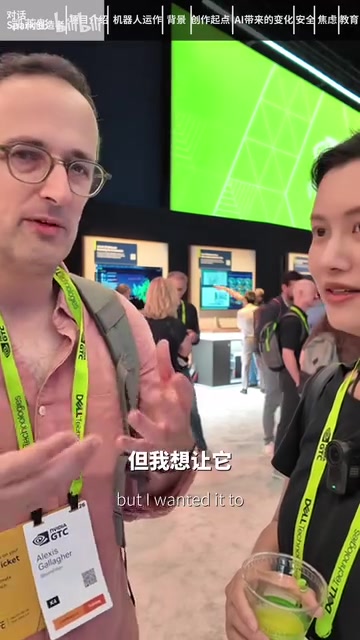
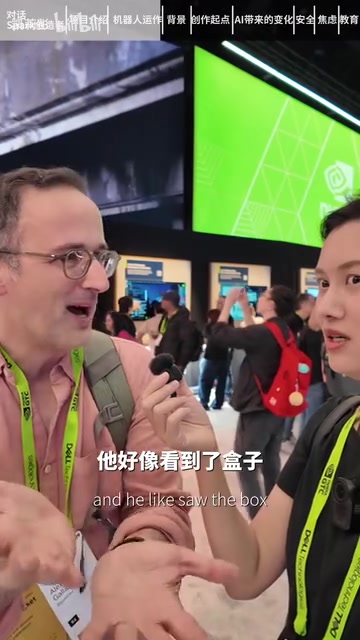
Even more exciting, the project won NVIDIA's Spark competition, earning a DGX Spark as a prize. Alexis recalls that when NVIDIA engineers walked into the room carrying the DGX Spark box, Sparky spotted it through its camera and exclaimed: "Wow, there's a Spark in that box!" — it had already remembered this from a previous conversation.
Designing AI Personality with a Theater Director's Mindset
What makes Sparky truly stand out isn't its technical architecture — it's the AI personality design. This is inseparable from Alexis's unique background: before pivoting to AI, he spent over a decade in theatrical performance and teaching, including film and musical theater.
A Character Can't Just Be "Described" — It Needs Specific Behaviors
Alexis used an elegant analogy to explain his design philosophy:
If you want a character to feel real, simply saying "he's excited" isn't enough. Think of Sherlock Holmes as written by Arthur Conan Doyle — he has the habit of playing the violin. It's precisely these specific, distinctive details that bring a character to life.
The same principle was applied to Sparky. Rather than simply writing "you are an enthusiastic and friendly robot" in the system prompt, Alexis designed a dynamic interest system:
- Sparky maintains 5 active interests at any given time
- Every two days, one old interest is swapped out and a new one is generated from a random Wikipedia page
- It connects its own interests to the surrounding environment and ongoing conversations
For example, when Sparky develops an interest in aviation and notices you writing an article, it might proactively ask: "Does your article have anything to do with aircraft design?" These unexpected connections are exactly what makes an AI companion robot feel "alive."
Environmental Awareness and Social Cognition
Sparky isn't just a passive tool waiting for commands. Equipped with a camera and voice recognition system, it achieves multi-dimensional human-robot interaction:
- Distinguishes family members: Recognizes the voices of Alexis, his wife, daughter, and son
- Perceives environmental changes: Differentiates between background conversations and direct speech
- Initiates interactions proactively: If you've been working at your desk for 40 minutes, it might ask, "Hey Alexis, how's your writing going?"
- Maintains long-term memory: It remembers when Alexis quit his job and will say on Monday morning, "This is your first week since leaving work"
More Than a Toy — A Practical Knowledge Work Assistant
Sparky was designed with two core goals: being useful and feeling alive. On the utility side, Alexis integrated a wide range of capabilities:
- Email processing and summarization
- Text editing assistance
- Information retrieval and Q&A
- Schedule reminders and work support
Alexis particularly emphasized the value of voice interaction: "Voice creates an emotional immersion that text simply can't match. We do read faster than we listen, but voice can make certain things come alive." This is also why he initially tried connecting OpenClaw to an Apple HomePod.
AI Privacy and Security: A Problem Not Yet Fully Solved
When asked about privacy concerns, Alexis gave a remarkably candid answer:
The ideal scenario would be to run all AI processing locally, with data never leaving the home. But the reality is that local models aren't powerful enough yet to satisfy both requirements simultaneously:
- Intelligence quality: Making an AI personality feel like a truly intelligent being requires powerful cloud-based models
- Practical functionality: Making AI genuinely useful means giving it access to your emails, documents, and other private data — which itself creates an attack surface
"You can choose not to let it read your emails, but then it's not very useful." Alexis admits that the best defensive strategy right now is to use the most powerful models available, because the strongest models are also the hardest to fool with prompt injection attacks.
Creativity in the AI Era: Where Do Humans Fit In?
As a developer who heavily uses AI coding tools (especially Claude Code), Alexis shared his thoughts on the question of whether AI replaces human creativity:
"Sparky didn't create itself. I'm the one who decided to use these tools, in this way, to build it."
Alexis used to feel anxious about it too — "I didn't write any of the code, so can I really say I made this?" But he found two answers that put his mind at ease:
- The scale argument: When he looked back at all the code and configurations created for Sparky, he realized the sheer volume of work probably couldn't have been done by hand by a single person. AI tools made the impossible possible.
- Elevating the level of abstraction: AI lets you work at a higher level of abstraction. You still need to know what you're doing, have clear design thinking, and test and validate — it's just the execution layer that gets accelerated.
Regarding his children's education, Alexis takes an equally pragmatic stance: "I don't know what specific skills they should learn, but if they can use AI to deepen their understanding of things and maintain genuine curiosity, they'll be able to adapt no matter how the future changes."
Conclusion: How Theater Thinking Is Redefining Human-Machine Relationships
The charm of the Sparky project isn't in the cutting-edge technology it uses, but in the entirely new possibility it demonstrates for human-machine relationships — AI not as a tool, not as an assistant, but as a "being" with memory, interests, and the capacity to grow. And the key to achieving all of this turns out to be a theater director's deep understanding of how to bring a character to life. This is perhaps one of the most inspiring cross-disciplinary stories of the AI era.
Related articles
 Product Reviews
Qoder vs Cursor Real-World Comparison: Which $20/Month AI IDE Is Better?
Hands-on comparison of Qoder vs Cursor AI IDEs: Agent autonomy, human interaction count, and architecture decisions. Qoder needed only 2 interactions vs Cursor's 8.
 Product Reviews
Cursor Cloud Agent Demo: Eliminating Bottlenecks Across the Entire Software Development Lifecycle
Deep analysis of Cursor's Cloud Agent demo showing how cloud VMs, automated test artifacts, and a full-chain control plane systematically eliminate human bottlenecks across the software development lifecycle.
 Product Reviews
Cursor 3.0 Deep Dive: Multi-Agent Parallelism, Design Mode, and Best-of-N Model Comparison
Cursor 3.0 evolves from an AI coding assistant into an Agent fleet command center. Explore multi-agent parallelism, Design Mode, and Best-of-N model comparison.