Small Business Owners Who Don't Understand AI Are Headed for Failure
Small Business Owners Who Don't Unders…
In the AI era, small business owners must personally get hands-on — AI learning can't be outsourced to employees.
The article argues that small business owners shouldn't follow the advice that "bosses shouldn't do tech work themselves." AI has lowered technical barriers but raised cognitive ones — "what to do" and "why to do it" are core capabilities that cannot be outsourced. Small business owners must personally use AI tools, re-understanding their business, users, and market through hands-on practice, or risk losing effective decision-making power and control over their company's fate.
"You're the Boss, Why Are You Doing Tech Work?" — This Advice Is Killing Small Business Owners
Recently, an entrepreneur who's been building websites with AI shared their experience: commenters kept saying "You're the boss, you shouldn't be doing this yourself." It sounds like well-meaning advice, but it might actually be the most dangerous suggestion you could follow.

For large companies, sure — the boss doesn't need to get hands-on with technology because there's a well-structured team and clear division of labor. But for a small company with only three to five people, this logic simply doesn't apply. If a small business owner maintains the posture of a "big boss" in the AI era and refuses to get personally involved, what awaits them is likely elimination by the times.
Talking About "Embracing AI" While Not Even Having an Account
Here's a brutal reality: many small business owners talk about "embracing AI" every day, but haven't even registered for a single AI tool account. Ask them why they don't research it themselves, and the answer is always "I'll have someone look into it."
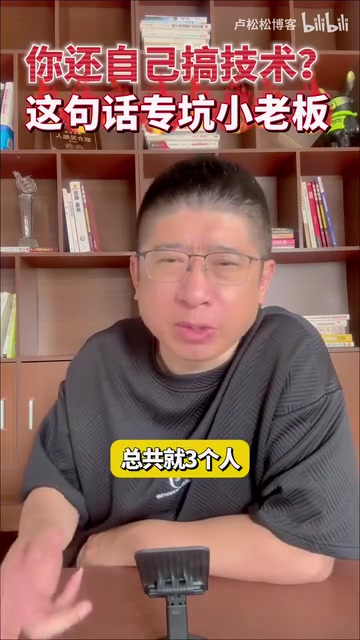
The problem is — you have a three-person team. Who exactly are you counting on? That employee making a few thousand a month to understand AI's disruptive impact on your business? That's not realistic.
An even more dangerous scenario: the person in your company who understands AI best is no longer you — it's some regular employee. Whatever the employee says, the boss nods along; whatever tool the employee recommends, the boss tries it. Once this dynamic takes hold, decision-making power has effectively shifted away, and the small company's fate is no longer in the boss's hands.
This risk has deep roots in management theory. Information asymmetry is one source of power — whoever controls critical information holds real influence. In large companies, there are checks and balances to prevent this kind of power shift. But in a three-to-five person team, an employee's AI knowledge is often limited to the operational level of specific tools, lacking a holistic understanding of the business. Tool choices made from a narrow perspective may be completely misaligned with the company's actual business needs — and the boss remains oblivious.
The Biggest Crisis for Small Companies: The Boss Losing Touch with the Front Lines
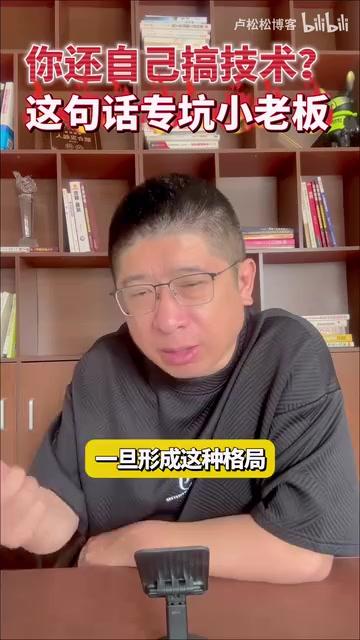
Many people think AI's greatest power is replacing human labor and improving efficiency. But after deep, hands-on use, you'll discover that AI's truly terrifying power is that it forces bosses to re-understand their own business.
When you personally use AI to build websites, create content, and develop products, you're forced to rethink the most fundamental questions:
- Who is the user, really? Not something you guess at — it's something you validate step by step through hands-on work.
- Why isn't anyone using this? Only by doing it yourself can you feel the real gap between product and market.
- Where does traffic come from? Not from listening to someone else's methodology, but from finding the path yourself on the front lines.
This "learning by doing" approach to building knowledge is fundamentally different from hearing employee reports or reading industry analyses: the former produces real cognition with friction and texture, while the latter often just confirms existing biases. In 2024, Y Combinator co-founder Paul Graham introduced the concept of "Founder Mode," whose core idea is: successful founders shouldn't switch to "professional manager mode" too early — they should maintain direct involvement in and perception of business details. AI tools provide exactly this kind of low-cost front-line battlefield, allowing bosses to re-feel the real temperature of their business at minimal cost.
AI hasn't replaced the boss — it's simply pulled the boss back to the front lines.

In the AI Era, Small Business Owners Must Get Personally Involved
The core logic here is actually simple: AI has lowered the technical barrier but raised the cognitive barrier.
This phenomenon has deep technical roots. Generative AI, represented by Large Language Models (LLMs), democratizes tasks that previously required professional programming knowledge through natural language interaction. AI coding tools like GitHub Copilot and Cursor allow non-professional developers to generate working code; AI-powered website builders have reduced site-building costs from tens of thousands to nearly zero. But this technological democratization creates a profound paradox: The easier the tools are to use, the more important the user's judgment becomes. When anyone can use AI to generate a website, the question of "what kind of website to generate" becomes infinitely more valuable. AI compresses execution costs to near zero, but pushes decision-making costs to the center stage.
In the past, small business owners who didn't understand technology could pay someone to handle it. Now, AI has made much technical work extremely cheap or even free — but the prerequisite is that you need to know "what to do" and "why to do it." This is precisely the capability that a boss cannot outsource.
Take building a website with AI as an example: the technical implementation itself is no longer the bottleneck. The real challenge is: What kind of website do you want to build? Whose problem does it solve? How do you acquire your first batch of users? No employee can answer these questions for the boss.
When a small business owner personally uses AI tools, what they gain isn't just a website or a piece of code — it's a renewed understanding of the business, a refreshed perception of users, and a recalibrated judgment of the market. This cognitive upgrade is something you can never get by sitting in an office listening to reports.
Don't Adopt the Big Boss Posture Before You've Even Made Real Money
In the AI era, the biggest danger for small business owners isn't not knowing how to use tools — it's a misalignment in mindset: adopting the posture of a big boss before you've even made real money.
Big bosses can afford not to understand technology because they have sufficient resources and teams to compensate. But small business owners don't have that luxury. For small teams, the boss is the most critical product manager, the most important decision-maker, and should be the person who understands AI best.
So don't be afraid when people say "you're still doing tech work yourself." In this era, getting personally involved is the most correct posture for a small business owner. Rather than spending time maintaining the appearance of being "the boss," spend it on what truly determines your company's survival — understanding AI, understanding your business, understanding your users.
This isn't lowering your status — it's returning to the essence.
Key Takeaways
- Small business owners cannot outsource AI learning to employees — they must personally get involved in understanding and using AI tools
- The most dangerous dynamic in the AI era is when the person who best understands AI in the company isn't the boss — decision-making power has effectively shifted away
- AI's real value isn't replacing human labor — it's forcing bosses to re-understand their business, users, and market
- AI has lowered the technical barrier but raised the cognitive barrier — "what to do" and "why to do it" are capabilities the boss cannot outsource
- The biggest danger for small business owners is adopting the big boss posture before making real money, losing touch with the front lines
Related articles
 Expert Opinions
Windsurf CEO Deep Dive Interview: Speed Is the Only Moat
Windsurf CEO Varun Mohan shares insights on AI coding IDE pivots, product methodology, async Agent challenges, and differentiation strategy vs Cursor. Speed is the only moat.
 Expert Opinions
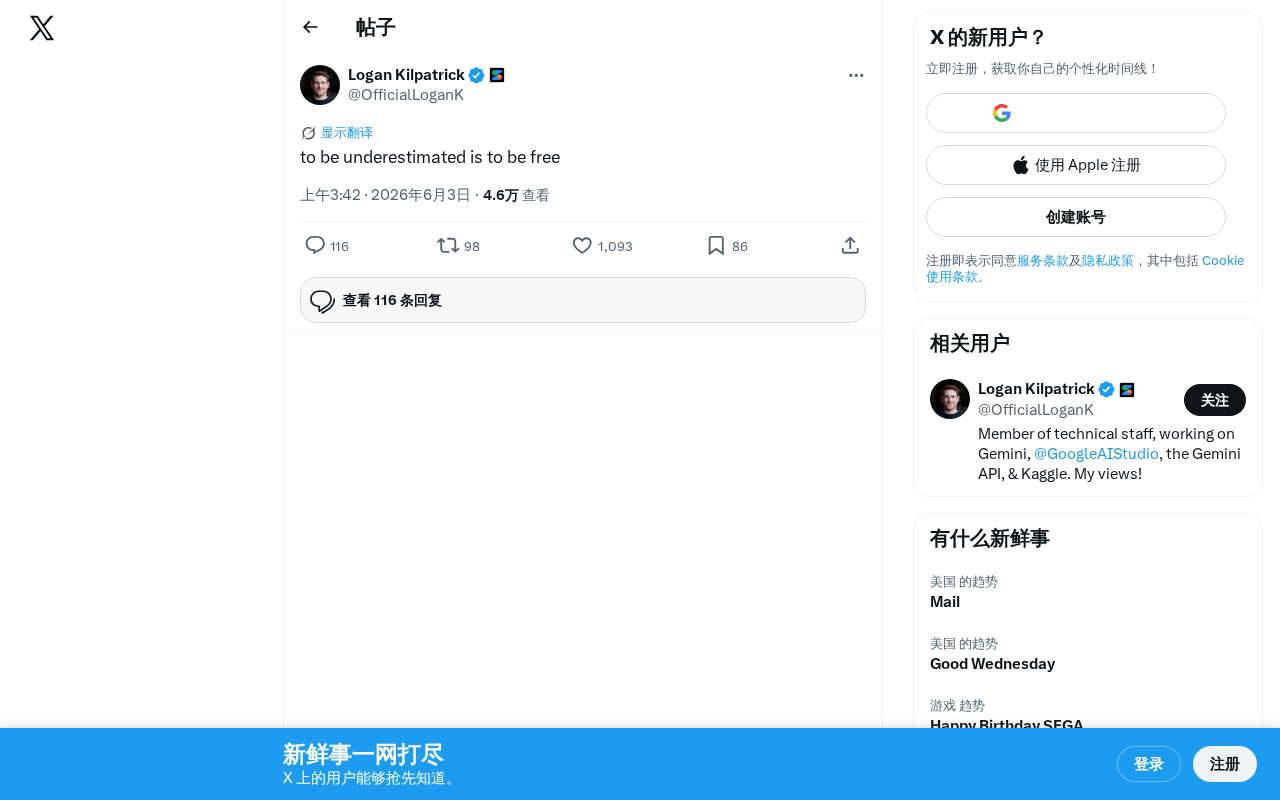
Being Underestimated Is Freedom: A Contrarian Competition Philosophy for the AI Era
Exploring the contrarian strategy of 'being underestimated is freedom' in AI. From OpenAI to DeepSeek to Cursor, why staying under the radar beats standing in the spotlight.
How the Protestant Work Ethic Was Hija…
How the Protestant Work Ethic Was Hijacked: From Protecting Workers to Oppressing Them
Philosopher Elizabeth Anderson reveals how the Protestant work ethic was twisted from a worker-protecting ideal into a tool of oppression—and what it means for the AI era.