Solo Developer Spends 6 Years Building a Cardfight!! Vanguard Fan-Made Card Game — Cardinal Noid DLC Fully Included
Solo Developer Spends 6 Years Building…
Solo dev spends 6 years creating a high-fidelity fan-made Cardfight!! Vanguard digital card game.
A solo developer has spent six years building a fan-made digital card game based on Cardfight!! Vanguard. The latest DLC fully includes all Cardinal Noid series cards from Booster Pack 01 with remastered artwork. The game faithfully recreates core mechanics like Ride, Drive Check, and triggers, with polished visuals and battle system details approaching official quality — a testament to the dedication of indie passion projects.
Six Years in the Making: A Solo Developer's Card Game Dream
In the world of game development, the phrase "passion project" carries the weight of countless indie developers' dedication and perseverance. Recently, a solo developer publicly showcased the latest DLC for their fan-made Cardfight!! Vanguard game — a project six years in the making — featuring the complete collection of all Cardinal Noid (カーディナルノイド) cards from Booster Pack 01, along with refined and remastered artwork. The reveal has generated significant buzz within the Vanguard fan community.
Cardfight!! Vanguard is a trading card game (TCG) launched by Japan's Bushiroad in 2011, accompanied by manga and anime media. Set in a universe of interstellar knights and alien civilizations, players take on the role of "Fighters" who summon units from the virtual planet "Cray" to battle. Over the years, Vanguard has gone through multiple series iterations, with the overDress series (launched in 2021) serving as a major reboot that introduced an entirely new nation system and mechanical design, attracting both new and returning players. This fan-made project not only faithfully recreates the core mechanics of the official card game but has also been meticulously polished in its visual presentation — a truly high-quality tribute to the original.
Faithful Recreation: From Card Mechanics to Battle Experience
Based on actual gameplay demonstrations, this fan-made game achieves an impressive level of fidelity to the official Vanguard card battle system. It fully implements the core gameplay framework, including Ride, Call, Drive Check, Damage Check, and other fundamental mechanics, as well as key elements of the trigger system such as Critical Triggers, Heal Triggers, and Draw Triggers.
Vanguard's battle mechanics are highly distinctive, setting it apart from mainstream TCGs like Magic: The Gathering. Ride is the core action where players upgrade their Vanguard unit each turn, representing the spiritual fusion between Fighter and unit. Call deploys rear-guard units to the battlefield. Drive Check is Vanguard's most iconic mechanic — when the Vanguard attacks, cards are revealed from the top of the deck, and trigger effects can instantly shift the tide of battle. Triggers come in several types: Critical, Heal, Draw, Front, and Over Trigger, the last of which grants a staggering 100 million power boost with spectacular visual effects. This system ensures that every attack is filled with uncertainty, serving as a major source of both tactical depth and spectacle.
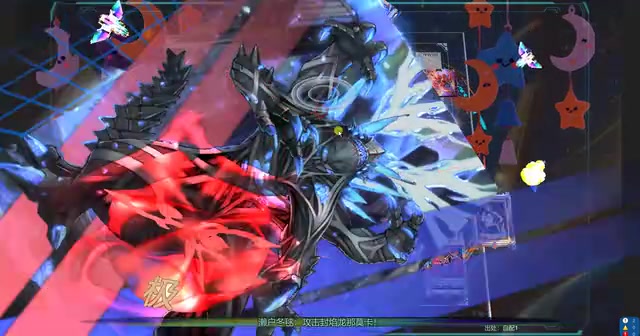
In the demonstration matches, players can experience deck battles across multiple nations (Clans). The video showcases an intense clash between a Flame Wind Shrine Maiden deck and a Brandt Gate Cardinal Noid deck, with card effects, chain triggers, guard checks, and other phases all faithfully reproduced.
Complete Cardinal Noid Collection
The highlight of this DLC is the complete inclusion of all Cardinal Noid series cards from Booster Pack 01. Brandt Gate is one of the six new nations introduced in the overDress series, defined by its highly advanced technological civilization and mechanical aesthetics. Cardinal Noid (カーディナルノイド) is a theme within Brandt Gate centered around giant humanoid cyber puppets, featuring a visual style that blends mecha with dark aesthetics. It stands as one of the signature themes of the Brandt Gate nation in the overDress series.
Its signature "World" mechanic (セットオーダー) belongs to the "Order" card system newly introduced in overDress — players can place specific cards on the field as persistent effects. As the world stage evolves from "Night" to "Abyssal Night," the deck's combat power and effects progressively strengthen, creating a unique rhythm of control and burst timing. It is one of the most mechanically complex themes in the entire overDress series.
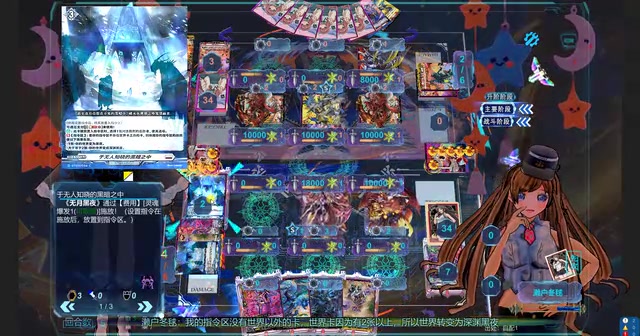
From the battle demonstrations, we can see that the Cardinal Noid deck's core mechanics have been fully implemented:
- World Stage System: State transitions from Night to Abyssal Night
- Cardinal Deus Orphist (カーディナルデウスオルフィスト) ace card effects
- Shadow Army (シャドウアーミー) Token summoning and amplification
- Energy Generator and other support cards' chain effects
Remastered Artwork: Six Years of Visual Refinement
The description of "relentless refinement and remastered artwork" in the title is no exaggeration. As an indie development project, the game has seen enormous effort poured into card artwork and interface design. Every card illustration, special effect animation, and battle UI element strives to approach official quality.
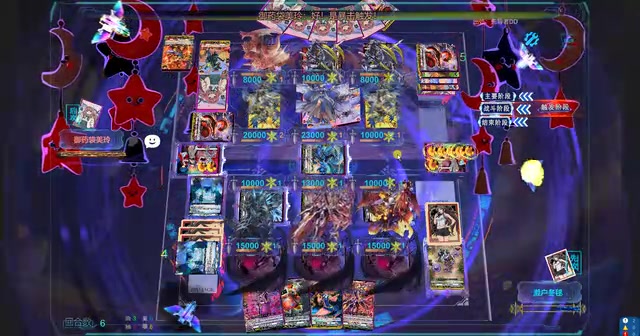
Digitizing a physical card game is a systematic engineering challenge — far more complex than it appears on the surface. Developers must build a complete rules engine that precisely handles card effect priorities, chain resolution, conditional checks, and other logic. They also need to implement AI opponents, online multiplayer, or local battle modes. For a TCG as rule-intensive as Vanguard, handling edge cases in the trigger system alone can consume enormous development time. Additionally, creating or licensing art assets, UI/UX design, and version maintenance must all be handled independently. Well-known community projects like OCTGN and Tabletop Simulator plugins typically rely on community collaboration to share the workload — completing a project of this scale solo is exceptionally rare. For indie developers, art assets are often the biggest bottleneck. To continuously refine the visual presentation over six years and ultimately achieve a standard worthy of "paying tribute to the official game" speaks volumes about the effort and technical expertise involved.
Polished Battle System Details
Beyond the card artwork itself, the game's attention to detail in the battle system is equally commendable:
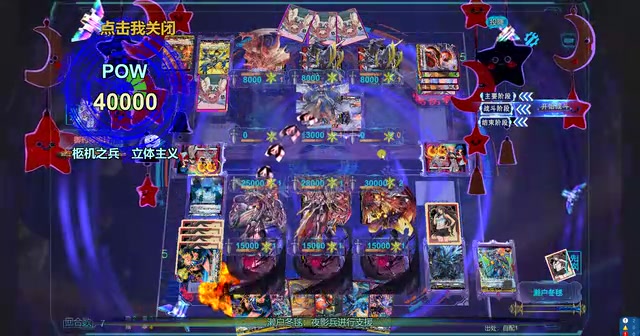
- Perfect Guard (完全ガード) mechanics correctly implemented, including hand condition checks
- Over Trigger (オーバートリガー) special animations — the +100 million power effect is truly impressive
- Equip Card system fully supported
- Persona Ride (ペルソナライド) bonus effects properly applied
Lessons from Indie Development: The Value of Passion Projects
The significance of this project extends far beyond a single fan-made game. It demonstrates the potential of indie developers who dedicate themselves deeply to a specific niche, while also reflecting the technical challenges inherent in digitizing card games.
The Perseverance Behind a Six-Year Development Cycle
A six-year development cycle is no small commitment for any project, and even more so for an indie project with no commercial return. The developer has had to continuously invest time and energy into development, testing, and optimization alongside their regular work. This kind of unwavering dedication to something they love is the very essence of the indie game development spirit.
Fan-made games (Doujin Games) have deep cultural roots in Japan, with events like Comiket gathering massive numbers of derivative works based on original IPs every year. Many Japanese rights holders take a relatively tolerant stance toward non-commercial fan creations, and card game companies like Bushiroad typically do not actively pursue non-profit fan digitization projects, as such works objectively help expand the IP's community influence and player base. However, this tacit approval is not a legal guarantee, and developers always face potential copyright risks. For this reason, many doujin game developers choose not to charge publicly, distribute quietly, and position their works as "tributes" to the original rather than commercial competitors — this is the true meaning of a "passion project."
Related articles
 Product Reviews
Qoder vs Cursor Real-World Comparison: Which $20/Month AI IDE Is Better?
Hands-on comparison of Qoder vs Cursor AI IDEs: Agent autonomy, human interaction count, and architecture decisions. Qoder needed only 2 interactions vs Cursor's 8.
 Product Reviews
Cursor Cloud Agent Demo: Eliminating Bottlenecks Across the Entire Software Development Lifecycle
Deep analysis of Cursor's Cloud Agent demo showing how cloud VMs, automated test artifacts, and a full-chain control plane systematically eliminate human bottlenecks across the software development lifecycle.
 Product Reviews
Cursor 3.0 Deep Dive: Multi-Agent Parallelism, Design Mode, and Best-of-N Model Comparison
Cursor 3.0 evolves from an AI coding assistant into an Agent fleet command center. Explore multi-agent parallelism, Design Mode, and Best-of-N model comparison.