Tabbit Browser Deep Dive: The AI-Native Browser from Meituan's Light Years Beyond Team

Meituan's Light Years Beyond launches Tabbit, an AI-native browser with deeply integrated Agent capabilities.
Tabbit is an AI-native browser from Meituan's Light Years Beyond team, built on the core philosophy of integrating AI Agent capabilities directly into the browser rather than layering them as plugins. Based on Chromium, it connects to multiple large models including GPT, DeepSeek, and Doubao, supports native AI features like smart tab grouping, and is free during public beta. The product represents the evolution of AI browsers from "conversational assistants" toward "autonomous operating Agents."
What is Tabbit Browser
Tabbit is an AI-native browser developed by Light Years Beyond (Kuxun Interactive Technology Co., Ltd.), a team under Meituan. It's currently in public beta and supports both Windows and macOS. The name combines "Tab" (browser tabs) and "Bit" (byte), positioning itself as a browser with deeply integrated AI Agent capabilities rather than simply layering AI features through plugins.
Light Years Beyond was originally founded in 2023 by Wang Huiwen, co-founder of Meituan, as an independent AI company. It was later acquired and absorbed into Meituan's ecosystem due to Wang's health issues. Kuxun Interactive Technology Co., Ltd. serves as its operating entity, bringing together top talent in AI and internet products. Meituan's decision to enter the AI browser space through this team reflects the strategic intent of major tech companies seeking new growth points at the AI application layer — browsers, as users' primary gateway to the internet, are natural carriers for AI Agents.
The official website is tabbit.com (which redirects to tabbit-ai). Currently in its promotional phase, all AI features are available for free.
Core Features and Design Philosophy
Multi-Model Support and Cloud-Based AI
Tabbit currently integrates multiple mainstream large language models, including:
- GPT series
- DeepSeek
- Doubao
- Kimi
- Tongyi Qianwen
- MiniMax
Users can freely switch between models depending on the scenario. This multi-model strategy reduces dependency on any single provider and allows users to compare output quality across different models. All model calls are currently cloud-based and free during the public beta.
Integrating multiple large language models is far more than simple API integration. It involves unified prompt management, standardized processing of different model output formats, and task routing strategies tailored to each model's strengths. For example, DeepSeek excels at code and reasoning tasks, Doubao has advantages in Chinese language understanding, and the GPT series is more balanced for general tasks. The business value of a multi-model strategy is twofold: it reduces bargaining dependency on any single vendor (avoiding being "held hostage"), and it creates room for differentiated pricing in the future — free users access basic models while paying users unlock more powerful ones.
Native Browser Integration vs. Plugin Model
Tabbit's core design philosophy is integrating AI functions that would typically require browser plugins directly into the browser itself. This includes:
- Smart Tab Grouping: AI automatically performs semantic classification and group management of open tabs
- Built-in Agent Functionality: AI Agent capabilities treated as first-class citizens of the browser, not add-ons
- Unified Product Experience: Eliminating the disconnect between plugins and the browser
The AI Agent concept mentioned here is one of the hottest topics in the AI field. Unlike traditional conversational AI (such as ChatGPT's Q&A mode), it emphasizes AI's ability to autonomously plan and execute multi-step tasks. In the browser context, an Agent can understand user intent and automatically perform web operations — filling out forms, comparing prices across multiple websites, automatically organizing research materials, etc. Integrating an Agent into the browser means AI can not only "understand" web content but also "operate" on it — clicking buttons, scrolling pages, extracting data — which is far more complex than simple text conversation capabilities.
From a product experience perspective, native integration offers clear advantages over the plugin model — smoother interactions, deeper page comprehension, and more consistent UI design language.
Technical Perspective: How Hard Is It to Build an AI Browser on Chromium?
The Chromium-Based Development Path
Nearly all third-party browsers on the market today are built on Google's open-source Chromium project, and Tabbit is no exception. This is a proven path — Baidu Browser, Edge, Brave, and others have all taken this route.
Chromium is a browser project open-sourced by Google in 2008. Its codebase exceeds 35 million lines of code (including third-party dependencies), requires approximately 30GB to download the full source, and takes several hours to compile on high-performance workstations. The technology stack is extremely broad: Blink handles HTML/CSS rendering, the V8 engine processes JavaScript execution, Skia handles 2D graphics rendering, plus networking protocol stacks, GPU acceleration, process sandboxing, and dozens of other subsystems. Because of this, teams capable of independently developing a browser engine are extremely rare — currently only three mainstream engines remain: Chromium (Blink), Firefox (Gecko), and Safari (WebKit).
The most complex part of the project isn't the UI layer but the rendering engine (Blink/V8) — which involves parsing web content, layout calculation, painting, and other low-level capabilities.
Most Modifications Focus on the UI Layer
For application-layer browsers like Tabbit, the primary development work focuses on:
- Redesigning the UI interface
- Integrating AI feature modules
- Ensuring cross-platform consistency
- Building the communication layer with cloud AI services
The rendering engine, network protocol stack, security sandbox, and other low-level capabilities largely retain Chromium's original implementation. This is a sound engineering choice — concentrating effort on differentiating features.
Industry Trends: The Future Direction of AI Browsers
Local Large Models Are a Direction Worth Watching
The Chrome team has recently been exploring the possibility of built-in local large models in browsers (such as Gemini Nano on-device). This means future browsers may not rely entirely on cloud AI, instead completing some inference tasks locally for faster response times and better privacy protection.
Specifically, Google began experimentally integrating the Gemini Nano model in Chrome 126 — a small language model with approximately 1.8 billion parameters, optimized for on-device use. The core advantages of local large models include: zero network latency (response time dropping from seconds to milliseconds), full offline availability, and data never leaving the device (privacy protection). However, the challenges are equally apparent — model capabilities are limited by device computing power, currently only handling lightweight tasks like summary generation and text rewriting, while complex reasoning still requires cloud-based large models. Apple Intelligence adopts a similar hybrid architecture: simple tasks are processed locally, complex tasks go to the cloud. This "edge-cloud collaboration" approach is likely to become the standard architecture for AI browsers.
Programming Language Is No Longer a Development Bottleneck
With the maturation of AI-assisted development tools, the barrier to maintaining browser kernels in C++ is decreasing. The community has also seen Rust-based browser engines (such as Servo) and experimental Node.js-based solutions. Language choice is becoming less critical, with core competitiveness shifting toward deep integration of AI capabilities.
Servo is an experimental browser engine project launched by Mozilla in 2012, written in Rust, aiming to leverage Rust's memory safety features and concurrency capabilities to address common security vulnerabilities in C++ browser engines. Statistics show that approximately 70% of Chrome's high-severity security vulnerabilities stem from C++ memory safety issues (use-after-free, buffer overflow, etc.). While the Servo project has progressed slowly and is far from production-ready, some of its technical achievements (such as the parallel CSS parser) have been adopted by Firefox. This represents a possible future direction for browser engine technology evolution.
Summary and Assessment
Tabbit represents an important direction for AI browsers: rather than placing an AI assistant beside the browser, it makes AI a core browser capability. The Meituan/Light Years Beyond team's decision to enter the browser space at this point clearly reflects their recognition of the opportunity in deeply combining AI Agents with web browsing.
The product is in early public beta, and the free strategy helps rapidly accumulate users and feedback. However, in the long run, how to establish differentiated barriers against Chrome's powerful ecosystem inertia, and how to continuously iterate on AI capabilities, will be Tabbit's core challenges.
For everyday users, if you have a need for AI-assisted browsing, Tabbit is worth trying — after all, it's free with multiple models to choose from, making the cost of experimentation extremely low.
Key Takeaways
- Tabbit is an AI-native browser from Meituan's Light Years Beyond team, integrating Agent functionality directly into the browser rather than relying on plugins
- Supports multiple large models including GPT, DeepSeek, Doubao, Kimi, Qianwen, and MiniMax, free during public beta
- Built on the open-source Chromium project, with differentiated development primarily at the UI layer and AI feature modules
- Built-in local large models in browsers represent a noteworthy future technical direction
- Competition in the AI browser space is intensifying, with the core moat lying in deep fusion of AI capabilities with browsing experience
Related articles
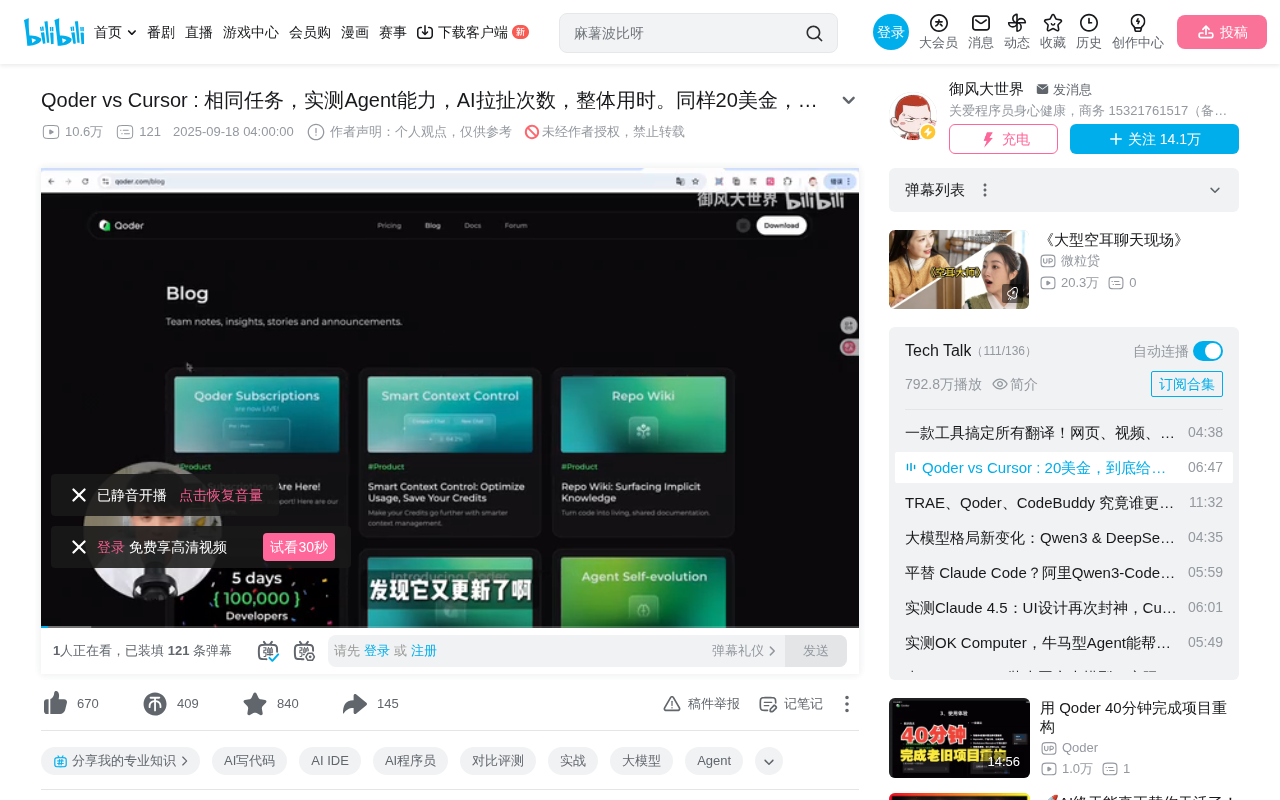 Product Reviews
Qoder vs Cursor Real-World Comparison: Which $20/Month AI IDE Is Better?
Hands-on comparison of Qoder vs Cursor AI IDEs: Agent autonomy, human interaction count, and architecture decisions. Qoder needed only 2 interactions vs Cursor's 8.
 Product Reviews
Cursor Cloud Agent Demo: Eliminating Bottlenecks Across the Entire Software Development Lifecycle
Deep analysis of Cursor's Cloud Agent demo showing how cloud VMs, automated test artifacts, and a full-chain control plane systematically eliminate human bottlenecks across the software development lifecycle.
 Product Reviews
Cursor 3.0 Deep Dive: Multi-Agent Parallelism, Design Mode, and Best-of-N Model Comparison
Cursor 3.0 evolves from an AI coding assistant into an Agent fleet command center. Explore multi-agent parallelism, Design Mode, and Best-of-N model comparison.