Terence Tao: AI Eliminates Cognitive Friction, Empowering Mathematicians to Pursue Crazier Ideas
Terence Tao: AI Eliminates Cognitive F…
Terence Tao: AI eliminates cognitive friction, freeing mathematicians to pursue bolder creative ideas.
Fields Medalist Terence Tao shared his experience with AI-assisted mathematical research. He believes AI dramatically lowers trial-and-error costs by handling mechanical computations, empowering researchers to try crazier ideas. He introduced the concept of "cognitive friction," noting AI's potential to reduce non-core cognitive labor like literature searches and repetitive calculations to zero. He also advocates for opening up research processes rather than only showcasing final results, and believes AI-assisted research is ready for prime time.
Fields Medalist and mathematician Terence Tao recently shared his profound insights on using AI to assist mathematical research. As a special project director at IPAM (Institute for Pure and Applied Mathematics), he believes AI is fundamentally changing how mathematical research is conducted — not by replacing mathematicians, but by freeing them to pursue bolder creative directions.
AI Lowers the Cost of Trial and Error, Encouraging Researchers to Take Risks
Tao openly stated that AI's rapid progress has made him bolder in his research:
"It lets me experiment. I'll try crazier things."
The logic behind this statement is worth reflecting on. In traditional mathematical research, exploring any direction means extensive computation and verification work. If an idea ultimately proves unviable, the time and energy invested upfront become sunk costs. This high cost of trial and error implicitly pushes researchers toward more conservative, "safer" research paths.
AI's involvement changes this equation. Tao described a new working mode:
"You can vibe on the blackboard, and then if there's a computation that neither of us wants to do, let the AI tool handle it."
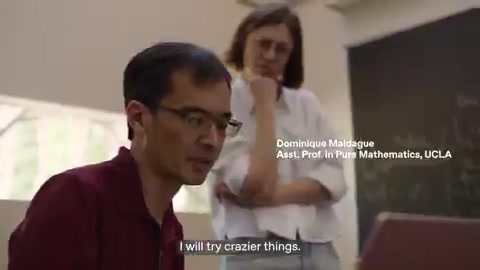
This combination of "vibing on the blackboard" plus AI computation essentially decouples creative thinking from mechanical calculation in mathematical research. Mathematicians focus on intuition, inspiration, and directional judgment, while AI handles the heavy lifting of verification and computation. The dramatic reduction in trial-and-error costs directly encourages more adventurous exploration.
Cognitive Friction: A Long-Overlooked Intellectual Cost
Tao introduced a remarkably insightful concept — cognitive friction.
"Until recently, we've been living in a world full of cognitive friction, where every task requires us to use our brains. We never really thought about it — we just assumed it was the cost of doing intellectual work."
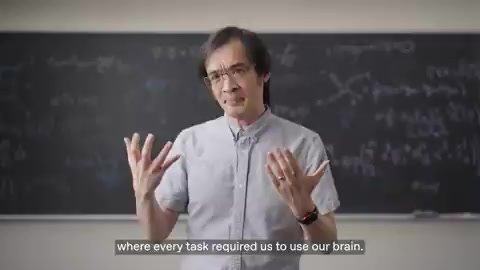
This observation precisely reveals a long-overlooked problem. Just as people before the Industrial Revolution considered physical labor an inevitable cost of production, we have always treated vast amounts of cognitive labor as the inherent cost of intellectual work. Literature searches, repetitive calculations, formatting, cross-verification — these tasks consume enormous amounts of researchers' time and energy, yet they are not the core of creative thinking.
Tao stated that AI and other technologies have the potential to "reduce these frictions to zero." He has already experienced this in practice:
"I can search the literature more accurately and more efficiently than before."
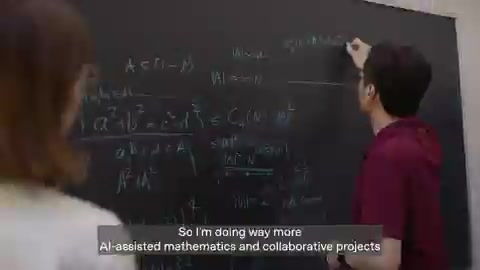
He explicitly stated that he is doing "more AI-assisted mathematics and collaborative projects" and believes this technology is "ready for prime time." Coming from a top mathematician, the weight of this statement speaks for itself.
Empowering 100 Mathematicians, Not Winning a Single Prize
The OpenAI side also articulated their core philosophy in this conversation:
"Fundamentally, we care more about being at the frontier of automating science, the economy, and ourselves. We don't care as much about winning a Nobel Prize or a Fields Medal — we care more about enabling 100 mathematicians to achieve those things themselves."
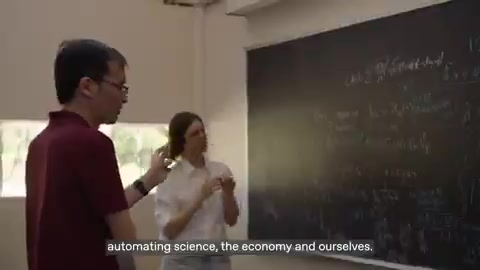
This positioning deserves attention. It means AI's role in scientific research is not to become a "super scientist," but to serve as a super tool — lowering barriers, amplifying capabilities, and accelerating iteration. If an AI tool can help 100 mathematicians each achieve breakthroughs in their respective fields, the total impact far exceeds what AI could accomplish by independently completing a single piece of research.
This also echoes Tao's discussion of cognitive friction. When friction is eliminated, not only can top researchers work more efficiently, but more researchers who were previously blocked by friction can also enter deeper levels of exploration.
Opening Up the Research Process, Not Just Showcasing Final Results
Tao also offered a forward-looking suggestion:
"I hope that when AI use becomes more widespread, people will not only publish their final results but also share all the different paths they took to get there, because that is also very valuable information."
This suggestion addresses a long-standing problem in scientific research — publication bias. Traditional academic publishing only showcases successful results and final proof paths, while failed attempts, detours, and abandoned directions are often buried. Yet these "failed paths" contain rich information that can help other researchers avoid redundant work, or even discover new inspiration.
In the era of AI-assisted research, the cost of recording and sharing these exploratory processes has dropped dramatically. Every interaction with AI, every hypothesis verified or refuted, can be systematically preserved and shared. This could give rise to an entirely new paradigm of scientific communication.
Conclusion
Tao's insights reveal AI's deeper impact on scientific research: it is not merely an accelerator, but a liberator. By eliminating cognitive friction and lowering the cost of trial and error, AI gives researchers the courage and capacity to pursue those "crazier" ideas. And it is precisely these crazy ideas that often give birth to the most significant breakthroughs.
Related articles
 Expert Opinions
Windsurf CEO Deep Dive Interview: Speed Is the Only Moat
Windsurf CEO Varun Mohan shares insights on AI coding IDE pivots, product methodology, async Agent challenges, and differentiation strategy vs Cursor. Speed is the only moat.
 Expert Opinions
Being Underestimated Is Freedom: A Contrarian Competition Philosophy for the AI Era
Exploring the contrarian strategy of 'being underestimated is freedom' in AI. From OpenAI to DeepSeek to Cursor, why staying under the radar beats standing in the spotlight.
How the Protestant Work Ethic Was Hija…
How the Protestant Work Ethic Was Hijacked: From Protecting Workers to Oppressing Them
Philosopher Elizabeth Anderson reveals how the Protestant work ethic was twisted from a worker-protecting ideal into a tool of oppression—and what it means for the AI era.