The Desensitization Effect After 100 Videos: When Creating Becomes as Natural as Breathing
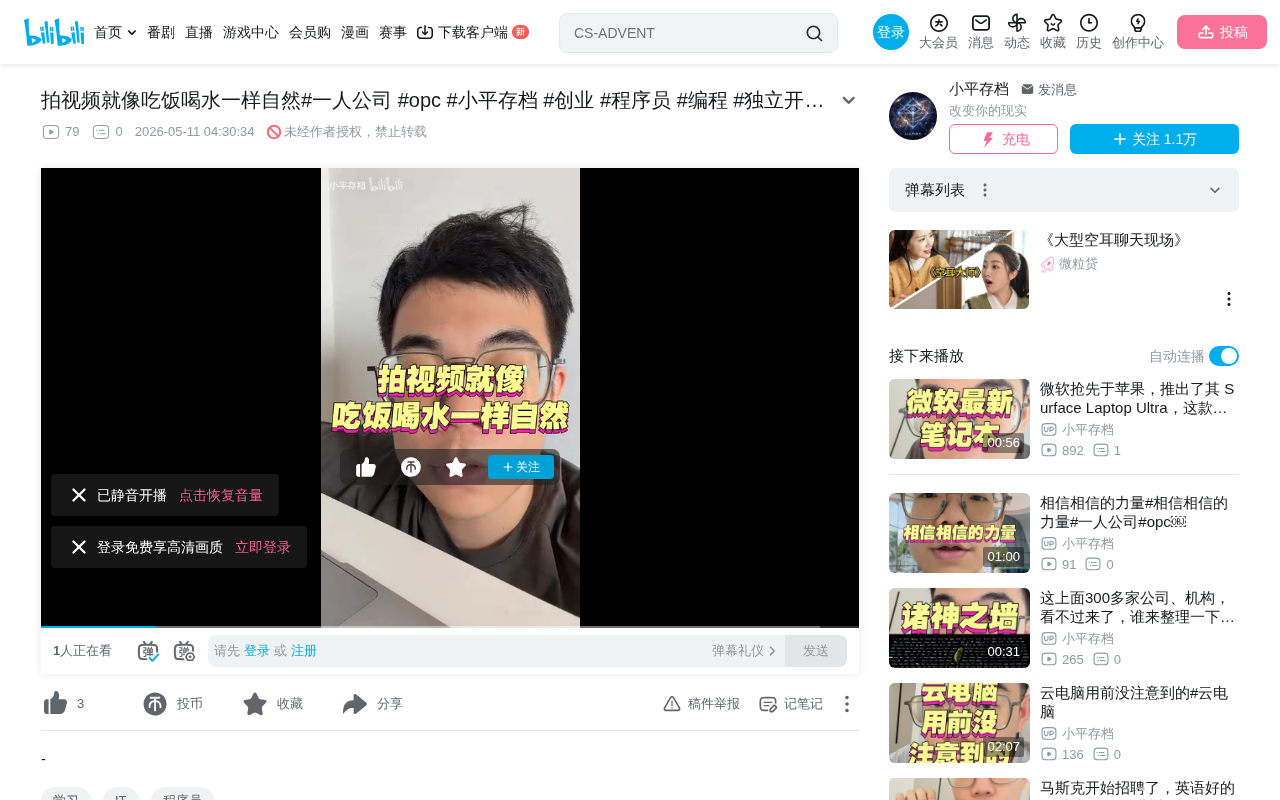
After making 100 videos, creators experience a desensitization effect where creating becomes as natural as a daily habit.
Starting from a Bilibili indie developer's insight, this article explains the "100-video desensitization effect": through repeated exposure to the act of creating, psychological barriers gradually fade and creation becomes natural. The article explains this phenomenon from psychology and neuroscience perspectives, arguing that for indie developers, lowering creative activation costs merges content marketing with product development — sustained action itself is the cure for creative anxiety.
Core Insight: 100 Videos Is the Creator's Watershed Moment
An indie developer shared his reflections on video creation on Bilibili: once a person has made 100 videos, a "desensitization effect" kicks in — making videos is no longer something that requires deliberate preparation or endless second-guessing. It becomes as natural as eating or drinking water.
While brief, this insight holds tremendous value for the many programmers and indie developers who want to start creating content but can never seem to take that first step.
What Is the Creative Desensitization Effect?
"Desensitization" is fundamentally a psychological concept. It originates from Systematic Desensitization in behavioral psychology, proposed by South African psychiatrist Joseph Wolpe in 1958, initially used to treat phobias and anxiety disorders. The core principle is that through gradual, repeated exposure to anxiety-inducing stimuli, an individual's fear response progressively weakens until it disappears. At the neuroscience level, this involves raising the response threshold of the amygdala (the brain's fear center) to specific stimuli.
Transferring this concept to content creation, when we repeatedly expose ourselves to the stimuli of "being watched" and "being judged," the initial nervousness, anxiety, and discomfort gradually fade. For video creators, desensitization manifests as changes on three levels:
- No longer obsessing over perfection: You won't re-record an entire segment because of one verbal slip
- No longer caring about others' opinions: Negative comments no longer disrupt your creative rhythm
- No longer needing "rituals": You don't need to specially set up a scene or adjust your mindset before hitting record
Why 100 Videos as the Quantitative Threshold?
Why 100 and not 10 or 1,000? While this number varies by individual, it represents a reasonable volume of practice. At a frequency of 2-3 videos per week, it takes approximately 8-12 months of consistent output. This period is enough for a person to:
- Experience technical growth from novice to proficient
- Establish a stable creative workflow
- Develop muscle memory for on-camera expression
The term "muscle memory" here isn't merely rhetorical — it involves the Procedural Memory system in cognitive science. Unlike declarative memory that stores facts and events, procedural memory stores "how-to" skill knowledge, primarily processed by the basal ganglia and cerebellum. Once on-camera expression techniques are encoded as procedural memory, execution no longer requires conscious involvement from the prefrontal cortex. The creator's cognitive resources can be fully devoted to content ideation rather than being distracted by execution-level concerns like "Does my expression look natural?" or "Is my speaking pace appropriate?"
This quantitative threshold also aligns with the "deliberate practice" theory proposed by cognitive psychologist Anders Ericsson. If each of the 100 videos takes an average of 2-3 hours (including ideation, recording, and editing), the total comes to approximately 200-300 hours. While far from Malcolm Gladwell's popularized "10,000 hours," it's sufficient for creators to cross the "cognitive stage" in skill acquisition theory and enter the "autonomous stage" where many operations have become automated.
In other words, 100 isn't a precise magic number — it's a rough benchmark for "enough repetitions to form a habit."
Why Indie Developers Need Creative Desensitization Even More
Creating Is Documenting, Documenting Is Marketing
This creator mentioned that "whenever a good idea pops into my head, if the surroundings are suitable, I'll just film it." This state is especially important for indie developers and solopreneurs. When creation becomes an instinctive response, content marketing is no longer an extra burden — it becomes a natural extension of the development process.
This strategy is known as "Build in Public" in the overseas creator economy. According to SignalFire estimates, over 50 million people globally now consider themselves content creators. Representative figures like Pieter Levels (founder of Nomad List) and Tony Dinh, both indie developers, continuously share their development process on social media, converting followers directly into product users. In China, Bilibili and Xiaohongshu are becoming the primary platforms for tech creators, with video formats offering stronger trust-building capabilities and algorithmic recommendation advantages compared to written blogs.
Debugging an interesting bug, discovering a useful tool, completing a new feature — these everyday development moments are natural video material. The key is whether you can casually capture them. When the psychological barrier to creation drops low enough, product development and content marketing merge into one — you're not "doing marketing," you're simply sharing what you're already doing.
Lowering Activation Cost Is the Key to Sustained Creation
Many programmers are reluctant to make videos because the "activation cost" is too high — they feel they need to prepare scripts, adjust lighting, and do post-production editing. But after desensitization, producing a video can be simplified to: think of something → pick up phone → say it → publish. This extremely low activation cost is the true guarantee of sustained creation.
The concept of "activation cost" borrows from "activation energy" in chemical reaction kinetics, and has been further systematized in behavioral science by Stanford University professor BJ Fogg's Behavior Design framework. Fogg's core model B=MAP states that behavior occurs when Motivation, Ability, and Prompt are simultaneously present. Lowering activation cost is essentially improving the "Ability" dimension — not making people more capable, but making the behavior itself easier to execute. When a behavior's execution difficulty drops to the point where you can "start within two minutes," it becomes much easier to turn into a habit. This is also the underlying logic of the "Two-Minute Rule" emphasized by James Clear in Atomic Habits.
How to Accelerate the Desensitization Process for Video Creation
For creators still hesitating about whether to start making videos, the following strategies can help shorten the desensitization cycle:
- Publish first, refine later: Don't aim for perfection on your first video. Get the content out there and iterate later. Perfectionism is the greatest resistance to creation, and the act of "publishing" itself is a desensitization exercise.
- Set minimum standards: Each video only needs to convey one core point — it doesn't need to cover everything. This aligns with Cognitive Load Theory — viewers have limited working memory capacity, and a single clear message is actually easier to remember.
- Establish daily triggers: Bind video creation to an existing daily habit, such as recording a summary every time you finish a coding session. In Behavior Design, this is called "Habit Stacking" — using an already stable behavior as the trigger prompt for a new behavior.
- Accept data fluctuations: Low view counts in the early stages are normal. Don't measure the value of every piece of content by its metrics. Platform algorithms need sufficient content samples to understand your positioning and audience profile — low early view counts are a necessary phase of algorithmic learning.
- Find fellow travelers: Join creator communities where you can encourage and give feedback to each other. It's much easier to persist together than alone. Social psychology research shows that the Peer Effect can significantly improve an individual's behavioral persistence rate.
Conclusion
The greatest enemy of content creation isn't a lack of talent or equipment — it's psychological barriers. The 100-video desensitization theory tells us a simple truth: sustained action itself is the cure. For indie developers, turning creation into a daily habit like writing code is both the foundation of personal brand building and a long-term strategy for product promotion.
From a neuroscience perspective, every practice session in front of the camera reshapes the brain's neural circuits — the amygdala's threat response to "being watched" weakens, while coordination between the prefrontal cortex and motor cortex strengthens. After 100 videos, what you gain isn't just 100 content assets — it's a trained brain capable of expressing itself with ease.
Don't wait until everything is perfect. Pick up your phone and start with video number one.
Related articles
 Expert Opinions
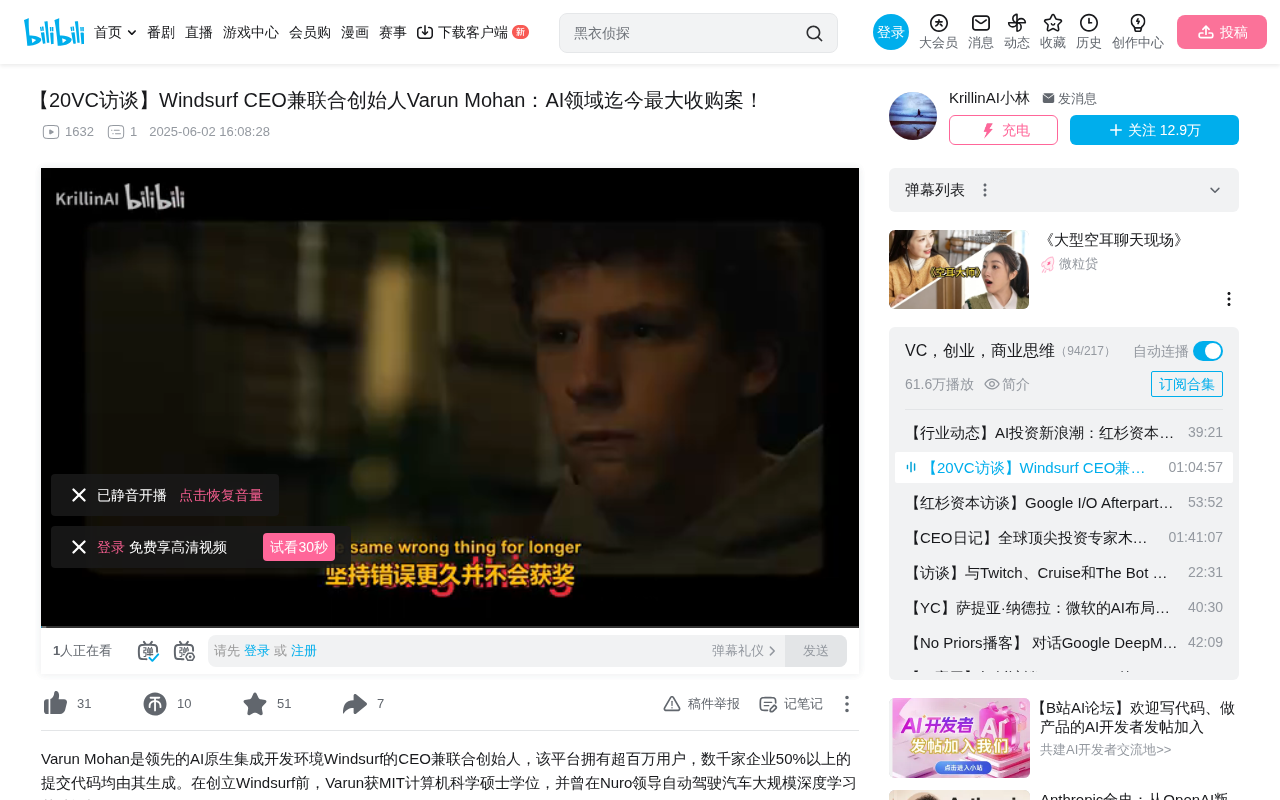
Windsurf CEO Deep Dive Interview: Speed Is the Only Moat
Windsurf CEO Varun Mohan shares insights on AI coding IDE pivots, product methodology, async Agent challenges, and differentiation strategy vs Cursor. Speed is the only moat.
 Expert Opinions
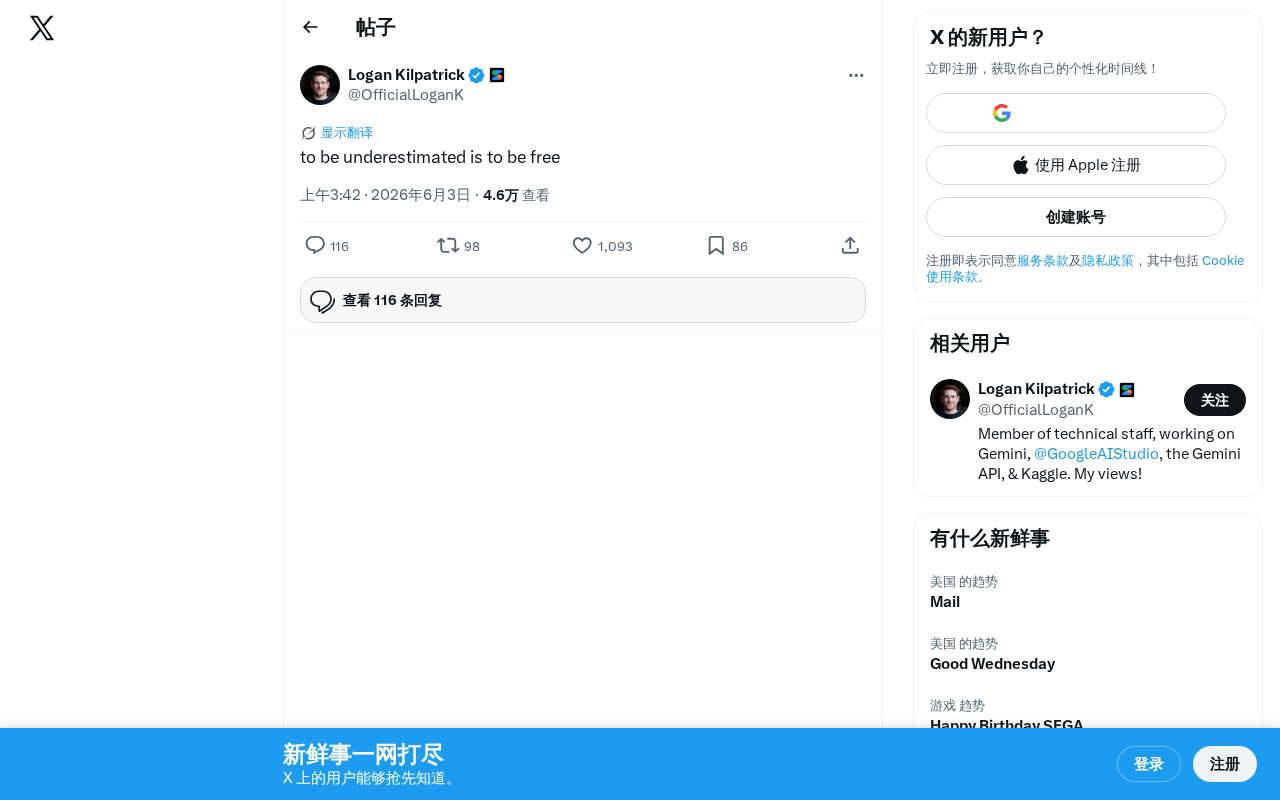
Being Underestimated Is Freedom: A Contrarian Competition Philosophy for the AI Era
Exploring the contrarian strategy of 'being underestimated is freedom' in AI. From OpenAI to DeepSeek to Cursor, why staying under the radar beats standing in the spotlight.
How the Protestant Work Ethic Was Hija…
How the Protestant Work Ethic Was Hijacked: From Protecting Workers to Oppressing Them
Philosopher Elizabeth Anderson reveals how the Protestant work ethic was twisted from a worker-protecting ideal into a tool of oppression—and what it means for the AI era.