The Easier AI Coding Gets, the More You Need to Resist the Urge to Start Building: Validate Before You Develop
The Easier AI Coding Gets, the More Yo…
In the AI coding era, product judgment matters more than development ability.
AI coding tools have drastically lowered development barriers, but "can be built" doesn't equal "worth building." This article proposes a "win first, then fight" philosophy, emphasizing three key questions to validate before development: Are users paying real costs for this problem? Do they already have workarounds? Can your solution eliminate steps for them? In an era where anyone can rapidly build with AI, the truly scarce capability has shifted from technical implementation to demand judgment.
AI coding tools have made development easier than ever before, but between "can be built" and "worth building" lies a chasm that many people fail to see.
When AI Coding Gets You "Hooked"
Open Claude Code, describe your requirements, and it will help you build the product piece by piece. This process gives you an incredibly addictive feeling—as if you can actually build products now.
But this is precisely the most dangerous moment.

AI coding tools like Claude Code, Cursor, and Windsurf represent the latest breakthroughs in large language models for code generation. Built on foundation models like GPT-4 and Claude 3, these tools are trained on massive code repositories and can understand natural language requirements to generate runnable code. Cursor uses a "codebase-aware" architecture that reads entire project contexts; Claude Code deeply integrates Anthropic's Constitutional AI principles, adding extra constraints on code safety. These tools enable non-professional developers to build a functional web app or mini-program prototype in hours, compressing development cycles from weeks to days or even hours.
The biggest waste of time in product development isn't the development process itself—it's when you actually build the thing and then discover that nobody needs it. Blogger Zhang Zhang shared his personal experience: he previously built two mini-programs and fell into the exact same trap both times—relying solely on the feeling that "someone should need this," only to face an awkward reality after launch. The products worked, but nobody actually used them.
Being able to build a product and the product being worth building are completely different things.
"Win First, Then Fight": Let Your Product Win Before Development
Zhang Zhang mentioned a core principle: Win first, then fight.
Applied to product development, this means—we shouldn't build the product first and then validate whether it's good. That's too late. The better approach is to make the product "win" before development even begins.

This philosophy aligns closely with the Lean Startup methodology popular in Silicon Valley. Systematized by Eric Ries in 2011, Lean Startup centers on the "Build-Measure-Learn" loop, emphasizing validation of core assumptions with a Minimum Viable Product (MVP) before investing significant resources in development. An even earlier theoretical foundation comes from Steve Blank's "Customer Development" methodology—he argued that the primary reason startups fail isn't technical problems, but "executing a business plan without customers." The three validation questions in this article essentially test whether the "problem hypothesis" holds true—the most fundamental yet most easily skipped step in Lean Startup.
What does it mean to "win"? It's not about wishful thinking—it's about confirming three key questions:
Question 1: Is anyone already paying a cost for this problem?
This cost can be time, money, or daily mental energy. If nobody is paying for a problem (whether with money or time), then the problem may not exist or isn't important enough. Real demand always comes with real cost expenditure.
Question 2: Do users currently have a "hacky workaround" to solve it?
This point is particularly insightful. If users currently have no alternative solutions whatsoever—no coping mechanisms at all—then this so-called "pain point" might not be that painful. Conversely, if users are using all sorts of clumsy, makeshift methods to cope, that's proof the demand is real—they're already trying to solve it, they just don't have a good enough solution yet.
Question 3: Can my solution eliminate at least one step for users?

One less copy-paste, one less app to open, one less time scrolling through chat history. As long as you can eliminate one real hassle for users, the product has a chance of truly sticking. Note the keyword is "real"—not a hassle you imagine exists, but friction users actually experience every day.
As Development Barriers Fall, Product Judgment Becomes the Moat

These three questions form a concise but effective demand validation framework. When Zhang Zhang builds products now, he doesn't start by asking "can this feature be implemented?" Instead, he first thinks through:
- Is anyone actually in pain over this problem?
- How much pain are they in?
- Is my solution actually more convenient than what they're currently doing?
Until these questions are clearly answered, there's no rush to open the code editor.
This perspective is especially important amid the current AI coding wave. Tools like Cursor, Claude Code, and Windsurf are rapidly lowering the development barrier, and more and more people are discovering they "can build products too." But precisely because of this, we need more restraint—don't mistake "I can build it" for "this thing is worth building."
"Democratization of technical capability" is a major trend in the tech industry in recent years. From low-code platforms (like Bubble and Webflow) to AI coding assistants, each wave of tool revolution lowers the technical barrier to entry. Economically, when a capability shifts from scarce to ubiquitous, its market value drops rapidly, and competitive advantage shifts upstream to judgment and downstream to execution. This echoes Clayton Christensen's "Disruptive Innovation" theory—technology democratization often first eliminates skill barriers, then reshapes competitive dimensions within industries. In the AI coding era, product managers' demand insights, user research capabilities, and founders' market intuition are becoming the new scarce resources.
The democratization of technical capability is a good thing, but it also means that the truly scarce capability has shifted from "can we build it" to "should we build it." In an era where everyone can rapidly develop with AI assistance, product judgment and demand insight are the real moats.
Final Thoughts: Thinking It Through Matters More Than Building It
Looking back at the entire discussion, the core logic is quite clear: AI has lowered the cost of "doing," but hasn't lowered the cost of "thinking it through." You could even argue that because the cost of doing has dropped, the price of not thinking clearly has actually increased—because you'll more frequently build things nobody wants, and erode your enthusiasm through repeated cycles of "launch and silence."
Rather than building ten products nobody uses, spend time thinking through one that people actually need. Win first, then fight. Validate first, then develop. This is the most important discipline of the AI coding era.
Related articles
 Expert Opinions
Windsurf CEO Deep Dive Interview: Speed Is the Only Moat
Windsurf CEO Varun Mohan shares insights on AI coding IDE pivots, product methodology, async Agent challenges, and differentiation strategy vs Cursor. Speed is the only moat.
 Expert Opinions
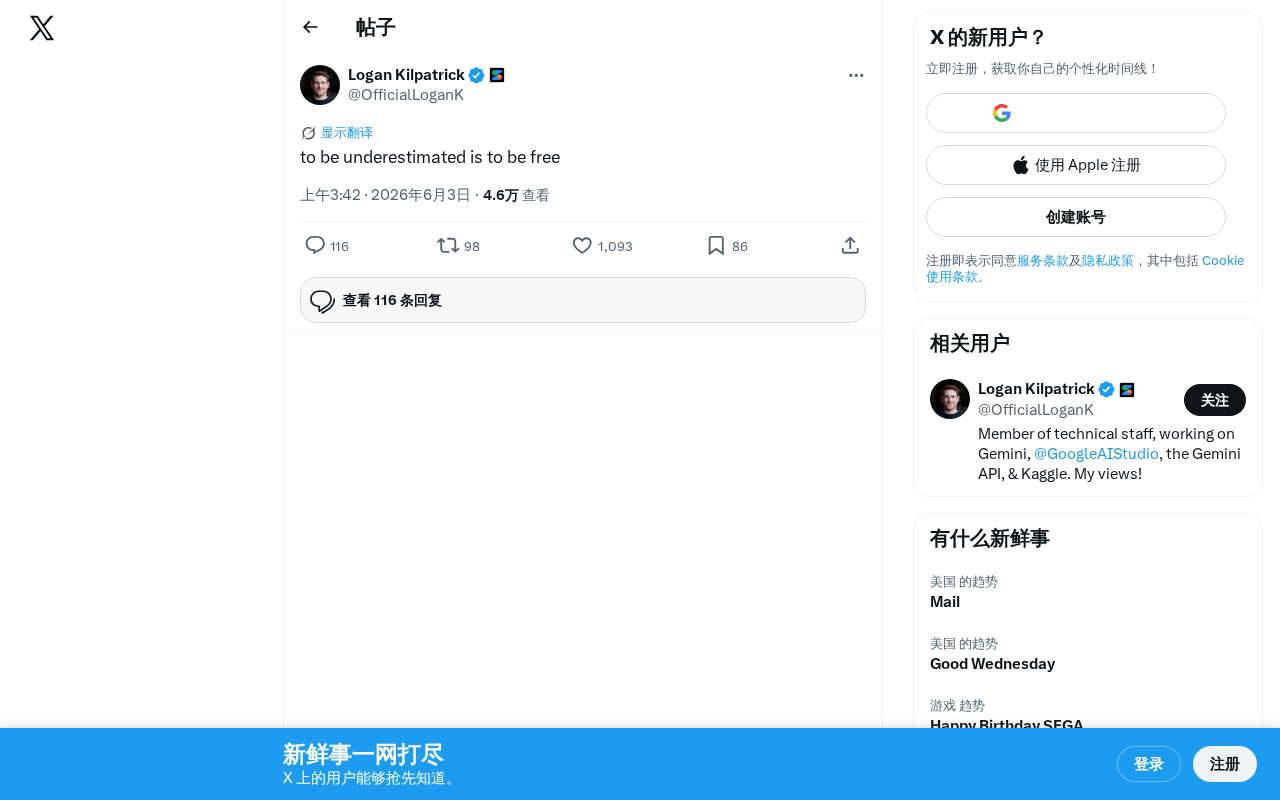
Being Underestimated Is Freedom: A Contrarian Competition Philosophy for the AI Era
Exploring the contrarian strategy of 'being underestimated is freedom' in AI. From OpenAI to DeepSeek to Cursor, why staying under the radar beats standing in the spotlight.
How the Protestant Work Ethic Was Hija…
How the Protestant Work Ethic Was Hijacked: From Protecting Workers to Oppressing Them
Philosopher Elizabeth Anderson reveals how the Protestant work ethic was twisted from a worker-protecting ideal into a tool of oppression—and what it means for the AI era.