The Hotter AI Gets, the More We Need Tech-Savvy People: Embrace the Tool, Don't Fear the Replacement

Jensen Huang urges everyone to embrace AI — those who master AI tools won't be replaced.
NVIDIA CEO Jensen Huang clearly states that everyone should embrace AI rather than fear it. This article argues from historical patterns that technological revolutions restructure rather than simply replace, pointing out that AI's growth increases demand for tech talent, and those truly displaced are people who refuse to learn new tools. It recommends proactively building AI literacy, developing core human capabilities like critical thinking that AI cannot replace, and learning through hands-on practice with AI tools.
Jensen Huang's Advice: Everyone Should Embrace AI
Recently, the debate over whether AI will steal human jobs has intensified. In response to this anxiety, NVIDIA CEO Jensen Huang offered a clear stance: everyone should embrace this technology rather than fear it.

Jensen Huang is the co-founder and CEO of NVIDIA, having led the company since its founding in 1993. NVIDIA initially started with graphics processing units (GPUs) serving the gaming market, but around 2012, Huang keenly recognized that GPUs' advantages in parallel computing could be applied to deep learning training, and promptly pivoted the company's strategy entirely toward AI computing platforms. This decision made NVIDIA one of the biggest beneficiaries of the AI era, with the company's market cap briefly surpassing $3 trillion in 2024. His statement that "everyone should embrace AI" is rooted both in his deep understanding of technology trends and in NVIDIA's strategic positioning as a core supplier of AI infrastructure — the higher the AI adoption rate, the greater the demand for GPU computing power.
This isn't empty motivational talk. Looking at the historical patterns of technological development, every major technological shift has been accompanied by similar panic — from textile workers smashing machines during the Industrial Revolution to predictions that "e-commerce will destroy brick-and-mortar stores" when the internet emerged. Yet history has proven that technological revolutions are never simply about "replacement" — they're about "restructuring."
The "textile workers smashing machines" reference refers to the Luddite Movement in early 19th-century England, when textile workers organized to destroy automated looms out of fear that the machines would take their jobs. However, history proved that while the Industrial Revolution eliminated some manual positions, it created tens of times more new employment opportunities — entirely new professions like factory management, mechanical repair, and logistics emerged. Economists call this phenomenon "Creative Destruction," a concept proposed by Joseph Schumpeter in 1942. The employment impact of each technological revolution typically follows a J-curve: short-term pain as some positions are displaced, but in the medium to long term, new technologies create far more jobs than they eliminate.
The Hotter AI Gets, the More We Need Tech-Savvy People
A seemingly contradictory yet critically important fact: the more AI technology flourishes, the greater the market demand for people who understand computers and technology. The logic behind this isn't complicated:

First, AI needs people to build and maintain it. Training, deploying, optimizing, and fine-tuning large models — every step requires professional technical personnel. Globally, the talent gap for AI engineers, data scientists, and MLOps engineers remains enormous.
Second, AI needs people to apply it and bring it to production. Technology doesn't automatically generate value on its own. Combining AI capabilities with specific business scenarios requires interdisciplinary talent who understand both technology and industry. Whether it's prompt engineering, AI product design, or AI system integration, these are all entirely new career directions. Prompt Engineering refers to the techniques and methodologies of carefully designing input prompts to guide large language models toward desired outputs. This field rapidly emerged in 2023 with the explosion of ChatGPT, with some companies even offering prompt engineer positions at salaries exceeding $300,000 per year. However, the deeper trend is that as model capabilities improve and Agent architectures develop, pure prompt engineering is evolving toward more complex AI system design, including multi-step reasoning chain design, tool-calling orchestration, and multi-Agent collaboration. This requires practitioners to not only understand how language models work but also possess systems architecture thinking and domain-specific expertise.
Third, AI has spawned an entirely new technology ecosystem. The infrastructure surrounding AI — from GPU cluster management to vector databases, from model evaluation to safety alignment — forms a massive technology stack, with each layer requiring specialized talent. Specifically, MLOps (Machine Learning Operations) is the engineering practice of deploying machine learning models from experimental environments to production and continuously maintaining them, similar to DevOps in software engineering. Vector databases (such as Pinecone, Milvus, and Weaviate) are database systems specifically designed for storing and retrieving high-dimensional vector data, serving as critical infrastructure for building RAG (Retrieval-Augmented Generation) applications. Model evaluation involves systematic testing of large language model output quality across multiple dimensions including accuracy, consistency, and safety. Safety Alignment is the research direction of ensuring AI systems behave in accordance with human values and intentions, involving cutting-edge techniques like RLHF (Reinforcement Learning from Human Feedback), and is one of the most central topics in AI safety today.
What Gets Replaced Is Never the Profession — It's People Who Refuse to Use New Tools

This statement captures the essence of the issue. Looking back at history, what gets eliminated is never a profession itself, but rather the subset of people who refuse to learn new tools:
- Excel didn't eliminate the accounting profession, but it displaced accountants who could only use an abacus
- CAD didn't eliminate the design profession, but it displaced drafters who could only draw by hand
- Search engines didn't eliminate research work, but they changed how information is accessed
Likewise, AI won't eliminate programmers, designers, or writers, but it will displace practitioners who refuse to incorporate AI into their workflows. A developer who uses AI-assisted programming may be 3-5x more efficient than a traditional developer; a designer who leverages AI tools can produce more high-quality solutions in the same amount of time.
Regarding the efficiency gains from AI-assisted programming, this isn't an exaggeration. GitHub Copilot's internal research data shows that developers using AI programming assistants complete tasks an average of 55% faster, with efficiency gains reaching several times over in specific scenarios (such as writing boilerplate code, unit tests, and documentation). In 2024, the emergence of AI-native IDEs like Cursor and Windsurf further transformed the development paradigm — developers can describe requirements in natural language, and AI directly generates complete code modules. Cognition Labs' Devin even attempts to build an "AI software engineer" capable of independently completing the entire process from requirements analysis to code deployment. These tools aren't meant to replace programmers but to elevate the programmer's role from "code writer" to "system architect and AI collaborator."
How to Properly Face Career Challenges in the AI Era
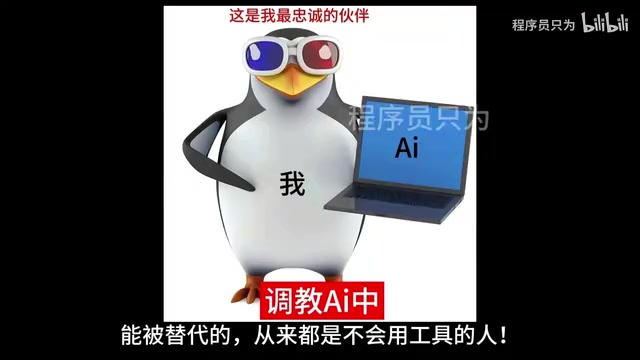
Rather than worrying about whether AI will replace you, think about how to make AI your "super assistant." Here are some practical suggestions:
1. Proactively Learn and Build AI Literacy
Not everyone needs to become an AI expert, but you should at least understand what AI can do, what it can't do, what it excels at, and where its limitations lie. This basic literacy will help you judge when to use AI and how to use it well. For example, understanding that large language models have a "hallucination" problem (generating content that seems plausible but is actually incorrect), understanding model context window limitations, and knowing that AI still has obvious shortcomings in scenarios requiring precise calculations and real-time information — this awareness will help you leverage AI tools more effectively rather than blindly trusting or completely dismissing them.
2. Develop Core Capabilities That AI Cannot Replace
Critical thinking, creative problem-solving, complex decision-making, interpersonal communication, and deep domain expertise — these remain human advantages that AI cannot match in the near term. Combining these capabilities with AI tools creates a true competitive moat. Cognitive science research shows that humans still far surpass current AI systems in handling ambiguity, making value judgments, and understanding social context and emotional nuances. The most valuable talent in the future will be those "translators" who can bridge the gap between uniquely human strengths and AI's powerful capabilities.
3. Learn by Doing — Get Hands-On
Don't just watch AI develop from the sidelines — get hands-on with it. Whether it's ChatGPT, Midjourney, or various AI coding assistants, you can only truly understand these tools' boundaries and potential through actual use. Start from your own daily work scenarios, find a specific pain point, and try using AI tools to solve it. For instance, use AI to help write weekly reports, generate first drafts of data analysis reports, or help organize complex documents — start small and gradually build intuitive understanding of AI's capability boundaries.
Conclusion
The technology wave is irreversible, and fear only causes people to miss opportunities. As Jensen Huang said, embracing AI technology is a required course for everyone. The real threat isn't AI itself, but our attitude toward change — whether we choose to learn and adapt, or choose to avoid and resist. In the AI era, the ability to continuously learn is itself the greatest competitive advantage.
It's worth noting that a key difference between this AI revolution and previous technological shifts is its speed. The transition from steam engines to widespread electricity took nearly a century, the internet's full penetration took about 20 years, but generative AI went from the lab to large-scale application in less than two years. This means the time window for people to adapt and transform is shorter, making the urgency of proactive learning and embracing change even greater. Those who start taking action today will hold a significant advantage in future competition.
Key Takeaways
- Jensen Huang clearly states: everyone should embrace AI technology, not fear it
- The hotter AI gets, the more we need tech-savvy people — the talent gap remains enormous
- What gets replaced is never the profession itself, but people who refuse to learn new tools
- Proactively build AI literacy and develop core capabilities that AI cannot replace
- In the face of technological change, the ability to continuously learn is itself the greatest competitive advantage
Related articles
 Expert Opinions
Windsurf CEO Deep Dive Interview: Speed Is the Only Moat
Windsurf CEO Varun Mohan shares insights on AI coding IDE pivots, product methodology, async Agent challenges, and differentiation strategy vs Cursor. Speed is the only moat.
 Expert Opinions
Being Underestimated Is Freedom: A Contrarian Competition Philosophy for the AI Era
Exploring the contrarian strategy of 'being underestimated is freedom' in AI. From OpenAI to DeepSeek to Cursor, why staying under the radar beats standing in the spotlight.
How the Protestant Work Ethic Was Hija…
How the Protestant Work Ethic Was Hijacked: From Protecting Workers to Oppressing Them
Philosopher Elizabeth Anderson reveals how the Protestant work ethic was twisted from a worker-protecting ideal into a tool of oppression—and what it means for the AI era.