Three AI Agents Tested Head-to-Head: Which One Handles E-Commerce Livestream Data Analysis Best?
Three AI Agents Tested Head-to-Head: W…
Cloud-based AI Agent solution tackles efficient e-commerce livestream comment analysis
This article compares three AI Agents for e-commerce livestream comment analysis: local deployment is limited by hardware resources and runtime stability, overseas API solutions face high costs and compatibility issues, while a cloud deployment + flexible multi-model scheduling approach enables rapid setup, 24/7 operation, and optimal model matching per task. Combined with last-mile delivery capabilities like Feishu sync, it creates a complete business closed loop from data analysis to actionable plans.
The Real Business Scenario: How Do You Efficiently Analyze Tens of Thousands of Livestream Comments?
Anyone who's worked in e-commerce livestream operations knows the drill: after every livestream session, you're staring at tens of thousands of bullet-screen comments and stream clips, and you need to have user feedback analysis, high-conversion script extraction, and churn point identification done before the next morning's standup meeting. It's a nearly impossible task.
But what if you had a few AI Agent "employees"? This video sets up a vivid scenario where three different types of AI Agents "debate" each other, ultimately revealing the real performance differences of current AI tools in actual business applications.
What Is an AI Agent? An AI Agent (intelligent agent) is an AI system capable of perceiving its environment, making autonomous decisions, and executing tasks — fundamentally different from traditional single-turn Q&A large language models. Agents possess three core capabilities: Tool Use, Memory management, and task Planning. In an e-commerce livestream scenario, an Agent doesn't just answer "is this comment positive or negative" — it autonomously decomposes tasks: first calling a sentiment analysis model to process bullet-screen comments, then invoking an intent recognition model to categorize questions, and finally using a document generation tool to output a report, all without human intervention. This ability to "autonomously orchestrate multi-step tasks" is what fundamentally distinguishes Agents from ordinary AI chat tools.
Pain Points of the First Two AI Agents: Local Deployment vs. Cost Dilemmas
Agent 1: The Hard Limits of Local Deployment
The first Agent represents a local deployment approach. Its problems are all too typical: analyzing tens of thousands of livestream comments is extremely memory-intensive, and once the system goes to sleep, the process is interrupted — making overnight automated processing completely impossible.
This is actually the core pain point many teams encounter when trying to run large models locally — limited hardware resources, unstable operation, and the inability to run 24/7.
Why Is Local Deployment So Demanding? Local LLM Deployment requires loading the complete model weight files into memory or VRAM. Take a mainstream 7B-parameter model as an example: even after 4-bit quantization, it still requires at least 6-8GB of VRAM, and batch inference tasks processing tens of thousands of text entries will push memory usage even higher. More critically, consumer-grade GPUs (like the RTX 4090) max out at 24GB of VRAM, making them completely inadequate for 70B-class models that require stronger reasoning capabilities. Additionally, local execution depends on the operating system's process management — once the system hibernates or a process is terminated, the task chain breaks. This is a fatal flaw for operations scenarios that need analysis pipelines to run overnight.
Agent 2: The Bill Anxiety of Overseas API Solutions
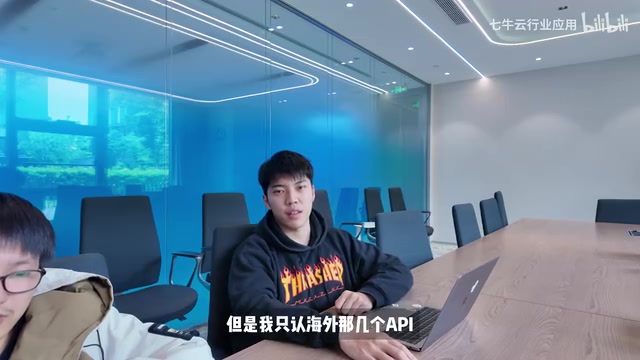
The second Agent represents a solution built on overseas LLM APIs. It can handle chained data analysis tasks, but the problem is clear: running this volume of e-commerce data through overseas model APIs racks up staggering costs. Want to switch to a cheaper domestic model? Sorry — first spend a day resolving parameter compatibility issues.
These two approaches expose the two core contradictions of current AI implementation: the resource bottleneck of local deployment and the cost and compatibility challenges of cloud API calls.
Agent 3's Breakthrough: Cloud Deployment + Flexible Multi-Model Switching
Just as the first two Agents hit a wall, a "newcomer" Agent enters the scene with a solution that directly addresses the pain points.
Cloud Image Deployment: Breaking Free from Local Environment Dependencies
Through a dedicated cloud image, deployment can be completed in ten minutes — no need to wrestle with local Linux environment configurations. This means even without a top-spec computer, you can run a complete AI analysis pipeline and achieve 24/7 uninterrupted operation.

Free Multi-Model Scheduling: Matching the Optimal Model to Each Task
Bullet-screen sentiment analysis, user intent recognition, conversion point detection — these are fundamentally different types of NLP tasks that require different model capabilities.
Why Do Different Tasks Need Different Models? Sentiment Analysis, Intent Recognition, and conversion point detection may all look like "text analysis" on the surface, but in the NLP (Natural Language Processing) field, they belong to different subtasks with significantly different requirements for model capabilities. Sentiment analysis requires deep understanding of tone, context, and internet slang; intent recognition is closer to a classification task, requiring the model to accurately distinguish between intents like "price inquiry," "shipping follow-up," and "product complaint"; conversion point detection needs to combine time-series data to analyze the correlation between comment density and purchasing behavior. This is why a single model can rarely perform optimally across all subtasks — Multi-Model Orchestration strategies exist precisely to address this "specialization" need.
This Agent connects to Qiniu Cloud's AI large model inference platform, enabling direct access to a massive pool of large model resources.
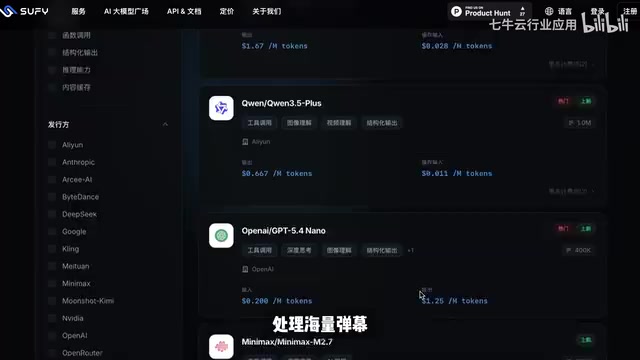
The video demonstrates it calling the MiniMax M2.7 model — one of the most widely used models currently available, offering strong performance with excellent cost-effectiveness. More importantly, it supports switching to the latest models at any time (such as the newly launched Qimi K2.6) with zero parameter migration costs.
Actual Output: A Complete Closed Loop from Data Analysis to Action Plans
What's most impressive about this AI Agent isn't its technical architecture — it's the actual deliverables:
- User Question Summaries: Automatically categorizes high-frequency questions from the livestream
- High-Conversion & Churn Analysis: Pinpoints which time periods had high conversion rates and which moments saw user drop-off
- Script Optimization Suggestions: Directly generates improved scripts for the next day's livestream
- One-Click Feishu Sync: Analysis documents are automatically pushed to work group chats

The Technical Logic Behind "One-Click Feishu Sync" Pushing AI analysis results to Feishu relies on Webhook and open API technology. Feishu provides a complete bot message push interface that allows external systems to send structured content (text, tables, card messages) directly to designated groups or documents via HTTP requests. This deep integration with collaboration tools is known in the industry as "last-mile delivery" — AI doesn't just generate analysis reports; it pushes results directly to the business team's working interface, eliminating the intermediate steps of "read report → manually organize → sync with team." This pattern aligns closely with the philosophy of RPA (Robotic Process Automation) and represents a critical step in upgrading AI Agents from "analysis tools" to "business collaboration members."
Even more noteworthy: when the Agent detects that users have repeatedly asked the same type of question, it automatically organizes that process into a reusable workflow, achieving self-evolution.
The Technical Principles Behind Agent "Self-Evolution" This capability corresponds technically to Workflow Memory and Pattern Recognition mechanisms. When an Agent detects that a certain type of user question has been processed beyond a threshold number of times, it serializes that processing sequence into a callable sub-workflow template. The next time similar trigger conditions are encountered, it reuses the template directly rather than re-planning from scratch. This is similar to "function encapsulation" in software engineering, but the abstraction and encapsulation are performed autonomously by the AI. In academia, this capability is classified as an engineering implementation of "Meta-Learning" and is one of the key focus areas for current Agent frameworks (such as LangGraph and AutoGen).
This goes beyond simple "tool calling" — it demonstrates genuine process learning capability.
Implications for E-Commerce Operations Professionals
While this case study has an obvious product promotion angle, the trends it reveals are worth paying attention to:
First, an AI Agent's competitive edge lies not in single-model capability, but in orchestration and integration. Only Agents that can flexibly schedule multiple models and automatically adapt to different task types can truly solve complex business problems.
Second, cloud deployment is becoming the optimal solution for small and mid-sized teams. The barriers and costs of local deployment are too high for most operations teams, while cloud solutions offer clear advantages in stability, scalability, and cost control.
Third, the value of AI tools lies in "last-mile" delivery. When analysis results can be directly synced to Feishu work groups and actionable script documents can be auto-generated, this deep integration with business workflows is where AI truly creates value.
According to the video, new users can try this cloud-based AI Agent solution for just 66 RMB, with free credits available for initial testing. For e-commerce teams looking for livestream data analysis solutions, this entry cost is certainly worth exploring.
Key Takeaways
- Local AI deployment suffers from insufficient memory and inability to run continuously, while overseas API solutions face high costs and parameter compatibility challenges
- Cloud-based Agent solutions enable rapid deployment via dedicated images, achieving 24/7 uninterrupted operation without high-end local hardware
- Connecting to a multi-model inference platform allows flexible scheduling of different large models, matching the optimal model to each task type with seamless switching
- An AI Agent's core competitive advantage lies in business closed-loop capability: complete delivery from data analysis to script generation to Feishu synchronization
- Agents with process self-learning capabilities can automatically organize high-frequency operations into reusable workflows, achieving self-evolution
Related articles
 Product Reviews
Qoder vs Cursor Real-World Comparison: Which $20/Month AI IDE Is Better?
Hands-on comparison of Qoder vs Cursor AI IDEs: Agent autonomy, human interaction count, and architecture decisions. Qoder needed only 2 interactions vs Cursor's 8.
 Product Reviews
Cursor Cloud Agent Demo: Eliminating Bottlenecks Across the Entire Software Development Lifecycle
Deep analysis of Cursor's Cloud Agent demo showing how cloud VMs, automated test artifacts, and a full-chain control plane systematically eliminate human bottlenecks across the software development lifecycle.
 Product Reviews
Cursor 3.0 Deep Dive: Multi-Agent Parallelism, Design Mode, and Best-of-N Model Comparison
Cursor 3.0 evolves from an AI coding assistant into an Agent fleet command center. Explore multi-agent parallelism, Design Mode, and Best-of-N model comparison.