Trae + Doubao Seed 2.0 Hands-On: Building a Full-Stack Book Management System for Free
Trae + Doubao Seed 2.0 Hands-On: Build…
Trae + Doubao Seed 2.0 free plan matches overseas AI coding tools on simple projects.
This article tests Trae IDE paired with Doubao Seed 2.0 by building a full-stack book management system with decoupled frontend and backend, benchmarking it against Gemini 2.5 and MiniMax. Results show minimal differences among the three on simple CRUD projects, proving domestic free solutions are fully viable. However, for complex projects, domestic models still lag behind Claude and other overseas models in long-context processing and code consistency. The recommendation is to choose tools flexibly based on project complexity.
Introduction
As domestic Chinese AI coding tools rapidly iterate, the capabilities of free-tier solutions keep pushing new boundaries. Can ByteDance's Trae IDE, paired with the newly released Doubao Seed 2.0 model, hold its own against overseas tools like Claude and Cursor in real-world project development? This article puts it to the test by building a complete full-stack book management system with a decoupled frontend and backend, while benchmarking Doubao Seed 2.0 against Gemini 2.5 and MiniMax — providing an honest, hands-on reference.
Test Design
Project Requirements
For this test, we chose a classic full-stack project — a book management system with a decoupled frontend and backend, using Django (backend) + Vue 3 (frontend). The specific requirements include:
- Three core data tables: Books, Authors, and Publishers, each with only a NAME field to keep things simple
- Full CRUD functionality: Create, Read, Update, Delete, plus search, pagination, and filtering
- Frontend UI requirements: Shadow effects, rounded rectangles, hover color transitions, and other visual polish
- Architecture requirements: Frontend and backend code in separate directories, fully independent
Background on Decoupled Frontend/Backend Architecture: Decoupled frontend and backend is the dominant architectural paradigm in modern web development. In our tech stack, Django provides RESTful API endpoints (typically via Django REST Framework), while Vue 3 handles frontend rendering and user interaction. The two communicate over HTTP and are deployed independently. One key challenge of this architecture is Cross-Origin Resource Sharing (CORS): browsers block frontend pages from making requests to backends on different domains/ports by default as a security measure. This means the AI needs to automatically configure the
django-cors-headersmiddleware when generating code — a subtle but telling indicator of the AI's architectural understanding. Vite, as Vue 3's officially recommended build tool, offers significantly faster cold starts compared to Webpack, which also reflects the AI's ability to make sensible technology choices.
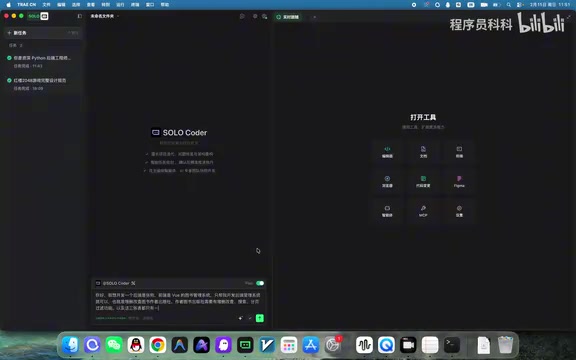
Prompt Engineering Details
One noteworthy detail: the author included several key constraints in the prompt. First, the AI was asked to "approach the design from the perspective of a frontend developer with 20 years of experience and a product manager with 20 years of experience" — this kind of role assignment effectively improves UI output quality. Second, the prompt explicitly stated "do not be influenced by other projects or files in the current directory" to prevent context contamination — a lesson learned from a previous pitfall when testing MiniMax.
The Principle Behind Role Prompting: In the field of Prompt Engineering, Role Prompting is a well-validated technique backed by extensive experimentation. The underlying principle is that large language models are exposed to massive amounts of domain-specific text during pre-training. By specifying a role (e.g., "a frontend engineer with 20 years of experience"), you activate the knowledge distributions within the model's weights that are relevant to that domain, resulting in more professional output. This shares a similar philosophy with Chain-of-Thought Prompting — both influence output quality by shifting the model's "reasoning starting point." Boundary constraints (such as "do not be influenced by other files") fall under context management strategies, aimed at reducing hallucinations or code contamination caused by the model retrieving irrelevant context. This is especially important in workspaces with multiple coexisting projects.
These details illustrate an important lesson: When collaborating with AI coding tools, boundary constraints and role assignments in your prompt are often more critical than the feature descriptions themselves.
Hands-On with Trae SOLO + Doubao Seed 2.0
Plan Generation Phase
Background on Trae IDE and SOLO Mode: Trae IDE is an AI-native integrated development environment from ByteDance. Its SOLO mode is a fully automated task execution mode — unlike standard code completion or conversational assistance, SOLO mode allows the AI to autonomously plan task steps, generate code, execute terminal commands, and verify results, all without requiring the developer to intervene at each step. This "Agent Loop" architecture aligns with the design philosophy of products like Cursor's Composer Agent and GitHub Copilot Workspace, representing the evolution of AI coding tools from "copilot" to "autopilot."
After submitting the requirements using Trae's SOLO mode, there was a brief queuing wait. This wasn't surprising — Doubao Seed 2.0 had just been released and was experiencing high demand.
Technical Background on Doubao Seed 2.0: Doubao Seed 2.0 is a next-generation large language model released by ByteDance's Volcano Engine, positioned as a general-purpose model that balances code generation and reasoning capabilities. Its improved performance on coding tasks is partly attributed to combining reinforcement learning with Chain-of-Thought training paradigms — similar to the technical approach used by DeepSeek-R1 and OpenAI's o-series models, where the model performs "internal reasoning" before generating answers to improve accuracy on complex tasks. For programming scenarios, this means the model can better understand implicit constraints in requirements rather than just matching keywords literally.
Once the queue cleared, the AI quickly generated a development plan with a clear structure:
- Backend: Django project structure, model definitions, API endpoint design
- Frontend: Vue 3 + Vite + Element Plus component library, using Axios for API requests
- CORS handling: Django CORS configuration
- Data relationships: Books linked to Authors and Publishers
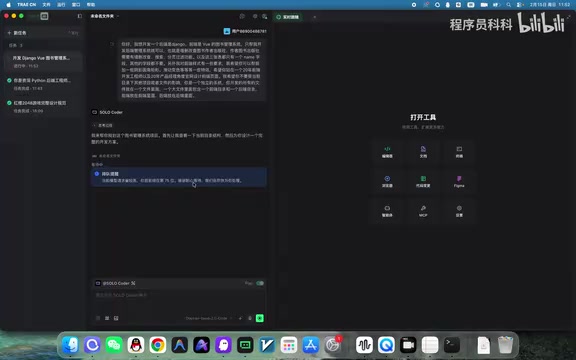
The AI demonstrated solid architectural understanding, automatically identifying the relationships between Books, Authors, and Publishers, and making reasonable technology choices.
Element Plus and the Vue 3 Ecosystem: Element Plus is an enterprise-grade UI component library open-sourced by the Ele.me team, designed specifically for Vue 3 as the successor to Element UI from the Vue 2 era. It provides ready-to-use components like tables, forms, pagination, modals, and toast notifications, significantly reducing repetitive frontend development work. In AI coding scenarios, choosing Element Plus over Ant Design Vue or Naive UI reflects the model's weighing of "community maturity and documentation completeness" — Element Plus has high-quality Chinese documentation and abundant training data, resulting in relatively lower error rates in AI-generated code. This is also why AI tools tend to favor "mainstream and stable" over "novel and cutting-edge" in their technology choices.
Code Generation and Deployment
After clicking execute, the code generation process was generally smooth with acceptable speed. Once generation was complete, the AI needed to be manually instructed to start the frontend and backend services — the frontend running on port 5173 and the backend on port 8000.
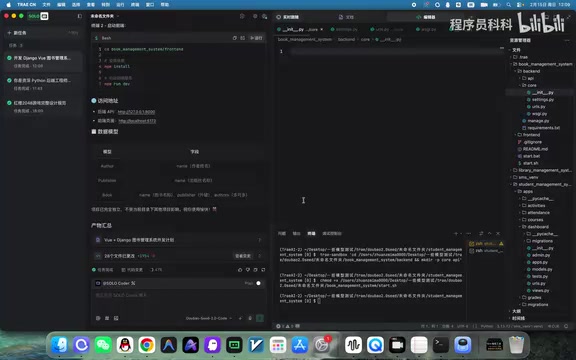
There was a minor hiccup during startup — the backend service briefly showed "service unavailable," but this was resolved by sending a follow-up instruction for the AI to restart it. These kinds of minor issues are common with AI coding tools and are typically fixed within one or two rounds of conversation.
Final Results
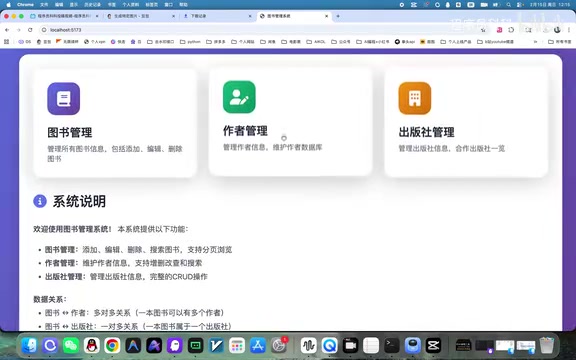
Once the system was up and running, the overall results were satisfying:
- UI: Shadow effects, rounded rectangles, and hover color transitions were all implemented, with a clean and attractive page design
- Functionality: All CRUD operations worked correctly, with delete actions accompanied by success toast notifications
- Interaction details: Pagination and search features were fully functional
Head-to-Head Comparison of Three Models
This test compared three models' performance on the same requirements:
| Dimension | Doubao Seed 2.0 | Gemini 2.5 | MiniMax |
|---|---|---|---|
| UI Style | Clean and cute | Clean and cute | Business professional |
| Feature Completeness | Complete | Complete | Complete |
| Development Speed | Fairly fast (with queuing) | Fast | Fairly fast |
| Bug Count | Few | Few | Few |
Based on the hands-on results, the gap between the three models on simple CRUD projects is minimal. If you prefer a cute, lightweight UI style, both Doubao Seed 2.0 and Gemini 2.5 are solid choices; if you're after a more business-oriented, professional visual presentation, MiniMax stands out.
The Real Gap Between Domestic and Overseas AI Coding Tools
Simple Projects: Virtually No Difference
For standardized CRUD systems like the one in this test, domestic models are fully up to the task. The free combination of Doubao Seed 2.0 with Trae IDE delivers usable results in both functionality and UI quality, offering exceptional value for money.
Complex Projects: The Gap Persists
The author also candidly shared an important observation: When project complexity increases and codebases grow larger, there is still a noticeable gap between domestic models and overseas models like Claude. Specifically:
- Issues that domestic models might take 3–4 conversation rounds to resolve, overseas models often handle in a single pass
- Overseas models demonstrate better stability in long-context understanding and code consistency maintenance
- There are differences in debugging and bug-fixing efficiency
The Technical Root of Long-Context Challenges: One core technical reason behind this gap is long-context processing capability. As codebases grow, models need to maintain consistent understanding of variable names, function signatures, and module dependencies across tens or even hundreds of thousands of tokens of context. The Claude 3.x series supports context windows up to 200K tokens and excels in long-document understanding benchmarks. Some domestic models, however, tend to "forget" variables defined earlier or redundantly regenerate existing functions once a certain length threshold is exceeded. Furthermore, "code consistency maintenance" involves the model's ability to implicitly model the overall project architecture, which requires large volumes of high-quality code training data and specialized reinforcement learning alignment training — a key area where domestic models are actively working to close the gap.
Conclusion and Recommendations
As a free domestic large language model, Doubao Seed 2.0's performance within Trae IDE deserves recognition. For learning, rapid prototyping, and small-to-medium projects, this free combination is more than adequate. However, for commercial projects or scenarios with high code complexity, overseas models should still be the primary choice, with domestic models serving as supplements and alternatives.
Selection advice: If budget is limited, prioritize Trae's free plan; if you value efficiency and stability, consider paying for Claude or Cursor; the best practice is to flexibly switch based on project complexity — use free tools for simple tasks and paid tools for critical modules.
Related articles
 Product Reviews
Qoder vs Cursor Real-World Comparison: Which $20/Month AI IDE Is Better?
Hands-on comparison of Qoder vs Cursor AI IDEs: Agent autonomy, human interaction count, and architecture decisions. Qoder needed only 2 interactions vs Cursor's 8.
 Product Reviews
Cursor Cloud Agent Demo: Eliminating Bottlenecks Across the Entire Software Development Lifecycle
Deep analysis of Cursor's Cloud Agent demo showing how cloud VMs, automated test artifacts, and a full-chain control plane systematically eliminate human bottlenecks across the software development lifecycle.
 Product Reviews
Cursor 3.0 Deep Dive: Multi-Agent Parallelism, Design Mode, and Best-of-N Model Comparison
Cursor 3.0 evolves from an AI coding assistant into an Agent fleet command center. Explore multi-agent parallelism, Design Mode, and Best-of-N model comparison.