Why AI Agent Development Is Addictive for Middle-Aged People: The Psychology Behind Flow State

The psychology behind middle-aged people's addiction to AI coding tools and how to turn it into real value
More middle-aged people are becoming obsessed with AI programming tools like Cursor and Claude — a phenomenon rooted in flow state experiences and the reconstruction of self-efficacy. AI tools perfectly create flow's "sweet spot" by lowering technical barriers, preserving creative challenges, and providing instant feedback. However, turning this passion into real value requires the discernment to identify genuine market needs and the perseverance to go from demo to product, avoiding the trap of equating process pleasure with outcome success.
When Middle-Aged People Discover AI Agents
A fascinating phenomenon is quietly unfolding: more and more middle-aged people are becoming obsessed with AI Agent development. From Cursor to Claude, from Windsurf to various AI coding tools, they're diving headfirst into this magical world like teenagers hooked on video games.
The reason these tools hold such powerful appeal is that they represent an entirely new programming paradigm. Unlike traditional IDEs or low-code platforms that still require systematic programming knowledge, AI Agents employ a conversational programming approach driven by large language models. Cursor deeply integrates AI capabilities on top of VS Code, Windsurf (developed by Codeium) emphasizes a "flow-based" programming experience, and Claude excels with its powerful reasoning and long-context abilities. What they share in common is transforming programming from "precise syntax expression" to "intent communication" — users simply describe their ideas in natural language, and the AI generates, debugs, and even refactors code, enabling people without professional programming backgrounds to rapidly build functional applications.
This isn't simply "playing with technology" — it's a natural response when deep psychological needs are being met. As one content creator shared from personal experience: "If you've tried any of these tools, you'll get hooked. For men, there's something magical about it — worse than teenage internet addiction."
Flow: The Peak Focus State That AI Programming Delivers
What Is Flow Experience
In psychological terms, this immersive development experience is essentially "Flow." Flow refers to the state where you're focused on something you find interesting and continuously receiving positive feedback. It's the most efficient and pleasurable state of concentration humans can achieve.
The concept of flow was first proposed by Hungarian-American psychologist Mihaly Csikszentmihalyi in 1975. Through extensive research on artists, athletes, chess players, and other groups, he discovered that flow states require several key conditions: a balance between task difficulty and personal skill level, clear goals, and immediate feedback. When challenges are too high, people feel anxious; when too low, they feel bored. Only in the "sweet spot" can one enter flow. AI programming tools happen to create this sweet spot perfectly — they lower the technical barrier to programming (preventing anxiety), while preserving creative challenges (preventing boredom), and providing instantly visible results (immediate feedback).
When you use an AI tool to bring an idea to life and see the code run successfully and the feature work, the dopamine rush your brain releases is far more "sophisticated and addictive" than other forms of entertainment. From a neuroscience perspective, dopamine isn't simply a "pleasure chemical" — its more accurate function is driving "anticipation" and "seeking" behavior. What makes AI programming special is that it creates a "variable ratio reinforcement" environment — sometimes the AI delivers a perfect solution on the first try, sometimes it requires multiple rounds of debugging. This uncertainty actually enhances dopamine release, similar to the addiction mechanism of slot machines, but producing constructive outcomes rather than emptiness. This excitement mechanism drives you to keep exploring, forming a positive feedback loop.
Why Middle-Aged People Are More Susceptible to AI Development Addiction
There's a deeper reason worth considering here. For most ordinary middle-aged people, life is filled with regrets, failures, and the frustration of unmet expectations. In the real world, it's difficult to frequently receive positive feedback.
The "Self-efficacy" theory proposed by psychologist Albert Bandura explains this phenomenon well. Self-efficacy refers to an individual's belief in their ability to complete specific tasks. The middle-age stage (typically 35-55) often comes with career plateaus, declining physical capabilities, and rigid social roles — all of which continuously erode self-efficacy. AI tools allow middle-aged people to re-experience the feeling of "I can do this" — projects that previously required a team months to complete can now be prototyped by one person in days. This sudden "unlocking" of capability is essentially a reconstruction of self-efficacy, carrying profound positive implications for mental health.
AI Agents change everything. They give you tools, they give you leverage. With every development project, every idea you implement, you achieve the expected results — often exceeding expectations. This "instant gratification" for middle-aged people who have long lacked positive feedback is like rain after a prolonged drought.
From Flow to Value: A Rational Look at the AI Development Craze
Enjoy the Process, But Don't Lose Your Way
While flow experiences are wonderful, we need to soberly consider a question: can these AI-assisted projects actually be monetized? Can they translate into real outcomes?
The answer is "hard to say." It's not impossible, but between immersive development and actual commercialization lies a minefield of obstacles and pitfalls. In the startup and product development world, there's a stage known as the "Valley of Death" — the long transition period between technical validation and Product-Market Fit. AI tools dramatically compress the time needed for technical validation, but they haven't shortened the subsequent stages: user research, product iteration, growth strategy, customer support, compliance requirements, and more. Statistics show that approximately 90% of startups fail, and most don't die because the technology doesn't work — they die because they can't find real user needs or establish a sustainable business model. In other words, AI has lowered the barrier to "building it," but the barriers to "selling it" and "surviving" remain unchanged.
Technical implementation is just the first step. Product positioning, market demand, user acquisition, ongoing operations — any of these can become a roadblock.
How to Turn AI Programming "Addiction" Into Real Value
To transform this passion into actual value, two key capabilities are needed:
Discernment — the ability to judge which projects have genuine market demand and which are merely self-indulgent technical exercises. Not everything that can be built is worth building. This requires stepping outside the "builder's perspective" to examine your work from the user's and market's standpoint: Who would pay for this? What real pain point does it solve? Are there already more mature alternatives on the market?
Perseverance — the distance from demo to product is often far greater than imagined. The ability to keep polishing after the initial enthusiasm fades is what separates "hobbyists" from "creators." Development in a flow state is enjoyable, but the detailed work of product refinement — fixing edge cases, optimizing user experience, handling customer feedback — is often tedious and lacks immediate rewards. This is precisely the stage that tests people the most.
Final Thoughts
The flow experience that AI Agents deliver is real and valuable. It gives ordinary people the ability to "build what they imagine" for the first time — this sense of empowerment is itself a gift of our era. But we must also guard against equating "the pleasure of the process" with "the success of the outcome."
The ideal state is: enjoy the focus and joy that flow brings, while maintaining a clear head, channeling this passion toward directions that truly create value. After all, the best "addiction" is one that lets you be fully immersed while also yielding real-world results.
From a broader perspective, this wave of AI tool adoption is redefining the threshold for being a "creator." In the past, going from idea to product required crossing an enormous technical chasm; today, AI is filling that chasm. But new chasms are forming — no longer "can I build it," but "does anyone need what I've built." For middle-aged developers immersed in flow, recognizing this truth may be more important than building ten more demos.
Related articles
 Expert Opinions
Windsurf CEO Deep Dive Interview: Speed Is the Only Moat
Windsurf CEO Varun Mohan shares insights on AI coding IDE pivots, product methodology, async Agent challenges, and differentiation strategy vs Cursor. Speed is the only moat.
 Expert Opinions
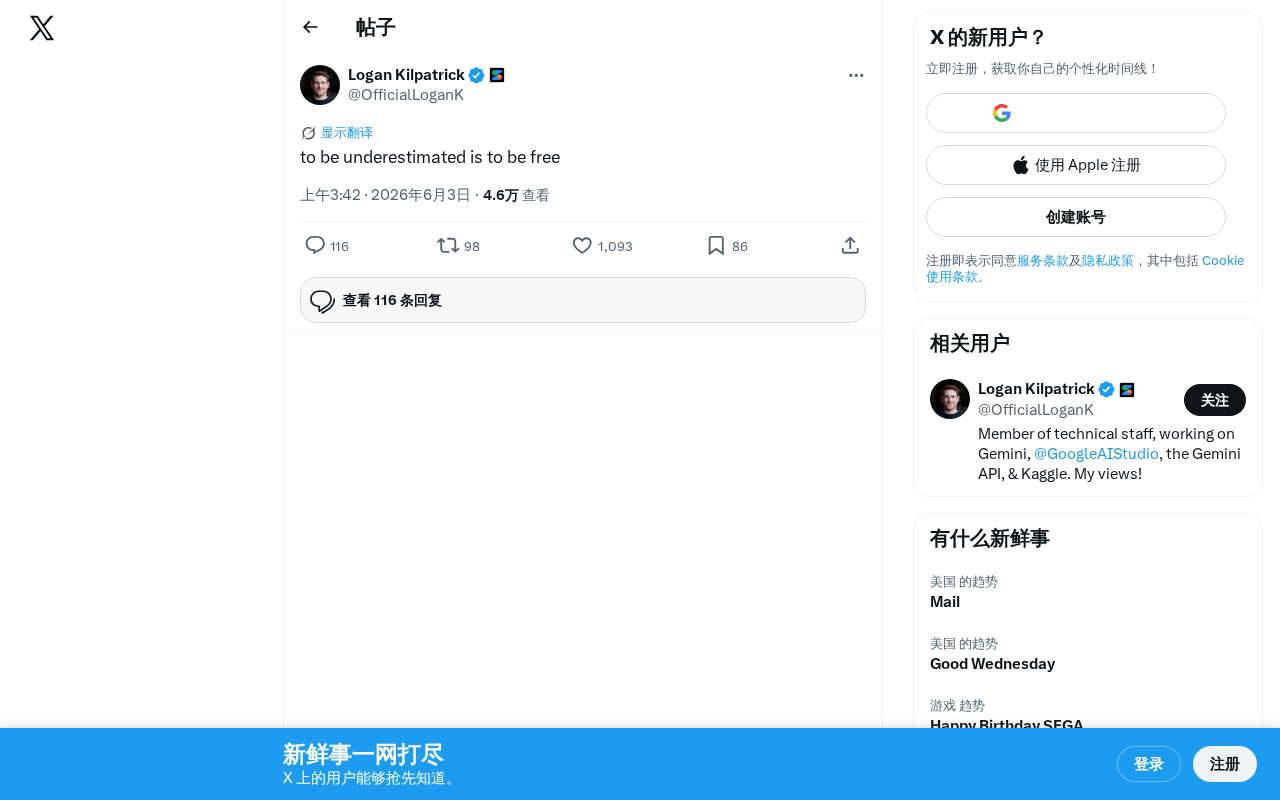
Being Underestimated Is Freedom: A Contrarian Competition Philosophy for the AI Era
Exploring the contrarian strategy of 'being underestimated is freedom' in AI. From OpenAI to DeepSeek to Cursor, why staying under the radar beats standing in the spotlight.
How the Protestant Work Ethic Was Hija…
How the Protestant Work Ethic Was Hijacked: From Protecting Workers to Oppressing Them
Philosopher Elizabeth Anderson reveals how the Protestant work ethic was twisted from a worker-protecting ideal into a tool of oppression—and what it means for the AI era.