Zero Coding, Zero Art Skills: Building a Rhythm Game with AI in 24 Hours
Zero Coding, Zero Art Skills: Building…
A developer with zero experience used an AI platform to build a rhythm game in under 24 hours.
A Bilibili content creator used AI game platform TabTab to build a PVP music rhythm battle game called Invade from scratch in under 24 hours, with art, music, and code 100% AI-generated — no programming or art skills required. The case proves AI can rapidly build game frameworks, but fine-tuning elements like chart precision and gameplay feel still demands significant human effort, leaving a clear gap from polished rhythm game quality.
When AI Takes Over the Entire Game Development Pipeline
A Bilibili content creator (AE Brother) recently shared a remarkable indie game development case study: using the AI game development platform TabTab, he built a music rhythm game from scratch in less than 24 hours of actual production time. The most striking part? The art, music, and code were 100% AI-generated — the developer himself had no programming or art background whatsoever.
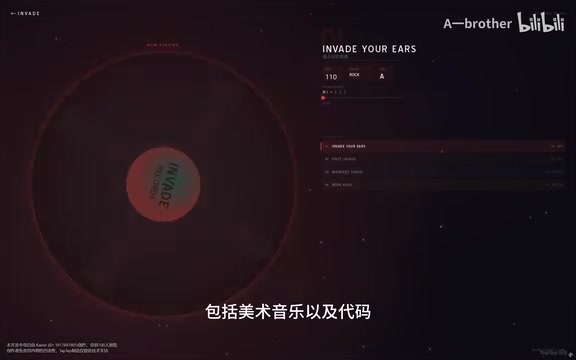
The game is called Invade, positioned as a PVP-focused music rhythm battle game. While it's currently only about 50% complete, the AI-assisted game development capabilities it demonstrates are already enough to turn heads across the industry.
It's worth noting that rhythm games are among the most technically challenging genres to implement. Their core systems include: an audio synchronization engine (which must precisely align visual judgment frames with audio streams, typically keeping errors within ±16ms), a chart editing system (defining note timing, track positions, and judgment windows), and latency compensation mechanisms (handling audio output delay differences across devices). In traditional development, audio synchronization alone could take a senior engineer weeks to fine-tune. This is precisely why AI can build a "runnable" framework in 24 hours, but chart precision and gameplay feel still require extensive manual intervention.
From Concept to Product: AI's Execution Exceeded Expectations
According to the creator, the most time-consuming part of the project wasn't the creative work itself, but rather the iterative revisions during testing. He described AI's execution capability as "extremely powerful," capable of achieving most of what he envisioned.
This represents a fundamental shift in the development workflow: in traditional indie game development, programmers spend enormous amounts of time writing code and debugging, artists repeatedly polish assets, and music requires professional production. With AI platform support, these stages are dramatically compressed, and the developer's role shifts from "executor" to "planner" and "reviewer."
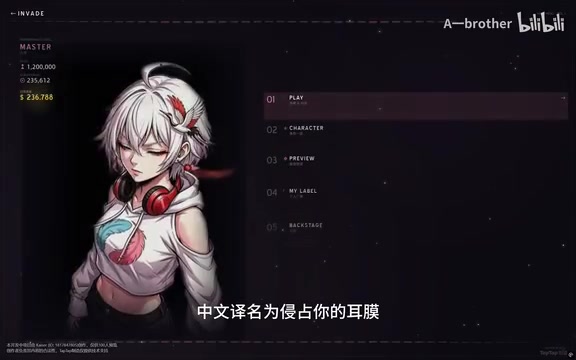
In other words, creativity and judgment have become the core competitive advantages, while the technical implementation barrier has been virtually eliminated by AI.
Current State: Possibilities Within an Unfinished Product
Implemented Features
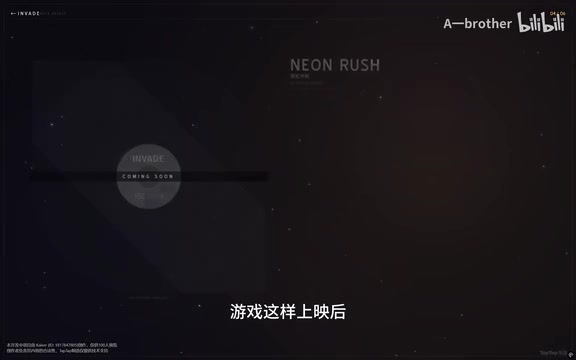
From the demo content, the game already has the basic framework of a music rhythm game: a rhythm judgment system, charts, music, and the overall game logic is functional. The PVP battle mode, as the core gameplay mechanic, has also entered the development phase.
Areas Needing Improvement
The creator was candid about the current version's shortcomings:
- PVP mode is not yet complete and is still undergoing major optimization
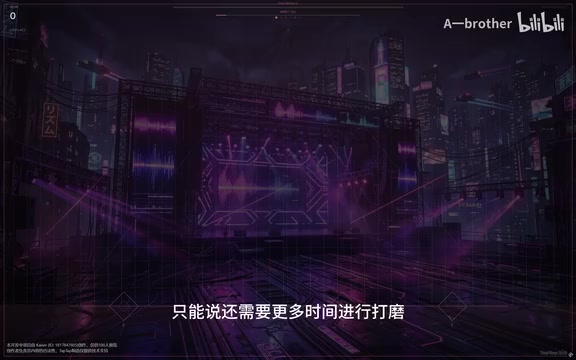
- Charts are very rough, with essentially no fine-tuning
- Art assets are not yet finalized, with significant room for visual improvement
- After official launch, songs, charts, and gameplay mechanics may undergo substantial changes
These issues reveal a core tension in current AI game development: AI can rapidly build frameworks, but fine-tuning and polish still require significant human time investment. The distance between "it runs" and "it's fun" still needs to be bridged by the developer's aesthetic sense and experience.
Insights and Reflections on AI Game Development
Lower Barriers Spark a Creative Explosion
The greatest significance of this case isn't the game's quality itself, but the possibility it proves: a person with no programming or art background can transform a game concept into a playable prototype in an extremely short time using AI tools. The implications for the indie game space are profound — when technical barriers are no longer obstacles, more people with creative ideas but lacking technical skills will flood into game development.
The technical barrier to indie game development has dropped significantly several times over the past two decades. Around 2005, the XNA framework allowed C# developers to make games without mastering low-level graphics APIs. In the 2010s, the widespread adoption of Unity and Godot dramatically reduced cross-platform publishing costs. The emergence of asset marketplaces like the Asset Store enabled small teams to purchase ready-made art and sound resources. Yet even so, indie developers still needed to master at least one programming language and have basic artistic sensibility. AI tools represent the third major barrier reduction — this time what's being leveled is "execution skill" itself, not merely tool usability. Historically, every barrier reduction has been accompanied by explosive growth in creator numbers. Phenomenon-level titles like Minecraft and Stardew Valley were both born during creative boom periods following barrier reductions.
TabTab's Core Value Proposition
As an AI game development platform, TabTab's core value lies in integrating all aspects of game development (art, music, code) into a unified AI workflow. Compared to the "patchwork" approach of using ChatGPT for code, Midjourney for art assets, and other tools separately, the efficiency advantage of an integrated platform is obvious.
From a technical architecture perspective, the integrated AI game development platform that TabTab represents essentially combines multiple domain-specific generative AI models into a unified workflow orchestration system. The code generation component is typically based on large language models fine-tuned specifically for game engines, capable of directly outputting scripts usable in Unity/Godot and similar engines. Art generation relies on diffusion models optimized specifically for style consistency across game assets. Music generation leverages audio generation models like Suno, Udio, or their APIs. The biggest difference from the "patchwork" approach is that an integrated platform can maintain contextual consistency across modules — for example, ensuring generated UI styles remain consistent with character art — something extremely difficult to achieve when using multiple tools separately.
Where Is the Quality Ceiling?
That said, we need to maintain a clear-eyed perspective: rhythm games are a genre with extremely high demands for "feel" and "timing precision." Whether AI-generated charts and judgment systems can meet the standards of core players remains a major question mark. Based on what's been shown so far, the game still has a considerable gap compared to polished rhythm games like Phigros and Arcaea.
This gap is no exaggeration. Phigros, developed by the Chinese indie team Pigeon Games, innovates with its "dynamic chart" system — the judgment line itself rotates, scales, and moves with the musical beat, with chart design deeply integrated with musical emotion. Each chart undergoes dozens of hours of manual fine-tuning by professional rhythm game designers. Arcaea is renowned for its precise difficulty grading system and a library of hundreds of polished charts, with a single high-difficulty chart typically requiring 40-80 hours of production time. This means there's a fundamental gap between the "functional charts" AI can currently generate and "artistic charts" — the former can make a game run, while the latter can evoke emotional resonance in players.
Moreover, Invade's PVP positioning is itself an ambitious design gamble. Introducing PVP mechanics into a music rhythm game requires solving several key design challenges: network latency synchronization (both players need to be judged on the same musical timeline, and any network jitter breaks fairness), skill gap balancing (the skill disparity between experts and beginners is especially stark in rhythm games), and battle feedback mechanism design (how to make "defeating your opponent" produce intuitive game feel within a rhythm game framework). Successful PVP rhythm game examples on the market are extremely rare, indicating that this direction itself contains design challenges that haven't been fully solved — making it the most noteworthy innovation bet to watch in Invade's development.
Final Thoughts
According to the creator, Invade is expected to launch in mid-June, with the first PV trailer coming soon. Regardless of the final product's quality, this project itself is a milestone worth documenting in the AI game development wave. It tells us that AI can not only help professional developers boost efficiency but can also turn "making games with zero experience" from a slogan into reality.
As for how far this rhythm game ultimately goes, let's wait and see.
Related articles
 Product Reviews
Qoder vs Cursor Real-World Comparison: Which $20/Month AI IDE Is Better?
Hands-on comparison of Qoder vs Cursor AI IDEs: Agent autonomy, human interaction count, and architecture decisions. Qoder needed only 2 interactions vs Cursor's 8.
 Product Reviews
Cursor Cloud Agent Demo: Eliminating Bottlenecks Across the Entire Software Development Lifecycle
Deep analysis of Cursor's Cloud Agent demo showing how cloud VMs, automated test artifacts, and a full-chain control plane systematically eliminate human bottlenecks across the software development lifecycle.
 Product Reviews
Cursor 3.0 Deep Dive: Multi-Agent Parallelism, Design Mode, and Best-of-N Model Comparison
Cursor 3.0 evolves from an AI coding assistant into an Agent fleet command center. Explore multi-agent parallelism, Design Mode, and Best-of-N model comparison.