Zor Full-Stack AI Engineer: Build Complete Production-Ready Apps with a Single Prompt

Zor is a full-stack AI engineer tool that builds complete, deployable apps end-to-end from natural language prompts.
This article introduces Zor, an AI programming tool that differentiates itself from code completion tools like Cursor and frontend generators like Lovable by positioning as a full-stack application building platform. Zor adopts a database-first architecture and uses natural language prompts to automatically handle authentication systems, database design, Stripe payment integration, and AI image generation — delivering complete, deployable application products that represent a significant evolution from AI-assisted coding to autonomous building.
From Code Generation to Complete Applications: The Evolution of AI Programming Tools
Generating code is no longer difficult today, but generating a fully functional, high-quality application — that's the real challenge. With tools like Cursor and Lovable, we see they can assist with coding, yet often leave significant gaps when it comes to connecting the frontend and backend. A tool called Zor, an AI full-stack engineer, is attempting to fundamentally change this landscape.
Traditional full-stack application development involves coordinating multiple independent technology stacks: frontend frameworks (React, Vue, etc.), backend services (Node.js, Python, etc.), databases (PostgreSQL, MongoDB, etc.), authentication services (OAuth 2.0 protocol), and deployment platforms (AWS, Vercel, etc.). Each layer requires specialized knowledge and extensive configuration. Supabase is an open-source Firebase alternative that provides instant databases, authentication, and real-time subscriptions; Netlify is a frontend deployment and serverless functions platform. Zor consolidates these disparate services into a unified AI-driven workflow, essentially simulating the collaborative process of a DevOps engineer + full-stack developer + architect working together.
Zor's positioning is crystal clear: it's not a code completion tool, but rather a full-stack application building platform that combines the capabilities of Lovable, Supabase, and Netlify. Through natural language conversation, it can build complete applications end-to-end — from authentication systems to databases, from payment integration to AI model invocation — all handled automatically.
Core Capabilities: Not Just Writing Code, But Assembling an Engineering Team
Complete Authentication System
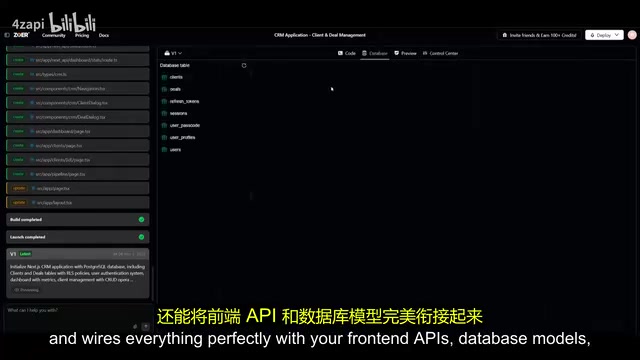
One of Zor's most impressive features is its built-in, fully-featured authentication system. It automatically generates registration pages, login pages, protected routes, and user management functionality — all directly linked to an auto-generated database. Users can log in via third-party accounts like Google and Facebook, with the entire authentication flow requiring zero manual configuration.
The third-party login here is based on the OAuth 2.0 authorization framework, an industry-standard protocol that allows users to log into third-party applications using existing Google, Facebook, or other accounts without exposing their passwords to those applications. The complete OAuth flow includes: authorization code acquisition, token exchange, user information retrieval, session management, and token refresh. Manually implementing this flow typically requires handling redirect URI configuration, CSRF protection, secure token storage, and numerous other security details — a common source of security vulnerabilities for junior developers. Zor encapsulates these complex security implementations into a one-click configuration, dramatically lowering the barrier to implementing authentication systems.
Database-First Architecture Philosophy
Zor adopts a "Foundation First" methodology — before generating any UI, it first creates the core database schema. This stands in stark contrast to most AI programming tools, which typically start with the frontend and leave the backend mess for developers to clean up themselves. Zor ensures that applications have a stable, scalable, and fully integrated architectural foundation from the very beginning.
In software engineering, "Schema First" or "Database First" is a classic architectural design methodology, with "Code First" being its counterpart. Database-first means defining data models and relationships (such as foreign key constraints, indexing strategies, and data types) before building business logic and UI around those models. The advantages of this approach include: data consistency is guaranteed at the source, API design naturally follows the data structure, and there are no data migration nightmares during later scaling. In contrast, the frontend-first approach used by many AI tools can quickly produce visual results, but the generated applications often lack a persistence layer, relying on localStorage or mock data for storage, making them unsuitable for production use.
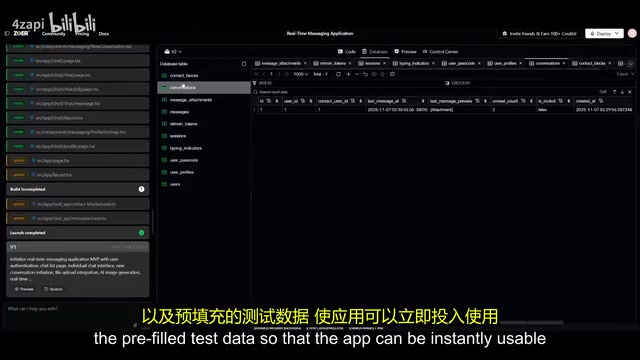
From session management to message storage, Zor designs complete database structures and even runs basic tests to ensure the application is immediately usable. Developers can configure and edit any part of the schema on top of this foundation, and can also export it in different file formats.
AI Image Generation Integration
Zor comes with built-in Nanobanana model integration, supporting both text-to-image and image-to-image functionality. Developers simply enable the feature in the control center — no additional setup or external API calls required — to use AI image generation capabilities directly within their applications. In the demo, a user typed "generate a cute dog playing with a red ball" in a chat application, and within seconds an image was generated and sent to a contact.
Stripe Payment Integration
Zor's Stripe payment integration process is remarkably streamlined:
- Go to Project Control Center → Integrations → Stripe Payments
- Enter three keys: Publishable Key, Secret Key, and Webhook Key
- Obtain API keys from the Stripe Dashboard's test mode
- Copy the Endpoint URL generated by Zor and configure the Webhook in Stripe
- Save and you're ready to go
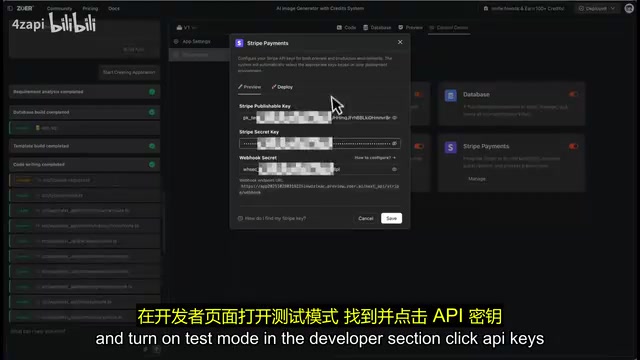
Stripe is one of the world's most popular online payment processing platforms, and its Webhook mechanism is central to implementing asynchronous payment notifications. When a payment event occurs (such as a successful payment, refund, or subscription renewal), Stripe sends an HTTP POST request to the developer's preset Endpoint URL, carrying event details as JSON data. The Webhook Secret Key is used to verify that requests genuinely come from Stripe rather than a malicious third party (via HMAC-SHA256 signature verification). The Publishable Key is used for frontend Stripe.js initialization (safe to expose publicly), while the Secret Key is used for backend API calls (must be kept confidential). Test mode allows developers to use simulated credit card numbers (such as 4242 4242 4242 4242) to run full end-to-end tests without incurring real charges.
In the demo, from clicking purchase to completing the Stripe test payment, the entire flow was seamless, with the payment gateway fully functional.
Hands-On Building Experience: From Prompt to Complete Application
Prompt Engineering and Enhancement
Zor's workflow begins with a natural language prompt. Users should describe the desired functionality in as much detail as possible, while also enabling various integration options: PostgreSQL database, authentication system, file uploads, AI image generation, Stripe payments, and more.

Prompt Engineering has evolved from a simple LLM conversation technique into a systematic methodology for expressing requirements. In application building scenarios, prompts essentially replace traditional software development artifacts like Product Requirements Documents (PRDs) and technical specification documents. Prompt Enhancement technology typically leverages the LLM's own capabilities to expand a user's vague description into a structured list of functional requirements, including user role definitions, feature module breakdowns, data flow descriptions, and boundary condition specifications. This reduces the "intent gap" between non-technical users and AI systems — the distance between the product vision in a user's mind and the precise instructions the AI can understand.
Zor's prompt enhancement feature transforms simple descriptions into more detailed and precise requirement specifications with a single click. Additionally, users can attach reference files such as wireframes to help Zor more accurately understand design intent.
Plan Refinement and Building
After submitting a prompt, Zor generates a refined plan that details the features to be implemented, the interface appearance, and the plugins to be added. Users can further modify this plan — for example, changing the primary color scheme — and Zor updates the plan in real time. Once confirmed, clicking "Build App" kicks off the end-to-end build process.
In the demo, a real-time chat application (similar to Telegram) was built from a single prompt. Zor sequentially completed:
- Database structure creation (user tables, message tables, session management)
- Backend system setup
- Frontend interface generation (including a polished Landing Page)
- Authentication system integration (Google login)
- Real-time messaging functionality
- AI image generation functionality
- File upload functionality
Throughout the process, users could preview code generation progress and application results in real time.
Zor Copilot and AI Code Blocks
Zor also includes a built-in Copilot feature that simplifies the application usage experience. Even more noteworthy is the AI Code Blocks feature — users can directly manipulate application data through natural language commands. For example, typing "Create a new customer record for John Smith, company GlobalTech, add contact information" prompts Zor to automatically execute the database operation, requesting user confirmation before each change is applied.
Differentiated Positioning Among Existing Tools
The current AI programming tools market can be roughly divided into three tiers:
- Code Completion Layer (e.g., GitHub Copilot, Cursor): Assists with writing code snippets
- Frontend Generation Layer (e.g., Lovable, V0): Rapidly generates UI components and pages
- Full-Stack Building Layer (e.g., Zor): Builds complete applications end-to-end
Zor's core differentiator is that it doesn't just hand you a UI file and some boilerplate code — it delivers a complete, deployed, immediately usable product. Authentication, databases, payments, AI integration — all the parts that typically consume enormous amounts of developer time for manual configuration are handled automatically by Zor.
Summary and Reflections
Zor represents an important direction in the evolution of AI programming tools from "coding assistance" to "autonomous building." It comes closest to the experience of having a complete engineering team — not helping you write code, but helping you build products.
AI Agents are among the most active research areas in AI today, referring to AI systems capable of autonomously planning, executing multi-step tasks, and adjusting strategies based on environmental feedback. Unlike traditional single-turn Q&A, Agents possess Tool Use, Memory management, and Task Decomposition capabilities. In the programming domain, the Agent evolution path roughly follows: code completion → code generation → multi-file editing → project-level building → autonomous deployment and operations. The full-stack building tools that Zor represents are essentially systems that orchestrate multiple specialized Agents — a database Agent handles schema design, a frontend Agent handles UI generation, a DevOps Agent handles deployment configuration — all working in concert to deliver end-to-end application delivery.
For complex enterprise-grade applications, tools like this may not yet fully replace professional development teams. But for MVP validation, prototype development, personal projects, and small-to-medium SaaS products, the capabilities Zor demonstrates are already quite impressive. As AI Agent capabilities continue to improve, the vision of "building an app with a single sentence" is rapidly becoming reality.
Key Takeaways
- Zor adopts a database-first architecture, building a complete backend schema before generating UI, ensuring application stability and scalability
- Includes built-in integrations for complete authentication systems, Stripe payments, and Nanobanana AI image generation — no manual configuration required
- Builds complete applications end-to-end from natural language prompts, including frontend, backend, database, and third-party service integrations
- Offers prompt enhancement, plan refinement, and real-time preview features, lowering the barrier for non-technical users
- AI Code Blocks allow users to manipulate application data through natural language, enabling application-level AI automation
Related articles
 Product Reviews
Qoder vs Cursor Real-World Comparison: Which $20/Month AI IDE Is Better?
Hands-on comparison of Qoder vs Cursor AI IDEs: Agent autonomy, human interaction count, and architecture decisions. Qoder needed only 2 interactions vs Cursor's 8.
 Product Reviews
Cursor Cloud Agent Demo: Eliminating Bottlenecks Across the Entire Software Development Lifecycle
Deep analysis of Cursor's Cloud Agent demo showing how cloud VMs, automated test artifacts, and a full-chain control plane systematically eliminate human bottlenecks across the software development lifecycle.
 Product Reviews
Cursor 3.0 Deep Dive: Multi-Agent Parallelism, Design Mode, and Best-of-N Model Comparison
Cursor 3.0 evolves from an AI coding assistant into an Agent fleet command center. Explore multi-agent parallelism, Design Mode, and Best-of-N model comparison.