$17 Billion! DoorDash Acquires Instacart, Reshaping the Delivery Landscape

DoorDash acquires Instacart for $17 billion, combining food and grocery delivery and reshaping the industry.
According to reports, DoorDash will acquire grocery delivery platform Instacart for $17 billion, merging major players in restaurant food delivery and grocery delivery. DoorDash dominates the restaurant delivery market, while Instacart has broad coverage in grocery delivery; both hope to achieve cross-selling and synergies by sharing delivery capacity, technical infrastructure, and user bases. The deal will significantly increase concentration in the on-demand delivery market, pressure competitors such as Uber Eats and Grubhub, and may also trigger antitrust review by regulators. The transaction still awaits regulatory approval, and the effectiveness of integrating technology platforms, courier networks, and merchant relationships, as well as the reasonableness of the $17 billion valuation, will determine its success. The move could trigger a new wave of M&A in the delivery industry.
Transaction Overview: Two Delivery Giants Merge
According to an RSS source, DoorDash will acquire Instacart for $17 billion. The deal brings two major players in the on-demand delivery space under one roof: DoorDash dominates the restaurant food delivery market, while Instacart has broad coverage in grocery delivery.
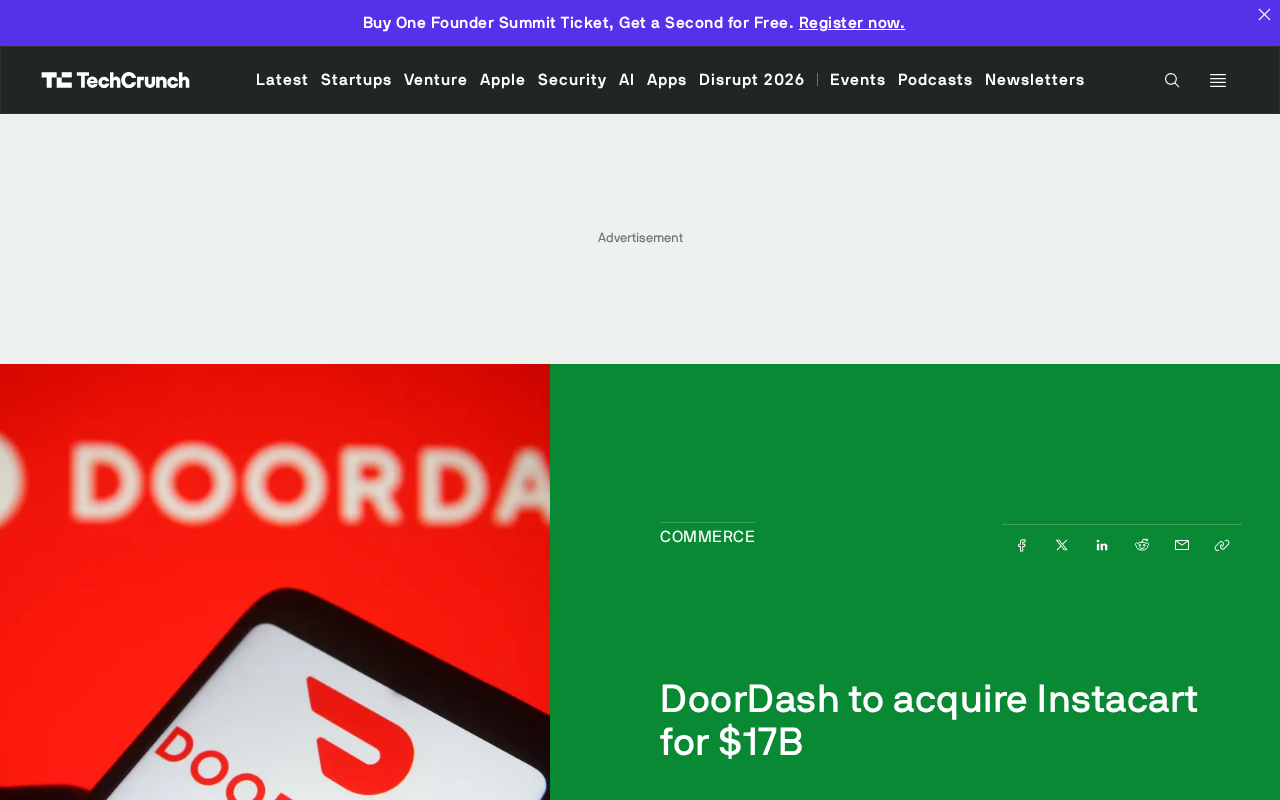
The $17 billion price tag highlights both parties' strategic intent to pool resources and expand delivery categories. Full transaction details have not yet been disclosed, but the news has already drawn widespread industry attention.
DoorDash was founded in 2013 and is headquartered in San Francisco. It is one of the largest restaurant food delivery platforms in the U.S. and went public on the NYSE in 2020. Its business has expanded from restaurant delivery to grocery, convenience store, and retail delivery, and it retains users through its "DashPass" subscription service. Instacart was founded in 2012, also headquartered in San Francisco, and went public in 2023. It is a leading U.S. grocery delivery and shopping platform that uses a "personal shopper" model and partners with more than 1,400 retailers, including Whole Foods, Costco, and Kroger. Both companies rely on the gig economy model, using independent contractors to complete "last-mile" delivery, so the merger involves not only market share but also the integration of the courier workforce and labor relations.
Complementary Strengths: Combining Restaurant Delivery and Grocery Delivery
DoorDash's core strength lies in restaurant food delivery. Its platform connects a large number of restaurants with consumers, forming a dense delivery network. Instacart focuses on grocery delivery, partnering with numerous supermarkets and retail stores to provide shopping and delivery services for fresh food and daily necessities.
After the merger, the two companies could in theory share delivery capacity, technical infrastructure, and user bases, enabling cross-selling. For example, DoorDash's food delivery users could convert into Instacart grocery users, and vice versa. This synergy is one of the core rationales for the acquisition.
Industry Impact: Increased Concentration in the Delivery Market
The acquisition will significantly change the competitive landscape of the on-demand delivery market. DoorDash already leads in restaurant food delivery, while Instacart is a top player in grocery delivery. The combined entity will cover a broader range of delivery scenarios and put greater pressure on competitors such as Uber Eats and Grubhub.
From the consumer perspective, increased market concentration may have two effects: on one hand, a more efficient delivery network could improve the service experience; on the other hand, reduced competition could raise concerns about pricing and choice. Whether regulators will conduct an antitrust review of the deal will be a key focus going forward.
Antitrust review is a key threshold for such transactions. In the United States, mergers above certain size thresholds must file HSR notifications with the Federal Trade Commission (FTC) and the Department of Justice (DOJ), and regulators can sue to block a deal under Section 7 of the Clayton Act on the grounds that it may "substantially lessen competition." In recent years, the FTC has tightened its review of tech and platform-economy mergers, having sued to block deals such as Microsoft's acquisition of Activision Blizzard and Amazon's acquisition of iRobot. The criteria typically include relevant market definition, market share, barriers to entry, and whether potential competition is eliminated. If regulators determine that restaurant delivery and grocery delivery belong to the same "on-demand delivery" relevant market, the combined share could trigger concerns; if they are treated as two separate markets, the review focus would shift to cross-subsidization and data concentration.
Open Questions and Outlook
The transaction is still at the announcement stage and requires regulatory approval and satisfaction of customary closing conditions. How the two sides integrate their respective technology platforms, courier networks, and merchant relationships will be key to the deal's success. In addition, whether the $17 billion valuation is reasonable will also depend on the extent to which future synergies are realized.
For the delivery industry, the deal could trigger a new wave of M&A, with other players potentially seeking mergers to cope with competition. Regardless of the outcome, DoorDash's acquisition of Instacart marks a new phase of consolidation in the on-demand delivery market.
Related articles

Why Does Self-Play AI Always Get Crushed by Cheap Units? An RTS Developer's Account of the Dilemma
An independent developer trained an RTS commander AI with pure self-play, only to find it dominated historical versions but was crushed by human players using cheap tier-1 units. This article analyzes the causes of self-play strategy collapse, explores solutions such as exploiters, diversity rewards, and reward design, and introduces the open Bot Kit and AI league plan.
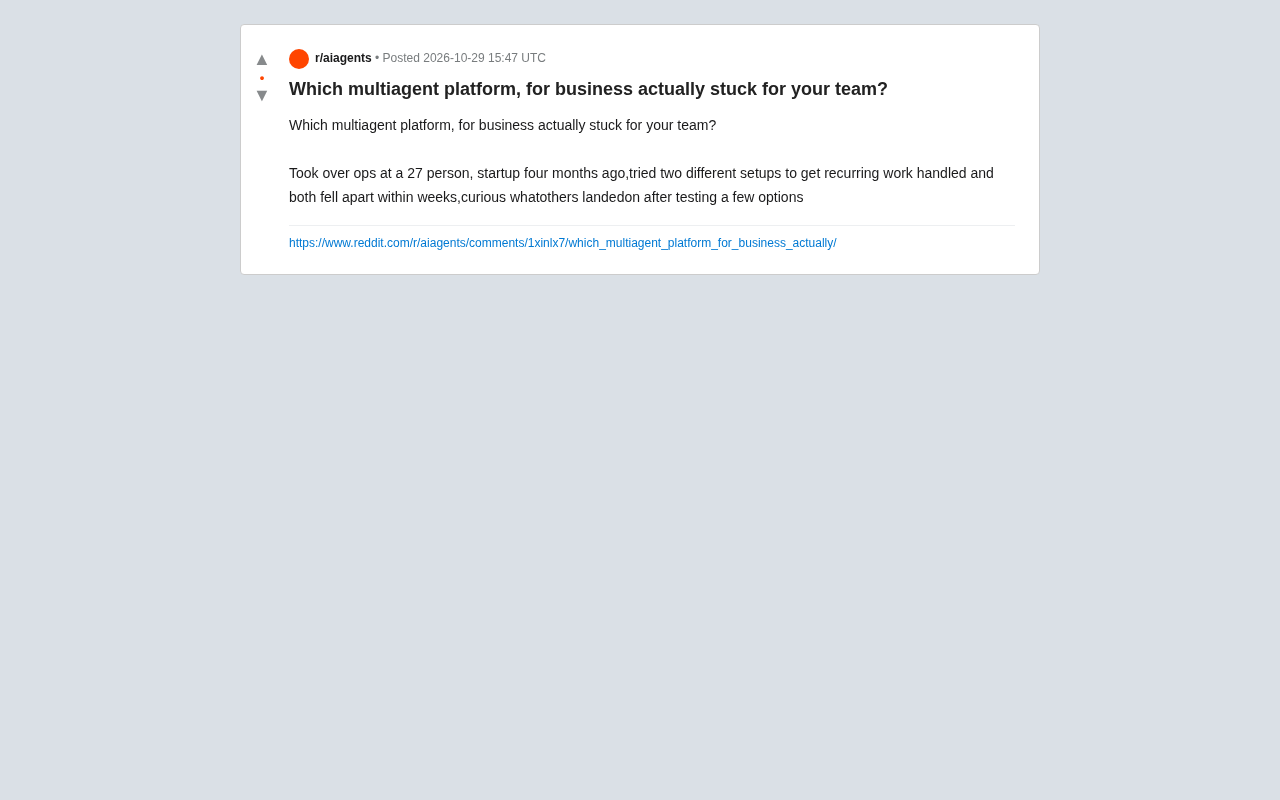
Which Multi-Agent Platform Wins? A Small Team's Battle Scars and Selection Considerations
A 27-person startup's ops lead tried two multi-agent platforms in four months and both failed. This article analyzes why small-team deployments break down, and offers selection guidance on integration depth, observability, and progressive rollout.

Thrive Holdings Takes ADT Private in $7.6 Billion Deal
Thrive Holdings acquires ADT for $7.6 billion in an all-cash take-private deal expected to close in Q1 2027. Analysis of the deal structure, ADT's asset value, and impact on the smart home security industry.