28 Zero-Day Vulnerabilities Found in Two Days: Is Robot Security Under Siege?
VicOne used AI to find 28 zero-days in under two days, with 75% in pre-deployment robot toolchains.
VicOne used AI-assisted vulnerability discovery to identify 28 zero-day vulnerabilities in under two days in software and tools supporting the Physical AI ecosystem, involving projects from Google, NVIDIA, Meta, and others. The vulnerabilities span development and training, simulation and validation, and deployment and operation, with 75% in pre-deployment toolchains. The article notes that AI speeds discovery for both attackers and defenders, compressing response time, and researchers demonstrated disabling a robot's remote E-stop. Patch release does not mean safe deployment; teams must confirm affected systems, check compatibility, and verify behavior, and can organize response around three questions.
AI-assisted vulnerability discovery is rewriting the pace of security research. VicOne identified 28 zero-day vulnerabilities in less than two days in software and tools supporting the Physical AI ecosystem, involving projects developed or maintained by teams at Google, NVIDIA, Meta, and others. According to preliminary verification, all 28 findings were classified as zero-day vulnerabilities; the final count may change following review by vendors and vulnerability management authorities, and some findings have not yet received CVE identifiers.
AI Accelerates Vulnerability Discovery, Benefiting Both Attackers and Defenders
Vulnerability discovery typically requires reviewing code, tracing how systems communicate, and verifying whether suspected weaknesses can actually be exploited. AI can accelerate parts of this process, enabling researchers to analyze more software in less time. The same capability can also be exploited by attackers.
When a weakness is a zero-day—previously unknown and without an available fix—faster discovery means the window teams have to respond is compressed. Exposure does not mean an attack has occurred, but teams still need to determine whether they use affected software and what attackers could access or modify.
Zero-day vulnerability refers to a vulnerability not yet known to the software vendor, and therefore without an official patch. If attackers can exploit it first, they can often bypass existing protections; defenders have a very short window from awareness to remediation. The value of a zero-day lies in its "unknown" nature—it may lurk in the dependency chain for a long time until actively discovered or maliciously exploited. For robotic systems, zero-days may appear in training frameworks, simulation tools, or runtime components, affecting everything from model integrity to physical behavior safety. Therefore, rapid discovery and coordinated disclosure of zero-days is a key step in shortening exposure windows and reducing systemic risk.
Vulnerabilities Span Three Stages of the Robot Lifecycle
VicOne's findings cover three stages of the robot lifecycle: development and training, simulation and validation, and deployment and operation. A VicOne chart shows that 75% of findings involve development, training, simulation, or validation tools—meaning most risks appear before robots are deployed.

Development and Training: Hidden Changes Can Reach Production Robots
Teams download pre-trained models and adapt them to their robots. Loading a malicious file may give attackers access to the training system, allowing them to alter training data or the model itself. A manipulated model may perform normally in routine tests but respond incorrectly to specific objects, scenarios, or commands after deployment. Risk can enter through tools the team trusts, without directly attacking the robot.
Simulation and Validation: Passing Tests Can Create False Confidence
Importing a tampered scenario or robot model may give attackers access to the simulation environment. With sufficient control, attackers can tamper with simulated sensor readings, physical conditions, or test results. A robot may appear to pass tests that should have exposed unsafe behavior, and teams approve it for real-world deployment based on misleading evidence.
Simulation and validation environments are software stacks used in robot development to reproduce physical conditions, sensor inputs, and task scenarios in a virtual world. They allow teams to test algorithms and safety policies at scale before hardware deployment. However, the simulation environment itself is also an attack surface: if attackers tamper with scenario files, sensor models, or physical parameters, dangerous behavior can be "hidden" during testing, leading teams to make approval decisions based on distorted evidence. The particularity of this risk is that it does not directly attack the robot but attacks the "trusted basis for testing," planting hidden dangers before deployment.
Deployment and Operation: Operators May Lose Visibility or Control
Attackers can exploit weaknesses to modify files affecting motion planning or send malicious map data that crashes the operator's monitoring display. A compromised teleoperation computer could also endanger commands sent to the robot. Depending on system design and protections, these weaknesses may alter robot motion or prevent operators from seeing the situation and responding in time.
These are potential consequences, not confirmed outcomes for every finding. Actual impact depends on attacker access, system design, and whether other protections prevent changes from propagating to physical behavior.
Remote E-stop is a protection mechanism that allows an operator to remotely trigger a safe stop state for the robot in abnormal situations. It is usually independent of the main control link, but if the communication services, authentication modules, or command parsing components it relies on are compromised, the E-stop command may be intercepted, forged, or rendered ineffective. VicOne's demonstration shows that safety functions are themselves software and must also undergo adversarial testing. Teams should verify whether redundant physical or logical braking paths exist when the software components supporting the E-stop are compromised, and whether operators can promptly detect E-stop failure.
Remote E-stop Failure: Protection Functions Themselves Can Be Compromised
In another demonstration, VicOne researchers provided a concrete case affecting a protection function: they exploited a vulnerability to disable a robot's remote E-stop command. This case shows that teams need to test whether protections remain effective when the software supporting safety protections is compromised.

Patch Release Does Not Mean Safe to Deploy
AI can shorten the time to find weaknesses, but robot teams still need to determine whether fixes can be safely deployed. Even after maintainers release a patch, teams must confirm affected systems, check compatibility, and verify that updates preserve expected behavior.
Previously successful tests remain useful evidence, but newly discovered weaknesses may expose conditions those tests never covered. Teams can organize their response around three questions:
- Where do we use the affected software? Including training computers, simulation environments, and deployed robots.
- What could this weakness change? Assess whether it affects models, test results, operator visibility, or robot behavior.
- How do we verify protection? Confirm the fix addresses the weakness and the updated system still operates as expected.
When immediate updates are not possible, teams may need temporary mitigations, such as restricting access to affected services, while preparing a validated fix.
Coordinated disclosure is a process in security research where vendors, researchers, and vulnerability management authorities agree on a timeline and synchronize the public release of vulnerability details and fixes. Its purpose is to prevent malicious exploitation before users obtain patches. For robot teams, coordinated disclosure means completing an internal impact assessment after patch release: confirming the list of affected assets, testing compatibility, and verifying that fixes do not change expected behavior. If immediate deployment is not possible, temporary mitigations (such as network isolation and access controls) can serve as a transition, but their limitations and validity period must be clear.
From Finding Vulnerabilities to Safer Deployment
As details of the 28 findings are gradually disclosed through coordinated disclosure, the next step for robot vendors is to map each finding to its potential impact on development, deployment, and robot behavior. This work also requires understanding how threats affect robot behavior and how to protect systems already in operation. VicOne Radeis helps teams identify potential zero-day vulnerabilities, assess AI model and system security, and use simulation before deployment to evaluate how these risks affect robot behavior; VicOne Rthena supports threat detection and response during operation according to approved policies.
Faster vulnerability discovery only matters when teams can turn it into action: identifying what needs attention, verifying that protections still hold, and confirming that fixes do not introduce new risks.
This article is presented by VicOne.
One-line Summary
VicOne used AI to find 28 zero-days in under two days, with 75% in pre-deployment robot toolchains.
Paragraph Summary
VicOne used AI-assisted vulnerability discovery to identify 28 zero-day vulnerabilities in less than two days in software and tools supporting the Physical AI ecosystem, involving projects from teams at Google, NVIDIA, Meta, and others. These vulnerabilities span three stages of the robot lifecycle—development and training, simulation and validation, and deployment and operation—with 75% concentrated in pre-deployment toolchains. The article notes that AI-accelerated vulnerability discovery benefits both attackers and defenders, and faster discovery compresses response time. Researchers also demonstrated disabling a robot's remote E-stop via a vulnerability, showing that protection functions themselves can be compromised. Patch release does not mean safe deployment; teams must confirm affected systems, check compatibility, and verify post-update behavior, and can organize their response around three questions.
Related articles
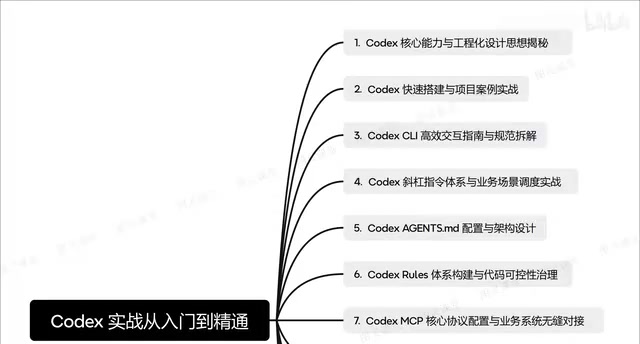
Codex in Practice: From Installation and Configuration to Multi-Agent Collaboration
Based on a Bilibili Codex course overview, this guide maps the full path of AI coding assistants from installation and agents.md context design to CLI commands, MCP integration, and multi-agent collaboration.
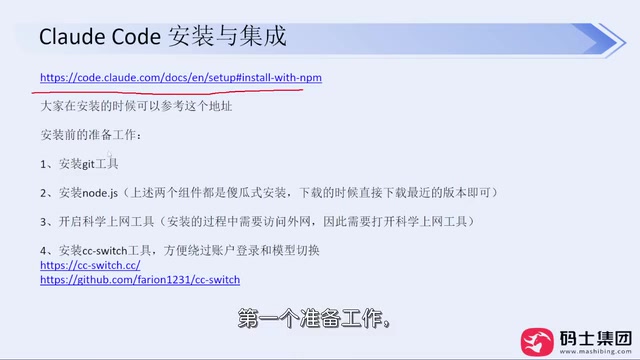
Claude Code Installation and Model Switching Guide for Users in China
How can developers in China install Claude Code reliably? This article compiles a Bilibili creator's hands-on solution: install via NPM, skip official login, use CC Switch to configure API Keys and freely switch between DeepSeek, Kimi, and other models to avoid account bans.
AI Supply Chain Security: What Canary Tokens Reveal
Starting from a Hacker News discussion, this article analyzes the role of canary tokens in AI supply chain security: how they detect abnormal access to model weights, training data, and credentials, as well as coverage blind spots and cost constraints during implementation.