2G: AI Recreates Millennium Handheld Console Tones with a Free Sampler Experience

2G is a retro handheld-styled AI sampler that generates timbres from text and supports keyboard performance.
2G is a lightweight music tool on Product Hunt whose look and sound mimic early handheld samplers. Its core feature is "describe-to-generate": users input a sound description, and a neural synthesis model returns an editable audio clip playable via computer keyboard. It supports plugin and standalone formats on Windows and macOS, and can load your own audio as a traditional sampler. Pricing: 20 free generation credits, Studio subscription $10/month for 200 credits plus a 7-day trial. 2G embeds generative AI into a mature sampler workflow, targeting bedroom producers and sound design beginners with a low-barrier, lightweight positioning.
When Neural Synthesis Meets Millennium Handheld Consoles
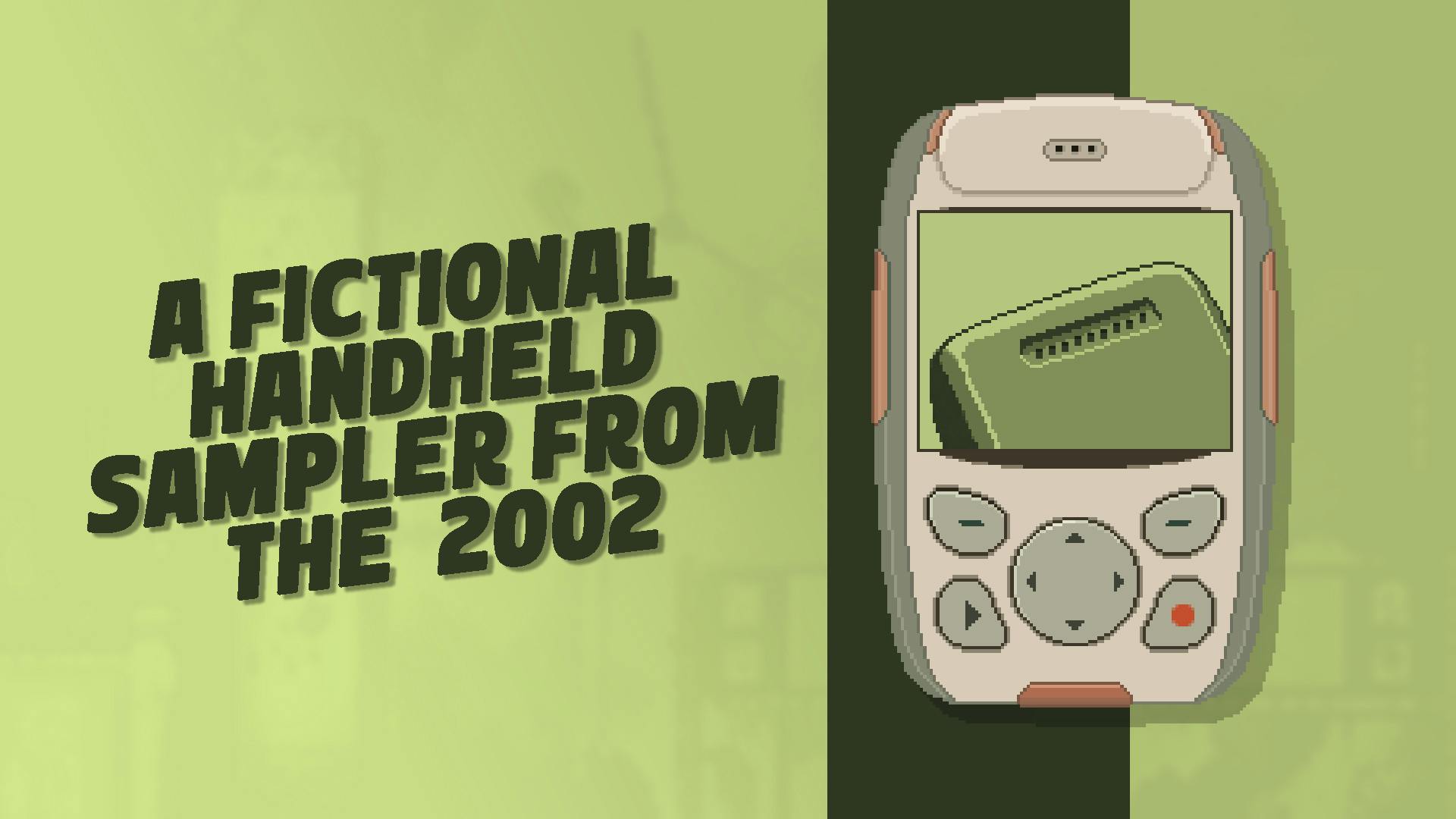
What would neural synthesis look like if it had been born twenty years earlier? 2G, ranked fifth on Product Hunt, offers an intriguing answer: a sampler whose look and sound both mimic early handheld devices. Rather than pursuing cutting-edge AI audio generation, it packs "describe-to-generate" capability into a retro shell, letting you play electronic tones from that era using your computer keyboard.
According to its Product Hunt page, 2G was built by a team obsessed with retro hardware, with a core logic of "describe a sound, and 2G generates it for you." Once generated, you can edit it, play it with your keyboard, or load your own audio samples directly. This combination of AI generation and sampler workflow lowers the barrier to sound design.
Neural Synthesis is not simply an umbrella term for "AI-generated audio"—it refers to audio generation techniques that use neural networks to directly synthesize waveforms or spectrograms. Traditional synthesizers rely on manually designed signal chains such as oscillators and filters, whereas neural synthesis typically uses generative models (such as diffusion models, autoregressive models, or GANs) to learn sound distributions from text, tags, or reference audio, then directly output sample-level audio. Representative directions include Google's DDSP, Magenta's NSynth, and later AudioLDM. These methods can generate complex timbres that traditional synthesizers struggle to describe, but they are computationally expensive and pose challenges for "editability"—2G places generated results into a sampler workflow precisely to compensate for the difficulty pure generative models have with fine-grained control in music production.
Core Features: Description-Based Generation and Keyboard Performance
2G's core interaction revolves around "text-to-audio." You input a sound description, and the system returns an editable audio clip. Unlike conventional sample library retrieval, it uses a neural synthesis model to generate timbres in real time. The generated results can be trimmed, looped, and triggered like a traditional sampler, and played by mapping notes to your computer keyboard.
For producers accustomed to DAW workflows, 2G offers both a plugin and a standalone application, supporting Windows and macOS. You can also import your own audio files and use it as a sampler with AI generation capabilities. This hybrid "generation + sampling" mode is rare among lightweight music tools.
DAW (Digital Audio Workstation) is the core software environment for music production, such as Ableton Live, Logic Pro, and FL Studio, handling recording, arrangement, mixing, and mastering. Plugin formats (VST/AU/AAX) mean 2G can be loaded into a DAW track and work alongside MIDI keyboards, effects, and automation curves. For producers, plugin format matters more than standalone applications: it allows AI-generated sounds to be called directly within existing projects without exporting and re-importing audio. 2G also offers a standalone application, catering to lightweight users who don't want to open a full DAW. This dual-format strategy reduces the friction of integrating AI tools into professional workflows.
Pricing and Usage Threshold
2G itself is free, with 20 generation credits given initially. The Studio subscription costs $10 per month, providing 200 credits monthly plus a 7-day trial. For users who occasionally want to try AI timbre generation, the free allowance is enough to experience core features; for frequent users, the subscription credit model is relatively transparent.
Note that credit consumption is tied to generation count, meaning heavy use incurs ongoing costs. But considering it also offers sampler functionality and plugin format, the entry barrier remains low for bedroom producers and sound design enthusiasts.
Credit-based is a common billing model for generative AI services, consuming a fixed number of credits per generation rather than offering unlimited monthly subscription use. Its advantage is tying cost to usage, which is friendlier to low-frequency users; its disadvantage is that generation is non-deterministic, so users may need multiple attempts to get satisfactory results, making credit consumption unpredictable. For audio generation, a single generation typically requires GPU inference, costing more than text generation, so a credit system is more sustainable than "unlimited." 2G's 20 free credits roughly correspond to 20 generation attempts, enough for users to judge whether generation quality matches their needs before deciding whether to subscribe.
The Product Thinking Behind the Retro Aesthetic
2G's visual style deliberately mimics early handheld devices, and this design choice is more than nostalgia. It packages "neural synthesis"—a technology that sounds abstract—into something with the feel of a physical toy: you can explore AI-generated sounds as if fiddling with an old sampler. Its 97 upvotes and 5 comments on Product Hunt show it has struck a chord with some musicians.
From an industry perspective, 2G represents a new trend: embedding generative AI into mature music production workflows rather than starting from scratch. It doesn't try to replace the DAW but exists as a plugin or lightweight app, letting producers invoke AI capabilities in familiar environments. This positioning of "AI as a tool rather than a platform" may be more readily accepted by professional users than large, all-encompassing AI music platforms.
Who Is 2G For?
If you're a producer looking to quickly obtain retro electronic timbres, 2G's text generation and keyboard performance can help you skip tedious synthesizer parameter tweaking. If you're a sound design beginner, the free allowance and intuitive interface lower the cost of experimentation. But if you need fine-grained sample editing or complex modulation matrices, 2G's lightweight positioning may not be enough.
Overall, 2G wraps neural synthesis capability in a clever retro shell, finding a balance between free tools and subscription services. It may not be a revolutionary product, but it offers a worthwhile reference sample for productizing AI audio tools: first let users play, then talk about productivity.
One-line Summary
2G is a retro handheld-styled AI sampler that generates timbres from text descriptions and supports keyboard performance.
Paragraph Summary
2G is a lightweight music tool on Product Hunt whose look and sound mimic early handheld samplers. Its core feature is "describe-to-generate": users input a sound description, and a neural synthesis model returns an editable audio clip that can be played by mapping notes to the computer keyboard. It supports both plugin and standalone formats, is compatible with Windows and macOS, and can also load your own audio as a traditional sampler. Pricing includes 20 free generation credits, with a Studio subscription at $10 per month providing 200 credits and a 7-day trial. 2G embeds generative AI into a mature sampler workflow, positioning itself as low-barrier and lightweight, aimed at bedroom producers and sound design beginners, representing a product philosophy of "AI as a tool rather than a platform."
Related articles

Vibe Coding Full-Stack in Practice: AI Programming from Beginner to Enterprise Deployment
From Cursor to Claude Code, this Bilibili AI programming course uses four progressive projects to cover full-stack development, open-source secondary development, and team collaboration. The article analyzes the shock to frontend roles, the efficiency shift from 50 people to 5, and the methodology required for enterprise-grade projects.

David Blaine's Global Quest for Real Magic: From South Africa to Japan and India
David Blaine travels to South Africa, Japan, and India in his Do Not Attempt special, documenting Spinning drivers, black mamba rescuers, iaijutsu masters, and ascetics—exploring the boundary between magic and real human极限 challenges.

Is a Touchscreen MacBook Coming? Vergecast Reveals Apple Executive's Response
Vergecast podcast reveals a conversation between a reporter and Apple executive John Ternus about a touchscreen MacBook and Apple Pencil support. Ternus says iPad is the best device for a stylus, while the reporter bets MacBook will eventually support Apple Pencil.