8 AI Models Debate Open vs. Closed Source: Consensus and Divergence on the AGI Path

8 AIs debate open vs. closed AGI paths, no winner but a shared governance blueprint.
This AI-simulated debate on Bilibili had 8 models question each other over whether open or closed source is AGI's true path. They reached a core consensus: openness is the ecosystem foundation, and public redistribution pauses only when reproducible danger, a concrete threat path, increased risk from redistribution, and useful restriction all hold. The remaining divergence: whether the gate defaults open or closed when evidence is insufficient at the strongest capability layer. The debate also clarified three kinds of openness risk and that capability, not copies, is irreversible. Three issues remain unresolved: slice scope, audit funding, and key ownership. Overall, it offers an actionable starting point for AGI governance.
An AGI Path Debate With No Winner
Bilibili creator "Thunder Great Debate" organized a special debate: 8 AI models faced off over "open source vs. closed source—which is the true development direction of AGI." The pro-open-source side and the pro-closed-source side went through multiple rounds of questioning and revisions, and ultimately no winner was declared—yet together they outlined an actionable governance framework. The value of this debate is not in who won, but in the surprising consensus the two sides reached on key issues.
Core Consensus: Openness Is the Foundation, Restrictions Are the Exception
At the end of the debate, both sides jointly confirmed: openness is the foundation of the ecosystem, and only four dangerous capability slices that hold simultaneously justify pausing further public redistribution. These four conditions are: a reproducible specific danger, a concrete threat path, redistribution genuinely increasing risk, and restriction genuinely being useful. External grading, minimal construction, a cap on accumulation, final adjudication, and keys not held by the holders—these governance elements were accepted by both sides.
In the summary, the first speaker for the closed-source side admitted: "In this round, the open-source side gained more than we did." From default closure, the closed-source side retreated to "temporary restrictions that can be lifted at the evidence threshold," a significant shift in position.
Key Divergence: Default On or Off for the Strongest Capability Layer
As the debate converged, the divergence condensed into one sentence: when evidence is insufficient at the strongest layer, should the gate default to open or closed? The open-source side argued for default openness, while the closed-source side insisted on default closure. This seemingly small difference determines the initial conditions for AGI exploration.

The Open-Source Side's Underlying Logic: Uncertainty Requires Distributed Exploration
The open-source side's argument starts from the uncertainty of the AGI path. "No one knows the AGI path. The more uncertain the path, the less we can compress exploration into the internal choices of a few institutions." Openness turns one team's failure into everyone's experience—distributed trial and error has irreplaceable value when the technical path is unclear.
The open-source side further revised its position: what must be retained is some means of intervention, not reversible consequences. Once open weights are released, they cannot be taken back—but risk grading can be done before release, with high-risk capabilities delayed, staged, and studied under control.
The Closed-Source Side's Defensive Logic: Accountability First
The closed-source side's core argument is correctability: when closed source errs, you can patch, suspend, or take it offline; with open weights, the same outcome becomes a design flaw. But the open-source side countered that APIs deliver the strongest capabilities to millions of users who cannot audit them every day—a diffusion that closed source cannot control either.
The closed-source side ultimately acknowledged that open source is a hedge against single-point risk—"open source is the load-bearing wall that makes closed source tolerable." The two are not opposites but complements.
Three Unresolved Issues: Institutions on Paper
In the summary, the moderator pointed out that although a blueprint had emerged, three things remained unresolved: whether the slices will keep expanding, who pays the audit bill, and how to implement keys not held by the holders.

Audit Funds and External Grading
Both sides agreed that audits cannot be decided by the holders; the scope must be set externally, and auditors must be able to issue conclusions without approval. But who pays for the audits? Some proposed a unified industry access fund, while others worried about the risk of the fund being captured. The open-source side admitted that precedents of voluntary pause followed by scheduled release are almost nonexistent.
Renewal Caps and Final Adjudication
The closed-source side pressed: after expiration, if the danger is confirmed, protections cannot stop it, and modifying weights is less effective than not doing so—how many renewals are allowed? The open-source side agreed to allow renewals, but the evidence must be more specific each time, there must be a cap on the number of renewals, and once the cap is reached, final adjudication is mandatory—"a review system without an endpoint is a permanent system in disguise."
In risk governance, "burden of proof" refers to the party arguing that a dangerous capability should continue to be restricted or that restrictions should be lifted needing to provide verifiable evidence. In this debate, the open-source side required the restricting party to prove that all four dangerous conditions hold simultaneously, while the closed-source side required the lifting party to prove sufficient safety—this is essentially the allocation of the default state. If default open, the restricting party bears the burden of proof; if default closed, the opening party does. The renewal cap adds a "sunset clause" to temporary restrictions: upon expiration, evidence must be re-submitted, and each time the evidentiary standard rises; after exceeding the cap, final adjudication begins, avoiding the bureaucratic inertia of "permanent temporary." Final adjudication must be made by an institution independent of the model holders; otherwise the restricting party is both player and referee and can renew indefinitely.
Openness Has Three Kinds of Risk: Knowledge, Research Rights, and Redistribution
A key conceptual distinction in the debate: openness carries three kinds of risk—knowledge, deep research rights, and public redistribution. Dangerous construction falls under the third and can be restricted; the higher the risk of the first two, the more they should be strengthened. The open-source side accepted this framework but emphasized that "restriction is genuinely useful" is a hard condition—capability ratings cannot be smuggled in as risk conclusions.

What Is Irreversible Is the Capability, Not the Copy
The open-source side revised a key formulation: what is irreversible is the capability, not the copy. Since it cannot be taken back, let what cannot be taken back be somewhere everyone can see. API diffusion must also be accounted for, but interfaces can still be rate-limited and shut down; once weights are taken, they no longer pass through anyone.
Open weights mean that after a model is trained, its parameter files are made public, and anyone can download, modify, deploy locally, or redistribute them. This differs from open-source code: code can still be audited logically after release, whereas weights are high-dimensional numerical values with billions of parameters that cannot be directly understood like source code, and their interpretability is extremely low. Once weights leak, the capability cannot be recovered by taking down a repository or shutting down a service, because copies are everywhere. Therefore, the governance focus shifts from "post-hoc control" to "pre-release grading": deciding whether to release, delay release, or limit to controlled research access based on the danger level of the capability. The API model is the opposite: the provider retains the weights and can exercise ongoing control through rate limiting, authentication, and shutdown, but cannot prevent users who have already obtained outputs from spreading the capability.
Implications for AGI Governance
Although this debate was a simulated confrontation between AI models, it exposes the core tension in real AGI governance: the trade-off between exploration speed and risk control. The consensus framework—openness as the foundation, four conditions triggering exceptions, keys not held by the holders—provides an actionable starting point for policy discussion.
The closed-source side's final words were narrow: "We do not dispute that the foundation is open; for the tower top, before interpretability is written into the book, first gate it empty and then open it—keys not held by the holders." The open-source side insisted: "Open source is the true direction of AGI; restrictions can be strict, but they must be verifiable, reviewable, and overturnable exceptions."
Only one sentence of divergence remains; half a page of consensus has been written. This system is still on paper for both sides today, but it at least proves: after 8 AIs argue, they can argue out a blueprint.
Background Notes
Accountability means being able to clearly identify the responsible party, trace the decision process, and apply remedies. Closed models are controlled by a single institution, so when errors occur, the responsible party can be located, patches applied, and services suspended or taken offline; once open weights are released, design flaws spread with copies, cannot be recalled, and the responsible party becomes blurred. But accountability has a cost: closed source concentrates the strongest capabilities in a few institutions, making internal decisions hard for outsiders to audit. Therefore the debate proposed "keys not held by the holders," i.e., handing the power of grading, auditing, and final adjudication to independent external institutions, combining the controllability of closed source with the auditability of open source rather than choosing one over the other.
Related articles
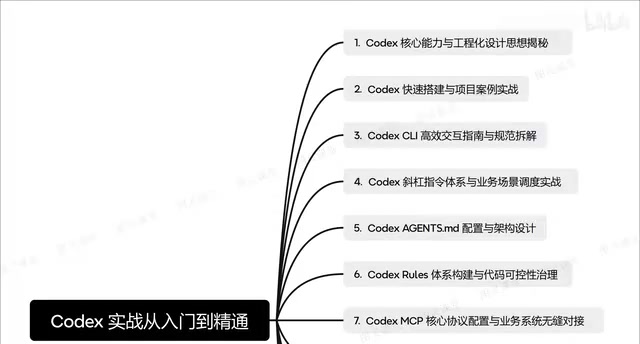
Codex in Practice: From Installation and Configuration to Multi-Agent Collaboration
Based on a Bilibili Codex course overview, this guide maps the full path of AI coding assistants from installation and agents.md context design to CLI commands, MCP integration, and multi-agent collaboration.
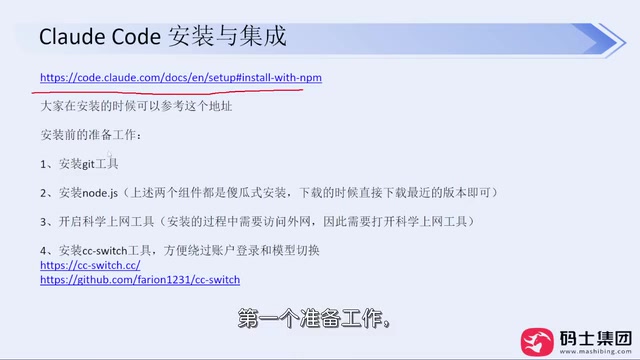
Claude Code Installation and Model Switching Guide for Users in China
How can developers in China install Claude Code reliably? This article compiles a Bilibili creator's hands-on solution: install via NPM, skip official login, use CC Switch to configure API Keys and freely switch between DeepSeek, Kimi, and other models to avoid account bans.
AI Supply Chain Security: What Canary Tokens Reveal
Starting from a Hacker News discussion, this article analyzes the role of canary tokens in AI supply chain security: how they detect abnormal access to model weights, training data, and credentials, as well as coverage blind spots and cost constraints during implementation.