A $100 New York Dinner Party? The Creative No-Utensils Challenge Menu

Food creator Zainab designs a $100 no-utensils desi dinner for five in NYC, using keema as the core with layered cost control.
Food creator Zainab takes on the challenge: hosting a $100 no-utensils dinner party for five in New York. She chooses a desi menu centered on chicken keema, paired with economical dal, paneer with peppers, and chopped cucumber salad, with beef stew and ice cream sandwiches as flexible dishes depending on remaining budget. The plan balances budget and creativity in a high-cost city through layered cost control—cheap ingredients carry the main portions while budget is reserved for experience-enhancing elements. The no-utensils rule actually simplifies decisions and drives a menu redesigned around handheld formats, offering a reusable methodology for home parties.
Hosting a dinner party for five in New York on $100—while following a "no utensils" rule—sounds like an impossible task. But food creator Zainab took on the challenge. Her approach wasn't to skimp, but to turn the constraint into creativity: if you can't use utensils, make everything handheld.
The Rules: A No-Utensils Dinner Party
The core rules of the challenge were clear: a $100 budget, five guests, and every dish must be handheld—meaning you can pick it up and eat it directly with your hands, no knife, fork, or spoon needed.

This rule may seem like a mere formality, but in reality it reshapes the entire menu design logic. Soups, stews, and long noodles—the usual dinner stars—are immediately ruled out, forcing the chef to rethink ingredient forms and presentation. Zainab didn't complain about the strict rules; she immediately began reimagining the dish structure around "handheld."
Menu Design: A Desi Plan Centered on Keema
Zainab chose a desi menu theme. Her reasoning was practical: "We're especially good at making delicious food with limited resources." In her view, $100 can actually cover quite a lot of ingredients.
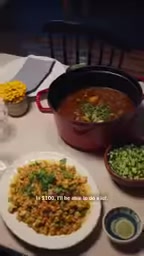
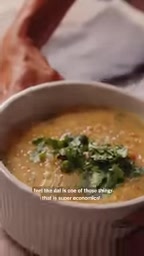
The menu revolves around keema (minced chicken)—which she calls "the star that isn't the star." With keema as the base, she pairs it with several cost-controlled sides: dal (lentils), which she names as a "super economical" ingredient; and paneer with bell peppers as a side dish.
The salad portion must meet the handheld requirement. She first thought of endive, then joked that it "sounds a bit pretentious," so she switched to kachuma—a chopped cucumber salad that's refreshing, cheap, and easy to handle.

If budget remains, she plans to add a beef stew with potatoes. For dessert, ice cream sandwiches—naturally satisfying the "eat with your hands" requirement and eliminating the hassle of plating and utensils.
Keema comes from Hindi/Urdu, referring to minced or ground meat, typically made from lamb, chicken, or beef, and is a highly representative ingredient in South Asian cuisine. The traditional method involves sautéing minced meat with onions, tomatoes, ginger-garlic, green chilies, and various spices (such as cumin, coriander powder, turmeric, garam masala), optionally with peas, potatoes, or other vegetables, resulting in a rich, juicy dish. Keema is extremely versatile: it can be served with naan or rice as a main course, or used as a filling for samosas or a base for burger patties. In budget-limited scenarios, chicken keema is especially economical and easy to cook in batches, making it an ideal choice for family gatherings that balance cost and flavor.
Dal is the South Asian term for various dried beans and lentils, including red lentils (masoor dal), yellow split peas (chana dal), mung beans (moong dal), and more. Dal is typically cooked into a thick stew, seasoned with onions, tomatoes, ginger-garlic, and spices, and is an important source of protein and dietary fiber in South Asian daily diets. Because its raw ingredients are inexpensive, shelf-stable, simple to cook, and filling, dal is often regarded as a "super economical" ingredient. In budget-limited gatherings, dal can be cooked in large batches, effectively controlling per-person costs while providing a solid nutritional foundation.
Paneer is a common unfermented fresh cheese in South Asia, made by curdling milk with acid and pressing it into a firm, slightly springy texture that doesn't melt easily when heated—perfect for pan-frying, grilling, or stir-frying. Its mild flavor absorbs spices and accompanying ingredients well. In budget menus, paneer is slightly pricier than legumes but flexible in quantity; a small amount can enhance a dish's richness and protein content, and it's often quickly stir-fried with bell peppers, onions, and other vegetables as a side, adding color and textural variety to the table.
The Art of Balancing Budget and Creativity
The cleverness of this menu lies in layered cost control. Keema and dal carry the protein and satiety load, with low unit prices and flexible quantities; paneer and bell peppers enhance the table's variety; cucumber salad barely touches the budget; beef stew and ice cream sandwiches are positioned as "only if there's money left"—flexible options.
This structure gives $100 room to maneuver in New York, a high-cost city. Zainab didn't aim for every dish to be expensive; instead, she let cheap ingredients carry the main portions and reserved budget for elements that elevate the experience.
How Constraints Inspire Creativity
The "no utensils" rule ostensibly adds difficulty but actually simplifies many decisions. There's no need to consider utensil pairings, soup bowl choices, or the complexity of serving order—the chef can focus on ingredient combinations and the handheld experience. The desi menu itself naturally fits this rule—kebabs, hand-held rice, chopped salads, ice cream sandwiches—many South Asian and street foods don't rely on utensils anyway.
Zainab's approach offers a reusable mindset: when facing budget or format constraints, first accept the rules, then look for options within the constraints that naturally fit, rather than fighting the limitations head-on.
Handheld food refers to dishes that can be eaten directly with hands, without knives, forks, or spoons. Such foods typically have the following characteristics: a graspable shell or structure (like flatbread, bread, or lettuce leaves), fillings that don't easily fall apart, and moderate moisture that doesn't drip. Common handheld foods include sandwiches, wraps, skewers, fried items, cut fruit, and ice cream sandwiches. When designing a no-utensils menu, chefs must reconsider ingredient cut sizes, sauce thickness, and plating to ensure each dish can be picked up with one hand and eaten in one or a few bites. This format constraint can actually inspire a more interactive and relaxed dining experience, especially suited for party settings.
Takeaways for Home Parties
The value of this challenge isn't how much money was saved, but the demonstration of a party design method: use a theme (desi) to unify the menu, a core ingredient (keema) to control costs, format rules (no utensils) to simplify execution, and flexible dishes (beef stew, ice cream sandwiches) to absorb budget surplus.
For those who want to host parties at home without overspending, this logic can be borrowed directly—first set rules and theme, then build a menu around one cheap but versatile main ingredient, and finally leave one or two flexible dishes to decide based on remaining budget.
Related articles
 Tech Frontiers
Stylome Bot Slammed as Useless Junk: Why Do AI Detection Tools Keep Failing?
Reddit users test the Stylome AI detection bot: Gemini-rewritten text judged human-written, consistently low confidence. An analysis of AI text detection's technical dilemmas, privacy concerns, and credibility crisis in community governance.
 Tech Frontiers
When AI Becomes a Productivity Divide: Clarity or "AI Psychosis"?
A civil engineer's deep use of agentic AI boosted efficiency but bred contempt for peers who refuse to learn. Is this clarity or AI psychosis? An analysis of the cognitive and psychological challenges behind the AI productivity divide.
 Tech Frontiers
Opus 5.5 Benchmark Scores Climb, Community Says Its "Weights Are Blessed"
Reddit community discusses Opus 5.5's rising scores on the Benchmaxxing Bench, with users describing its performance as "weights are blessed." This article interprets the community reaction and cautions against conflating benchmark scores with real capability.