A Single AI Model Simulates the Motion of Everything: From Flowing Sand to Protein Folding

WorldParticle uses a single AI model to learn particle motion laws and achieve unified cross-material simulation.
WorldParticle is a unified AI simulation framework whose core idea is not to presuppose material properties but to learn interaction patterns from particle motion data, thereby using the same model to simulate vastly different phenomena such as sand flow, fluid motion, and protein folding. Traditional simulation relies on separate tools such as the discrete element method, Navier-Stokes equations, or molecular dynamics, whereas WorldParticle attempts to unify these fragmented fields in a data-driven way. The research could be applied to soft robot design and drug discovery, simplifying multi-material R&D workflows. However, its generalization ability, simulation accuracy, and computational efficiency remain to be verified, and the interpretability of AI simulation is also an issue that requires careful consideration.
One Model, Many Materials: The Ambition of WorldParticle
Imagine the same AI model being able to simulate both the sliding of sand grains and predict how proteins fold—this sounds like something out of science fiction, but a study called WorldParticle is making it a reality. According to the original report, the system learns how matter moves and could play a role in fields such as soft robotics and drug discovery.
Traditionally, simulating different materials requires different physics engines and numerical methods: sand grains require the discrete element method, fluids require the Navier-Stokes equations, and protein folding requires molecular dynamics simulations. The core breakthrough of WorldParticle is that it uses a unified AI framework to learn the common principle of "how matter moves," rather than modeling each material separately.
Learning "Motion" Rather Than "Matter": A Shift in Technical Approach
WorldParticle's approach is quite illuminating: it does not presuppose the physical properties of materials, but instead learns interaction patterns between particles from motion data. This means that what the model sees is not "this is sand" or "this is a protein," but "how these particles move under specific conditions."
This particle-motion-based learning approach gives the model cross-material generalization ability. Once it has learned the basic rules of particle interaction, it can transfer the same rules to different scenarios—from macroscopic sandpile flow to microscopic molecular folding. This "one model, many materials" capability is precisely what traditional simulation methods struggle to achieve.
A particle system is a fundamental representation method in computer graphics and physics simulation: a continuous medium is discretized into a set of particles with attributes such as position and velocity, and the overall motion evolves by defining interaction forces between particles. In graphics, it is commonly used to simulate flames, smoke, and fluids; in molecular dynamics, atoms themselves are treated as particles. WorldParticle adopts exactly this general representation, and can therefore use the same network architecture to handle materials of different scales and different physical properties—sand grains, fluids, and proteins are all just "a set of moving particles" in the eyes of the model, with differences reflected only in interaction patterns and learned dynamics.
Potential Applications: Soft Robotics and Drug Discovery
The original report points out that WorldParticle could assist in the development of soft robots, drugs, and more. This is not empty talk: the design of soft robots requires accurate simulation of the deformation and motion of soft materials, while drug discovery is inseparable from understanding protein folding and molecular interactions.
If the same model could handle both types of problems simultaneously, R&D workflows could be greatly simplified. Engineers could test the motion behavior of different materials within a unified framework, without having to switch back and forth between different simulation tools. This integrated simulation capability could accelerate the iteration process from proof of concept to prototype design.
The protein folding problem refers to the process by which a chain of amino acids spontaneously folds into a specific functional conformation in three-dimensional space. Because the conformational space is extremely large, traditional molecular dynamics simulations require enormous computational resources, while deep learning methods such as AlphaFold have demonstrated the feasibility of data-driven approaches to this problem. Soft robots, on the other hand, are made of deformable materials such as silicone and elastomers, and their motion depends on the continuous deformation of the material itself rather than rigid joints; therefore, accurate simulation of soft material deformation and contact is key to their design. These two types of problems appear very different on the surface, but in essence both involve "the evolution of motion of large numbers of particles under complex interactions," which is exactly the object that WorldParticle attempts to model in a unified way.
What a Unified Simulation Framework Means
From a broader perspective, WorldParticle represents a trend: using data-driven methods to unify previously fragmented fields of physics simulation. Traditional methods rely on precise physical equations, but in complex systems, the equations are often difficult to solve or require extensive approximations. AI models, by contrast, can capture complex behaviors from data that are hard to describe with equations.
Of course, this does not mean that traditional physics simulation will be replaced. The interpretability and generalization boundaries of AI models remain issues that must be treated with caution. But WorldParticle at least demonstrates a possibility: one model, many materials, a unified understanding of motion.
Interpretability here refers to whether researchers can understand why a model makes a particular prediction and whether its internal representations correspond to identifiable physical quantities. Every step of traditional physics simulation corresponds to explicit equations, whereas neural networks are black boxes whose predictions are difficult to trace causally. Generalization boundary refers to the model's performance outside the training distribution: if the training data cover only particle motion at a specific scale or for a specific material, can the model extrapolate to unseen materials? These two issues directly determine whether AI simulation can be used in scientific and engineering scenarios with extremely high reliability requirements, and they are also dimensions that must be examined when evaluating methods such as WorldParticle.
Open Questions
At present, publicly available information about WorldParticle is still limited. To what extent can it generalize to materials outside the training data? How does its simulation accuracy compare with traditional methods? Does it have an advantage in computational efficiency? These questions await further research. But in any case, this idea of "learning the laws of motion rather than material properties" offers a direction worth watching for the application of AI in scientific simulation.
Related articles
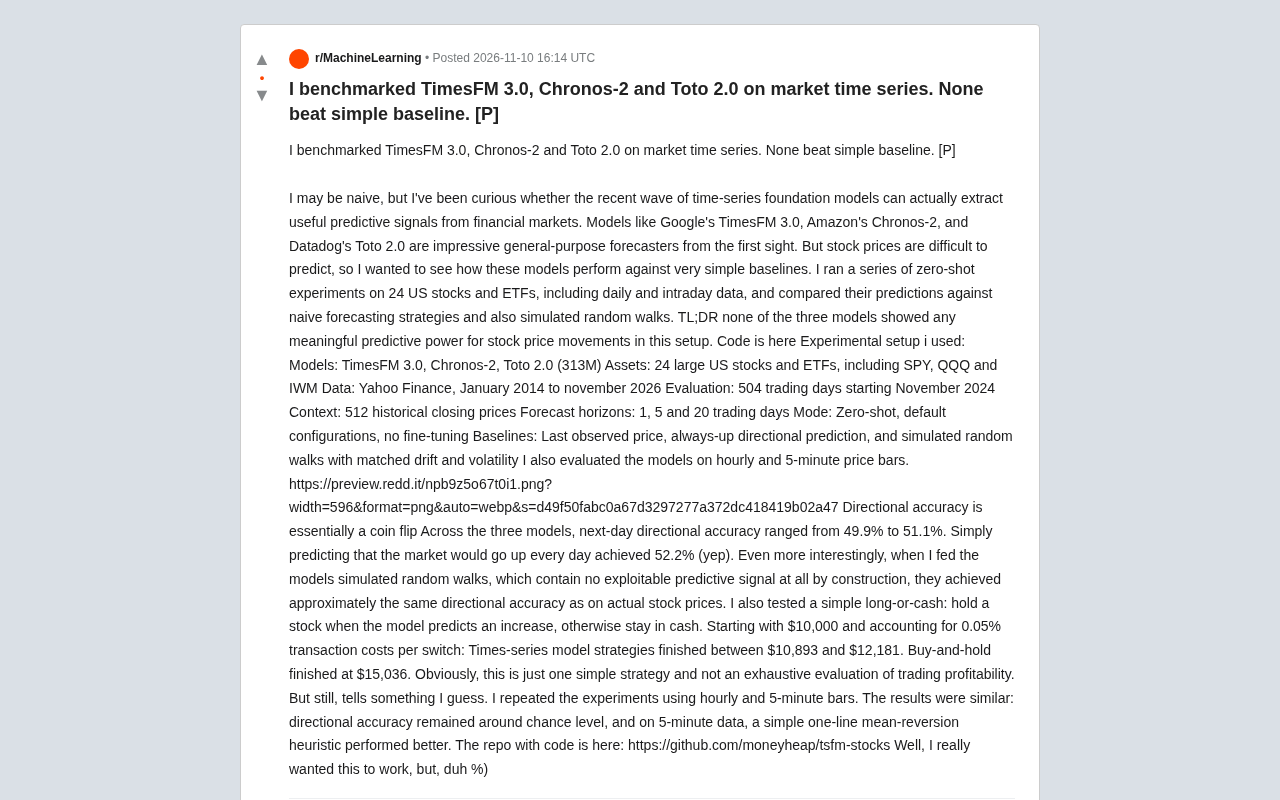
Putting TimesFM 3.0, Chronos-2, and Toto 2.0 to the Test: Time-Series LLMs Can't Beat Simple Baselines
A developer's zero-shot benchmark of TimesFM 3.0, Chronos-2 and Toto 2.0 on 24 U.S. stocks and ETFs: directional accuracy of just 49.9%-51.1%, and simulated trading underperformed buy-and-hold. Time-series foundation models show no edge over simple baselines on financial data.
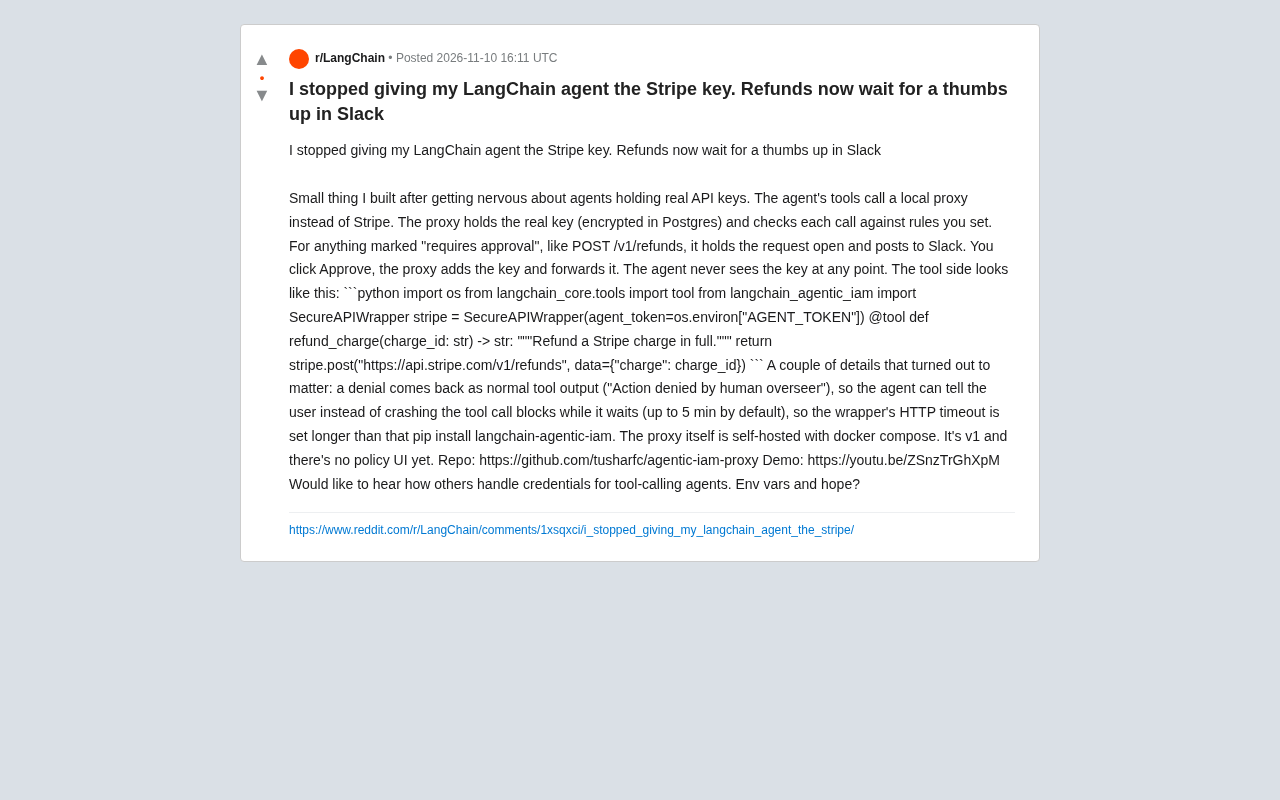
LangChain Agents No Longer Hold Stripe Keys: Refunds Require Slack Approval
A developer shares a credential management approach for LangChain agents: agents don't hold Stripe keys, and sensitive operations like refunds are forwarded through a local proxy and only executed after human approval in Slack, with code examples and engineering details.
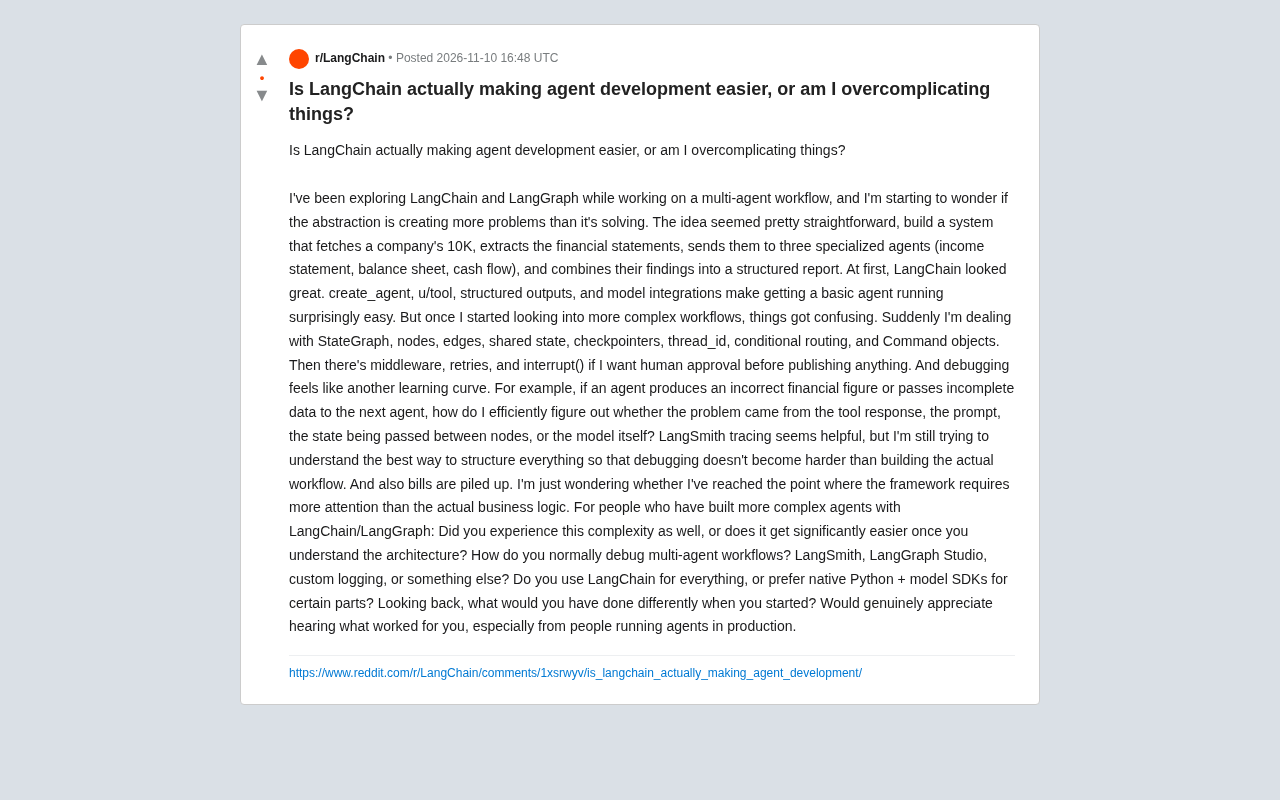
Does LangChain Really Make Agent Development Easier? A Developer Reflects on the Cost of Abstraction
A Reddit developer reflects on the abstraction cost of LangChain and LangGraph in multi-agent workflows: easy to start, but StateGraph, state management, debugging, and cost control add new complexity. The discussion covers debugging methods, whether to mix native Python + model SDKs, and production trade-offs.