A Survey of Quantum Graph Neural Networks: Architectures, Trainability, and Applications
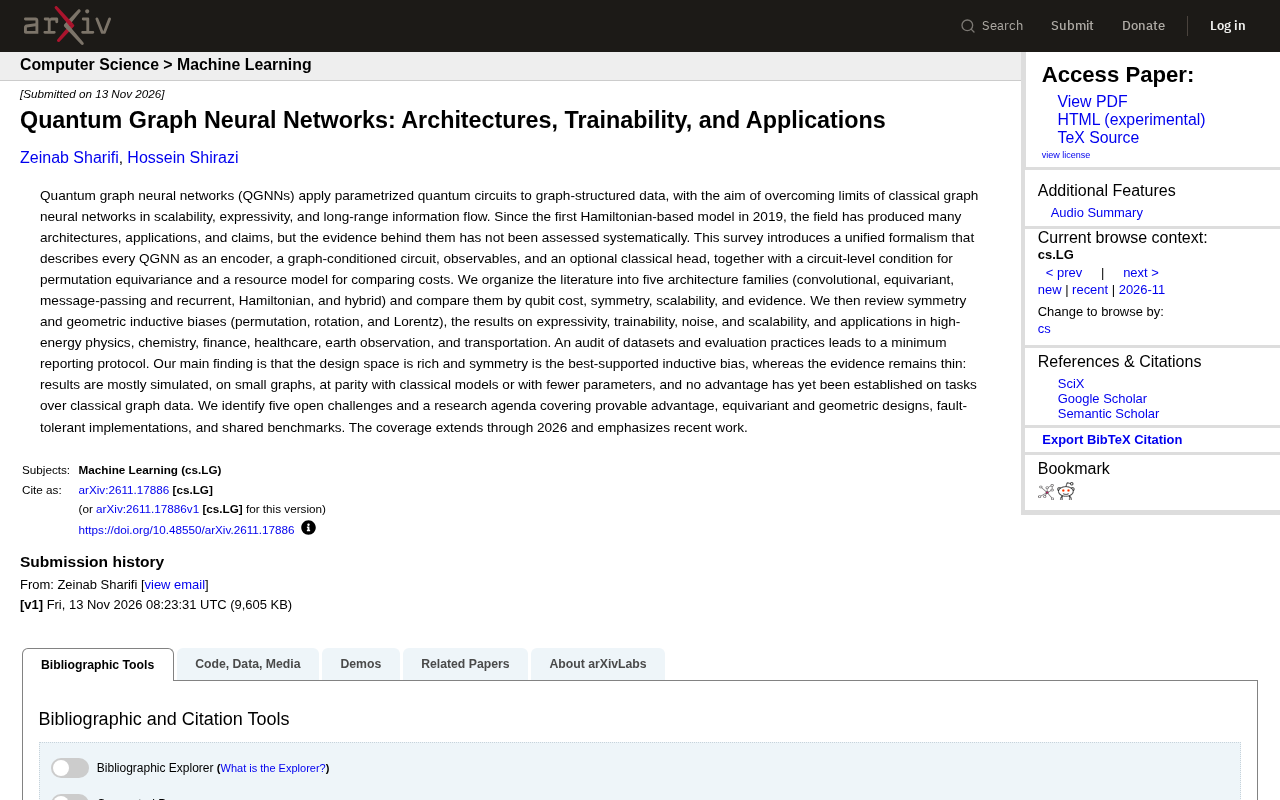
This survey systematically evaluates quantum graph neural networks, noting that symmetry is supported but quantum advantage is not yet established.
This survey systematically reviews and audits quantum graph neural network (QGNN) research through 2026. It proposes a unified formalization framework decomposing QGNNs into an encoder, graph-conditioned circuit, observable, and classical head, and classifies architectures into five families. Symmetry is the best-supported inductive bias, and equivariant architectures show potential on geometric tasks, but evidence remains simulation-based. Challenges in expressiveness, trainability, noise, and scalability persist, especially barren plateaus and NISQ limits. Applications span high-energy physics, chemistry, finance, healthcare, Earth observation, and transportation, but the audit finds most results use small simulated graphs and match classical models or win only with fewer parameters. No quantum advantage has been established on classical graph data tasks. The survey proposes a minimum reporting protocol and open challenges.
Quantum Graph Neural Networks (QGNNs) attempt to apply parameterized quantum circuits to graph-structured data in order to overcome the bottlenecks of classical graph neural networks in scalability, expressiveness, and long-range information propagation. Since the first Hamiltonian-based model appeared in 2019, the field has produced a large number of architectures, applications, and performance claims, but the evidence behind them has never been systematically evaluated. A survey covering work through 2026 fills this gap, revealing the true state of current research through unified formalization, architecture classification, and evidence auditing.
Unified Formalization: A General Framework for QGNNs
The survey first proposes a unified formalization framework that describes any QGNN as four components: an encoder, a graph-conditioned circuit, an observable, and an optional classical head. The encoder maps graph data into quantum states, the graph-conditioned circuit dynamically adjusts the quantum gate sequence according to the graph structure, the observable extracts expectation values from the quantum state, and the classical head post-processes the measurement results. This framework also includes circuit-level conditions for permutation equivariance and a resource model for comparing costs.
This formalization not only unifies the dispersed model formulations in the literature but also provides a common language for analyzing symmetry and resource consumption. For example, the permutation equivariance condition is directly tied to the inherent symmetry of graph data, while the resource model quantifies key cost metrics such as the number of qubits and circuit depth.
Parameterized Quantum Circuit (PQC) is the core computational unit of a QGNN, referring to a quantum circuit composed of a series of quantum gates, some of whose rotation angles are trainable parameters. A PQC iteratively adjusts parameters through a classical optimizer to minimize a loss function, and its expressiveness depends on gate types, entanglement structure, and circuit depth. Unlike classical neural networks, PQCs operate in quantum state space and can naturally exploit superposition and entanglement, but they are limited by the noise and qubit count of current hardware. In a QGNN, the PQC must be coupled with the graph structure, that is, the gate sequence or parameters are dynamically adjusted according to the graph topology, which is the key to graph-conditioned circuits.
Five Architecture Families and Their Comparison
The survey divides existing QGNN architectures into five families: convolutional, equivariant, message-passing and recurrent, Hamiltonian, and hybrid. Each family has its own characteristics in terms of qubit cost, symmetry, scalability, and strength of evidence.
- Convolutional: Drawing on the ideas of classical graph convolutional networks, these implement local neighbor aggregation through quantum circuits and usually require fewer qubits, but their expressiveness and ability to handle long-range dependencies are limited.
- Equivariant: These explicitly encode permutation, rotation, or Lorentz symmetry and perform well on geometric graph data, but circuit design is complex and qubit costs are higher.
- Message-passing and recurrent: These mimic classical message-passing mechanisms and support iterative information exchange, making them suitable for dynamic or sequential graphs, but training stability is challenging.
- Hamiltonian: Based on Hamiltonian evolution, these are naturally suited to simulating physical systems and are common in quantum chemistry and condensed matter physics applications, but circuit depth is relatively large.
- Hybrid: These combine classical neural networks with quantum circuits in an attempt to balance expressiveness and training efficiency, but they introduce additional hyperparameters and integration complexity.
The comparison shows that symmetry is the best-supported inductive bias, and equivariant architectures show potential on geometric tasks, but the evidence remains predominantly simulation-based.
Permutation Equivariance refers to the property that when the node order of an input graph is arbitrarily rearranged, the model output is rearranged accordingly while the functional relationship remains unchanged. For graph data, node indices have no inherent order, and a model must be equivariant to permutation operations; otherwise, learning results will depend on arbitrary indexing. In a QGNN, permutation equivariance requires the design of the quantum circuit to align with the graph structure, for example, the way gates act depends only on the connectivity between nodes rather than node indices. Equivariant architectures explicitly construct circuit layers satisfying this property through group representation theory, thereby reducing the number of parameters that need to be learned and improving generalization. This property is central to inductive bias in graph learning and is the form of symmetry with the strongest evidence in the survey.
Symmetry and Geometric Inductive Bias
The survey focuses on reviewing symmetry and geometric inductive bias, including permutation, rotation, and Lorentz symmetry. Permutation equivariance ensures that the model is invariant to node reordering and is central to graph learning; rotation equivariance is suitable for 3D molecules and point clouds; and Lorentz symmetry is crucial in high-energy physics.
The survey points out that symmetry is currently the inductive bias with the strongest evidence. Equivariant QGNNs can achieve performance comparable to classical models with fewer parameters on specific tasks, but an advantage on classical graph data tasks has not yet been demonstrated.
Expressiveness, Trainability, Noise, and Scalability
In terms of expressiveness, QGNNs can theoretically represent graph functions that classical GNNs struggle to capture, but practical advantages are limited by circuit depth and measurement error. Trainability research focuses on the barren plateau problem—parameter gradients in quantum circuits vanish exponentially as the number of qubits increases—and message-passing architectures are particularly sensitive. Noise is another major challenge; the error rates of current noisy intermediate-scale quantum (NISQ) devices severely constrain model scale. In terms of scalability, most existing experiments are simulated on small graphs with a limited number of qubits, and there is still a gap before practical application.
Barren Plateau is a core obstacle in the training of variational quantum algorithms: as the number of qubits increases, the variance of the loss function gradient decays exponentially, causing the parameter update signal to vanish and optimization to stagnate. This phenomenon arises from the high-dimensional Hilbert space and entanglement structure of quantum circuits, making gradient estimation require exponentially many measurements. For QGNNs, especially message-passing architectures, the barren plateau problem is more severe because repeated application of quantum gates for information exchange increases circuit depth and entanglement. Mitigation strategies include using local cost functions, layer-wise training, parameter initialization strategies, and limiting circuit depth, but these methods often come at the expense of expressiveness.
Application Domains and Evidence Audit
The survey reviews QGNN applications in high-energy physics, chemistry, finance, healthcare, Earth observation, and transportation. They are used in high-energy physics for classifying particle collision events, in chemistry for molecular property prediction, in finance for fraud detection and portfolio optimization, in healthcare for drug discovery, in Earth observation for remote sensing image analysis, and in transportation for road network traffic prediction.
However, an audit of datasets and evaluation practices reveals serious problems: most results are based on simulation, graph sizes are small, models perform on par with classical models or win only with fewer parameters, and no advantage has been established on classical graph data tasks. The survey therefore proposes a minimum reporting protocol requiring explicit reporting of quantum resources, simulation assumptions, baseline comparisons, and statistical significance.
Noisy Intermediate-Scale Quantum (NISQ) refers to the era of current and near-term quantum devices: the number of qubits is roughly between tens and hundreds, and they are severely affected by gate errors, decoherence, and measurement errors, making full quantum error correction impossible. NISQ devices can only run shallow circuits, which limits the scale and depth of QGNNs. Most of the simulation results mentioned in the survey were obtained on classical simulators and did not account for real hardware noise, whereas actual deployment must face performance degradation caused by noise. Therefore, the evidence audit emphasizes the need to clearly report quantum resources and noise assumptions and to distinguish simulation from real hardware experiments. Fault-tolerant quantum computing remains a long-term goal, and current QGNN research needs to find meaningful application scenarios under NISQ constraints.
Open Challenges and Research Agenda
The survey identifies five open challenges: provable advantage, equivariant and geometric design, fault-tolerant implementation, shared benchmarks, and standardized evaluation. The research agenda emphasizes that future work should focus on tasks that prove quantum advantage, develop more efficient equivariant architectures, design for fault-tolerant quantum computers, and build community-shared benchmark platforms.
Currently, the design space of QGNNs is rich, but the evidence is weak. Symmetry as an inductive bias has received the most support, while quantum advantage has not yet been established on classical graph data tasks. This conclusion provides researchers with a sober roadmap, avoids overpromising, and moves the field toward rigorous validation.
One-line Summary
This survey systematically evaluates quantum graph neural networks, noting that symmetry is supported but quantum advantage has not yet been established.
Paragraph Summary
This survey systematically reviews and audits the evidence for quantum graph neural network (QGNN) research through 2026. The article proposes a unified formalization framework that decomposes a QGNN into an encoder, a graph-conditioned circuit, an observable, and a classical head, and provides permutation equivariance conditions and a resource model. Architectures are divided into five categories: convolutional, equivariant, message-passing and recurrent, Hamiltonian, and hybrid, and their characteristics in qubit cost, symmetry, and scalability are compared. The survey notes that symmetry is the best-supported inductive bias, and equivariant architectures show potential on geometric tasks, but the evidence remains predominantly simulation-based. Challenges in expressiveness, trainability, noise, and scalability remain severe, especially barren plateaus and NISQ device limitations. Applications cover high-energy physics, chemistry, finance, healthcare, Earth observation, and transportation, but the audit reveals that most results are based on small simulated graphs, performance is on par with classical models or wins only with fewer parameters, and no quantum advantage has been established on classical graph data tasks. The survey proposes a minimum reporting protocol and open challenges, providing the field with a rigorous roadmap.
Related articles
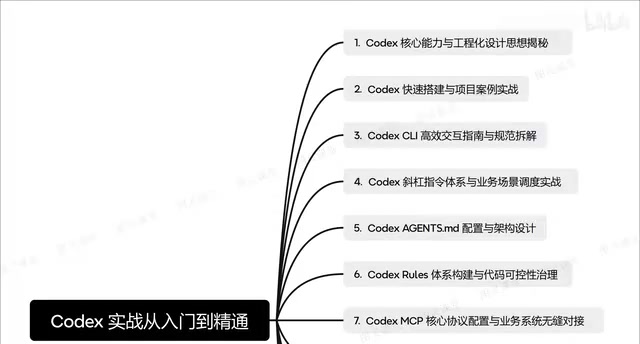
Codex in Practice: From Installation and Configuration to Multi-Agent Collaboration
Based on a Bilibili Codex course overview, this guide maps the full path of AI coding assistants from installation and agents.md context design to CLI commands, MCP integration, and multi-agent collaboration.
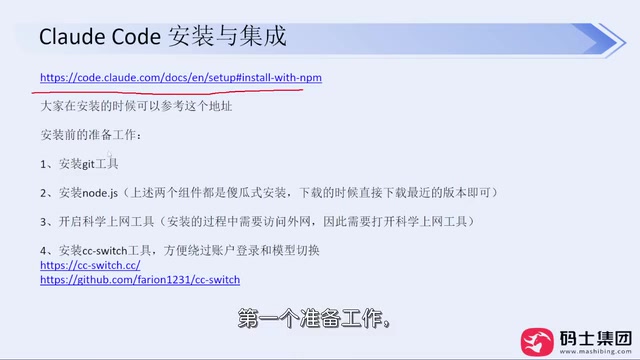
Claude Code Installation and Model Switching Guide for Users in China
How can developers in China install Claude Code reliably? This article compiles a Bilibili creator's hands-on solution: install via NPM, skip official login, use CC Switch to configure API Keys and freely switch between DeepSeek, Kimi, and other models to avoid account bans.

AI Supply Chain Security: What Canary Tokens Reveal
Starting from a Hacker News discussion, this article analyzes the role of canary tokens in AI supply chain security: how they detect abnormal access to model weights, training data, and credentials, as well as coverage blind spots and cost constraints during implementation.