ActWorld-JEPA: How Action-Conditioned World Models Are Revolutionizing End-to-End Autonomous Driving
ActWorld-JEPA combines an action-conditioned JEPA world model with latent planning to explore a new path for end-to-end autonomous driving.
The article introduces the ActWorld-JEPA framework discussed in the Reddit community, which aims to solve the bottleneck of end-to-end autonomous driving lacking future reasoning. Built on JEPA self-supervised learning, it predicts in latent representation space rather than pixel space and uses actions as conditional inputs to evaluate the consequences of different action sequences. The planner also operates in latent space and is jointly trained end-to-end with the world model, reducing information loss and improving planning efficiency. The article analyzes potential advantages in adaptability to complex dynamic scenarios and computational efficiency, while noting deployment challenges such as prediction error accumulation, large data requirements, high training resources, and safety and interpretability, emphasizing the need for real-world validation.
In the exploration of end-to-end autonomous driving, how to make models truly "understand" the causal relationship between actions and future scenes has always been a core challenge. ActWorld-JEPA, which recently sparked discussion in the Reddit community, attempts to combine an action-conditioned JEPA world model with latent planning, offering a new approach to this problem.
Background: The Bottleneck of End-to-End Autonomous Driving
Traditional end-to-end autonomous driving methods typically learn a direct mapping from sensor inputs to control signals, lacking explicit reasoning about the future. This "black box" paradigm tends to fail in complex scenarios because the model cannot anticipate how its own actions will change the environment. The introduction of world models is precisely to give agents the ability to "imagine the future" and thereby assist decision-making. However, how to build an efficient world model that is tightly coupled with planning remains an open question.
JEPA World Model: Predicting the Future in Latent Space
JEPA (Joint Embedding Predictive Architecture) is a self-supervised learning framework whose core idea is to make predictions in a latent representation space rather than reconstructing raw pixels. This design avoids generative models' excessive focus on details and concentrates more on abstract features useful for decision-making. ActWorld-JEPA takes actions as conditional inputs, enabling the model to predict "how the latent state will evolve after executing a certain action." This provides the planner with differentiable future rollout capability.
The Significance of Action Conditioning
In autonomous driving, the action space is continuous (e.g., steering angle, acceleration). Through conditional modeling, ActWorld-JEPA enables the world model to evaluate the consequences of different action sequences. This differs from traditional video prediction models that only predict scene evolution; instead, it explicitly associates actions with future states, making the model closer to decision-making needs.
Joint Embedding Predictive Architecture (JEPA) was proposed by Yann LeCun and others around 2022 and can be seen as an alternative route to generative world models. Its structure typically includes an encoder, a predictor, and an optional momentum encoder: the encoder maps observations to embedding vectors, and the predictor predicts the representation of target locations in embedding space based on context. The training objective is to minimize the distance between predicted embeddings and target embeddings rather than pixel-wise reconstruction, so the model naturally ignores high-frequency details irrelevant to decision-making. To prevent representation collapse (all inputs mapping to the same vector), JEPA often employs asymmetric architectures, stop-gradient, or regularization. Works such as I-JEPA and V-JEPA have validated the effectiveness of this paradigm in image and video self-supervised learning, and ActWorld-JEPA is an attempt to transfer it to action-conditioned driving scenarios.
Action-conditioned world models are fundamentally different from pure video prediction models. The latter take only historical frames as input to predict future frames and mostly learn the average evolution under the data distribution, unable to answer "what happens if I execute a certain action." Action-conditioned models feed the action $a_t$ together with the state $s_t$ into a transition function and output a prediction of $s_{t+1}$, thereby supporting counterfactual rollout: the planner can roll out predictions for multiple candidate action sequences and compare the results. In continuous action spaces, this is usually implemented by concatenating or fusing the action vector with the latent state. This capability is the prerequisite for making world models truly serve decision-making rather than merely passive prediction, and it is also the core design that distinguishes ActWorld-JEPA from traditional video prediction methods.
Latent Planning: Searching for Optimal Policies in Abstract Space
Unlike planning in the raw observation space, latent planning is performed directly in the representation space learned by JEPA. Since the latent space has lower dimensionality and is more abstract, planning efficiency is significantly improved. ActWorld-JEPA jointly trains the world model and the latent planner, enabling the planner to use the future states predicted by the world model to evaluate the quality of action sequences. This end-to-end coupling is expected to reduce information loss between planning and control.
Latent planning differs from classical model predictive control (MPC) mainly in the space where optimization variables reside. MPC typically optimizes an explicit cost function directly in state space or control sequence space; latent planning first compresses observations into low-dimensional representations, then rolls out the world model in that representation space to evaluate candidate action sequences. Since the latent dimensionality is far lower than image pixels, the computational cost of sampling and gradient optimization is significantly reduced, and because irrelevant details have been filtered out of the representation, cost design can more easily focus on task-relevant factors. Common implementations include random shooting, the cross-entropy method (CEM), or differentiable gradient optimization in latent space. The risk is that if the encoder loses safety-critical information (e.g., small distant objects), the "optimal" in latent space may not correspond to the optimum in the real world.
Method Integration and Potential Advantages
The framework of ActWorld-JEPA can be summarized as follows: the perception module encodes sensor inputs into latent states; the world model predicts the next latent state based on the current state and action; the planner optimizes action sequences in latent space to achieve goals. The entire system can be trained end-to-end, and the world model's predictive capability provides the planner with more accurate future information.
The potential advantages of this approach include: stronger adaptability to complex dynamic scenarios, because the model can "foresee" the consequences of different actions; higher computational efficiency since planning is performed in latent space; and end-to-end learning reduces the bias of hand-designed modules. However, these advantages still require empirical validation.
Challenges and Outlook
Although the concept of ActWorld-JEPA is quite appealing, practical deployment still faces challenges. Prediction errors in latent space may accumulate, affecting the stability of long-horizon planning; action-conditioned world models require large amounts of diverse driving data; and end-to-end training demands substantial computational resources. In addition, how to ensure the safety and interpretability of latent planning is an urgent problem to be solved.
Overall, ActWorld-JEPA represents a cutting-edge attempt to combine world models with end-to-end autonomous driving. It emphasizes the synergy between action-conditioned prediction and latent planning, offering a new perspective for improving the reasoning capability of autonomous driving systems. Future research needs to validate its effectiveness in real-world scenarios and explore more efficient training strategies.
Prediction error accumulation is an inherent problem of recursive world models: the deviation at each prediction step becomes the input for the next step, and errors amplify exponentially or linearly with the rollout horizon, leading to distortion in long-horizon planning. Common mitigation measures include injecting noise into latent states during training to enhance robustness, adopting multi-step rollout loss functions, shortening the planning horizon combined with receding horizon replanning, and introducing uncertainty estimation to fall back to short-sighted planning when confidence is low. For autonomous driving, the stability of long-horizon prediction is directly related to safety, so error accumulation is not only an accuracy issue but also a reliability issue that needs to be addressed jointly at the architecture and training objective levels.
One-line Summary
ActWorld-JEPA combines an action-conditioned JEPA world model with latent planning, exploring a new path for end-to-end autonomous driving.
Paragraph Summary
The article introduces the ActWorld-JEPA framework, which is hotly discussed in the Reddit community and attempts to solve the bottleneck of end-to-end autonomous driving lacking future reasoning capability. Based on JEPA self-supervised learning, the framework predicts the future in latent representation space rather than pixel space and takes actions as conditional inputs, enabling the model to evaluate the consequences of different action sequences. The planner also operates in latent space and is jointly trained end-to-end with the world model, thereby reducing information loss and improving planning efficiency. The article analyzes the potential advantages of this approach in adaptability to complex dynamic scenarios and computational efficiency, while pointing out deployment challenges such as prediction error accumulation, large data requirements, high training resources, and safety and interpretability, emphasizing that real-world validation is still needed.
Related articles
Claude Code Practical Guide: Installation, Permission Modes, and Productivity Tips
Based on a Bilibili creator's hands-on sharing, this guide covers Claude Code installation (NPM recommended), permission modes, slash commands, CLAUDE.md configuration, context management, and practical tips for stable use and avoiding account bans.
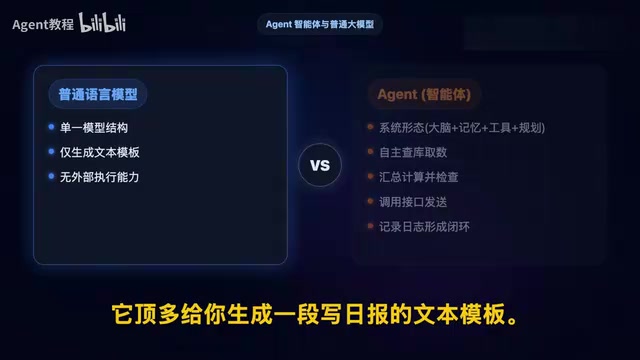
The Essential Difference Between AI Agents and Traditional AI: From Functions to Autonomous Task Executors
What is the essential difference between AI Agents and traditional AI? This article systematically breaks down the nature of Agents from six core components, dynamic decision-making authority, boundaries with Chatbots and Workflows, safety boundaries, and observability, helping you understand key concepts in LLM application development.
Dify Low-Code AI in Practice: RAG and Agents Made Easy
Based on a Bilibili Dify course, this article systematically covers Dify's five application types (Chat Assistant, Text Generation, Agent, Chat Flow, Workflow), Windows + Docker deployment, MySQL connection configuration, model integration strategies, and application publishing methods, helping beginners quickly build their own intelligent assistants.