Adobe Goes All-In on Agentic AI: Design Assistants and Workflow Automation
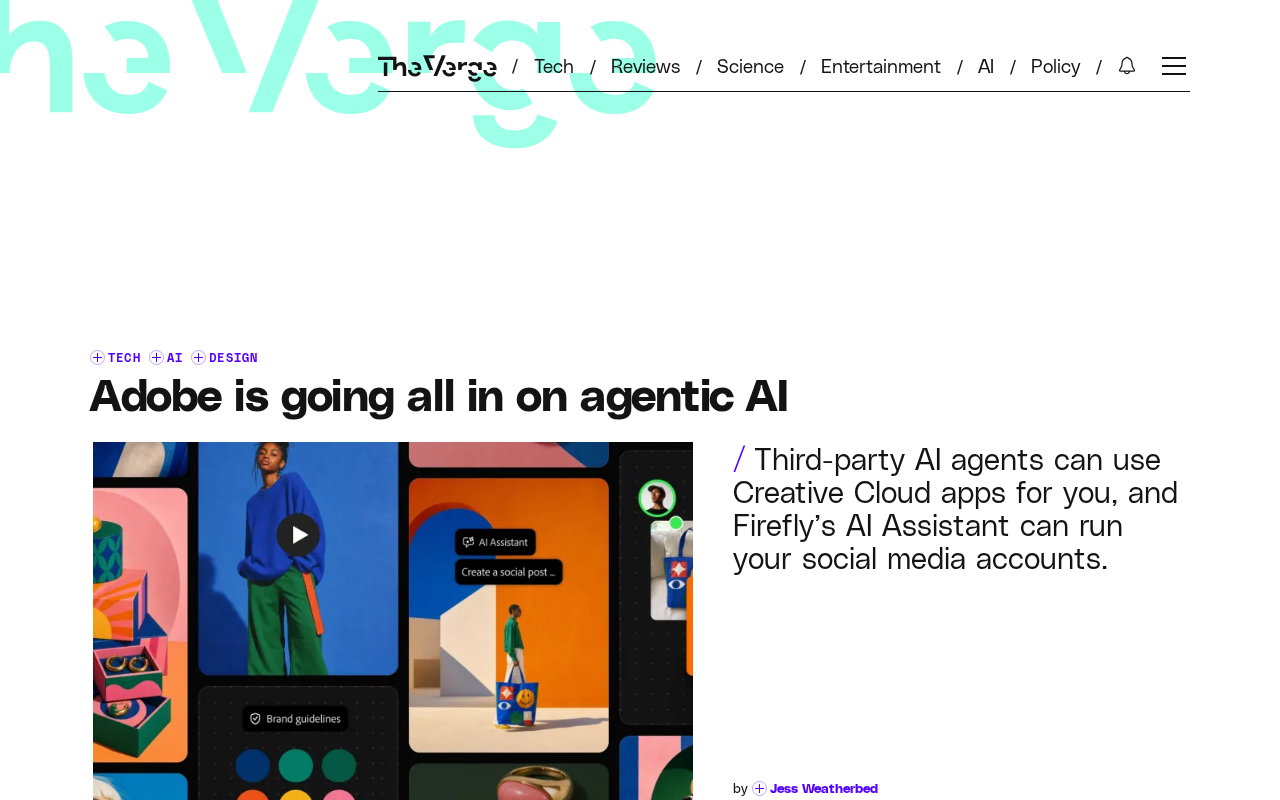
Adobe bets big on agentic AI at Max, opening third-party access and reshaping creative workflows.
At its Miami Max conference, Adobe announced agentic AI as the next core of its creative ecosystem, turning chatbots and AI agents into design assistants that automate workflows. It will also let users' preferred third-party agents access and modify content in Adobe's ecosystem, while keeping its platform central to orchestration. Feature details, timing, and security boundaries remain unclear.
From Tools to Agents: Adobe's AI Strategic Shift
At its Max conference in Miami, Adobe sent a clear signal: agentic AI will become the next core of its creative software ecosystem. According to information disclosed at the conference, Adobe is working to make chatbots and AI agents into users' design assistants, and even to automate creative workflows and repetitive tasks on users' behalf. This is not simply embedding generative AI features into existing products, but rather an attempt to redefine how people interact with creative tools—shifting from "humans operating tools" to "agents understanding intent and executing."
The backdrop to this strategic shift is that competition in generative AI has moved from comparing model capabilities into the application-layer deployment phase. Adobe needs to prove that its products are not only content production tools but intelligent platforms capable of actively assisting creation.
Agentic AI is fundamentally different from the generative AI we commonly encounter. Generative AI typically refers to models that generate text, images, video, and other content based on prompts, with an interaction pattern of "user inputs instructions—model outputs results" in single- or multi-turn dialogue. Agentic AI, by contrast, emphasizes systems with goal decomposition, task planning, tool invocation, and autonomous execution capabilities, enabling them to complete multi-step workflows with minimal human intervention. It is usually built with a large language model as the reasoning core, combined with memory, external tool interfaces, and environmental feedback loops. In the creative software context, this means AI can not only generate an image but also understand high-level goals like "make a set of social media assets for this brand," automatically open the relevant applications, adjust parameters, export files, and check consistency. This concept is key to understanding Adobe's strategic shift: the goal is not to add a generate button, but to make AI an executor capable of operating the entire creative toolchain.
Third-Party Agent Access: A Key Step Toward an Open Ecosystem
Among the features Adobe announced, the most open-ended is allowing users' preferred third-party AI agents to access and modify content within the Adobe ecosystem. This means users may no longer be locked into Adobe's own AI assistant, but can bring their habitual agents (such as conversational AI from other platforms) into workflows in Photoshop, Illustrator, and other applications.
From a competitive strategy perspective, this choice is quite bold. Opening access to third-party agents, on one hand, can lower users' learning costs and barriers to use, making agents a natural extension of Adobe's tools; on the other hand, it means Adobe needs to ensure its platform's central position in agent orchestration, avoiding becoming merely a "tool being called." Details such as which third-party agents will be supported and how permission control mechanisms will be designed have not been fully disclosed, but the answers to these questions will determine the feature's practical usability.
Third-party agent access typically relies on standardized interfaces such as APIs, plugin protocols, or model context protocols (like MCP) in technical implementation, enabling external agents to read and modify documents, layers, and project data in the host application. This model is similar to traditional plugin ecosystems, but the difference is that the caller shifts from "human-operated extensions" to "autonomous decision-making AI agents." For platforms, open access means designing fine-grained permission systems—for example, distinguishing between read-only, suggest-modification, and direct-execution permission levels, and logging agent operations for traceability. At the same time, platforms need to handle security boundaries such as identity authentication, data privacy, and malicious invocation. If Adobe can open these capabilities while maintaining the integrity of project file structures, it will upgrade its ecosystem from an "app store" to "creative infrastructure orchestrated by agents"—but this also places higher demands on interface stability and version compatibility.
How Agents Will Change Creative Workflows
According to Adobe's vision, the role of agents in creative workflows goes beyond "answering questions." Tasks they might take on include adjusting design drafts based on natural language instructions, batch-processing repetitive operations, coordinating task sequences across multiple applications, and even proactively suggesting design recommendations.
For designers, the direct value is reducing time spent on mechanical operations and focusing energy on creative decisions. But it also imposes new requirements: users need to learn how to express intent clearly and to review and correct agent outputs. Agents will not replace designers' judgment, but they will change designers' work rhythms and collaboration methods.
The features unveiled at Adobe Max are essentially testing a proposition: are creative professionals willing to hand over part of their control to AI agents? The answer will depend on the agents' reliability, controllability, and whether they truly understand design context.
Cross-application task automation is the most imaginative part of agents in creative workflows, and its technical foundation is Adobe's long-built cross-application data model and cloud document system. Take Photoshop, Illustrator, and Premiere as examples: they share Creative Cloud's asset management and font and color libraries, but their file formats and operational logic differ considerably. For an agent to coordinate multi-application tasks, it needs to understand each application's capability boundaries and decompose a high-level instruction into a sequence of atomic operations executable by each application. This involves capabilities such as task planning, state tracking, and exception recovery. In practice, an agent might first locate the target object in the layers panel, then invoke the generative fill interface, and finally sync the result to the video timeline. Whether this automation can run reliably depends on whether Adobe exposes sufficiently fine-grained operational interfaces to agents, and on the agent's understanding of design context and brand guidelines.
Competitive Landscape and Open Questions
Adobe is not the only player betting on agentic AI. From office software to design tools, major platforms are exploring how to move AI from passive response to proactive execution. Adobe's advantage lies in its products covering the complete creative chain from image processing to video editing—once agents connect these applications, they can form cross-tool task automation capabilities.
However, the information disclosed so far is mainly directional, with specific launch timing, support scope, and pricing strategy all unspecified. The security boundaries of third-party agent access, the impact on Adobe's subscription model, and users' acceptance of automated workflows are all variables to watch. Whether Adobe's "all-in bet" can translate into actual user adoption still needs to be tested after the products launch.
One-line Summary
Adobe announced at Max an all-in bet on agentic AI, opening third-party access and reshaping creative workflows.
Paragraph Summary
At its Max conference in Miami, Adobe announced it will make agentic AI the next core of its creative software ecosystem, aiming to turn chatbots and AI agents into design assistants that automatically execute creative workflows and repetitive tasks. This strategic shift marks a transformation in interaction from "humans operating tools" to "agents understanding intent and executing." Adobe also announced it will allow users' preferred third-party AI agents to access and modify content within its ecosystem, reflecting an open ecosystem strategy, though it must also ensure its platform's central role in agent orchestration. Agents may take on tasks such as adjusting design drafts, batch processing, and cross-application coordination, changing designers' work rhythms. However, specific feature details, launch timing, third-party support scope, and security boundaries remain unclear, and actual adoption will need to be tested once products launch.
Related articles

Anthropic Launches Dual Flagships Claude Fable 5.2 and Mythos 5.2, Topping Coding and Science Benchmarks
Anthropic releases Claude Fable 5.2 and Mythos 5.2 dual flagships, with full upgrades in coding, 3D interaction, and life sciences, topping third-party intelligence index, integrated by GitHub Copilot and Cursor, API pricing lower than competitors.
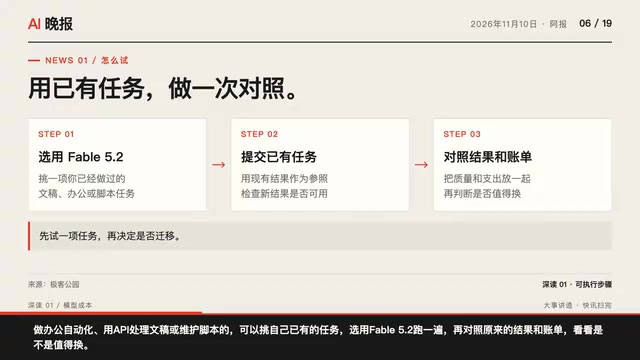
Claude Code Reportedly Leaks Secrets to GitHub, Sounding the Alarm for AI Coding Security
Claude Code reportedly exposed passwords and API keys to GitHub, per Ars Technica. We recap the incident alongside Claude Fable 5.2's 20% price cut and Meta Muse Ember, urging developers to check commit settings before granting permissions.
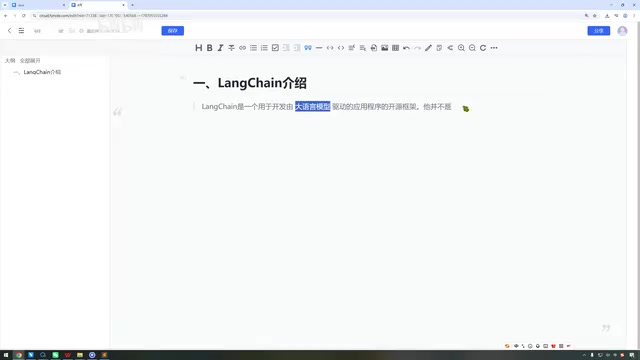
Getting Started with LangChain: Core Concepts of the Agent Development Framework
Starting from the three major limitations of LLMs, this article explains LangChain's positioning and value as an Agent development framework: limited knowledge, external system interaction, and state retention, along with its official documentation system and learning path.