After Affirmative Action Ends: Sharp Drop in Black Enrollment and the Rise of HBCUs

After the Supreme Court ended race-conscious admissions, Black freshman enrollment at elite universities fell 27%, while HBCU applications are heating up.
On June 29, 2023, the U.S. Supreme Court ruled the race-conscious admissions policies of Harvard and UNC Chapel Hill unconstitutional, ending a decades-long affirmative action framework. Black freshman enrollment across the top 50 most selective universities fell 27% overall, with Harvard dropping from 18% to 11.5% and Yale from 9.5% to 8%. Meanwhile, HBCUs are seeing an application surge and rising Black enrollment. The article traces the legal lineage from the Civil Rights Act of 1964 to the Students for Fair Admissions litigation, presents both sides of the debate, and highlights the need to watch race-neutral alternatives, HBCU capacity, and long-term effects on social mobility.
After the U.S. Supreme Court ended race-conscious admissions policies at colleges and universities, the proportion of Black freshmen at the most elite institutions has dropped significantly, while Historically Black Colleges and Universities (HBCUs) are seeing a new wave of application interest. This rise and fall reflects a deeper shift in the logic of American higher education admissions.
The End of Affirmative Action and the Data Shock
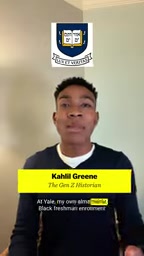
According to data cited by Khalil Green, host of Vox's new series "Khalil Explains," Black freshman enrollment across the top 50 most selective universities in the U.S. has dropped by 27% overall since the Supreme Court ruling. At top-tier schools specifically: Harvard's Black students made up 18% of the freshman class before the ruling, but now account for only 11.5% of the Class of 2029; Yale's figure fell from 9.5% to 8%.
The immediate trigger for this change was the Supreme Court's June 29, 2023 ruling in Students for Fair Admissions v. Harvard University and the University of North Carolina at Chapel Hill. The Court voted 6-3 (UNC case) and 6-2 (Harvard case) to find the two schools' admissions policies unconstitutional, effectively ending race-conscious admissions nationwide.
Affirmative Action in American higher education means far more than "racial quotas in admissions." It is a policy framework that allows universities to consider race as one of several "plus factors" in admissions, with the goal of expanding access for historically excluded groups (primarily Black and Latino students). The Supreme Court first established in the 1978 Regents of the University of California v. Bakke case that race could be one factor in admissions but that fixed quotas were impermissible; the 2003 Grutter v. Bollinger decision further allowed universities to pursue racial considerations in service of the educational interest in "diversity." The 2023 ruling effectively overturned this 45-year legal precedent, holding that race itself cannot be an independent basis for admissions decisions. Understanding this lineage is essential to grasping why the ruling's impact is so profound: what changed is not any single school's practice, but the very legal foundation of admissions across American higher education.
From the Civil Rights Act to the Courtroom Showdown
The history of affirmative action in higher education dates back to the passage of the Civil Rights Act of 1964. Affirmative action is defined as a set of procedures aimed at eliminating unlawful discrimination among applicants, remedying the consequences of past discrimination, and preventing future discrimination. However, in 2014, Students for Fair Admissions, founded by conservative legal activist Edward Blum, sued Harvard and UNC, alleging that their admissions policies discriminated against Asian American applicants.

The litigation lasted nearly a decade before the conservative-majority Supreme Court issued its historic ruling. The decision not only changed the admissions landscape at elite private schools like Harvard and Yale, but also imposed constraints on all federally funded colleges and universities nationwide.
HBCUs Become the New Choice
As Black enrollment declined at top predominantly white institutions, more Black students began turning their attention to Historically Black Colleges and Universities (HBCUs). Data presented by Khalil Green on the program shows that Black student enrollment at top HBCUs is rising.

This trend is not a simple substitution effect. HBCUs have long been known for their supportive environments and Black cultural identity. During the affirmative action era, some high-achieving Black students were absorbed by elite predominantly white institutions; now that admissions pathways have narrowed, HBCUs' appeal has naturally rebounded. But whether this represents a regression in educational resource allocation remains an unresolved debate.
Historically Black Colleges and Universities (HBCUs) are higher education institutions established before the passage of the Civil Rights Act of 1964 whose primary mission is to serve Black students. There are currently about 100-plus HBCUs in the U.S., including Howard University, Spelman College, and Morehouse College. HBCU history dates back to the post-Civil War era; during the segregation era, they were virtually the only pathway for Black Americans to access higher education. Their defining feature is not merely that they have "many Black students," but rather their institutional support environment: mentoring culture, Black cultural identity education, a strong sense of community belonging, and a historical track record of producing the Black middle class and professionals. During the affirmative action era, elite predominantly white institutions drew away some high-achieving Black students, and HBCUs faced enrollment competition for a time; now that admissions pathways have narrowed, HBCUs' role is being re-examined.
Divisions and Controversy Behind the Ruling
Supporters of the ruling argue that college admissions should be based on individual merit rather than race, and that the longstanding unfairness faced by Asian applicants needs to be corrected. Opponents point out that the complete removal of race from admissions will cause campus diversity to shrink dramatically, and that diversity has irreplaceable value for the educational experience and social mobility.

Behind these two viewpoints are different definitions of "fairness": procedural fairness or outcome fairness? Individual rights or group compensation? The Supreme Court's ruling provided a legal answer, but the societal debate is far from over.
The race-neutral alternatives repeatedly mentioned in the ruling are a key concept for understanding what comes next. The Supreme Court suggested that universities could consider indicators such as family income, first-generation college student status, and zip code to maintain diversity. But research generally shows that because race and income do not fully overlap, such alternatives have limited effectiveness in restoring Black student proportions at highly selective universities—the gap in admission rates between low-income Black students and low-income white students within the same income bracket often cannot be bridged by economic indicators alone. Moreover, after states such as California and Michigan banned affirmative action through ballot initiatives, Black enrollment at top public universities has not recovered to pre-ban levels over the long term, providing a reference point for assessing the long-term impact of this nationwide ruling.
Future Directions and Indicators to Watch
Behind the 27% decline in Black freshman enrollment are thousands of individual educational paths altered. In the coming years, key things to watch include: whether elite universities can maintain some degree of diversity through race-neutral means (such as family income and first-generation status); whether HBCU capacity can match growing demand; and the long-term impact of these changes on social class mobility.
At the end of the program, Khalil Green urged viewers to examine the full data and join the discussion. For policymakers and educators, the chain reaction set off by this judicial ruling is only just beginning to unfold.
One-line Summary
The Supreme Court's termination of race-conscious admissions has led to a 27% drop in Black freshman enrollment at elite universities, while HBCU applications are heating up.
Paragraph Summary
On June 29, 2023, the U.S. Supreme Court ruled that the race-conscious admissions policies of Harvard and UNC Chapel Hill were unconstitutional, ending a decades-long affirmative action admissions framework. After the ruling, Black freshman enrollment across the top 50 most selective universities in the U.S. dropped by 27% overall, with Harvard falling from 18% to 11.5% and Yale from 9.5% to 8%. Meanwhile, HBCUs are seeing an application surge, with Black student enrollment rising. The article traces the legal lineage from the Civil Rights Act of 1964 to the Students for Fair Admissions litigation, presents the two-sided divide between supporters who emphasize individual merit and opponents who fear shrinking diversity, and notes that future attention should focus on the effectiveness of race-neutral alternatives, HBCU capacity, and the long-term impact on social class mobility.
Related articles

Mistral Large 4 Open-Sources a Trillion Parameters, Microsoft Offers Voluntary Severance to 60,000 Employees
Mistral Large 4 open-sources a trillion-parameter multimodal model with a coding agent score of 48; SanDisk earnings show AI inference reshaping NAND demand; Google Gemini adds in-app file editing, OpenAI raises Codex quotas, and Microsoft offers voluntary severance to 60,000 employees.

Mistral Large 4 Opens Its Weights: AI Morning Brief Roundup of Models and Ecosystem Trends
Mistral Large 4 opens its weights, a 1-trillion-parameter MoE architecture that can run locally on MacStudio; Meta's test-generation technology enters production; top tax benchmark pass rate only 10.8%; Canadian government takes a stake in Cohere; Doubao Work opens third-party model calls. This AI Morning Brief rounds up model, ecosystem, capital, and policy developments.

Mistral Large 4 Goes Open Source: A 1T-Parameter European Qwen Challenging DeepSeek
Mistral Large 4 is now open source: 1T total parameters, 52B activated, focused on coding and cybersecurity, with ~610G NVFP4 weights. We analyze its comparison with DeepSeek V4 Flash, API pricing, demo realism, and local deployment value.