AI Agent Development Tutorial: From Prompt Engineering to Enterprise-Grade Agents

LLM adoption goes through four stages, and Agents become the top enterprise choice via autonomous planning.
Based on a popular Bilibili tutorial, this article outlines four progressive stages of enterprise LLM adoption: native models, prompt engineering, RAG, and Agents. It notes prompt engineering and RAG solve "answering well," while Agents solve "thinking and solving autonomously"—the enterprise efficiency dividing line. Agents fill native model gaps via translator, tool expert, memory keeper, and task manager. It categorizes commercially viable agents into tool-type, role-type, utility-type, and industry-type, with industry-type having the highest ceiling. It concludes that 2026 is the breakout year for agents, making it a prime time for traditional programmers to enter Agent development.
From prompt engineering to RAG to Agents, large models have gone through four stages of enterprise adoption. Based on a popular tutorial on Bilibili, this article breaks down the core value of AI Agents, their four major categories, and the development learning path, helping developers understand how to build enterprise-grade agents from scratch and avoid common pitfalls.
Why Aren't Prompt Engineering and RAG Enough?
Many learners believe that mastering prompt templates, memorizing structured instructions, or building a local knowledge base (RAG) counts as mastering large model development. But according to the observations of a Bilibili creator in the tutorial, these skills often fall short when facing enterprise-level requirements such as automated order processing and customer follow-up in interviews.
The root cause lies in the different positioning: prompt engineering and RAG solve the problem of "getting large models to answer questions well," while Agents solve the problem of "getting large models to think and solve problems autonomously." Traditional enterprises pursuing large model adoption aren't aiming to build a Q&A chatbot—they want to reduce costs and boost efficiency by running entire business processes end to end. This is precisely why Agents became the top choice for enterprise adoption in 2026.
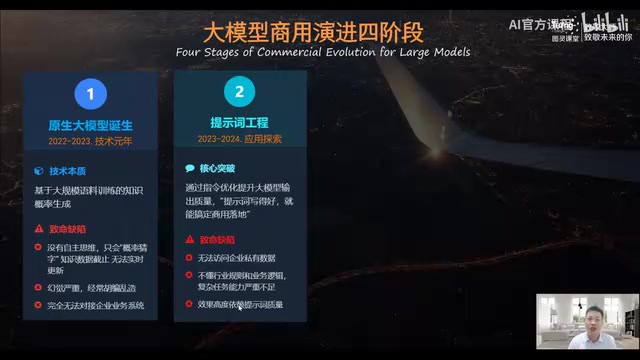
The Four Stages of Enterprise Large Model Adoption
The tutorial divides large model cloud deployment into four progressive stages, with difficulty increasing at each step.
Stage One: Native Large Models
Trained on massive public internet data, these models possess concept generation and Q&A capabilities. Their limitations are also obvious: no autonomous thinking ability, knowledge cutoff dates, a tendency to hallucinate, and no way to connect to enterprise business processes. Relying solely on native large models is still far from enterprise-grade cost reduction and efficiency gains.
Stage Two: Prompt Engineering
Improving output quality by optimizing prompt quality—structured instructions, chain-of-thought, and other techniques once became industry hot topics. But prompt engineering still has three major flaws: no access to enterprise private data, no ability to handle complex business processes, and output quality highly dependent on human prompt design skill. As the Bilibili creator put it, learning to type doesn't mean you can run an IT company—prompt engineering is now just a basic skill for large model application engineers.
Stage Three: RAG (Retrieval-Augmented Generation)
Fixed, repetitive business data (spreadsheets, images, etc.) is stored in a knowledge base; before answering, the large model performs a relevance search, then generates a response based on the retrieved results. RAG is currently the mainstream solution for enterprise knowledge Q&A systems, but its inherent flaws are: it can only passively retrieve information, it cannot think proactively; it cannot decompose complex tasks; and it only supports one-question-one-answer delivery. In e-commerce scenarios, the full workflow from inquiry to ordering to inventory checking to address changes is difficult for RAG to handle.
How RAG Works Technically: RAG (Retrieval-Augmented Generation) works by first retrieving the document fragments most relevant to the user's question from an external knowledge base before the large model generates an answer, then concatenating these fragments as context into the prompt to guide the model to answer based on real materials. The typical pipeline includes document chunking, vector embedding, vector database storage, similarity retrieval, and re-ranking. This mechanism allows the model to reference enterprise private knowledge without retraining, significantly reducing hallucinations, but retrieval quality is highly dependent on chunking granularity and the choice of embedding model.
Stage Four: Agent
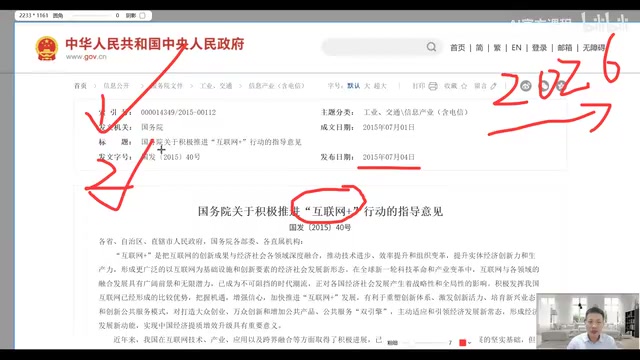
Large models gain autonomous planning and execution capabilities, upgrading from Q&A tools to "digital employees" that can call various tools to complete complex tasks and support multi-agent collaboration. According to national policy documents cited by the Bilibili creator, the "AI+" action opinion released in August 2025 has already listed agents as a key direction, proposing that the penetration rate of next-generation agents reach 70% by 2027 and achieve full development by 2035.
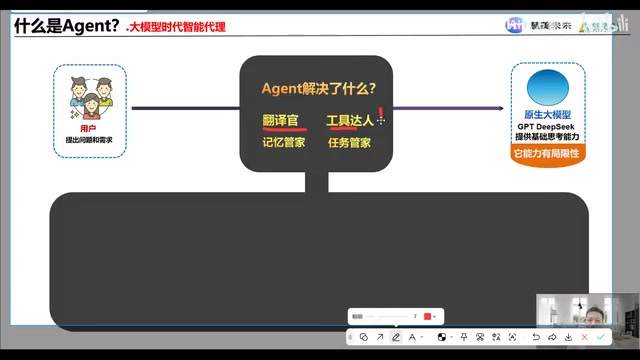
What Exactly Is an Agent?
An Agent is a proxy for large models, acting as a communication bridge between users and large models. Users submit requirements; the Agent understands the requirements, calls tools, completes complex tasks, and returns the results to the user. It addresses four fatal shortcomings of native large models:
- Translator: Translates natural language requirements into instructions the large model can understand, and converts outputs into usable results.
- Tool Expert: Helps large models call APIs, search data online, manipulate files, and connect to enterprise systems, transforming large models from "only able to talk" into "able to take action."
- Memory Keeper: Remembers context, user preferences, and historical conversations, supporting coherent multi-turn interactions.
- Task Manager: Decomposes complex problems into multiple sub-steps and plans execution, proactively invoking solutions when problems arise.
Agents are already ubiquitous in daily life: behind the conversations in Doubao and DeepSeekAd, there's an Agent layer calling native models and processing results; programming tools commonly used by developers like Codex and Cursor demonstrate tool-calling and memory management capabilities.
Classic Agent Architecture: In academic and engineering practice, an Agent is typically composed of four major modules: perception, planning, memory, and tool use. Representative paradigms include ReAct (alternating reasoning and action) and Plan-and-Execute (plan first, then execute). It fundamentally relies on the large model's Function Calling capability to map natural language intents into structured tool-calling parameters. Multi-agent systems collaborate through role division and message passing to complete complex tasks that a single agent struggles with, and they are an important foundation for industry-specific agents moving into production environments.
Four Main Agent Categories and Monetization Paths
Agents that can achieve commercial deployment on the market basically fall into four categories—these are also the most stable monetization tracks today.
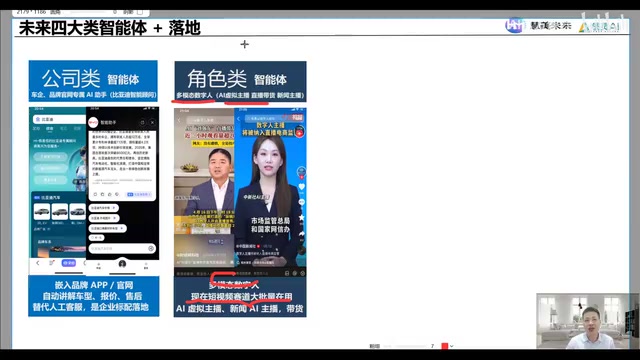
Tool-Type Agents
Automaker official intelligent customer service is a typical example, embedded in brand apps and official websites, covering vehicle model pricing, after-sales, and configuration inquiries, replacing human staff for 24/7 response. Enterprises of a certain scale are already deploying or preparing to deploy these.
Role-Type Agents
Multimodal digital human forms, commonly seen in virtual streamers and livestream selling. Technically, these are a combination of Agent capabilities and digital human technology, and short-video and e-commerce companies have adopted them in large numbers.
Utility-Type Agents
Focused on single-function pain points, such as AI writing and resume generation. Suitable for individual developers to build around niche scenarios, monetizing through memberships or traffic.
Industry-Type Agents (Enterprise-Grade)
Aimed at B2B traditional enterprise transformation, going deep into the entire business workflow. Industries such as healthcare, finance, e-commerce, logistics, manufacturing, and legal can all be combined with large models. Taking industrial agents as an example, they can run the entire workflow from inquiry to inventory checking to order address changes. The tutorial judges that this type of agent has the highest ceiling in the future, and it is also the main content of the systematic course.
Key Points for Enterprise-Grade Agent Deployment: Unlike individual developers building utility-type applications, industry-type agents need to connect to enterprises' existing CRM, ERP, order, and inventory systems. Therefore, standardization of tool interfaces, permissions and data security, and observability of call chains are all unavoidable engineering issues. In practice, human review nodes and failure rollback mechanisms are usually also introduced to control the business risks brought by autonomous agent execution. This is also why industry-type agents have the highest technical barrier and the highest ceiling.
Learning Path and Timing for Entry
The tutorial's timeline judgment is: 2023–2024 was the first year of foundational large model adoption, with companies competing on parameters and computing power; 2025 saw Agents move from concept to small-scale deployment, a trial phase for early adopters; 2026 is the year of explosive growth for tens-of-billions-scale agents, with central SOEs, state-owned enterprises, and medium-to-large and small enterprises all advancing transformation.
For traditional programmers, entering Agent development now happens to coincide with the industry's mass transformation wave—many positions, few talents. On the learning path, prompt engineering is the foundation but far from the end point; the focus should be on core Agent capabilities such as tool calling, memory management, and task planning, as well as the complete development workflow for industry-type agents.
One-line Summary
Large model adoption goes through four stages, and Agents become the top choice for enterprise deployment thanks to autonomous planning and execution.
Paragraph Summary
Based on a popular Bilibili tutorial, this article outlines the four progressive stages of enterprise large model adoption: native large models, prompt engineering, RAG, and Agents. It points out that prompt engineering and RAG solve "answering questions well," while Agents solve "thinking and solving problems autonomously"—the dividing line for enterprise-grade cost reduction and efficiency gains. Agents compensate for native model shortcomings through four capabilities: translator, tool expert, memory keeper, and task manager. The article further divides commercially deployable agents into tool-type, role-type, utility-type, and industry-type, arguing that industry-type has the highest ceiling. Finally, it offers a timing judgment: 2026 is the year of explosive growth for tens-of-billions-scale agents, and traditional programmers switching to Agent development are riding the wave.
Related articles

Private Key Set to 4? CA's Elementary Mistake Leaves TLS Exposed
CA eMudra set private keys to tiny values like 4, making TLS certificates brute-forceable. A Computerphile video demonstrates the full process from extracting public keys to forging certificates, and explores the fragility of the PKI trust chain.

How Gen Turns Data into Decisions with ChatGPT Work
In an OpenAI user case, business leader Gen shares how ChatGPT Work turns data into decisions: within hours of launch, teams can judge whether integrations and onboarding flows work, shifting decision iteration from hundreds of trial-and-error attempts to a fast feedback loop.

ChatGPT vs. Claude In-Depth Comparison: Strong at Coding but Weak at Research — How to Bridge the Gap?
A user considers switching from ChatGPT to Claude, finding Claude stronger at coding but shallower at research. We analyze the differences and share tips to make Claude's research deeper.