AI Agent Launches a Product Business in One Day: Hands-On with Alibaba's AI Product Sourcing and Sampling
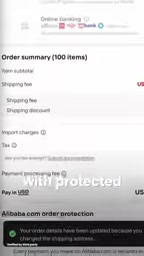
Hands-on with Alibaba.com's AI Agent: sourcing and ordering done in an afternoon, but final decisions stay with humans.
A creator tested Alibaba.com's AI Mode to launch a product business in one day: the AI Agent independently handled sourcing, design, and branding, and ordered a real sample through the platform's protected payment channel, compressing the journey from idea to sample-on-the-way into one afternoon. But the Agent didn't take on the fourth task — the final decision — and the creator deliberately kept it that way, believing taste and accountability must remain human. The real barrier isn't supply chain knowledge but willingness to answer factory questions. The experiment stops at sample shipment; production decisions and business risks remain with humans.
From One Sentence to a Sample on Its Way — All It Takes Is an Afternoon
Can an AI Agent launch a product business from scratch in a single day? One creator posed this question to Alibaba.com's AI Mode and spent one day completing four stages: product sourcing, design, branding, and sampling. The conclusion is more concrete than expected: the first three things AI can do independently, the fourth it can't — and the creator believes this is exactly the right boundary.
From One Sentence to a Sample on the Way — Just an Afternoon
The video opens with a direct assessment: the distance from "I want to sell something" to "the sample is already on its way" is now one afternoon. Two years ago, this step was nearly impossible for a solo operator, because sourcing, finding factories, placing orders, and making payments all depended on experience and connections.
In this experiment, the AI Agent played the role of "eyes" — browsing supply-side information through Alibaba.com's AI Mode, completing product screening, and ordering a real sample from a real factory, with payment going through the platform's protection channel. The creator emphasizes: the factory is real, the sample is real, the payment is protected — this is not a simulated demo.
AI Completed the First Three Things: Sourcing, Design, Branding
According to the video's breakdown, a product business from scratch roughly involves four things: product sourcing, design, branding, and the final decision. This time, the Agent fully took over the first three.

The sourcing stage relies on rapid retrieval and comparison of supply-side information — exactly the scenario AI Mode was designed for. For design and branding, the Agent also provided usable proposals. The creator's exact word was "yes," but he immediately added: it still needs you — your taste, and the final decision.
This caveat is crucial. AI can produce options, but choosing between them involves aesthetic judgment and business intuition — this part has not been automated. In other words, the Agent compressed the execution workload to a minimum but left the decision-making power with humans.
Alibaba.com's "AI Mode" is an intelligent agent capability the platform offers for cross-border B2B procurement scenarios. It is powered by large language models and connected to the platform's product catalog, supplier profiles, quotation and transaction data. Unlike general-purpose chatbots, its retrieval scope is limited to the platform's real supply-side information, so the sourcing lists and supplier lists it outputs map directly to orderable SKUs and factories. It also integrates inquiry, price comparison, ordering, and payment protection workflows — which is the prerequisite for the experiment's "real sample, protected payment" to hold true. Understanding this is key: the Agent's capability ceiling depends not only on the model itself but also on how complete the data and transaction pipelines it's connected to are.
The Fourth Thing It Didn't Do — And the Creator Doesn't Want It To
The most noteworthy line in the video: the Agent completely took the first three things off my plate; the fourth it didn't touch.

The fourth thing refers to the final decision — whether to proceed once the sample arrives, which brand direction to choose, how to finalize product details. The creator explicitly states "I don't think I want it to do this." This isn't a denial of AI capability but a deliberate choice about division of labor: hand off what can be standardized, keep what requires bearing consequences.
This attitude is worth considering for individuals thinking about using AI for cross-border business. AI lowers the barrier to entry but doesn't eliminate business responsibility. The sample was ordered by AI, but every step after the sample arrives — the responsibility still lies with a human.
In human-machine division-of-labor discussions, the "final decision" is often called the human-in-the-loop stage — judgment nodes where outcomes are irreversible and carry economic or legal consequences. In cross-border e-commerce, such nodes include whether to mass-produce, how to set acceptance criteria, and how to arrange inventory and cash flow. They're hard to hand to an Agent not just because of model capability but because of accountability: AI cannot be a contracting party, nor can it bear losses from wrong judgments. Hence the industry's common practice of positioning Agents as "proposers" rather than "deciders," with humans retaining veto and signing authority. This also explains the creator's attitude — not that AI can't offer suggestions, but that he's unwilling to relinquish the position of bearing consequences.
Supply Chain Knowledge Is Not a Prerequisite
The video ends with a counterintuitive conclusion: if after watching this video you feel you must first understand supply chains before you can start, you don't need to.

The creator distilled the startup conditions into three things: one sentence, one afternoon, and the willingness to answer when the factory comes back with questions. The most easily underestimated of these is the last one — during sampling, factories will raise specific questions about materials, specifications, quantities, and lead times. These questions need human responses; the Agent can't make commitments on your behalf.
This also explains why the whole process can run in one afternoon: the platform consolidates finding factories, price comparison, ordering, and payment into one place; AI handles information processing; humans handle answering and decision-making. All three working together is what makes "launch in one day" possible.
Sampling is the verification stage between a product concept and mass production: the factory produces a small number of physical samples according to specifications, and the buyer checks whether materials, craftsmanship, dimensions, and appearance meet expectations before deciding whether to place a mass-production order. During sampling, factories often follow up on details like material weight, color codes, packaging methods, minimum order quantity (MOQ), lead times, and whether sampling fees can be deducted from bulk orders — these responses are essentially commercial commitments that the buyer must confirm and bear subsequent responsibility for. This is precisely the part the Agent struggles to complete independently — it can organize questions and draft replies, but final confirmation still requires a human.
What This Means for Individual Sellers
From this hands-on test, the AI Agent's role in cross-border product business looks more like an efficient information-processing layer than a replacement for the operator. It can compress product research and initial supplier screening from days to tens of minutes, and let someone without a supply chain background get real quotes and place sample orders in the time of a lunch break.
But the path after the sample — judging quality, deciding whether to mass-produce, handling factory follow-ups, bearing payment and inventory risks — still requires a human. The video doesn't provide sales data or follow-up results; the experiment's boundary stops at "sample has been shipped." For someone wanting to validate a product idea, this boundary itself may already be useful enough: get something physical at the lowest cost and shortest time, then decide whether to continue.
One-line Summary
Hands-on with Alibaba.com's AI Agent: sourcing, design, and ordering done in an afternoon — but the final decision stays with humans.
Paragraph Summary
The article documents a creator's hands-on test of launching a product business in one day using Alibaba.com's AI Mode: the AI Agent independently completed sourcing, design, and branding, and ordered a sample from a real factory through the platform's payment protection channel, compressing the distance from "I want to sell something" to "sample on its way" into one afternoon. But the Agent didn't take on the fourth thing — the final decision — and the creator deliberately chose not to let it, believing taste judgment and decision-making responsibility must stay with humans. The article further notes that the startup barrier isn't supply chain knowledge but one sentence, one afternoon, and the willingness to respond to factory follow-ups. The experiment stops at sample shipment; mass-production decisions and business risks remain with humans.
Related articles

Vibe Coding Full-Stack in Practice: AI Programming from Beginner to Enterprise Deployment
From Cursor to Claude Code, this Bilibili AI programming course uses four progressive projects to cover full-stack development, open-source secondary development, and team collaboration. The article analyzes the shock to frontend roles, the efficiency shift from 50 people to 5, and the methodology required for enterprise-grade projects.

David Blaine's Global Quest for Real Magic: From South Africa to Japan and India
David Blaine travels to South Africa, Japan, and India in his Do Not Attempt special, documenting Spinning drivers, black mamba rescuers, iaijutsu masters, and ascetics—exploring the boundary between magic and real human极限 challenges.

Is a Touchscreen MacBook Coming? Vergecast Reveals Apple Executive's Response
Vergecast podcast reveals a conversation between a reporter and Apple executive John Ternus about a touchscreen MacBook and Apple Pencil support. Ternus says iPad is the best device for a stylus, while the reporter bets MacBook will eventually support Apple Pencil.