AI Aggregator Hub: Free Access to GPT, Gemini, Grok, and Other Major LLMs — A Hands-On Review
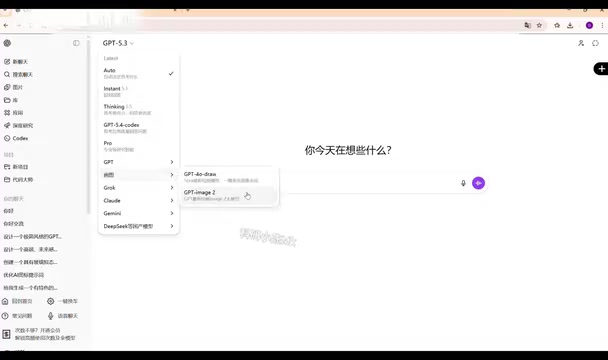
A review of AI aggregator platforms that offer free access to major LLMs via shared account pools.
This article reviews AI aggregator platforms that provide free access to official versions of GPT, Gemini, Grok, Claude, and other major LLMs through shared account pools. It explains the technical mechanisms behind account rotation and cross-model context memory, while highlighting significant privacy, compliance, and stability risks inherent to the shared account model.
Introduction: Too Many AI Models, Too Many Scattered Entry Points
As major AI companies release new models at a rapid pace, everyday users face a practical problem: to try the latest GPT, Gemini, Claude, Grok, and other models, you need to register separate accounts, deal with network access issues, and navigate each platform's usage limits and paywalls.
Recently, a Chinese Bilibili creator shared an AI aggregator site that claims to offer zero-barrier free access to the official web versions of all major global AI models. How does this kind of platform actually perform? What's the logic behind it? This article takes a deep dive.
Core Features: One Site Aggregating All Major AI Models
Direct Official Site Access, Not an API Wrapper
Unlike the common "API relay" services on the market, the core selling point of this type of AI aggregator platform is direct redirection to each AI product's official website — users interact with the authentic official interface and full feature set.
Understanding this distinction requires knowing the fundamental difference between the two approaches: API wrapper platforms call the AI vendors' open API endpoints and package/forward requests through their own interface. These platforms show a third-party UI while the actual computation is handled by the original API, and functionality is often incomplete — for example, you can't use GPT's Canvas code execution environment, DALL-E image generation, or Gemini's file upload analysis and other advanced features that require official site session state. The direct official site model, on the other hand, lets users operate the original interface through shared accounts, offering higher feature completeness — but this also brings more prominent account security and privacy concerns.
According to the video demonstration, the platform covers the following models:
- OpenAI GPT Series: Including the latest GPT models, with full official site features like code execution and image generation
- Google Gemini Series: Including Gemini Pro and other premium versions
- xAI Grok Series: Elon Musk's AI assistant
- Anthropic Claude Series: Including Claude premium versions
- Chinese Models: Such as DeepSeekAd
Account Pool Rotation: The Core Logic Behind Free Access
The platform's free-access logic is straightforward — it maintains a large pool of paid accounts across various platforms. When a user hits the usage limit on one account, they can use a "switch" function to seamlessly jump to another account and continue. According to the introduction, the platform maintains hundreds of official accounts, circumventing usage limits through rotation.
From a technical perspective, an Account Pool is a common architecture in web scraping, automated testing, and shared service domains. The core idea is to pre-register or purchase a large number of target platform accounts, store them centrally in a database, and use a scheduling system to assign user requests to different accounts via round-robin, load balancing, or quota-based strategies. For AI aggregator platforms specifically, each ChatGPT Plus account has a message cap for advanced models within a 3-hour window, and Claude Pro similarly has daily usage quotas. By maintaining hundreds of accounts and automatically switching when users hit limits, the platform achieves an "unlimited usage" effect on the surface. The technical barrier isn't particularly high, but ongoing maintenance costs for account purchasing, anti-ban measures, and cookie management persist.

Cross-Model Context Memory
The video showcased a particularly practical feature: when switching between different AI models within the same conversation, context memory is preserved. For example, you can first use GPT to generate code, then switch to Gemini to get optimization suggestions based on the previous conversation — the model can "see" the complete conversation history.
The implementation principle behind this feature is worth understanding: large language models are inherently stateless — each call is independent, and models don't naturally "remember" previous turns. What we call "context memory" is essentially including the conversation history as an input prefix (Prompt Context) sent along with each new request. The aggregator platform achieves cross-model context preservation by maintaining a unified conversation history on the server side. When a user switches models, the complete message history is formatted and injected into the new model's request — this requires the platform to perform unified conversion between different models' message formats (such as OpenAI's role/content structure and Anthropic's Human/Assistant format). For users who need to cross-validate answer quality across different AIs, this feature genuinely improves efficiency.
Hands-On Experience Highlights
GPT Image Generation Capabilities
The video prominently showcased GPT's latest image generation capabilities, including various creative composite images — from game character crossovers to celebrity parody scenes — with results that are impressively photorealistic. This is also a hot topic in current discussions around GPT's image generation features.

Code Generation with Instant Preview
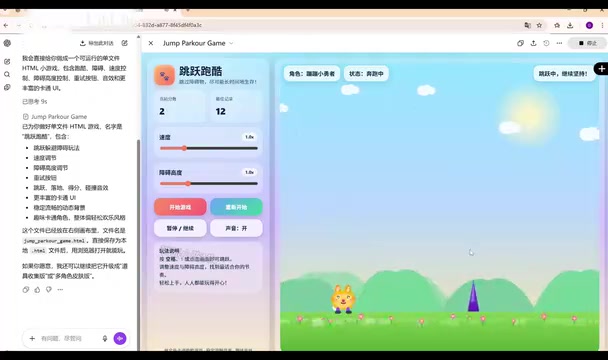
In the demonstration, GPT was asked to generate an interactive mini-game. The model not only output complete code but also supported direct playback in a side panel — this is the full Canvas/Artifacts functionality from the official site, proving the platform truly delivers an official-site-level complete experience.
Independent Official Site Entry Points for Each AI Model
Beyond the aggregated conversation interface, the platform also provides independent official site entry points for each AI product. Users can jump directly to the native interfaces of Gemini, Grok, GPT, and other products, enjoying each platform's unique features.

Important Considerations Before Using
Questionable Model Version Numbers
The video title mentions version numbers like "GPT 5.6," "Gemini 3.5," and "Claude 3.7" that clearly don't match the actual version naming used by each vendor. Understanding each vendor's naming conventions helps identify such false labels: OpenAI uses naming schemes like GPT-4o, GPT-4.1, o1, and o3 — they have never released anything called "GPT 5.6"; Google's Gemini series follows generational naming of 1.0, 1.5, 2.0, 2.5, differentiated by Flash, Pro, and Ultra capability tiers; Anthropic's Claude uses Claude 3 Haiku/Sonnet/Opus and Claude 3.5, 3.7, etc. Third-party platforms using inflated or fabricated version numbers typically do so to attract attention or confuse users about which model they're actually using. Users can do a preliminary check by directly asking the model "what version are you" in conversation, but note that some wrapper services modify system prompts to fake identity. Users should rely on official announcements from AI vendors rather than version labels from third-party platforms.
Compliance and Security Risks of Shared Accounts
This type of platform fundamentally operates by sharing paid accounts, and virtually all major AI platforms' Terms of Service explicitly prohibit account sharing or resale. OpenAI's ToS states that accounts may not be transferred or shared with third parties; Anthropic similarly prohibits using Claude accounts for commercial resale purposes. Once a platform detects abnormal login behavior (such as a large number of requests from different IPs and devices within a short period), accounts face suspension or permanent ban — meaning the account pool requires constant replenishment, and service could be interrupted at any time.
Additionally, shared accounts raise the following concerns:
- Privacy Risk: Multiple people sharing an account means your conversation content could potentially be seen by other users or platform administrators
- Compliance Issues: Shared accounts typically violate each AI platform's terms of service, with the risk of being banned at any time
- Stability: Account pool availability depends on the platform's maintenance capabilities, making it unsuitable for professionals with ongoing needs
- Data Security: Sensitive information (personal data, trade secrets, etc.) should absolutely never be entered on such platforms
Sustainability of the Free Model
Maintaining hundreds of paid accounts isn't cheap. The platform's current revenue model likely relies on traffic monetization, premium add-on services, or other methods. Users should maintain realistic expectations about "forever free" promises.
Who Are AI Aggregator Platforms For?
Suitable scenarios:
- Casual users who want to quickly experience and compare different AI model capabilities
- Learners interested in AI but unwilling to pay for multiple platform subscriptions
- Temporary use in non-sensitive contexts
Not suitable for:
- Work scenarios involving privacy or trade secrets
- Professional users who need stable, long-term access
- Enterprise users with strict data security requirements
Conclusion: An Experience Gateway, Not a Productivity Tool
The emergence of AI aggregator platforms reflects a genuine market need: in an era of flourishing AI models, users need lower-barrier ways to experience and compare different products. Features like cross-model context memory and account pool rotation do address real pain points.
However, users need to clearly recognize the inherent risks of the shared account model — whether it's compliance issues at the terms-of-service level or the privacy concern that conversation data may be accessed by multiple parties, these are structural defects that such platforms cannot fundamentally avoid. For users serious about leveraging AI for productivity, subscribing to official services remains the safest and most stable choice. These aggregator platforms are better suited as "trial experience" gateways rather than tools to depend on for daily work.
A final reminder: stay vigilant about exaggerated model version numbers in videos, and always refer to each vendor's official channels for accurate AI product information.
Related articles

Mistral Large 4 Open-Sources a Trillion Parameters, Microsoft Offers Voluntary Severance to 60,000 Employees
Mistral Large 4 open-sources a trillion-parameter multimodal model with a coding agent score of 48; SanDisk earnings show AI inference reshaping NAND demand; Google Gemini adds in-app file editing, OpenAI raises Codex quotas, and Microsoft offers voluntary severance to 60,000 employees.
Mistral Large 4 Opens Its Weights: AI Morning Brief Roundup of Models and Ecosystem Trends
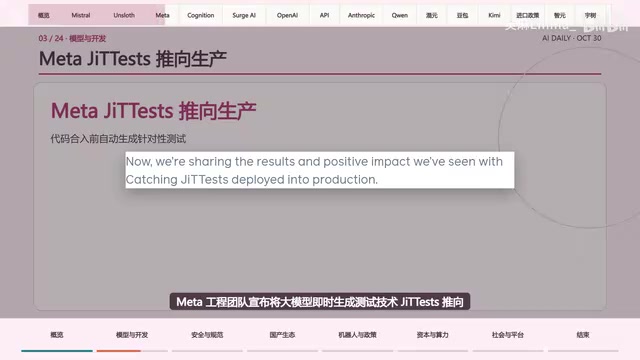
Mistral Large 4 opens its weights, a 1-trillion-parameter MoE architecture that can run locally on MacStudio; Meta's test-generation technology enters production; top tax benchmark pass rate only 10.8%; Canadian government takes a stake in Cohere; Doubao Work opens third-party model calls. This AI Morning Brief rounds up model, ecosystem, capital, and policy developments.

Mistral Large 4 Goes Open Source: A 1T-Parameter European Qwen Challenging DeepSeek
Mistral Large 4 is now open source: 1T total parameters, 52B activated, focused on coding and cybersecurity, with ~610G NVFP4 weights. We analyze its comparison with DeepSeek V4 Flash, API pricing, demo realism, and local deployment value.