AI and Humans Claim to Prove the Riemann Hypothesis: Machine-Verified, Yet Nobody Can Understand It
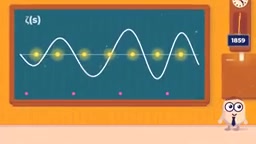
AI and a mathematician claim to prove the Riemann Hypothesis; the proof passes machine verification as 17 million lines of Lean code, but humans do not yet understand it.
The article describes how Anthropic mathematician Levent Alperger, working with AI Claude, claims to have found a proof of the Riemann Hypothesis. The proof is not the traditional four pages but 17 million lines of Lean code, independently compiled and line-by-line verified by the Lean community. Previously, Claude coordinated about 60 agents to raise the proportion of zeros proven to lie on the critical line from 41.6% to 67.2%, breaking a decades-old record. However, verification is not understanding: Fields Medalist James Maynard expects the proof to be correct, but understanding its principles may take months or even years, and the Clay Institute's million-dollar prize still requires formal publication and peer review. The event raises a new epistemological question: does a machine-verifiable but humanly incomprehensible proof count as mathematical knowledge? Meanwhile, the priority dispute between Anthropic and OpenAI awaits confirmation from more sources.
In 1859, a German mathematician wrote down a conjecture about the distribution of prime numbers. For 167 years since, no one has been able to prove it. According to the YouTube video "An AI Helped Prove the Riemann Hypothesis. Nobody Can Read It.," this deadlock may have been broken—a mathematician at Anthropic, working with the AI Claude, claims to have found a proof of the Riemann Hypothesis. A computer has verified every logical step line by line, but no human has actually read and understood it yet.
Primes, Zeros, and a Mysterious Straight Line
Prime numbers are the atoms of arithmetic. Every integer is a product of primes. But the primes themselves appear extremely random: 2, 3, 5, 7, 11, with gaps appearing without any pattern. Bernhard Riemann discovered a hidden map—a function whose zeros determine where the primes fall. Riemann's conjecture is that all the significant zeros lie on a single straight line. Computers have checked trillions of zeros, and all lie on the line. But trillions is not the same as all. In 2000, the Clay Institute listed it as one of the seven Millennium Prize Problems, with a prize of one million dollars. Before this, only one of these seven problems had ever been solved.
The Riemann zeta function and the critical line: The central object of the Riemann Hypothesis is the Riemann zeta function, originally defined as the infinite series ζ(s) = 1 + 1/2^s + 1/3^s + …, which converges when the real part is greater than 1, and then extended to the entire complex plane via analytic continuation (except for a pole at s=1). The so-called "significant zeros" refer to the nontrivial zeros, i.e., those located in the critical strip between 0 and 1. The Riemann Hypothesis asserts that the real part of all these nontrivial zeros equals 1/2—that is, they all lie on a vertical line in the complex plane (called the critical line). This line is mysterious because it precisely links the distribution of primes to the locations of zeros in complex analysis: the imaginary parts of the zeros determine the oscillatory pattern of the prime-counting function.
Millennium Prize Problems: In 2000, the Clay Mathematics Institute selected seven unsolved mathematical problems, each with a one-million-dollar prize for its solver—these are the "Millennium Prize Problems." The Riemann Hypothesis is one of them, and the only one that was also included in Hilbert's list of 23 problems in 1900. As of the time described in the article, only one of the seven has been solved (the Poincaré conjecture, by Grigori Perelman in 2003), and Perelman declined the prize.
From 41.6% to 67.2%: Claude First Broke a Record
According to the video, an engineer at Anthropic—note, not a mathematician—gave Claude a strange task: to launch a genuine assault on the Riemann Hypothesis. Claude split the work among approximately 60 agents working collaboratively. It did not prove the conjecture, but it broke a record that had been creeping up for decades: the proportion of zeros proven to lie on the line jumped from 41.6% to 67.2%. One of the mathematicians involved in checking this work was Levent Alperger.
This thread is worth noting: the AI did not "solve" a century-old problem right away, but made significant progress on a quantifiable subproblem. This path—first expanding the verified frontier, then attacking the core—is exactly the normal rhythm of mathematical research, except that this time the executor was a machine.
The zero proportion record: The "proportion of zeros proven to lie on the line" here refers to the percentage of nontrivial zeros that have been rigorously proven to satisfy the Riemann Hypothesis within a certain finite height range (e.g., imaginary part less than some T). Mathematically, it is known that at least some zeros lie on the critical line (for example, Hardy and Littlewood proved that infinitely many zeros lie on the line), and numerical computations can verify more. But "proving" a certain proportion requires rigorous mathematical argument, not just numerical checking. Raising this proportion from 41.6% to 67.2% means that zero locations have been rigorously verified over a wider range—this itself is a quantifiable advance, though still far from proving that "all" zeros lie on the line.
Multi-agent collaboration: The video mentions that Claude split the task among about 60 agents working together, which belongs to the field of "multi-agent systems" in AI. In this architecture, multiple AI instances each handle subtasks, collaborating through message passing or a shared workspace, and finally aggregating results. This pattern is suitable for large decomposable problems, but also brings challenges of coordination, verification, and result integration.
Four Pages and Seventeen Million Lines: How the Proof Was "Verified"
In September of this year, Alperger and Tristan Buckmaster used Claude to crack the equations of ideal fluids. Hours later, OpenAI claimed it had also solved a Millennium problem, and the two sides immediately became embroiled in a priority dispute.
On November 20, Alperger published four pages. He believes that, working with Claude, he has found a proof of the Riemann Hypothesis—and a proof of a broader version.
The key detail is this: the proof is not in those four pages. The actual proof is 17 million lines of Lean code—Lean is a language in which a computer can check every logical step line by line. Within a day, the Lean community independently compiled the proof and ran multiple independent checkers. Every step passed.
Lean and formal proofs: Lean is an interactive theorem prover and a programming language, initiated by Leonardo de Moura at Microsoft Research in 2013. In Lean, mathematical proofs are written as code, and every logical inference step must strictly conform to type theory rules; a computer can check its correctness line by line. "Formalizing" a traditional mathematical proof into Lean code is an extremely time-consuming task, typically requiring years of collaboration between domain experts and formalization experts. The scale of 17 million lines of Lean code is unprecedented, far exceeding any previous formalization project (e.g., the formalization of the four-color theorem is about 60,000 lines, and the Kepler conjecture about 200,000 lines). The Lean community's ability to independently compile and run multiple checkers within a day demonstrates the reliability of formal verification and the efficiency of community collaboration.
Equations of ideal fluids: The "equations of ideal fluids" mentioned in the text refer to the Euler equations, which describe the motion of inviscid fluids. The global regularity problem for the three-dimensional Euler equations is also one of the Millennium Prize Problems (the existence and smoothness of the Navier-Stokes equations). If Alperger and Buckmaster's cracking of this problem is confirmed, it would be another major achievement, but it likewise requires peer review.
Checking Is Not Understanding
This is the most intriguing part of the whole affair. Verification passed, but understanding has not yet arrived.

Fields Medalist James Maynard expects the proof to be correct, but says that understanding why it holds will take much longer. Number theorist Eunice Lamzuri estimates months, or even years. As for the million dollars? Not yet obtainable. The Clay Institute requires a proof that has been formally published and has withstood peer scrutiny.
For centuries, the essence of proof has been one person convincing another. Now, we may already have the answer to the most famous problem in the history of mathematics, yet we must wait for someone to actually understand it. This raises a brand-new epistemological question: when machines can verify proofs that humans cannot understand, what does "mathematical knowledge" actually mean?
The epistemology of mathematical proof: Traditionally, a mathematical proof is not only a means of verification but also a pathway to human understanding of mathematical truth. A proof being accepted usually means that the mathematical community can follow its logic, grasp its core ideas, and integrate it into the existing body of knowledge. Although formal verification provides the highest level of logical certainty, it does not automatically produce a human-readable explanation. When a proof reaches 17 million lines, it is nearly impossible for humans to read it line by line, let alone form an intuitive understanding. This raises the question of "explainability": does a proof that is machine-verifiable but humanly incomprehensible count as mathematical knowledge? Some philosophers and mathematicians hold that understanding is an intrinsic component of mathematical knowledge, while others argue that logical correctness is the only standard. This debate has become particularly urgent in the AI era.
Multi-Source Cross-Checking and Open Questions
The video cites the judgments of several mathematicians, including Maynard's and Lamzuri's estimates of the time needed for understanding, as well as the fact of independent verification by the Lean community; these constitute the core information currently verifiable. However, it should be noted that the above content currently comes mainly from a single video narrative; the publication of a formal paper and the results of peer review have not yet appeared, nor has the Clay Institute confirmed any prize. The priority dispute (between Anthropic and OpenAI) is likewise a one-sided account in the video and awaits corroboration from more sources.
What is certain is this: the role of AI in mathematical proof has moved from "assisted computation" to "generating complete machine-verifiable proofs." Even if the final recognition of the Riemann Hypothesis remains uncertain, this model itself has already changed the way mathematical research is conducted collaboratively.
Related articles

Why Voice AI Can't Understand Kenyans' Everyday Conversations
Swahili speech recognition hits 3.24% error on read text, but everyday Kenyan speech mixes English, Sheng slang, and accents—leaving mainstream voice AI struggling.

Data Centers Build Their Own Natural Gas Plants: AI Compute's Breakout Around a Decade-Long Grid Wait
Grid interconnection approvals can take a decade, so xAI and others are building off-grid natural gas plants to power AI clusters. This article analyzes the drivers, costs, and impact of behind-the-meter generation on AI infrastructure.

2035 Arrives Early: AI Coding Assistants Are Reshaping Developer Workflows
"2035 Came Early" sparks Hacker News debate: how AI coding assistants reshape developer workflows—from writing to reviewing code, speed vs. verification cost, and toolchain relayering.