AI Auto-Fixes Production Crashes: Building a Self-Healing Ops Pipeline with n8n + Dify

Build a self-healing ops pipeline with n8n + Dify + LLM that auto-fixes production crashes — but auto-deploying AI patches carries real risks.
This article analyzes a case of building a self-healing ops pipeline with AI Agents: when a production error occurs, the system automatically captures the stack trace, calls a Dify-based AI debugging agent to analyze the error and rewrite the code, then uses n8n to push the patch to GitHub and trigger redeployment — all reportedly in under 10 seconds. The tech stack combines n8n (workflow orchestration), Dify (Agent framework), and ChatGPT (code generation), with a low enough barrier for small teams. However, the article also flags key risks: auto-pushing AI-generated code to production lacks human review, LLM hallucinations can introduce new bugs, and "10 seconds" reads more as a marketing claim than a rigorous metric. A safer approach is to have the Agent draft a patch and open a PR, preserving a human-in-the-loop review step to balance efficiency with safety.
A Production Incident That Sparked an Automation Idea
A production environment crashes right before a critical client demo — 50 lines of legacy code throwing errors, almost no time for manual debugging. This is a real scenario shared by the YouTube channel Auto Ops AI, and a nightmare moment many engineers have lived through.
Rather than frantically digging through logs in a panic, the author had a pre-built automation system take over the entire recovery process. From error trigger to patch deployment, the whole thing reportedly completed in under 10 seconds — and the demo went off without a hitch.
The case itself has obvious marketing undertones (it ends with a call to subscribe and grab a workflow template), but the underlying technical concept — using AI Agents to build a "self-healing" ops pipeline — genuinely represents a cutting-edge direction in the no-code automation space worth examining.

How the Self-Healing Pipeline Works
According to the author, the full auto-repair chain is built from several key stages linked in sequence:
Error Capture and Log Pipeline
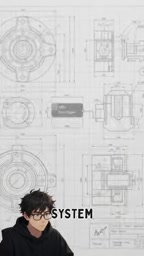
The system includes an error trigger (the author calls it the ADANE error trigger) that captures the complete stack trace the moment an exception occurs, then pipes the raw logs directly to a downstream AI debugging agent. The core value here is zero-latency information collection — no need for a human to locate log files or manually copy error messages.
AI Debugging Agent Intervention
The logs are fed into a custom AI debugging agent built on Dify. This Agent is responsible for parsing the specific error content and pinpointing the root cause. Unlike traditional alerting bots that can only "notify" you of a problem, this Agent is given the ability to understand and reason — which is precisely the fundamental difference between LLM-driven automation and traditional script-based automation.
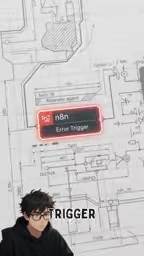
Dify is an open-source LLM application development platform. Its core capability is wrapping model calls, prompt orchestration, tool use, and RAG (Retrieval-Augmented Generation) into a visual configuration interface. Developers can build AI Agents with a complete "perceive → reason → act" loop without writing API integration code from scratch. In this self-healing pipeline, Dify plays the role of the Agent's "brain framework" — it receives log text from the n8n pipeline, calls an LLM for error analysis, and outputs the result (the fixed code) to downstream nodes via tool-call interfaces. Compared to calling the OpenAI API directly, Dify provides engineering capabilities like prompt version management, call chain tracing, and multi-model switching, making it better suited for production-grade Agent scenarios that need to run reliably within a team.
Code Fix and Automated Deployment
The most critical stage: the Agent doesn't just identify the error — it rewrites the problematic query, pushes a security patch to GitHub, and re-triggers the deployment pipeline. The entire loop from "problem detected" to "fix deployed" is fully automated.

Tech Stack Breakdown: n8n, Dify, and ChatGPT
Based on the tooling involved, this solution uses a fairly typical combination:
- n8n: Serves as the no-code / low-code workflow orchestration engine, linking together the error trigger, log forwarding, GitHub push, and pipeline restart nodes.
- Dify: Used to build the "debugging Agent," providing LLM application orchestration, prompt management, and tool-calling capabilities.
- ChatGPT / LLM: Handles the actual code comprehension and generation tasks — parsing the stack trace and rewriting the query.
The advantage of this combination is its relatively low barrier to entry. You don't need to build a backend service from scratch; you can embed AI capabilities into your ops workflow through visual nodes. For small-to-medium teams or individual developers, this is a pragmatic path to getting "AI Agents into real workflows."
n8n is an open-source workflow automation platform, positioned similarly to Zapier or Make (formerly Integromat), but with support for self-hosted deployment and a more developer-friendly experience. Each "node" corresponds to one action (such as an HTTP request, database write, or GitHub API call), and nodes are linked via a directed graph to form a complete automated pipeline. Its key advantage when combined with AI Agents is that n8n has native support for LangChain, OpenAI Function Calling, and other AI toolchains built in. You can configure the full "trigger → AI reasoning → write back to external system" flow directly in the visual interface without writing glue code. In the scenario described here, n8n handles the process orchestration layer — it doesn't understand the code, but it ensures the two critical data flows work correctly: "error signal reaches Dify" and "Dify's output gets pushed to GitHub."
A Sober Look: The Real-World Challenges Behind the Flashy Demo
This kind of "10-second self-healing" demo looks impressive, but there are real concerns to address before deploying anything like this in a true production environment:
The risk of auto-pushing code changes. Letting an AI automatically rewrite queries, push patches to GitHub, and trigger redeployment means unreviewed code goes straight into production. This might be acceptable for non-critical systems with solid rollback mechanisms, but in high-stakes business contexts, the lack of a human-in-the-loop review step can introduce new failure modes.
The credibility of "under 10 seconds." LLM inference alone takes several seconds. Add in a GitHub push, CI/CD rebuild, and deployment, and it's very hard to compress the whole thing to 10 seconds in practice. That number feels more like a claim designed for shareability than a rigorous performance benchmark.
Reliability and hallucinations. AI-parsed errors and AI-generated fixes aren't always correct. A confidently wrong "fix" can make the actual problem much harder to diagnose. Production-grade applications need accompanying test verification, canary releases, and circuit-breaker mechanisms.
Human-in-the-loop is a core safety principle in AI system design. It means keeping a human review or intervention opportunity at critical decision points in an automated pipeline, rather than letting the system run entirely autonomously. In a code-repair scenario, this typically means: the Agent generates a patch and automatically creates a Pull Request, but merging and deploying requires a manual trigger from an engineer. This isn't about reducing automation — it's about drawing a reasonable boundary between "efficiency gains" and "risk mitigation." Another important engineering concern is the LLM hallucination problem — models sometimes generate syntactically correct but logically wrong code, and they present it with high confidence. In a scenario where code is auto-pushed to production, a single hallucination can trigger a new outage. That's why automated testing (unit tests or smoke tests) running before a patch merges is a non-negotiable safety net.
What Developers Can Actually Take Away
Stripping away the marketing packaging, the core idea worth borrowing from this case is: orchestrating monitoring, diagnosis, and remediation — three traditionally siloed stages — into a single coherent automated chain via AI Agent coordination.
Even if you're not aiming for "fully automatic push to production," you can absolutely adopt a more conservative middle ground: let the Agent automatically complete error analysis and draft a patch, generate a Pull Request for human review, and stop there rather than auto-merging and deploying. This way you capture the efficiency gains from AI while preserving the necessary safety guardrails.
As tools like n8n and Dify mature in their AI capability support, the cost of building these kinds of intelligent ops workflows will keep dropping. The real challenge isn't whether you can build it — it's how to design the right review and fallback mechanisms so your automation is both fast and controllable.
Related articles

14 Core Concepts of Reasoning Models: From Chain of Thought to GRPO Explained
A systematic breakdown of 14 core concepts of reasoning models: chain of thought, test-time compute, verifiers, RLVR and GRPO, distillation, and reward hacking, plus rules for controlling thinking-token costs to help you decide when reasoning is worth paying for.

OpenAI's Claimed Refutation of ETH Sparks Debate, Meta Bets Big on AI Infrastructure
OpenAI claims an AI-assisted discovery that challenges the Exponential Time Hypothesis (ETH) and launches the mid-tier GPT-6.1 Tera. Cloudflare discloses a cross-customer data leak postmortem, and Meta plans $95B in AI infrastructure financing.

Data Scraping, AI Proofs, and Open Source Contracts: This Week's Deep Dive into the Tech World
From the 3D model crawler controversy and OpenAI's Lean formal proofs to AI agents challenging Brooks' Law and Debian rejecting LLM review, this week's tech discussions center on openness and verifiability.