AI Buzz Weekly: GPT-6.5 Leak, New Claude Model, and MiniMax's Cost-Effectiveness
AI buzz was dense this week: OpenAI new model clues, Anthropic capability preview, disappointing Gemini early checkpoints, and MiniMax's low-price model shaking the market.
AI news was dense this week, showing two main threads. First, precursors to next-generation model releases from leading vendors: a mysterious website's source code showed a GPT-6.5 reference but with questionable credibility, while GPT-6.1 Tera in Microsoft evaluation configurations was seen as a more reliable clue; Anthropic's new model is said to identify entire classes of problems behind bugs and proactively ask; early Google Gemini 4 Carbon checkpoints disappointed on coding. Second, Chinese models are disrupting the market with extreme cost-effectiveness: MiniMax M3.1 Flash costs only 15 cents per million input tokens, scores 62% on an agentic benchmark, beating Claude Opus 5 and GPT-5.6 Sol, and runs at over 200 tokens per second. In addition, OpenAI emphasized modernizing old programming languages, Zhipu Zcode introduced multi-agent workflows, Kimi K3.1 leaked four reasoning levels, NVIDIA achieved 423 tokens per second on Kimi K3 through software optimization, and Anthropic launched an open-source security scanning program.
AI news was dense this week, from traces of GPT-6.5 to a price war among Chinese models—a huge amount of information.
Over the past week, the AI community has been stirred up by a series of leaks, rumors, and official releases. From suspected traces of OpenAI's next-generation model to capability previews of a new Anthropic model to the Flash model launched by Chinese vendor MiniMax at an extremely low cost, almost every piece of news deserves separate discussion. This article is based on the video content of Bilibili creator "AI Circle" (AI圈), organizes the most critical information, and adds appropriate analysis.
GPT-6.5 and GPT-6.1 Tera: Leak or Coincidence?
The video first mentions a mysterious website openside.lo, whose HTML source code was found to contain a reference to "6.5", along with a countdown pointing to 10 a.m. San Francisco time on November 1. This date happens to match the 28th day of OpenAI's "28-day shipping commitment", sparking speculation: OpenAI may close out this series of releases with a major new model.
But the creator also points out an important doubt: an archive of the site from September 23 shows it was originally an independent OpenAI parody site for sale. So this is not official information, and its credibility is questionable.
More noteworthy is another clue: according to reports, references to GPT-6.1 Tera appeared in Microsoft's evaluation configurations, with a total of 18 configurations upgraded from GPT-5.6 Tera to GPT-6.1 Tera. The creator believes this is more convincing than the website domain, because it involves actual code changes in Microsoft's evaluation infrastructure.
HTML source code and countdown clues: A webpage's HTML source code sometimes embeds developer comments, data attributes, or unrendered script variables. Although these are not directly displayed to users, they may leak internal project codenames, version numbers, or planned timing. The appearance of a "6.5" reference in the source code of the openside.lo website, combined with a countdown pointing to 10 a.m. San Francisco time on November 1, was interpreted by the community as a clue to an OpenAI new model release. But note that source code can be modified by anyone, and historical archives of the site show it was originally a parody website, so the reliability of such "leaks" is usually low.
Microsoft evaluation configurations: Cloud vendors such as Microsoft maintain internal lists of model evaluation configurations to test different models' performance, cost, and integration compatibility. The model identifiers, version numbers, and parameter settings in these configuration files (such as JSON or YAML) often reflect the models the vendor is integrating or evaluating. Reports say references to "GPT-6.1 Tera" appeared in Microsoft's evaluation configurations, with 18 configurations upgraded from GPT-5.6 Tera. Such infrastructure code changes are harder to fake than public website clues and are therefore seen as a more credible precursor to a release.
New Anthropic Model: More Than Bug Fixes—It Can Identify Entire Classes of Problems
According to The Information, Anthropic is preparing to release a new model, likely Fable 5.5 (or Fable 5.1). The video cites anonymous testers as saying the model is clearly stronger at reasoning, intuition, and understanding users' real needs.
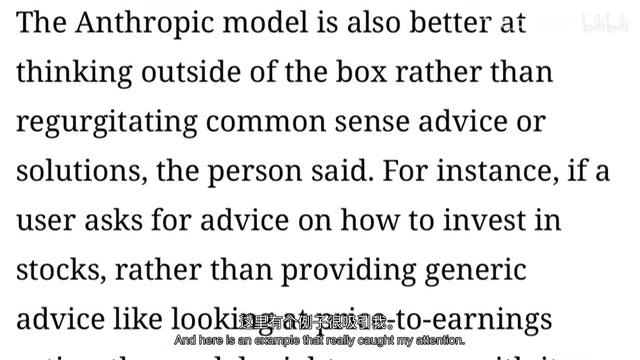
A specific example: when you use Claude Code to have it fix a bug, the new model not only fixes the individual problem but also recognizes that the bug belongs to a larger underlying problem and proactively asks whether you want to address the entire class of problems. The creator believes this is significant for autonomous coding agents, because current models usually require users to explicitly specify the fix target, while a model that can infer underlying intent will provide a completely different level of assistance.
Gemini 4 Carbon: Early Checkpoints Disappoint
Business Insider previously reported that a new Gemini checkpoint codenamed Carbon in Google's internal testing had coding ability comparable to Claude Opus 5.5. But after personally testing two different checkpoints (Carbon B and Carbon Z), the creator said the results were quite disappointing.
He claims that compared with Opus 5.5, these checkpoints are completely not on the same level for coding tasks; even compared with Google's existing Gemini models, almost no meaningful improvement is noticeable. The Carbon checkpoints are slightly faster, but actual coding quality is worse. The creator believes claims that its coding performance reaches Opus 5's level are "absolutely false", and Google may need several more months to reach that level.
However, he also acknowledges that these are early checkpoints and will improve substantially over time.
MiniMax M3.1 Flash: Extremely Low Price, Standout Benchmarks
China's MiniMax officially released M3.1 Flash, and the mysterious model SpaceBunny Alpha that previously topped the charts was confirmed to be its early version. The model processes more than 200 tokens per second, nearly 3 times faster than the previous M3 model, with costs reduced by about 70%.
Pricing: 15 cents per million input tokens, 60 cents per million output tokens, and cached input tokens as low as 1.5 cents per million. By comparison, Claude Opus 5 charges $5 per million input tokens and $25 for output; GPT-5.6 Sol charges $4 for input and $20 for output.
In benchmarks, M3.1 Flash scored 62% on an agentic benchmark, while Claude Opus 5 scored 50.3% and GPT-5.6 Sol scored 45.8%. On DeepSuite, MiniMax reported a score of 74%. The creator emphasized that benchmarks do not tell the whole story, but the model's performance is indeed impressive.
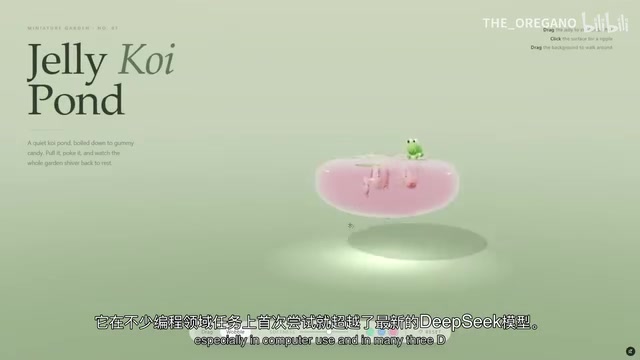
In a comparative test recreating a Tesla Roadster police car chase scene, MiniMax spent only $2.34 to complete the task, while DeepSeekAd spent about $3.07, making it about 24% cheaper. In another test to create a landing page for a hardware device launch, MiniMax completed it for just 1 cent, while Opus 5 required $1.22—nearly 88 times cheaper and 4 times faster.
After combining multiple benchmarks and prompt tests, the creator believes M3.1 Flash currently ranks 18th overall, which is quite astonishing for a Flash model. In addition, MiniMax is developing a stronger Pro version, which according to early Reuters reports may have 2.7 trillion parameters.
Token pricing and cost structure: Large model APIs usually charge by the number of tokens processed. Input tokens refer to the prompt sent by the user (including context), and output tokens refer to the model's generated reply. Cached input tokens refer to the discounted price enjoyed when a repeatedly used prompt prefix is cached and called again, which can greatly reduce the cost of multi-turn conversations or fixed system prompts. The dollar price per million tokens is the industry's common basis for comparison. MiniMax M3.1 Flash's 15 cents per million input tokens and 60 cents per million output tokens are only about 3% and 2.4% of Claude Opus 5 ($5/$25), placing it in an extremely low price band.
Agentic Benchmark: This type of benchmark tests a model's overall performance in automated tasks, such as multi-step tool calling, code execution, and web operations, rather than single-turn question answering. Scores are usually expressed as a percentage of task completion or accuracy. M3.1 Flash scored 62% on an agentic benchmark, higher than Claude Opus 5's 50.3% and GPT-5.6 Sol's 45.8%. But note that benchmark design, data contamination, and task distribution affect comparability, and low-price models may have uncovered weaknesses in complex reasoning or long-context tasks.
Other Notable Developments
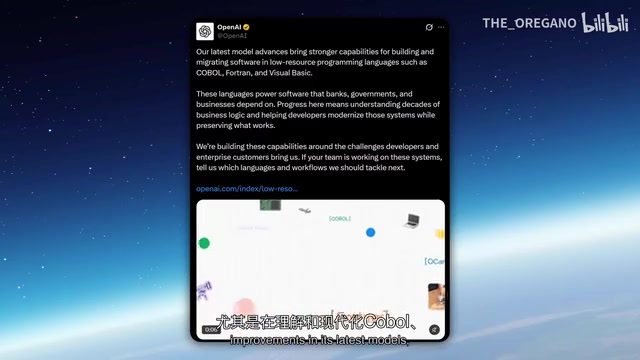
OpenAI emphasizes modernizing old programming languages. OpenAI says its latest models are significantly stronger at understanding old codebases such as COBOL, Fortran, and even Visual Basic, helping developers migrate old code without breaking existing functionality. The creator believes this is the most underrated application of AI coding agents.
Zhipu Zcode workflow mode. Zhipu's coding platform Zcode received a large-scale update, introducing a workflow mode that allows developers to orchestrate multiple AI agents simultaneously. A demo showed ten sub-agents working independently and tracking progress in real time.
Kimi K3.1 leak. According to reports, Kimi K3.1 appeared in API requests and was shut down 7 minutes later. Leaked information shows it uses the same tokenizer and chat format as Kimi K3, but introduces 4 reasoning levels (low, medium, high, highest, with highest as default) and supports image input.
NVIDIA inference optimization. NVIDIA's CentML team achieved 423 tokens per second per user on the 2.8-trillion-parameter Kimi K3 large model, a 1.68x speedup on the same architecture. This was made possible by decoding kernels written in CUDA DSL and Mega Kernel Fusion technology, with about 12,000 lines of highly optimized code, extracting more performance from existing GPUs without additional hardware.
Dreamlabs robot foundation model Dream 1. Dreamlabs emerged from stealth and launched Dream 1, which can control robots it has never encountered before and complete untrained operations in unfamiliar environments. The starting price for using the Dream API is only $3 per hour.
Anthropic launches OSS Scanner. The program uses its most powerful models to provide free regular security scans for critical open-source projects, with each finding including a proof of concept and a suggested patch.
CUDA DSL and Mega Kernel Fusion: CUDA DSL refers to domain-specific languages based on CUDA (such as NVIDIA's TileLang or similar tools), allowing developers to write GPU kernels at a higher level of abstraction and then compile them into efficient machine code. The decoding kernel is the core computation module responsible for token-by-token generation during inference, and its efficiency directly determines throughput. Mega Kernel Fusion combines multiple fine-grained GPU operations into a single large kernel, reducing kernel launch overhead and memory read/write counts, thereby increasing tokens per second without adding hardware. NVIDIA's CentML team used about 12,000 lines of highly optimized code to achieve 423 tokens per second per user on the 2.8-trillion-parameter Kimi K3, a 1.68x improvement on the same architecture—a typical case of software-layer inference optimization.
Robot Foundation Model: These models are pretrained on large-scale robot operation data to learn general perception-action mappings, enabling them to generalize to unseen robot embodiments and unfamiliar environments. Dreamlabs' Dream 1 claims it can control robots it has never encountered and complete untrained operations. The difficulty lies in cross-embodiment transfer (different joint counts and sensor configurations) and zero-shot task generalization. The starting API price of $3 per hour means robot policies are being offered as cloud services, lowering the barrier to robotics applications.
Summary
This week's information shows two main threads: first, precursors to next-generation model releases from leading vendors (GPT-6.5 rumors, a new Claude model, Gemini Carbon); second, Chinese models disrupting the market with extreme cost-effectiveness (MiniMax M3.1 Flash). It should be noted that leaks and rumors are uncertain, and the performance of some early checkpoints does not represent final release quality. Readers are advised to follow official information and remain cautious about benchmark results.
Related articles

Why Does Self-Play AI Always Get Crushed by Cheap Units? An RTS Developer's Account of the Dilemma
An independent developer trained an RTS commander AI with pure self-play, only to find it dominated historical versions but was crushed by human players using cheap tier-1 units. This article analyzes the causes of self-play strategy collapse, explores solutions such as exploiters, diversity rewards, and reward design, and introduces the open Bot Kit and AI league plan.
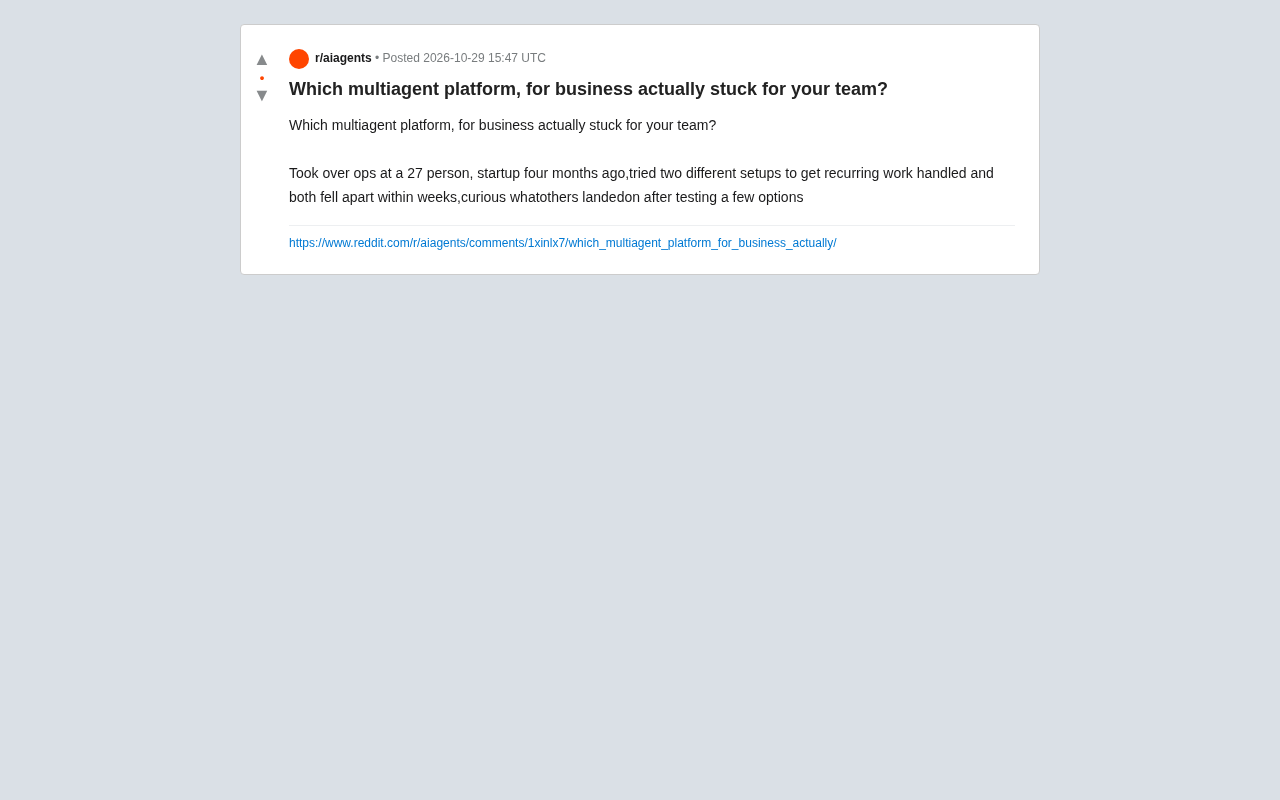
Which Multi-Agent Platform Wins? A Small Team's Battle Scars and Selection Considerations
A 27-person startup's ops lead tried two multi-agent platforms in four months and both failed. This article analyzes why small-team deployments break down, and offers selection guidance on integration depth, observability, and progressive rollout.

Thrive Holdings Takes ADT Private in $7.6 Billion Deal
Thrive Holdings acquires ADT for $7.6 billion in an all-cash take-private deal expected to close in Q1 2027. Analysis of the deal structure, ADT's asset value, and impact on the smart home security industry.