@ai-sdk/vue 2.0.262 Released: A Patch Update for the Vercel AI SDK

Vercel AI SDK's Vue binding releases patch 2.0.262, syncing with core package ai@5.0.262.
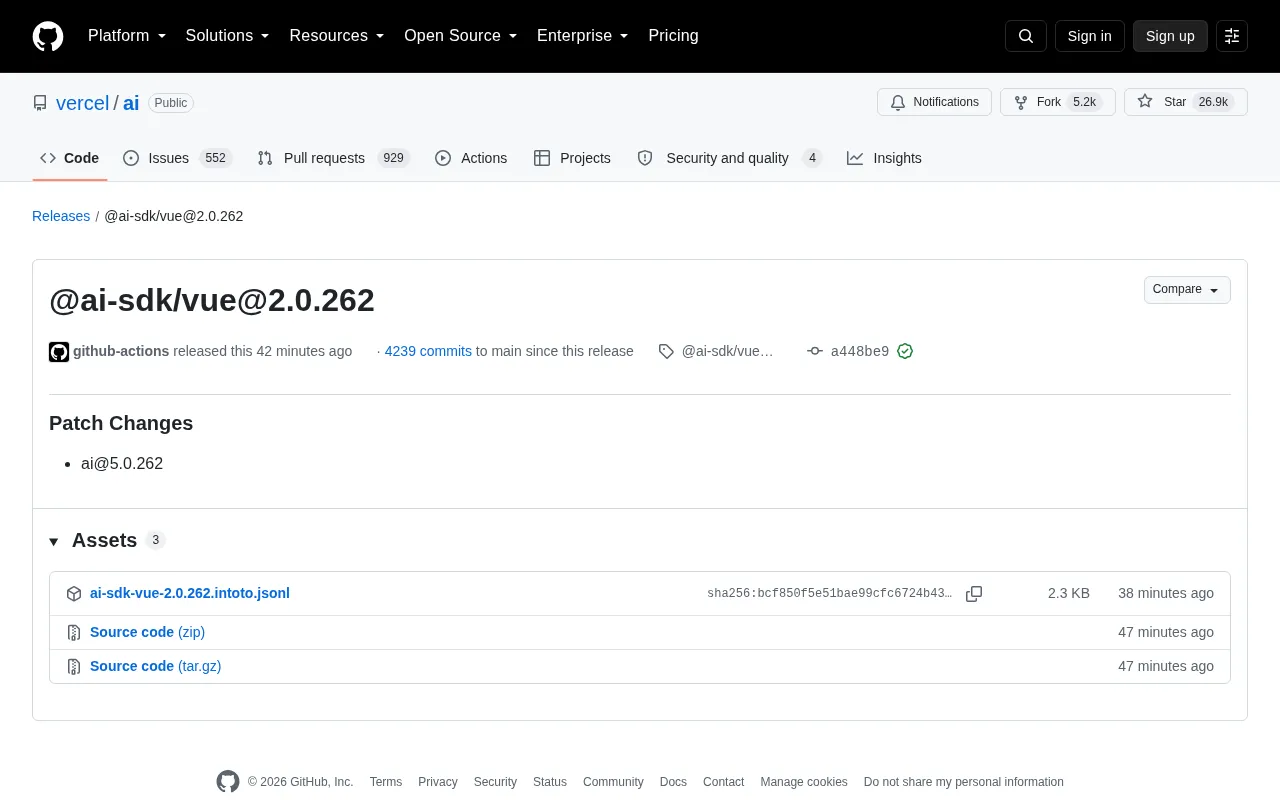
`@ai-sdk/vue@2.0.262` is a routine patch update for the Vercel AI SDK's Vue framework binding, with the sole change being a sync to the internal dependency `ai@5.0.262`. Following SemVer conventions, this patch increment involves no breaking API changes and was published via GitHub Actions with GPG signature verification for supply chain security. The article also highlights the Vercel AI SDK ecosystem's rapid iteration pace (26.9k stars, 4,238+ commits), advising developers to treat such updates as part of normal dependency management — reviewing the core package changelog, keeping all `@ai-sdk/*` sub-packages version-aligned, and validating critical paths like streaming responses in CI before merging.
Vercel's AI SDK ecosystem has received another version update — @ai-sdk/vue@2.0.262 has been automatically published via GitHub Actions. This is a patch-level update, primarily syncing with the core package ai@5.0.262. For developers integrating AI capabilities into Vue projects, this kind of release is worth noting but nothing to be alarmed about.
Version Overview
@ai-sdk/vue is the official Vue framework binding for the Vercel AI SDK, enabling developers to seamlessly integrate large model conversations, streaming output, and other AI capabilities into Vue/Nuxt applications. Version 2.0.262 is a patch update, with the core change being a sync to the internal dependency ai@5.0.262.
The version number tells the story: this is a patch segment increment under the SemVer specification, which typically indicates a bug fix or dependency alignment — no breaking API changes involved. The release record shows the commit was verified with a GitHub GPG signature (key ID: B5690EEEBB952194), ensuring the integrity of the published artifact.
SemVer (Semantic Versioning) is a widely adopted versioning convention formatted as MAJOR.MINOR.PATCH. A major version increment signals breaking, incompatible changes; a minor increment adds backward-compatible features; and a patch increment represents backward-compatible bug fixes or minor adjustments. For dependency managers like npm and pnpm, understanding this convention helps decide whether to auto-accept certain upgrades — the ^ symbol typically allows automatic minor and patch upgrades, while ~ only allows patch upgrades. GPG (GNU Privacy Guard) signature verification adds another layer of security: publishers sign commits or release artifacts with a private key, and users can verify authenticity with a public key, guarding against package tampering in supply chain attacks.
Vercel AI SDK Activity Level
The Vercel AI repository numbers speak for themselves: 26.9k stars, ~5.2k forks, and over 4,238 commits on the main branch. The rapid release cadence — patch numbers already reaching 262 — reflects how actively this SDK is being developed.
For teams, a high-frequency patch cadence is both a strength and a challenge. The upside: issues get fixed quickly and the ecosystem stays current. The challenge: dependency management requires more care. The recommended approach is to lock versions via a lockfile and pair upgrades with automated tests before merging.
How Developers Should Respond
For projects already using @ai-sdk/vue, patch versions are generally safe to upgrade, but a few best practices are still worth following:
Review the Changelog
The Patch Changes for this release only note a dependency sync to ai@5.0.262 with no specific feature changes listed. This strongly suggests it's an alignment release tracking the core package. Reviewing the full changelog for the core ai package will give you more meaningful context before upgrading.
Handle Coupled Dependencies with Care
Since @ai-sdk/vue is tightly coupled to the core ai package's versioning, make sure both are compatible when upgrading. If your project uses multiple @ai-sdk/* sub-packages simultaneously, it's best to keep their versions in sync to avoid potential type conflicts or runtime issues.
In the Vercel AI SDK architecture, framework bindings like @ai-sdk/vue and @ai-sdk/react are essentially thin wrappers over the core ai package, sharing the same type definitions, Provider interfaces, and streaming protocols. This "core package + framework binding" monorepo pattern (typically managed via Turborepo or pnpm workspaces) requires strict version alignment across sub-packages: if the core package introduces a new TypeScript interface that the binding hasn't synced, you'll get type errors at best — and serialization or event handling inconsistencies at runtime at worst. When your project depends on multiple @ai-sdk/* packages, it's recommended to lock their version ranges uniformly in package.json and use tools like syncpack to periodically check version consistency.
Validate with CI
Even for a patch update, it's good practice to run your test suite in CI before merging to the main branch — especially for critical paths like streaming responses and error handling.
Summary
@ai-sdk/vue@2.0.262 is a routine patch maintenance release, with its primary value being a dependency sync following ai@5.0.262. The release itself carries limited new information, but it reflects the high-frequency iteration and active ecosystem of the Vercel AI SDK. Teams building AI applications on the Vue stack can handle this as part of their standard dependency update workflow.
Related articles
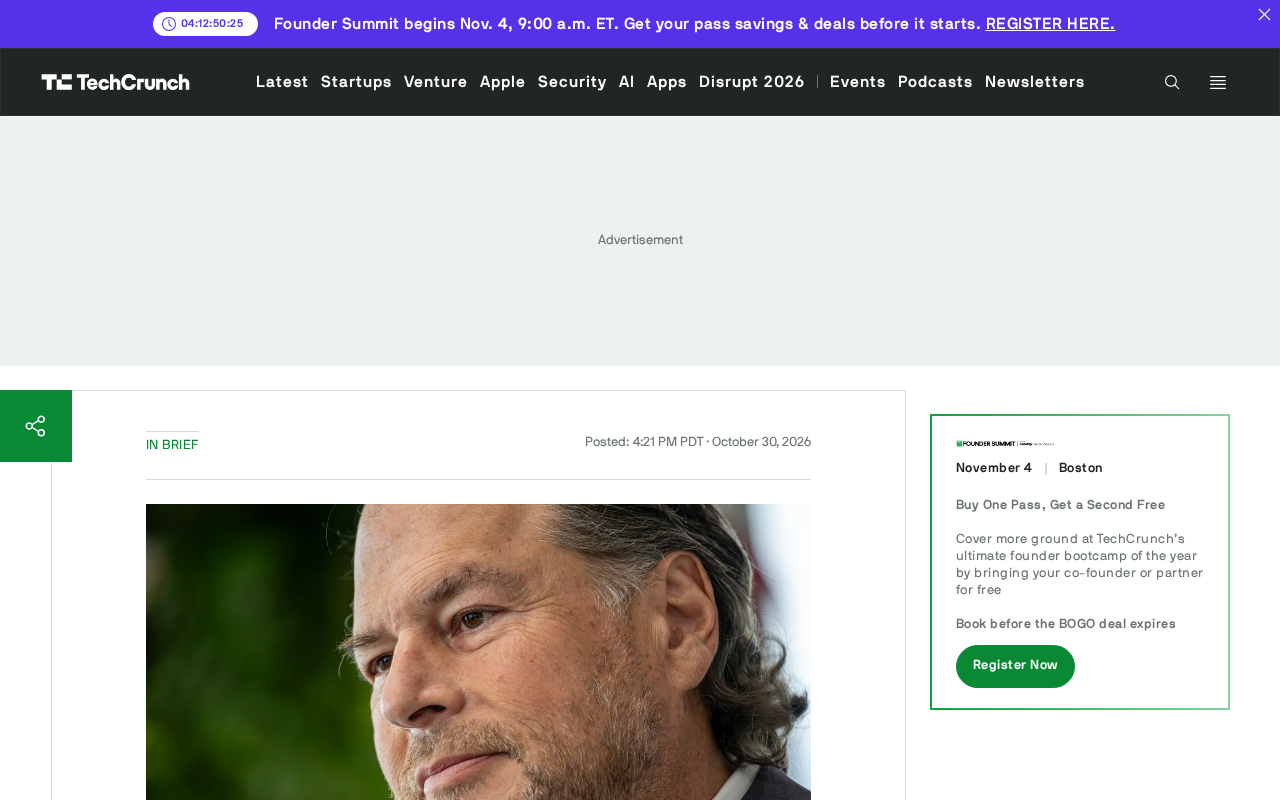
Salesforce Acquires Rune for $375M: AI Logistics Tech Bolsters Defense Business
Salesforce reportedly acquires defense tech startup Rune for $375M. Rune's AI logistics tech will strengthen Salesforce's Missionforce defense platform, continuing its M&A spree.

Why Fair Use Benefits Everyone in the AI Era
Starting from a Hacker News discussion, this article analyzes the legal logic and controversies of the fair use principle in AI training and content creation, and its dual impact on creators and the tech ecosystem.

Mistral Large 4 Open-Sources a Trillion Parameters, Microsoft Offers Voluntary Severance to 60,000 Employees
Mistral Large 4 open-sources a trillion-parameter multimodal model with a coding agent score of 48; SanDisk earnings show AI inference reshaping NAND demand; Google Gemini adds in-app file editing, OpenAI raises Codex quotas, and Microsoft offers voluntary severance to 60,000 employees.