Airbnb's Charity Gala Sparks Discussion: A New Social Experiment for Tech Companies?

Airbnb's nonprofit hosts a charity gala, reflecting tech brands going offline and public perception gaps.
Airbnb's nonprofit organization held its inaugural charity gala in Los Angeles, prompting widespread surprise of "Airbnb has galas?" The article argues this reflects tech companies shifting from feature-driven to emotion-driven branding, using offline rituals and philanthropic projects to expand brand boundaries. Hosting through a nonprofit entity allows flexible focus on charitable causes while avoiding direct commercial ties—a common reputation management strategy. Public reaction exposes a perception lag behind business development. Such efforts are hard to quantify but signal increasingly diverse communication between tech companies and the public, with more companies likely to enter offline social scenarios.
An Unexpected Charity Gala
According to an RSS source, Airbnb's nonprofit organization held its inaugural charity gala in Los Angeles on Wednesday. Once the news broke, the most common reaction across the internet was: "What? Airbnb has galas?"
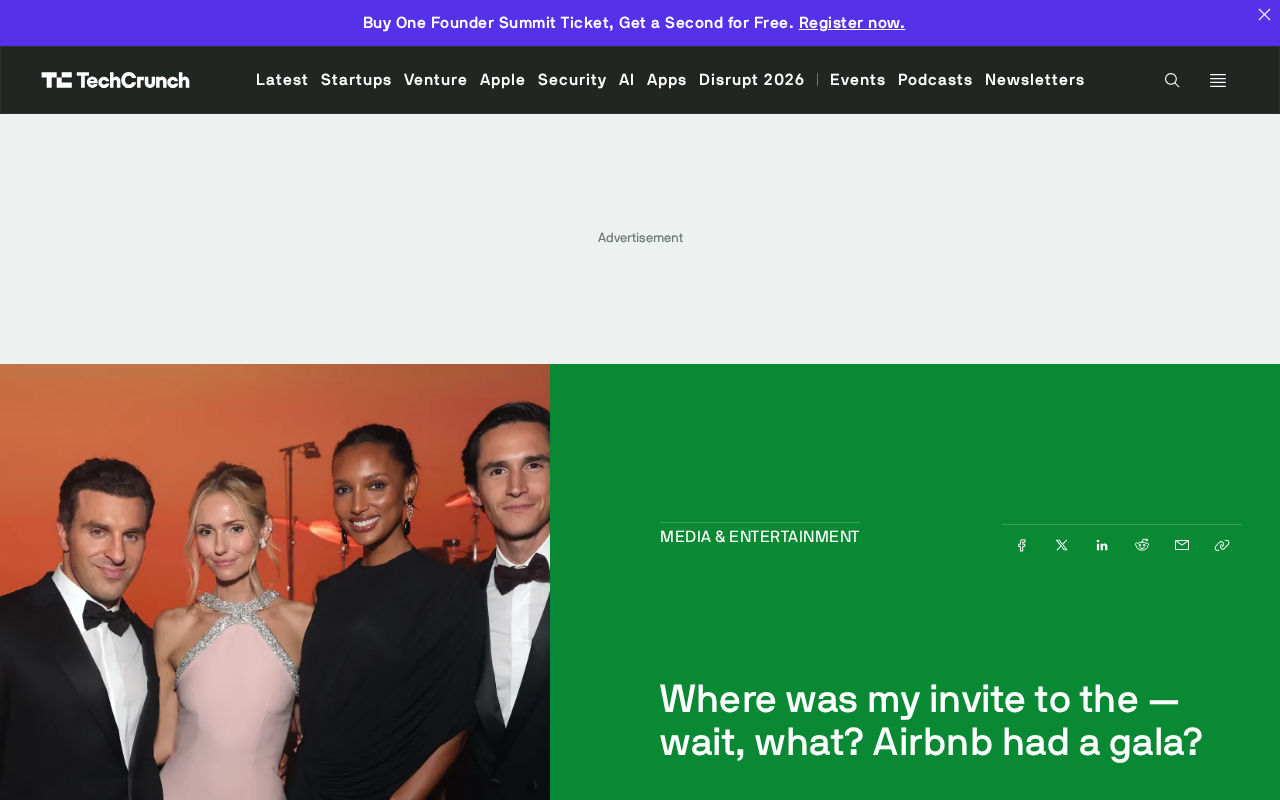
That reaction itself is telling. In the public imagination, Airbnb has always been the short-term rental platform that disrupted the traditional hotel industry—not a brand known for hosting high-end social events. The surprise appearance of this gala raises a question worth pondering: why are tech companies beginning to venture into this seemingly traditional social arena?
Why Tech Companies Need "Offline Rituals"
Charity galas are nothing new, but in recent years more and more tech companies have begun hosting similar events. There are several layers of logic behind this.
From Platform to Community: A Shift in Identity
Airbnb's core business is built on "trust between strangers." Hosting a gala through its nonprofit organization is an attempt to extend that trust from online transactions to offline social interaction. The event itself may be limited in scale, but its symbolic significance outweighs its practical returns—it sends a signal to the outside world that Airbnb is not just a tool, but a community with values.
Independent Operation of the Nonprofit
Interestingly, this gala was hosted by Airbnb's nonprofit organization rather than the company itself. This structural arrangement allows the event to focus more flexibly on philanthropic causes while avoiding direct association with commercial interests. For tech companies, conducting social activities through nonprofit entities is a common reputation management strategy.
Charity galas are a social and fundraising format with a long tradition in Western society, typically hosted by museums, hospitals, arts institutions, or foundations. They include formal dinners, auctions, performances, and donation segments, with attendees mostly being corporate executives, celebrities, and philanthropists. Their core function is not just fundraising but serving as "ritual occasions" for building elite networks and showcasing the host's values. Tech companies have historically had limited involvement in this space because their brand narratives emphasize efficiency, scale, and product features rather than traditional elite socializing. In recent years, as tech companies have grown in scale and faced increased public scrutiny, they have begun borrowing such traditional rituals to shape a more multidimensional and warmer brand image, while also providing executives and employees with formal channels for philanthropic participation.
Tech companies typically establish nonprofit organizations using an independent legal structure, such as a foundation or a public-benefit association, with legal and financial separation from the parent company. The advantages of this arrangement are: the nonprofit entity can accept donations, apply for tax benefits, and conduct activities guided by a philanthropic mission without being directly subordinated to commercial marketing goals. Meanwhile, the parent company can participate indirectly through funding or personnel support, maintaining brand association while avoiding the event being seen purely as commercial PR. This "company–foundation" dual-track structure is not uncommon in the tech industry; it allows enterprises to speak out on social issues while reducing the perception of direct commercial promotion.
The Cognitive Gap Behind Public Reaction
The "What gala?" reaction online reflects a disconnect between tech brands and public perception.
On one hand, Airbnb's business has become deeply embedded in daily life, but its public image remains at the "booking platform" level. On the other hand, tech company executives and employees do have a need to participate in charitable activities—it's just that these activities tend to be conducted quietly and are unknown to the general public.
This disconnect is not unique to Airbnb. Many tech companies encounter similar perception lag when attempting to expand their brand boundaries. The key question is whether such activities can generate sustained impact rather than being a one-off topic.
Brand perception lag refers to the phenomenon where a company's business has already diversified or upgraded, but the public's impression remains stuck on its early core product. Causes of this lag include: users only interact with one functional entry point of the brand in their daily lives, media focus more on products and competition than on corporate social responsibility, and companies themselves have long focused on a single selling point in brand communication. For platform-based tech companies, this disconnect is particularly pronounced—users use the booking function every day but rarely come into contact with the organizational structure, philanthropic projects, or executive social circles behind the company. To narrow the perception gap, companies need to gradually update public impressions through sustained, perceptible offline activities and public narratives rather than relying on one-off events.
Implications for the Tech Industry
Airbnb's gala provides an observation window: as tech company growth stabilizes, brand building is beginning to shift from feature-driven to emotion-driven. Offline events, philanthropic projects, community building—these conventional practices of traditional industries are being picked up again by tech companies.
However, the effects of such attempts are difficult to quantify. How much brand goodwill can a single gala generate? Can a nonprofit's operations synergize with corporate strategy? These questions have no standard answers.
What is certain is that the ways tech companies communicate with the public are becoming more diverse. Airbnb's gala may be just the beginning; in the future, more tech companies may enter offline social scenarios in similar ways. Whether the public can shift from "What gala?" to "Please invite me next time" depends on whether these activities can truly build influence commensurate with brand values.
Related articles

Vibe Coding Full-Stack in Practice: AI Programming from Beginner to Enterprise Deployment
From Cursor to Claude Code, this Bilibili AI programming course uses four progressive projects to cover full-stack development, open-source secondary development, and team collaboration. The article analyzes the shock to frontend roles, the efficiency shift from 50 people to 5, and the methodology required for enterprise-grade projects.

David Blaine's Global Quest for Real Magic: From South Africa to Japan and India
David Blaine travels to South Africa, Japan, and India in his Do Not Attempt special, documenting Spinning drivers, black mamba rescuers, iaijutsu masters, and ascetics—exploring the boundary between magic and real human极限 challenges.

Is a Touchscreen MacBook Coming? Vergecast Reveals Apple Executive's Response
Vergecast podcast reveals a conversation between a reporter and Apple executive John Ternus about a touchscreen MacBook and Apple Pencil support. Ternus says iPad is the best device for a stylus, while the reporter bets MacBook will eventually support Apple Pencil.