Airgorah: A WiFi Security Auditing Tool Built with Rust
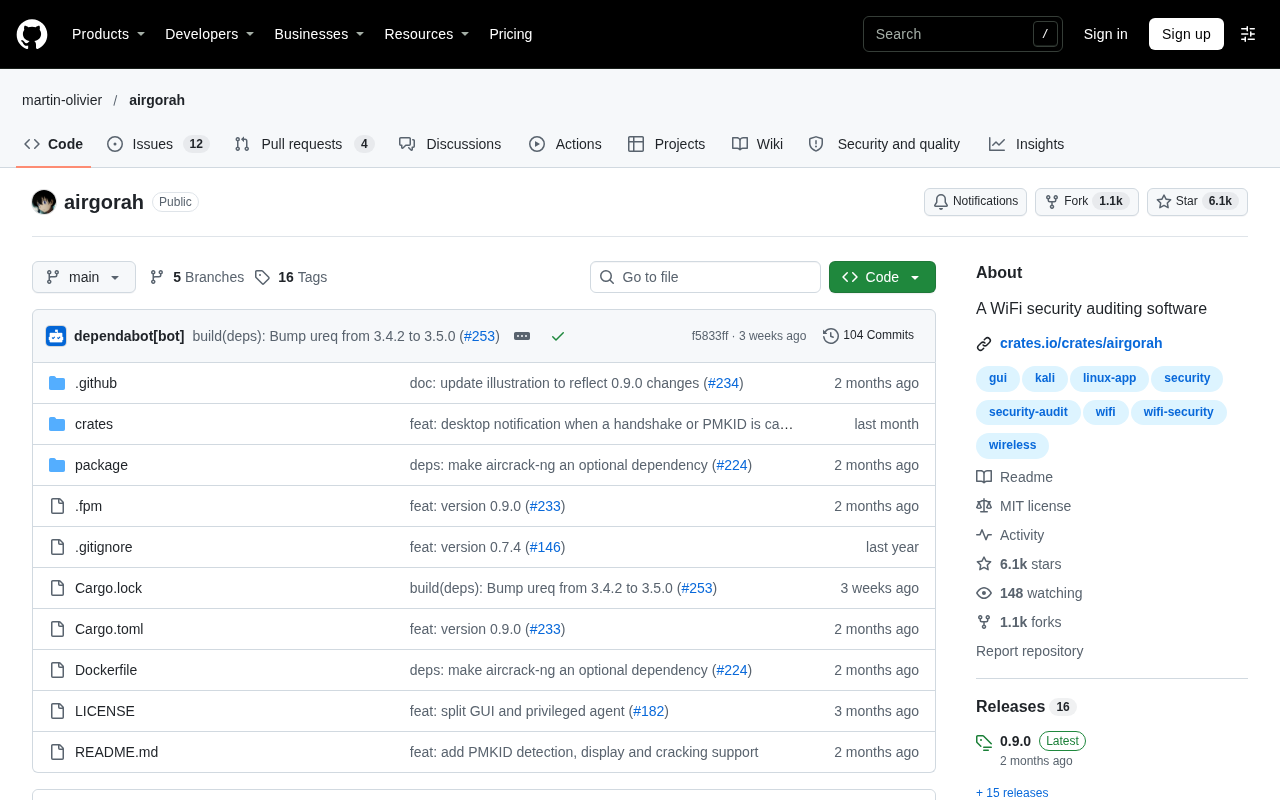
Rust-based WiFi auditing tool Airgorah gained 270 stars in a day, drawing community attention.
Airgorah is a WiFi security auditing tool written in Rust that has earned 6,128 stars and 1,052 forks on GitHub, with about 270 new stars in a single day. Rather than simply reimplementing the traditional aircrack-ng suite, it leverages Rust's memory safety to rebuild a more usable and safer auditing workflow, positioned to help network owners or authorized testers assess wireless network security rather than provide out-of-the-box attack tools.
Why WiFi Auditing Tools Are Worth Watching
The security of home and office networks often hinges on the weakest link, and wireless networks are the entry point that is most frequently overlooked. Airgorah is a WiFi security auditing tool written in Rust that has already gathered 6,128 stars and 1,052 forks on GitHub, with roughly 270 new stars in a single day — a sign that it is rapidly gaining attention among developers and security enthusiasts.
Compared with the traditional aircrack-ng suite, Airgorah is not a simple reimplementation; it attempts to rebuild a more usable and safer auditing workflow using a modern systems programming language. Rust's memory safety features give it a natural advantage in a context that requires direct interaction with network cards and low-level protocols.
The aircrack-ng suite is the most widely known collection of tools in the wireless security field, comprising multiple standalone command-line programs such as airodump-ng (packet capture and scanning), aireplay-ng (packet injection), and aircrack-ng (key cracking). Born in the mid-2000s and written in C, it has long been the de facto standard for WEP/WPA security assessment. Its strengths are comprehensive functionality and abundant documentation; its drawbacks are scattered commands, numerous parameters, a steep learning curve, and the need to manually connect data flows between tools. A new generation of tools such as Airgorah targets exactly these usability problems, attempting to integrate scanning, analysis, and reporting into a more coherent workflow.
Core Features and Design Orientation
Built for Auditing, Not Attack
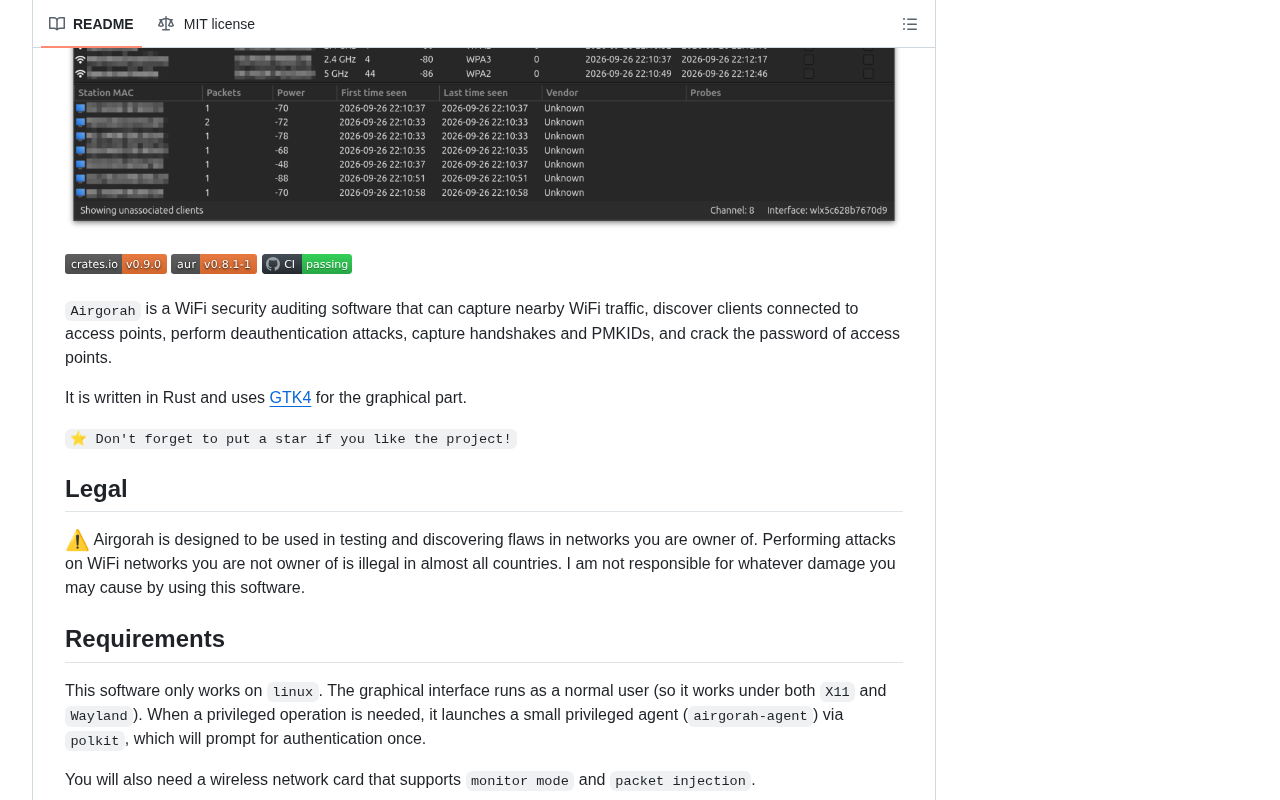
The project description "WiFi security auditing software" makes Airgorah's positioning clear: security auditing — helping network owners or authorized testers assess the security of their own wireless networks, rather than providing out-of-the-box attack tools. Such tools typically cover capabilities like scanning nearby access points and identifying encryption methods and configuration weaknesses; the specific feature scope should be based on the project documentation.
The Engineering Value of Rust
In the wireless security field, C-language tools have long dominated, but their memory management issues have also brought no small number of hazards. Airgorah's choice of Rust means that when parsing network packets and handling large volumes of concurrent scan results, there is far less need to worry about buffer overflows and dangling pointers. For an auditing tool that needs to run for extended periods and directly touch raw network data, this is a genuine engineering improvement.
Buffer overflows and dangling pointers are the two most typical classes of memory errors in C. A buffer overflow occurs when a program writes more data than a fixed-length memory region can hold, potentially overwriting adjacent variables or even the return address, and is often exploited to execute arbitrary code; a dangling pointer is a pointer to memory that has already been freed, and continuing to dereference it causes undefined behavior. Rust prevents these problems at compile time through ownership, borrow checking, and lifetimes — without relying on garbage collection. For an auditing tool that must parse untrusted network packets, this directly narrows the attack surface exposed to maliciously crafted 802.11 frames.
What the Community Traction Tells Us
Roughly 270 new stars in a single day is quite substantial for a security auditing project. The user base for such tools is usually fairly niche; part of the reason for this growth rate is that "rewriting classic tools in Rust" has itself become a popular narrative in the open-source community in recent years, and another part is that the demand for wireless security auditing has always existed — whether for enterprises conducting compliance checks or individuals wanting to confirm their home router's configuration is sound.
The ratio of 1,052 forks to 6,128 stars is also worth noting, indicating that many developers are not just bookmarking the project but have a real intention to modify it or build on top of it.
802.11 is the family of wireless local area network (WLAN) standards developed by IEEE — in everyday terms, Wi-Fi. It defines the communication rules for the physical and data link layers, covering frequency bands, modulation schemes, frame structures, and encryption and authentication mechanisms such as WEP, WPA, WPA2, and WPA3. The core work of an auditing tool is precisely to capture and parse these 802.11 management, control, and data frames, from which it determines an access point's encryption suite, authentication method, and configuration flaws. Understanding the basic classification of 802.11 frames is a prerequisite for interpreting the output and source code logic of such tools.
Boundaries to Clarify Before Use
Wireless auditing tools always walk the line between legality and violation. Using Airgorah to scan or test networks without authorization may constitute a violation of the law in most jurisdictions. Using it on your own network, or in a penetration testing project with written authorization, is the correct way to use such tools.
The project itself is framed around auditing, but the ultimate use of a tool depends on its user. For technical professionals who want to deepen their understanding of the 802.11 protocol and learn the wireless security assessment process, reading its Rust source code is itself a worthwhile learning opportunity.
Who Should Give It a Try
If you are already familiar with configuring wireless network cards and switching to monitor mode on Linux, Airgorah is a new option worth trying; if you are a Rust learner who wants to see how systems-level network programming is put into practice, the project's code structure is also worth referencing. For beginners who have never encountered wireless security at all, it is recommended to first understand the relevant laws and regulations and basic networking principles before getting hands-on.
Related articles

No Coding Required: He Shipped an App Store App by 'Cutting Features' and Nitpicking with AI
A game designer with zero frontend/backend skills shipped a dual-platform App Store app with AI—not via one-click generation, but by cutting scope and nitpicking like a demanding client.

What Is Harness Engineering? From Concept Origins to Enterprise-Level Agent Implementation
What is Harness Engineering? This article traces the concept's origins and analyzes enterprise-level Agent requirements for tool call fault tolerance, data security, tenant isolation, and memory gaps.
Coze in Practice: A Three-Tier Agent Classification and a Multi-Agent Collaboration Guide
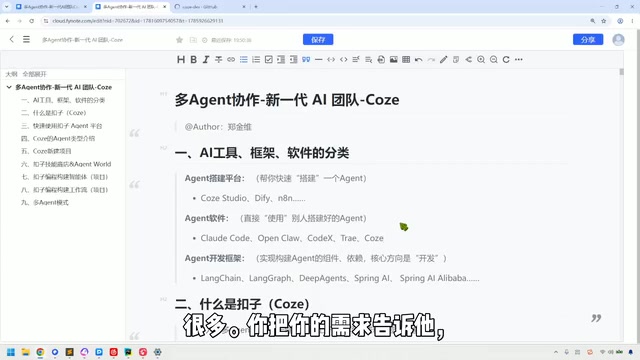
A Bilibili tutorial breaks down the multi-agent collaboration toolchain into three categories: building platforms like Coze Studio and Dify, Agent software like Claude Code, and development frameworks like LangChain—plus a Coze demo of industry templates, three-platform interoperability, local Agent integration, and the trade-offs of credit consumption.