Amazon Aims to Build a Global Product Graph, Unifying the E-Commerce Data Landscape

Amazon plans to build a global product graph, indexing products across the web to consolidate its e-commerce gateway position.
Amazon is quietly advancing its 'World Product Graph' project, aiming to index product information for all items sold on the internet, including non-Amazon products, thereby positioning itself as the ultimate gateway for shopping search and price comparison. This move could reduce consumer outflow to other platforms and enhance Amazon's influence in the e-commerce ecosystem, but it also faces challenges such as data legality, information accuracy, third-party seller relationships, and antitrust regulation. For consumers, price comparison becomes more convenient but choices may be controlled by the platform; for sellers, exposure opportunities increase but competition intensifies. The plan reveals that e-commerce competition is shifting from products and logistics to data and indexing capabilities.
Amazon is making a big move: it's no longer content with just selling products on its own platform—it wants to bring every product sold across the entire internet into its database. According to Reuters, Amazon plans to build a project called "World Product Graph," aimed at indexing products across the entire web, even those not sold by Amazon. This move could reshape the landscape of e-commerce search and price comparison, positioning Amazon as the ultimate gateway for product information.

Amazon's Ambition: Beyond Its Own Products
According to Reuters, Amazon's "World Product Graph" project is aimed at a grand vision: building a data vault covering every product for sale on the internet. This means that whether products come from competitor e-commerce platforms, independent brand websites, or small vertical retailers, Amazon wants to include their product information and present it to consumers through the Amazon website.
The direct purpose of this project is to reduce the likelihood of consumers leaving Amazon to compare prices or look up product information on other websites. Currently, many shoppers browse products on Amazon but may ultimately complete their purchase on Google, other e-commerce platforms, or even brand websites. By mastering product data across the entire web, Amazon can position itself as both the starting point and the endpoint of shopping search, further solidifying its dominance in the e-commerce space.
Data Barriers and the Competitive Landscape
If successfully implemented, this plan would significantly strengthen Amazon's influence in the e-commerce ecosystem. Product data is one of the core assets of e-commerce, and mastering product information across the entire web means Amazon can more precisely understand market trends, pricing strategies, and consumer preferences. For competitors, this could constitute a new competitive barrier—when consumers become accustomed to checking any product information on Amazon, the traffic gateway value of other platforms will be weakened.
However, the plan also faces numerous challenges. The legality of data collection, the accuracy and real-time updating of product information, and how to manage relationships with third-party sellers are all issues Amazon needs to address. In addition, regulators are increasingly scrutinizing data aggregation by large tech companies, and Amazon's ambition may attract antitrust attention.
The word "Graph" in "World Product Graph" originates from graph theory, referring to a data structure composed of nodes and edges. In the tech field, knowledge graphs use graph structures to integrate and associate information, enabling machines to understand relationships between entities. Amazon's product graph is likely based on similar principles, treating products as nodes and associations between products (such as substitutes, accessories, and similar items) as edges, thereby building a semantically rich product network. This structure helps enable intelligent search, recommendations, and price comparison, and provides underlying data support for AI-driven shopping assistants.
Data aggregation and indexing activities may touch upon the "Essential Facilities Doctrine" in antitrust law. This doctrine states that if a company controls infrastructure essential to competitors and has an obligation to provide access on reasonable terms, failure to do so may constitute abuse of market dominance. If Amazon indexes product information across the entire web through crawlers and other technical means, it could be questioned for using its data advantage to squeeze out competitors. Regulations such as the EU's Digital Markets Act (DMA) also impose stricter transparency requirements on data usage by large platforms, and Amazon's plan may face compliance review.
Potential Impact on Consumers and Sellers
For consumers, Amazon's World Product Graph could bring a more convenient shopping experience. Being able to compare prices and specifications of products across the entire web on a single platform would undoubtedly save time and effort. However, it could also give Amazon greater control over how product information is displayed, thereby influencing consumer choices—for example, Amazon might prioritize showing its own products or products with better logistics services.
For third-party sellers, this plan presents both opportunities and challenges. On one hand, their products may gain more exposure through Amazon's traffic; on the other hand, they may face more intense price competition, and their control over their own product information could be weakened. How Amazon balances its own business interests with those of third-party sellers will be key to whether the plan can proceed smoothly.
Industry Reaction and Uncertainty
Currently, Amazon has not publicly disclosed specific details of the project, and Reuters' report is based on information from people familiar with the matter. The industry is paying close attention to Amazon's move. Some analysts believe this is an important step in Amazon's transformation from a "general store" to "product information infrastructure," similar to Google's model of indexing information across the entire web. Others worry that Amazon may use this data advantage to further squeeze competitors' room to survive.
Regardless of the final outcome, Amazon's World Product Graph plan reveals a trend in the e-commerce industry: data aggregation and indexing capabilities are becoming the new frontline of platform competition. In a context where AI-driven shopping experiences are increasingly prevalent, whoever masters the most comprehensive product data is more likely to define the future of shopping.
Google Shopping is a price comparison service launched by Google that indexes product information across the entire web, allowing consumers to search and compare products from different retailers. The EU has ruled that Google abused its market dominance by prioritizing its own shopping service in search results, harming competitors' interests. Amazon's "World Product Graph" is similar but focuses more on presenting products from across the web within the Amazon platform, which may raise similar competitive concerns. The difference between the two is that Google Shopping mainly relies on merchants actively uploading data, while Amazon may actively collect data through crawlers, resulting in broader data sources but also making it more prone to privacy and copyright disputes.
Conclusion: A New Chapter in the E-Commerce Data War
Amazon's "World Product Graph" plan is ambitious, attempting to bring product information from across the entire web into its own domain, thereby occupying a dominant position in shopping search and price comparison. If realized, this move will profoundly affect consumers, sellers, and the entire e-commerce competitive landscape. However, data privacy, antitrust regulation, and the complexity of implementation all add uncertainty to the plan. What is certain is that competition in the e-commerce sector is escalating from a contest of products and logistics to a battle of data and indexing capabilities.
One-line Summary
Amazon plans to build a global product graph, indexing products across the web to consolidate its position as the e-commerce gateway.
Paragraph Summary
Amazon is quietly advancing its "World Product Graph" project, aiming to index product information for all items sold on the internet, including non-Amazon products, thereby positioning itself as the ultimate gateway for shopping search and price comparison. This move could reduce consumer outflow to other platforms and enhance Amazon's influence in the e-commerce ecosystem, but it also faces challenges such as data legality, information accuracy, third-party seller relationships, and antitrust regulation. For consumers, price comparison becomes more convenient but choices may be controlled by the platform; for sellers, exposure opportunities increase but competition intensifies. The plan reveals that e-commerce competition is shifting from products and logistics to data and indexing capabilities.
Related articles

AI Writes Your Code—Do You Still Need to Learn Git? Five Reasons
AI coding agents handle Git operations automatically—is it still necessary to learn Git? Five reasons: team communication, reviewing agent PRs, monitoring code changes, fallback when AI goes down, and the joy of learning—plus how the focus of learning Git is shifting in the agent era.

Anthropic Reportedly Prices IPO at $83 Per Share, Valuing Company at $1.5 Trillion
Anthropic reportedly prices IPO at $83 per share, above the expected range, with a fully diluted valuation of $1.5 trillion. This article analyzes the signal significance of the pricing and its impact on the AI industry's financing environment.
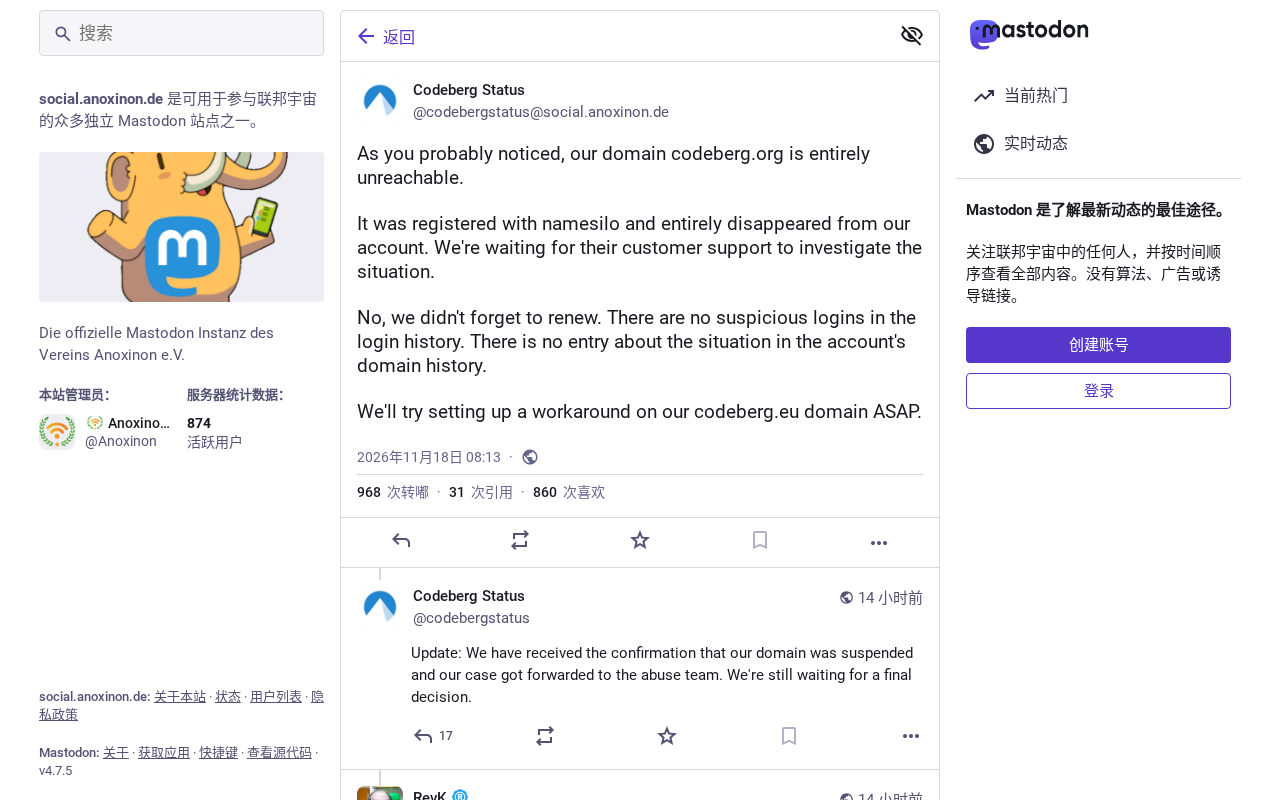
Open-Source Code Hosting Platform Codeberg Suffers Outage, Sparking Debate in Developer Community
Open-source code hosting platform Codeberg.org suffered an outage, sparking Hacker News debate over nonprofit platform stability and open-source infrastructure dependency risks.